

Choosing the right injury lawyer after an accident can feel overwhelming, especially when you’re dealing with medical bills, lost wages, and physical recovery. Many Georgia accident victims struggle to identify which attorney has the expertise, track record, and communication style to maximize their claim. This guide walks you through the essential steps and considerations for selecting a qualified personal injury lawyer in 2026, helping you make an informed decision that protects your legal and financial interests.
Table of Contents
- Understanding Personal Injury Law In Georgia
- Preparing To Choose The Right Injury Lawyer
- Step-By-Step Guide To Selecting And Hiring Your Injury Lawyer
- Common Mistakes And How To Avoid Them When Choosing An Injury Lawyer
- How The Jewkes Firm Can Help With Your Injury Claim In Georgia
- FAQ
Key takeaways
| Point | Details |
|---|---|
| Prove four legal elements | Georgia injury claims require proving duty of care, breach, causation, and damages for success. |
| Research Georgia-specific experience | Verify your lawyer’s years handling Georgia personal injury cases and their settlement track record. |
| Verify credentials and communication | Check state bar records, client reviews, and fee structures before signing any agreement. |
| Follow a systematic hiring process | Use consultations, reference checks, and clear agreements to ensure proper attorney-client alignment. |
| Avoid common selection mistakes | Hiring too late, ignoring specialization, or unclear fees can reduce your settlement significantly. |
Understanding personal injury law in Georgia
Before you choose a lawyer, understanding the legal foundation of your claim helps you evaluate whether a prospective attorney truly knows Georgia injury law. In Georgia, a personal injury victim must prove four elements: duty of care, breach, causation, and damages. Duty of care means the at-fault party owed you a legal obligation to act responsibly. Breach occurs when they violated that duty through negligence or wrongful action. Causation links their breach directly to your injuries, and damages represent the actual harm you suffered, from medical expenses to lost income and pain.
These four elements apply across common case types in Georgia: auto accidents where a driver ran a red light, medical negligence where a surgeon made a preventable error, and wrongful death claims when a loved one died due to someone else’s reckless conduct. A lawyer experienced in Georgia personal injury law will know how to gather evidence proving each element, from police reports and medical records to expert testimony and witness statements. Without this expertise, your claim risks weak arguments or missed deadlines.
Understanding these legal basics also empowers you to ask targeted questions during consultations. You can evaluate whether a lawyer has handled cases similar to yours and how they approach proving causation in complex scenarios like multi-vehicle crashes or delayed medical diagnoses. This knowledge separates qualified specialists from generalists who dabble in injury law.
Pro Tip: During your initial consultation, ask the lawyer to explain how they would prove each of the four elements in your specific case. Their answer reveals their depth of experience and strategic thinking.
Preparing to choose the right injury lawyer
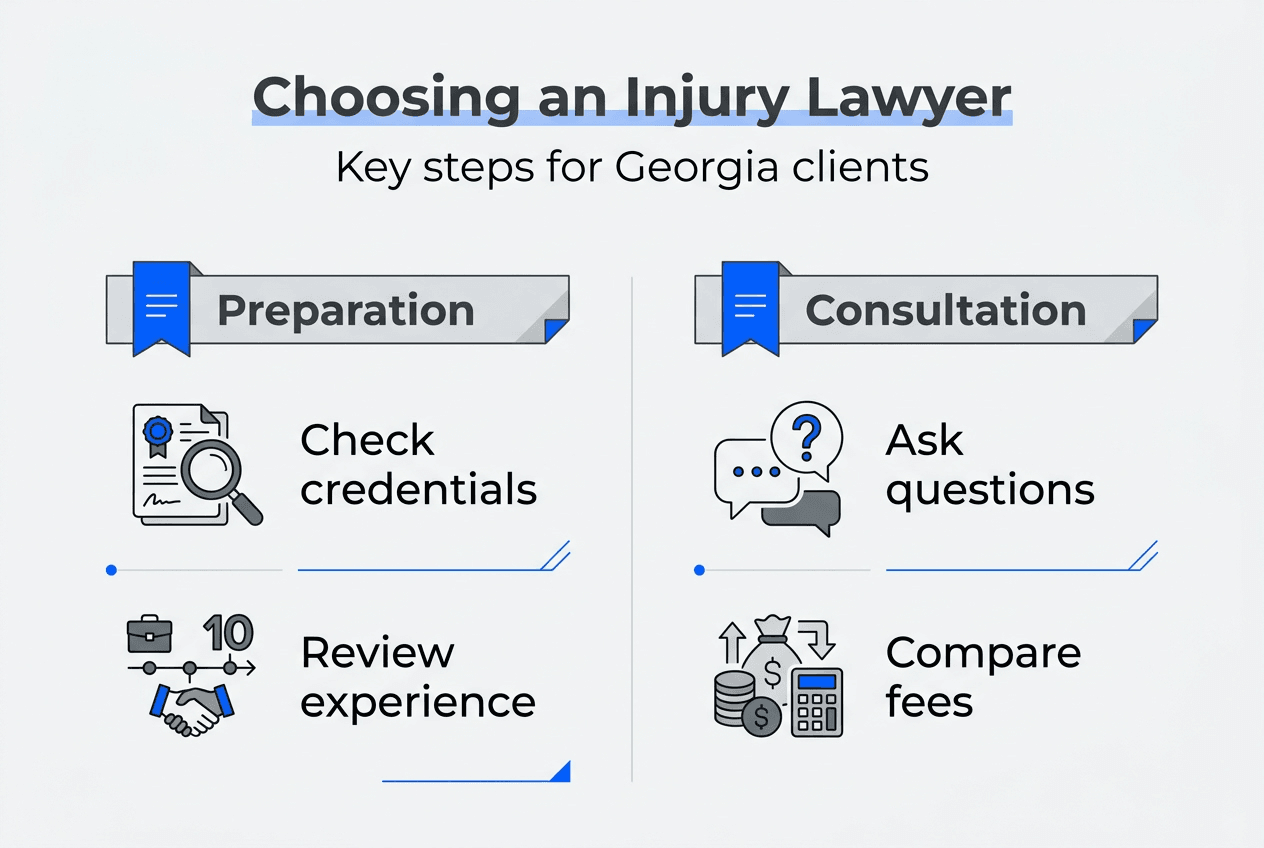
Effective preparation before hiring an injury lawyer saves you time, money, and frustration. Start by verifying credentials: check the Georgia State Bar website to confirm your prospective lawyer is licensed and has no disciplinary actions. Years of experience matter, but specialization matters more. A lawyer who has spent a decade handling Georgia auto accident claims brings deeper knowledge than a general practitioner who occasionally takes injury cases. Experience specific to Georgia personal injury claims improves claim success and client outcomes.

Research the lawyer’s track record by reviewing case results, settlement amounts, and client testimonials. Online reviews on Google, Avvo, and the Better Business Bureau provide insights into communication style, responsiveness, and professionalism. Look for patterns: do multiple clients praise the lawyer’s negotiation skills or complain about poor updates? This research helps you shortlist candidates who align with your needs.
| Credential Level | Typical Experience | Expected Outcome |
|---|---|---|
| Licensed generalist | 1-3 years mixed practice | Basic representation, lower settlements |
| Injury law specialist | 5-10 years Georgia claims | Strong negotiation, higher settlements |
| Senior injury litigator | 10+ years trial experience | Maximum compensation, complex case handling |
Prepare a list of questions for consultations. Ask about their caseload, how many cases like yours they’ve handled, their success rate at trial versus settlement, and how they communicate with clients. Clarify fee structures upfront: most injury lawyers work on contingency, meaning they take a percentage of your settlement only if you win. Understand what percentage they charge and whether you pay court costs if the case goes to trial.
Pro Tip: Request references from past clients with cases similar to yours. A confident, experienced lawyer will gladly connect you with satisfied clients who can vouch for their work.
For more detailed guidance on evaluating lawyers, explore this resource on hiring an injury lawyer.
Step-by-step guide to selecting and hiring your injury lawyer
Once you’ve done your research, follow this systematic process to choose and engage your injury lawyer:
- Schedule consultations with at least three qualified candidates. Most personal injury lawyers offer free initial consultations, so use this opportunity to assess their expertise and compatibility.
- Evaluate their case assessment. A skilled lawyer will review your facts, identify strengths and weaknesses, and provide a realistic estimate of potential compensation without overpromising.
- Compare communication styles. Pay attention to how clearly they explain legal concepts, how promptly they respond to your questions, and whether they make you feel heard and valued.
- Verify references and check online reviews. Contact past clients to ask about their experience, particularly regarding settlement outcomes and the lawyer’s availability during the case.
- Review the fee agreement carefully. Ensure you understand the contingency percentage, who pays court costs and expert fees, and what happens if you lose.
- Sign a written retainer agreement that outlines the scope of representation, fee structure, communication expectations, and termination terms.
Following a clear step-by-step hiring process ensures better alignment and case handling by your injury lawyer. This structured approach prevents hasty decisions driven by stress or aggressive marketing.
| Service Type | Scope | Best For |
|---|---|---|
| Full-service representation | Handles all aspects from investigation to trial | Complex cases, serious injuries, wrongful death |
| Limited-scope assistance | Advises on specific issues, client handles some tasks | Minor injuries, straightforward liability |
| Settlement-only focus | Negotiates settlement, avoids trial | Cases with clear liability, cooperative insurers |
Pro Tip: Clarify the contingency fee percentage and whether it increases if the case goes to trial. Some lawyers charge 33% for settlements and 40% for trial verdicts, so understanding this upfront prevents surprises.
To learn more about the overall process of pursuing a claim, review this guide on filing injury lawsuit process.
Common mistakes and how to avoid them when choosing an injury lawyer
Many accident victims make preventable errors when selecting legal representation, jeopardizing their claims and financial recovery. Recognizing these pitfalls helps you avoid costly missteps.
- Hiring too late: Waiting weeks or months after your accident to consult a lawyer allows evidence to disappear, witnesses to forget details, and insurance adjusters to pressure you into low settlements.
- Ignoring specialization: Choosing a lawyer who handles divorce, real estate, and injury cases means you get divided attention and less expertise than a dedicated injury specialist.
- Accepting unclear fee agreements: Signing a retainer without understanding the contingency percentage, cost responsibilities, or termination terms creates disputes later.
- Poor communication expectations: Failing to establish how often you’ll receive updates or who handles day-to-day questions leads to frustration and feeling ignored.
- Overlooking licensing verification: Hiring a lawyer without checking their bar status or disciplinary history risks representation by someone unqualified or ethically compromised.
- Choosing based solely on advertising: Flashy billboards and TV ads don’t guarantee competence. Research actual case results and client feedback instead.
One of the most damaging mistakes is attempting to handle your claim alone or with an unqualified lawyer. Selecting the wrong injury lawyer can delay your claim or reduce settlement amounts significantly. Insurance companies deploy experienced adjusters and lawyers to minimize payouts. Without equal legal firepower, you’re at a severe disadvantage.
“Accident victims who seek legal advice promptly after their injury receive settlement amounts 3.5 times higher on average than those who negotiate alone or delay hiring representation.”
Avoid these mistakes by following the preparation and selection steps outlined earlier. Verify credentials, ask detailed questions, and prioritize specialization and communication. Your choice of lawyer directly impacts your financial recovery and peace of mind during a stressful time.
For strategies on maximizing your claim value, read about maximizing claim with injury lawyer.
How the Jewkes Firm can help with your injury claim in Georgia
Now that you understand what to look for in an injury lawyer, consider how the Jewkes Firm’s expertise aligns with your needs. Our team specializes exclusively in Georgia personal injury law, handling auto accidents, medical negligence, and wrongful death cases across South Atlanta and surrounding counties. We’ve recovered millions for clients by combining deep legal knowledge with personalized attention to each case.

We offer free consultations to evaluate your claim, explain your legal options, and outline a strategy for maximum compensation. Our contingency fee structure means you pay nothing unless we win your case. Whether you’re navigating insurance negotiations or preparing for trial, our experienced attorneys guide you through every step. Contact us today to discuss how we can help you secure the justice and financial recovery you deserve. Learn more about choosing a personal injury attorney and hiring an injury lawyer on our blog.
FAQ
How do I verify an injury lawyer’s experience in Georgia?
Visit the Georgia State Bar website to confirm the lawyer is licensed and check for any disciplinary actions or complaints. Ask the lawyer directly about the number of Georgia personal injury cases they’ve handled, their settlement success rate, and whether they have trial experience. Request references from past clients with similar cases to yours.
What questions should I ask during the initial consultation?
Ask about their experience with cases like yours, their assessment of your claim’s value, and their strategy for proving liability and damages. Clarify their fee structure, including contingency percentages and who pays court costs. Discuss their communication process, how often you’ll receive updates, and who will handle your case day to day.
How are injury lawyer fees structured in Georgia?
Most personal injury lawyers in Georgia work on a contingency fee basis, meaning they receive a percentage of your settlement or verdict only if you win. Typical contingency fees range from 33% to 40%, often increasing if the case goes to trial. You generally pay no upfront fees, though you may be responsible for court costs and expert fees depending on your agreement.
How long does it take to resolve a personal injury claim in Georgia?
Timelines vary widely based on case complexity, injury severity, and whether the case settles or goes to trial. Simple cases with clear liability may settle in a few months, while complex claims involving serious injuries or disputed fault can take one to three years. Engaging a qualified lawyer promptly helps expedite the process by ensuring proper evidence collection and efficient negotiation.