
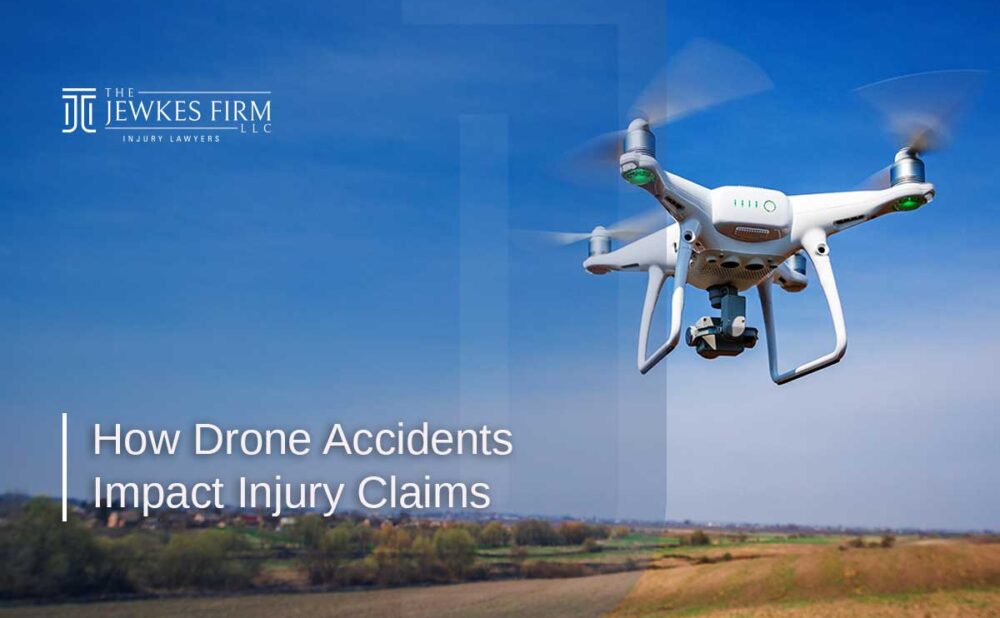
How Drone Accidents Impact Injury Claims in Georgia
In recent years, drones have become increasingly popular for both recreational and commercial use across Georgia. While these unmanned aerial vehicles offer many benefits—from aerial photography to delivery services—they also pose unique risks and challenges. When something goes wrong, though, a drone accident can can cause very real injuries: deep cuts from propellers, head and eye trauma, burns from battery fires, and vehicle wrecks when a driver swerves to avoid a falling device.
When a drone accident causes injury, navigating the personal injury claim process can be complex. From a legal standpoint, drone cases can look like a “simple” negligence claim at first—but they often involve unique layers of evidence, multiple potentially liable parties, and Federal Aviation Administration (FAA) rules that can strengthen (or complicate) a personal injury case. At The Jewkes Firm, LLC, we understand these complexities and are here to help you protect your rights.
Below is a practical, Georgia-focused guide on how a drone crash can affect a personal injury claim—and what to do if you’re hurt.
Injured In A Drone Crash? Contact Us For A Free Consultation
Injured In A Drone Crash?
Understanding Drone Accidents in Georgia
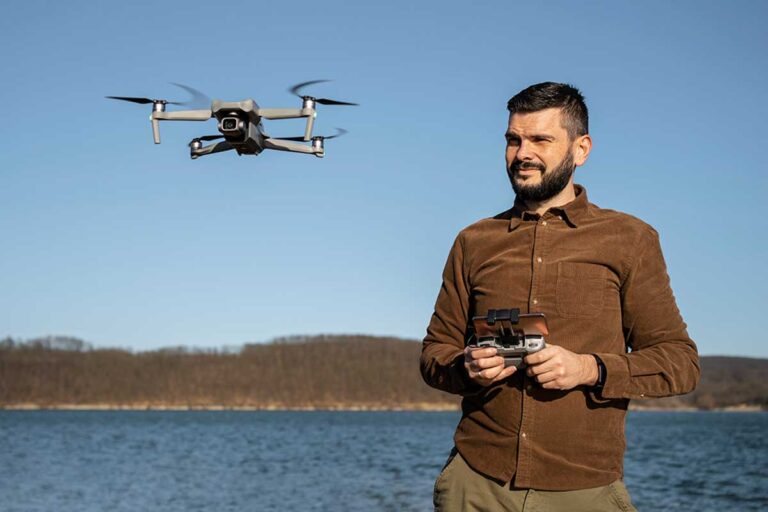
The National Transportation Safety Board (NTSB) tracks aviation incidents, including drone-related accidents, which have been on the rise as drone usage increases in both commercial and recreational sectors both in Georgia and nationwide. Drone accidents can take various forms, including crashes, collisions with people or vehicles, and property damage. The FAA provides insights into the broader implications of drone accidents, including fatalities and severe injuries. Common causes include:
- Mechanical failure
- Operator error or negligence
- Breach of FAA regulations
- Interference with manned aircraft or public spaces
When a drone accident results in injury, victims often wonder how these incidents affect their ability to file personal injury claims in Georgia.
Legal Framework Surrounding Drone Accidents
Drones fall under a unique intersection of federal, state, and local regulations. The FAA governs the airspace and drone operation rules, while Georgia has its own statutes concerning personal injury and liability. Key points include:
- FAA Regulations. Drone operators must follow FAA guidelines. Violations can serve as evidence of negligence.
- Georgia Tort Law. Personal injury claims in Georgia require proving that the defendant owed a duty of care, breached that duty, and caused harm as a result.
- Privacy and Trespassing Laws. Sometimes drones may violate privacy, which can complicate claims.
Why Drone Injury Claims are Different Than Typical Accident Cases
Experts have developed safety guidelines and recommendations to mitigate risks associated with drone operations, emphasizing the importance of responsible usage. However, most injury cases come down to who acted unreasonably and what insurance applies. Drone cases still follow those fundamentals, but they add three big twists:
You may need to identify the operator and the responsible business
Sometimes the person holding the controller isn’t the one with legal responsibility. Possible drone owners include:
- a photography company
- a real estate team
- a construction or roofing contractor
- an event vendor
- a government agency
- or another business using a remote pilot
That matters because commercial defendants often have higher insurance limits than an individual hobbyist.
Federal aviation rules can become key evidence
Drone operators—especially commercial operators—must follow FAA requirements (registration, operational limits, remote ID, and rules about operations over people/vehicles, depending on the flight). Typically, FAA standards show what “reasonable care” looks like in drone operation.
Georgia’s local-rule “patchwork” can affect the facts
Georgia law generally preempts local governments from regulating drone operations, with limited exceptions (older ordinances, enforcing FAA restrictions, and rules about launching/landing on public property). That can come up when a defendant argues they were “allowed” to fly in a certain area—or when a city/county park has a launch/land restriction.


Who Can be Held Liable for a Drone Accident in Georgia?
A major impact of drone accidents is that liability is often shared. Potentially responsible parties may include:
The drone operator (most common)
If the pilot flew carelessly—too close to people, beyond skill level, in unsafe conditions, or in violation of FAA operating rules—that can support a negligence claim.
The drone owner (even if they weren’t piloting)
Owners can be liable under several theories depending on the facts (for example, negligently entrusting the drone to an inexperienced operator).
An employer or business
If the operator was working (filming, surveying, inspecting, delivering), the business may be responsible under respondeat superior (employer liability for employees acting within the scope of work).
A manufacturer or seller (product liability)
If a defect caused the crash (battery fire, prop failure, software malfunction), your case may shift toward a product liability investigation—often requiring preservation of the drone for expert inspection.
Property owners / event organizers
If a venue allowed unsafe drone operations over crowds—or failed to enforce reasonable safety rules—there may be an additional layer of liability depending on the circumstances.
Need a Free Consultation? Need a Skilled Attorney?
Free Consultation
Call (770) 771-5130
If you’ve been injured, you need to hire the best legal care to assist you with your claim. Get a FREE consultation today!
How Drone Accidents Impact Personal Injury Claims
Determining Liability
Establishing who is liable in a drone accident can be challenging. The operator may be directly responsible, but other parties—such as manufacturers, employers, or property owners—might share liability under certain circumstances.
In many drone cases, FAA rules can strengthen your case (and help prove negligence). One of the most valuable pieces of evidence is whether the operator complied with FAA requirements such as:
- Registration rules (with limited exceptions for very light recreational drones)
- Remote ID compliance for drones that require registration (with FAA enforcement after the discretion period ended in 2024)
- Operational rules under Part 107 (commercial) including restrictions and conditions for operations over people and moving vehicles
- Recreational requirements like taking TRUST for recreational flying under the federal exception
Why this matters: if the operator violated safety rules designed to protect the public, that can be powerful proof that they failed to act reasonably.
Evidence Gathering
Drone accidents often involve technical evidence, including flight logs, video footage, maintenance records, and witness statements. Proper investigation is critical to building a strong claim. Drone cases can become evidence fights fast. Helpful evidence includes:
- Photos/video of the drone, injuries, and scene
- The drone itself (do not alter it—preserve it)
- Names/contact info of the operator and witnesses
- Any app logs, controller screenshots, or flight records
- Police/incident reports (when available)
- Medical records and timeline of symptoms
- Nearby surveillance footage (businesses/homes)
If the drone operator leaves, try to safely capture identifying details (vehicle tag, company name on shirts/vehicles, etc.).
Comparative Fault
Georgia follows a comparative fault system. Georgia comparative fault can reduce—or bar—recovery. If the injured party is found partially responsible (for example, by ignoring safety warnings), the court may reduce their compensation proportionally. If the court finds you 50% or more at fault, it can bar you from recovering damages; if you’re less than 50% at fault, your damages can be reduced by your percentage of fault.
In drone cases, defendants sometimes argue the injured person:
- walked into a posted flight area
- ignored warnings
- tried to grab the drone
- or created the hazard by approaching
That doesn’t automatically defeat a claim—but it’s one reason why witness statements, video, and scene documentation are so important.
Insurance Challenges
Insurance policies may not explicitly cover drone-related accidents, leading to disputes over coverage and claim payouts.
Another major “impact” of drone accidents in Georgia is that the insurance coverage isn’t always obvious. Depending on the situation, coverage may come from:
- Homeowners or renters insurance (sometimes, for hobby use—policy-specific)
- Commercial general liability (CGL) for businesses
- Professional drone/aviation liability policies (common for commercial operators)
- Auto insurance (if the drone caused or contributed to a vehicle crash)
- Umbrella policies (for higher limits)
A key practical point: insurers sometimes try to frame drone injuries as “unusual” and deny coverage quickly. Early investigation into who was operating the drone and why can make a big difference.
Severity and Type of Injuries
Drone accidents can cause a range of injuries—from minor cuts and bruises to broken bones and traumatic brain injuries. The severity of injuries influences the compensation amount.
Drone-related injuries often stem from:
- Loss of control (pilot error, signal loss, interference)
- Mechanical failure (battery/propeller defects, motor failure)
- Flying too close to people (parks, events, neighborhoods)
- Operation near traffic (roads, parking lots, driveways)
- Night flight or poor visibility without proper precautions
- Falling debris (drone parts, payload drops)
Even when a drone doesn’t strike someone directly, it can cause injuries indirectly—like a fall while trying to avoid it, or a car crash caused by distraction.
Deadlines —Statutes of Limitation Still Apply
Drone cases don’t get special timing rules just because the technology is new. Common Georgia deadlines include:
- Personal injury. Generally two years from when the claim accrues
- Property damage. Often four years (depending on the property claim type)
If a drone injury involves a government entity or a public-safety drone operation, additional notice requirements may apply—so it’s important to act quickly.
Injured In A Drone Crash? Contact Us For A Free Consultation
Injured In A Drone Crash?
What to Do if You’re Injured by a Drone in Georgia
If a drone injures you in an accident, it’s essential to:
- Get medical care immediately (head/eye injuries and lacerations can worsen).
- Document everything (photos, witnesses, where it happened, what the drone was doing).
- Identify the operator and purpose (recreational vs. business matters for insurance).
- Preserve the drone if it’s left behind (store it safely; don’t disassemble).
- Avoid recorded statements to insurers until you understand the full scope of the claim.
- Report the incident to law enforcement and the FAA if applicable.
- Contact an experienced personal injury attorney who understands drone laws.
Talk to a Georgia Personal Injury Lawyer About a Drone Accident
If a drone injured you in Georgia—whether it happened at a park, a public event, on the road, or near your home—don’t assume it’s a “small” case. Medical bills, missed work, and long-term symptoms can add up quickly, and the insurance issues can be deceptively complex.
Because drone cases can involve overlapping liability (pilot + business + manufacturer), legal counsel often focuses on:
- Identifying all potentially responsible parties
- Securing flight data and related records before they disappear
- Evaluating FAA compliance issues that may support negligence
- Finding the best insurance coverage path (or multiple paths)
- Documenting damages (medical costs, lost income, pain and suffering, future care)
The Jewkes Law Firm can evaluate who may be legally responsible, what coverage applies, and what your next steps should be.

GEORGIA DRONE ACCIDENT LAWYER NEAR ME
Why Trust The Jewkes Firm Injury Lawyers?
- Extensive experience in personal injury law throughout Georgia.
- Expertise in emerging technologies and drone-related legal issues.
- Tailored, compassionate representation designed to your needs.
- Commitment to holding negligent parties accountable.
Drone accident injuries can change your life in an instant. Don’t navigate the legal process alone. Reach out to The Jewkes Firm at (770) 771-5130 to schedule a free consultation. Let us help you understand your rights and get the justice you deserve.
Frequently Asked Questions
What should I do if I’m injured by a drone in Georgia?
Seek medical attention immediately, document the scene and your injuries, identify the drone operator if possible, and preserve any evidence. Speaking with a personal injury lawyer early can help protect your claim.
Who is responsible for a drone accident injury?
Liability may fall on the drone operator, the drone owner, a business using the drone, an employer, or even the manufacturer if a defect caused the crash. Many drone injury cases involve multiple responsible parties.
Can I sue if I don’t know who was flying the drone?
Possibly—but identification is critical. Sometimes, investigators can trace video, witnesses, the drone's markings/registration, or the business behind the flight.
What if a drone hit my car and caused a crash?
There may be overlapping claims (auto + liability). Causation and fault become key issues, especially if the defendant argues the driver overreacted.
Do FAA rules automatically create liability?
Not automatically, but violations can be strong evidence of unreasonable conduct, depending on the facts and the specific rule involved.
Are drone operators liable for injuries caused by their drones in Georgia?
Yes, drone operators can be held liable if their negligence or violation of FAA rules causes injury. Liability depends on proving duty of care and breach under Georgia law.
Are drone operators required to follow FAA rules?
Yes. Commercial drone operators must comply with FAA regulations, and recreational operators must follow federal safety requirements. Violations can be strong evidence of negligence in a personal injury claim.
Can I file a claim if the drone operator was flying recreationally?
Yes. Even recreational drone pilots can be held legally responsible if careless operation causes injury. Insurance coverage may come from homeowners or renters policies, depending on the situation.
How long do I have to file a drone injury claim in Georgia?
Personal injury claimants in Georgia must file most claims within two years of the accident. Claims involving government entities may have shorter notice deadlines.
Do drone accidents qualify as personal injury cases?
Yes. Injuries caused by drones—such as lacerations, head trauma, eye injuries, burns, or accident-related injuries—can support a personal injury claim under Georgia law.
Can I claim compensation if a drone crashes onto my property and causes injury?
Absolutely. Injuries or property damage caused by drone accidents may qualify for personal injury or property damage claims.
How does Georgia’s comparative fault rule affect drone injury claims?
Under Georgia's comparative fault system, the court may reduce your compensation proportionally if you are partly responsible for the accident.
What evidence is important in a drone accident personal injury claim?
Flight data, videos, photos, witness statements, and maintenance records can all play a crucial role in supporting your claim.
Should I report a drone accident to authorities?
Yes, reporting to local law enforcement and, if applicable, the FAA helps document the incident and strengthens your claim.