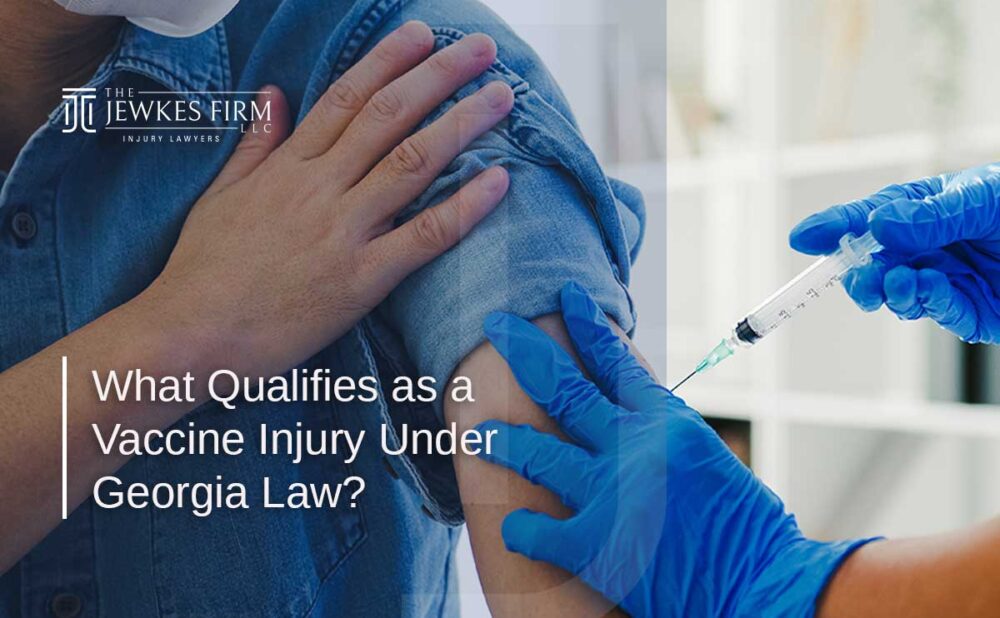
What Qualifies as a Vaccine Injury Under Georgia Law?
As vaccines continue to play a crucial role in preventing infectious diseases, questions about vaccine-related injuries remain a significant concern for many Georgians. Understanding what qualifies as a vaccine injury under Georgia law is essential if you or a loved one has experienced adverse effects following vaccination.
In Georgia, the legal framework for vaccine injury claims differs significantly from most other personal injury matters. Unlike typical accident or medical malpractice cases governed by Georgia state law, injuries related to vaccines are generally not pursued in Georgia state courts under ordinary personal injury statutes. Instead, a federal system created specifically for that purpose resolves most vaccine injury claims.
At The Jewkes Firm, Attorney Jordan Jewkes helps clients navigate the complex landscape of vaccine injury claims. This article provides a comprehensive overview of vaccine injury definitions, legal standards, and the protections available under Georgia law.
Suffered A Vaccine Injury? Contact Us For A Free Consultation
Suffered A Vaccine Injury?
Federal Law Governs Vaccine Injury Claims — Not Georgia Tort Law
National Vaccine Injury Compensation Program (VICP)
Vaccine injuries in Georgia—and throughout the United States—are primarily handled through the National Vaccine Injury Compensation Program (VICP). This is a federal “no-fault” program established by the National Childhood Vaccine Injury Act of 1986 as an alternative to traditional civil lawsuits against vaccine manufacturers and administrators. Vaccines covered include common immunizations such as MMR, DTaP, flu shots, and more. Under VICP:
- Individuals injured by a covered vaccine can file a petition for compensation with the United States Court of Federal Claims (Vaccine Court) in Washington, D.C., not state courts. This federally administered program generally preempts most state-level vaccine injury lawsuits.
- The process involves a special master rather than a traditional jury trial.
- A federal trust fund (financed by an excise tax on vaccines) pays compensation, not vaccine makers directly.
- Georgia’s state personal injury statutes generally do not apply to vaccine injuries. Instead, claims must comply with the VICP’s procedures and deadlines.
Limited Civil Actions After VICP
In rare situations, a claimant may pursue a civil lawsuit after or instead of a VICP claim—but only if certain conditions are met. For example, after receiving a decision from the Vaccine Court, a claimant may choose to reject that decision and pursue a civil action under state law or federal law, but this is highly specialized and subject to strict legal limits under federal law.
What Is a Vaccine Injury?
A vaccine injury refers to a harmful adverse reaction or negative health outcome after getting a vaccine. These injuries can range from mild, temporary symptoms to severe, long-lasting medical conditions.
Under both federal and Georgia law, a vaccine injury must be directly linked to the administration of a vaccine, with medical evidence supporting this connection.
Under the VICP, a vaccine injury is any health condition that meets the program’s criteria and results from the administration of a vaccine covered by the federal law. Here are key concepts:
Covered Vaccination
The VICP must cover the vaccine associated with the injury. This generally includes most vaccines routinely recommended in childhood or adulthood in the United States—such as DTaP, MMR, hepatitis vaccines, influenza, HPV, and others. The Department of Health and Human Services maintains the complete, up-to-date list.
Injury or Condition
You must prove the vaccine caused the qualifying injury. This can occur in two main ways:
- Listed Injuries (Presumed Causation). The VICP maintains a Vaccine Injury Table that lists specific injuries and the time frames in which they must occur after vaccination in order for the program to presume the vaccine caused them. If the injury appears within the listed timeframe and meets the criteria, the VICP presumes causation unless they identify another cause.
- Off-Table Injuries. If an injury is not on the Vaccine Injury Table, a claimant can still recover compensation, but they must provide evidence showing that the vaccine more likely than not caused the injury. This typically requires medical and scientific evidence establishing a plausible causal connection.
Severity and Timing
To qualify:
- The injury must produce significant health consequences—not simply mild, expected side effects (like brief soreness or fever).
- Specific time limits apply for filing a petition, generally within three years from the first symptom of the injury, and related requirements if the injury results in death.
Common Vaccine Injuries Recognized Under the Law
While officials update the specific Vaccine Injury Table periodically, some examples of serious conditions that can qualify include:
- Severe allergic reactions (anaphylaxis) occurring within hours of vaccination
- Neurological conditions such as Guillain‑Barré Syndrome (GBS), a rare disorder that can cause paralysis
- Brain dysfunction (encephalopathy) linked to vaccination
- Acute neurologic events (such as seizures or convulsions) triggered by vaccine response
- Shoulder Injury Related to Vaccine Administration (SIRVA) when improper injection technique causes prolonged shoulder pain and disability
These injuries must meet the VICP’s criteria for timing and severity to be eligible.
What to Do If You Suspect a Vaccine Injury in Georgia
If you or a loved one has suffered an adverse reaction after receiving a vaccine, it is critical to:
- Seek immediate medical attention.
- Document all symptoms, treatments, and medical diagnoses.
- Report the injury to the Vaccine Adverse Event Reporting System (VAERS).
- Consult with an experienced vaccine injury attorney.
Reporting vs. Compensation — VAERS
It is important to distinguish between an adverse event report and a vaccine injury claim:
- VAERS (Vaccine Adverse Event Reporting System) is a federal reporting system where anyone (doctors, patients, caregivers) can report an adverse event occurring after vaccination. The existence of a VAERS report does not prove causation or automatically qualify someone for compensation.
- VAERS reports can support a claim but are not the same as filing a petition for financial compensation through VICP.
Need a Free Consultation? Need a Skilled Attorney?
Free Consultation
Call (770) 771-5130
If you’ve been injured, you need to hire the best legal care to assist you with your claim. Get a FREE consultation today!
Why Georgia Law Doesn’t Normally Provide a Direct Vaccine Injury Claim
State personal injury and product liability laws in Georgia typically govern injuries caused by negligence or defective products. However, the National Childhood Vaccine Injury Act provides immunity to vaccine manufacturers and administrators in most cases. This means that vaccine design or side effect claims are generally not actionable in state court if the vaccine is one covered by the federal program or accompanied by proper directions and warnings. This federal law preempts many state‑law product liability claims. As a result, Georgia courts rarely serve as the first forum for vaccine injury claims.
Vaccine Injury Under Georgia Law
Georgia incorporates federal standards regarding vaccine injuries, but also maintains specific state laws affecting liability and compensation.
State Restrictions on Vaccine Injury Lawsuits
Georgia law generally limits vaccine injury claims through honoring federal program exclusivity. This means claimants must file most vaccine injury claims through the federal VICP rather than state court.
Exceptions and State Claims
While the VICP covers most vaccines, some vaccines or claims may not fall under the federal program. In rare cases, if a vaccine injury claim can bypass federal exclusivity (for example, in cases of willful misconduct by a vaccine manufacturer), Georgia law permits civil lawsuits. However, these cases are extraordinarily difficult to prove.
Defining a Vaccine Injury
Under Georgia law and VICP standards, a vaccine injury occurs when:
- The individual experiences a serious or life-threatening adverse reaction after vaccination, such as severe allergic reaction (anaphylaxis), Guillain-Barré syndrome, or encephalopathy.
- The federal Vaccine Injury Table lists the injury and outlines recognized adverse events and their timeframes.
- Medical evidence shows a probable causal link between the vaccine and injury.
Compensation Available Through VICP
If a petition is successful under VICP, compensation can include:
- Related medical and rehab costs
- Lost wages
- Pain and suffering (subject to statutory caps)
- Death benefits for survivors in fatal cases
- Attorneys’ fees and costs (often paid by the program directly)
Important Deadlines and Legal Requirements
Deadlines in vaccine injury cases are strict and unforgiving:
- Generally, you must file a petition within three years from the date the first symptom of the vaccine injury appeared (and within two years of death if the injury resulted in death).
- Legal representation by attorneys experienced in federal vaccine cases is highly recommended because the procedural and evidentiary requirements differ dramatically from standard personal injury practice.

GEORGIA VACCINE INJURY LAWYER NEAR ME
Trust The Jewkes Firm — Your Ally in Vaccine Injury Claims
While vaccines remain safe and effective for the vast majority, vaccine injuries can and do occur. Under Georgia law, ordinary state personal injury statutes do not govern vaccine injuries. Instead, Georgia residents must turn to a federal compensation system (VICP) designed expressly for vaccine‑related injuries. Success in these cases hinges on proving that a covered vaccine caused a significant injury within specific timeframes and that the Vaccine Injury Table recognizes the injury or evidence demonstrates causation.
Navigating vaccine injury claims is complex, especially given the interplay between federal and state laws. We offer personalized legal guidance to:
- Evaluate your potential claim based on current legal standards.
- Assist in filing a Petition with the U.S. Court of Federal Claims through the VICP.
- Explore any possible state-level remedies if applicable.
- Advocate for fair compensation for medical expenses, pain and suffering, and other damages.
Recognizing what qualifies as a vaccine injury and understanding your legal options are crucial first steps. If you or a loved one is struggling after a vaccine-related injury, don’t hesitate to contact The Jewkes Firm Injury Lawyers at (770) 771-5130 to schedule a free consultation.
Frequently Asked Questions
What qualifies as a vaccine injury under Georgia law?
A vaccine injury under Georgia law generally refers to serious adverse health effects directly caused by a vaccine, such as severe allergic reactions, neurological disorders, or other injuries recognized by the federal Vaccine Injury Table.
How do I file a vaccine injury claim in Georgia?
Claimants file vaccine injury claims through the federal VICP program, not Georgia state courts. To file, you must submit a petition to the United States Court of Federal Claims, also known as the Vaccine Court. You must file the petition within three years of the first symptom of the injury.
Can I sue a vaccine manufacturer in Georgia for an injury?
Generally, no. The National Childhood Vaccine Injury Act protects vaccine manufacturers from lawsuits, except in rare cases. The VICP handles most vaccine injury claims and provides compensation for vaccine-related injuries.
What kind of compensation can I receive for a vaccine injury?
Compensation through the VICP can include medical expenses, lost wages, pain and suffering, and death benefits for surviving family members. The amount varies depending on the severity of the injury and other factors.
What is the deadline for filing a vaccine injury claim in Georgia?
You must file a petition within three years from the onset of symptoms from the vaccine injury. If the injury leads to death, the petitioner must file the petition within two years of the death.
What vaccines fall under the federal Vaccine Injury Compensation Program?
The VICP covers a range of vaccines including MMR, flu vaccines, DTaP, and others listed on the official Vaccine Injury Table.
How do I report a vaccine injury in Georgia?
You should report any adverse vaccine reactions to the Vaccine Adverse Event Reporting System (VAERS) and consult a qualified attorney to understand your legal options.