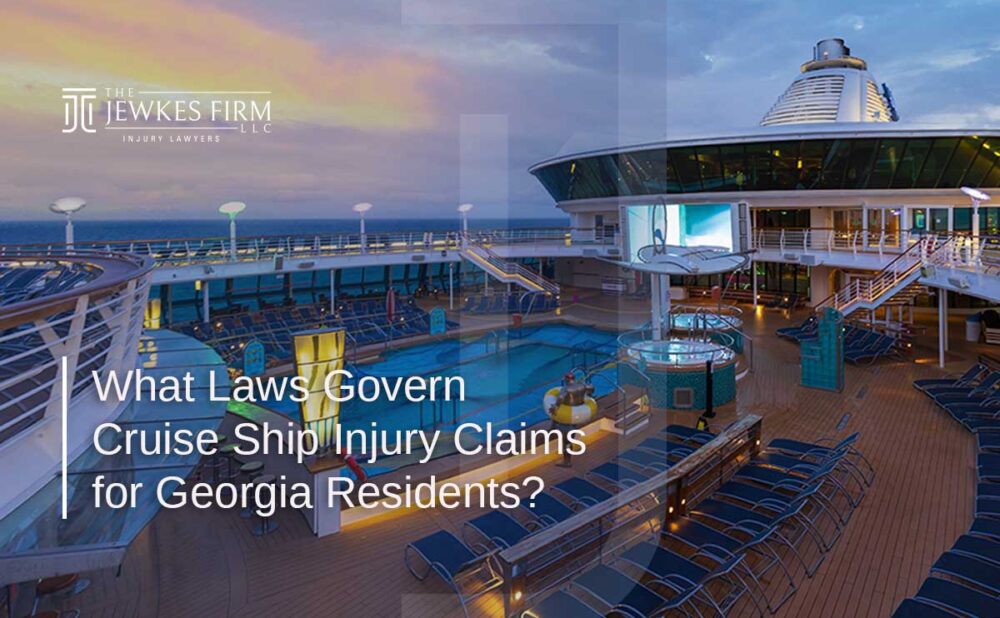
What Laws Govern Cruise Ship Injury Claims for Georgia Residents?
Cruise vacations are meant to be relaxing and enjoyable — but when negligence leads to serious injury, the legal landscape that follows can be complex and intimidating, especially for Georgia residents. Ordinary state law does not govern cruise ship injury claims. Instead, they fall within a specialized web of federal maritime rules, international treaties, and contractual provisions that differ significantly from land‑based personal injury law.
At The Jewkes Firm, we help injured Georgians understand these laws and pursue the compensation they deserve when cruise ship negligence impacts their lives. In this article, we break down the key laws and legal principles that govern cruise ship injury claims involving Georgia residents.
Injured On A Cruise Ship? Contact Us For A Free Consultation
Injured On A Cruise Ship?
Jurisdiction and Venue — Where Can You File Your Claim?
Unlike typical car or slip-and-fall accidents on land, cruise ship injury claims often involve complex jurisdictional issues due to the international nature of cruise travel.
- Port of Injury. If your injury occurred in a U.S. port such as Savannah or another Georgia port, state laws may apply initially.
- Flag State Law. Most cruise ships register (or “flag”) in overseas nations like the Bahamas, Liberia, or Panama. The law of the country where the ship is registered often governs legal claims.
- Federal Courts. Many cruise lines include clauses in their passenger tickets that require passengers to file lawsuits in specific federal courts, often in Florida. This means Georgia residents may need to file suit in a federal court outside of Georgia.
- Forum Selection Clauses. Cruise lines typically include “forum selection” clauses in the passenger contract that dictate where passengers can file a lawsuit.
Laws Governing Cruise Ship Injury Claims
Because cruise ship cases involve multiple layers of law, claims are generally governed by a combination of:
- Federal Maritime Law. This body of law governs navigation and commerce on navigable waters and applies to injuries occurring on cruise ships. Maritime law includes principles from historical admiralty law and federal statutes.
- Jones Act (Merchant Marine Act of 1920). Applies if the injured party is a crew member. It allows seamen to sue their employers for negligence.
- General Maritime Law. This covers injuries to passengers. The cruise line owes passengers a “duty of reasonable care,” meaning the company must maintain safe conditions aboard the ship.
- State Law Claims. Depending on the facts, some state laws may apply, particularly when the cruise ship docks in Georgia or the injury began in Georgia’s territorial waters.
Governing Legal Framework — Admiralty and Maritime Law
Cruise ship injury claims are primarily governed by admiralty and maritime law — a body of law developed through federal statutes, international conventions, and court decisions that applies to incidents on navigable waters. This body of law:
- Establishes legal duties owed by cruise lines to passengers and crew.
- Defines when and where to file lawsuits.
- Sets special procedural and timeline rules that differ from state tort law.
Under maritime law, cruise lines owe passengers a duty of reasonable care — a standard that obligates them to maintain safe conditions on the ship and aboard excursions they arrange.
Need a Free Consultation? Need a Skilled Attorney?
Free Consultation
Call (770) 771-5130
If you’ve been injured, you need to hire the best legal care to assist you with your claim. Get a FREE consultation today!
Key Cruise Ship Injury Statutes and Doctrines
General Maritime Law (Admiralty Law)
The foundation for cruise ship injury cases, general maritime law governs negligence, unseaworthiness, and other injury claims that occur on navigable waters including:
- Slip and fall injuries aboard decks.
- Injuries from poorly maintained equipment.
- Medical negligence on board.
General maritime law creates a consistent legal framework that applies nationwide, irrespective of a passenger’s home state — including Georgia.
Death on the High Seas Act (DOHSA)
If a cruise ship incident causes death more than three nautical miles offshore, the Death on the High Seas Act (DOHSA) applies. Under DOHSA:
- Only pecuniary (financial) losses are compensable.
- Damages like loss of companionship or pain and suffering are generally not recoverable for offshore deaths.
This statute can significantly affect recovery for families of Georgia residents who suffer fatal injuries on cruise trips.
The Jones Act (Primarily for Crew, Not Passengers)
The Jones Act is a federal law protecting maritime workers (seamen) injured at sea. It allows injured workers to file negligence lawsuits against employers for:
- Medical expenses
- Lost wages
- Pain and suffering
While the Jones Act generally doesn’t apply to cruise passengers, it remains vital to differentiate crew claims from passenger claims — especially in mixed‑party incidents or where a Georgia resident was working aboard the ship.
Contractual Terms — Forum Selection and Choice of Law
When you book a cruise, your ticket contract usually includes clauses that significantly impact your legal rights:
- Forum selection clauses dictate where you must file a lawsuit — most often in specific courts like federal court in Florida, regardless of where the injury occurred or where you live.
- Choice of law provisions may require a particular jurisdiction’s laws to govern disputes.
These provisions are enforceable and can shape your case from the earliest stages.
Key Deadlines and Notice Requirements
- Statute of Limitations. Under federal maritime law, the statute of limitations for personal injury claims is generally 3 years from the date of injury. However, this can vary depending on specific circumstances or applicable state law.
- Notice of Claim. Many cruise contracts require passengers to notify the cruise line of their injury within a short time frame—sometimes as little as 30 days.
- Passenger Ticket Contract. Your cruise ticket is a binding contract that may limit remedies and contains important legal provisions. Retaining experienced counsel to review this document is critical.
Jurisdiction — Federal vs State Court
Cruise ship injury cases are usually filed in federal court under admiralty jurisdiction, regardless of a Georgia resident’s home state. Federal courts handle maritime law claims because:
- Maritime law is federal in nature.
- Cruise lines use forum selection clauses to centralize cases in specific venues.
For Georgia residents, this often means litigation outside of Georgia — making experienced maritime counsel essential.
Shore Excursion Injuries and Foreign Law
Many injuries don’t happen aboard the ship but during shore excursions — which complicates the governing law:
- That country’s laws may govern accidents on land in a foreign country.
- However, U.S. maritime principles may still hold cruise lines liable if the cruise company arranged the excursion.
This is a nuanced area requiring detailed analysis of multiple legal systems.

GEORGIA CRUISE SHIP INJURY LAWYER NEAR ME
Why Georgia Passengers Need a Maritime Injury Lawyer
Navigating cruise ship injury claims involves overcoming complex maritime laws, jurisdictional hurdles, and contractual restrictions. Georgia residents face additional challenges such as:
- Potentially having to file claims in distant courts
- Understanding the interplay between federal maritime rules and Georgia state law
- Dealing with powerful cruise lines and their insurers
At The Jewkes Firm, we guide injured Georgia passengers through the maze of maritime and admiralty law to pursue maximum compensation.
Common Types of Cruise Ship Injury Claims
Georgia residents injured on cruise ships may suffer injuries from:
- Slip and falls due to wet or poorly maintained decks
- Food poisoning or illnesses caused by unsanitary conditions
- Accidents during excursions or onboard activities
- Injuries from cruise ship personnel negligence
- Medical negligence aboard the ship
- Faulty equipment or ship maintenance.
- Inadequate security, assaults, or incidents involving other passengers or crew
Each type of claim requires specific evidence and legal strategy under maritime law.
What Should You Do If Injured on a Cruise Ship?
- Seek Medical Attention Immediately. Your health is the top priority. Obtain medical documentation of your injury.
- Report the Injury to the Cruise Line. Notify the ship’s medical personnel and management.
- Preserve Evidence. Take photos, gather witness information, and keep records of all related documents.
- Contact The Jewkes Firm Injury Lawyers. Before speaking to cruise line representatives or signing any documents, consult with an attorney experienced in cruise injury claims.
A complex blend of federal maritime law, international conventions, and binding contractual terms governs cruise ship injury claims for Georgia residents. Unlike routine personal injury cases, these claims demand specialized legal knowledge and prompt action.
If you or a loved one has suffered an injury on a cruise, time is of the essence. Contact The Jewkes Firm ay (770) 771-5130 to protect your legal rights and navigate these challenging legal waters with confidence.
Frequently Asked Questions
What laws apply to cruise ship injury claims involving Georgia residents?
Federal maritime law, including general maritime principles, the Jones Act for crew members, and the laws of the ship's registration country primarily govern cruise ship injury claims involving Georgia residents. State law and federal courts may also play a role depending on the case.
What is the deadline to file a cruise ship injury claim?
The statute of limitations under federal maritime law is generally 3 years from the date of injury. Some cruise contracts also require timely notice, often within 30 days. It’s important to consult an attorney immediately.
Can I file a cruise ship injury claim in Georgia courts?
Plaintiffs file most cruise ship injury claims in federal court, not Georgia state courts, due to the nature of maritime law. However, the forum selection clause in your cruise ticket may specify a different venue, such as federal courts in Florida.
How do shore excursion injuries impact my cruise ship injury claim?
The laws of the country where the injury occurred may govern injuries that occur during shore excursions. However, courts can still hold cruise lines liable if the cruise company organized the excursion. This can complicate the legal process and requires a thorough legal analysis.
What types of damages can I recover from a cruise ship injury claim?
Damages in cruise ship injury claims may include medical expenses, lost wages, pain and suffering, and in some cases, loss of companionship or punitive damages. However, maritime laws like the Death on the High Seas Act may limit certain claims, such as wrongful death damages.
What injuries are common on cruise ships?
Common injuries include slip and falls, food poisoning, accidents during excursions, medical malpractice aboard ship, and injuries caused by negligent crew members.
Why should I hire an attorney for a cruise ship injury claim?
Cruise ship injury claims involve complicated maritime law, jurisdictional issues, and contractual restrictions. An experienced attorney like Jordan Jewkes can help navigate these complexities to protect your rights and pursue maximum compensation.