
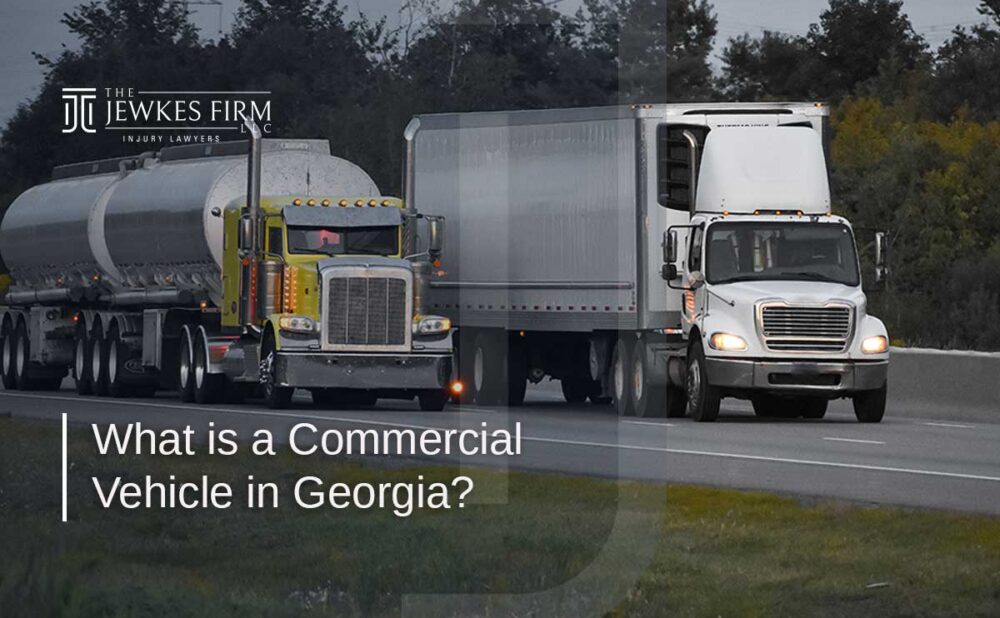
What is a Commercial Vehicle in Georgia?
When you or a loved one has been injured in a crash involving a large truck, bus, delivery van, or other heavy vehicle, understanding what legally qualifies as a “commercial vehicle” is crucial. This distinction can affect liability, insurance claims, and the legal process that follows. At The Jewkes Firm, we know Georgia’s commercial vehicle laws inside and out, and we’re here to explain them clearly so you know your rights. Below is a practical breakdown of what Georgia law considers a commercial vehicle, why it matters, and how it can affect your injury claim.
Federal vs Georgia Definitions — They Both Matter
Georgia, like many other states, defines a “commercial vehicle” based on federal rules set by the Federal Motor Carrier Safety Administration (FMCSA/49 C.F.R.) as well as Georgia state statutes and administrative rules.
In the state of Georgia, a commercial vehicle is generally defined based on its use, size, and purpose. The Georgia Department of Revenue and the Georgia Department of Public Safety provide specific criteria that help classify a vehicle as commercial.
Injured By A Commercial Vehicle? Contact Us For A Free Consultation
Injured By A Commercial Vehicle?
Defining a Commercial Vehicle in Georgia
According to Georgia law and the Federal Motor Carrier Safety Regulations, a commercial vehicle is any self‑propelled or towed motor vehicle used on public highways for transporting property or passengers. A commercial vehicle must meet one or more of the following criteria:
Purpose of the Vehicle
A commercial vehicle is primarily used for business purposes—including transporting goods, passengers, or equipment. This includes vehicles owned by businesses, government agencies, or individuals engaging in commercial activities.
Weight and Size
Numerous commercial vehicle regulations depend on the vehicle’s weight, often measured as the Gross Vehicle Weight Rating (GVWR). Under Georgia law, vehicles with a GVWR of 10,001 pounds or more are typically classified as commercial vehicles. This includes large trucks, delivery vans, and certain heavy-duty pickups.
Note: GVWR is a manufacturer‑rated maximum, not the actual weight on the scale.
Passenger Capacity
Vehicles that carry passengers for hire, such as taxis, limousines, shuttle buses, or vans designed to seat more than 15 passengers (including the driver), are also classified as commercial vehicles.
Hazardous Materials Transport
Hazardous materials are carried by the vehicle in quantities that require proper placards under federal hazardous materials rules.
Registration and Licensing
Commercial vehicles in Georgia often require a Commercial Driver’s License (CDL) for operation if they exceed certain size, weight, or passenger thresholds. These vehicles must be registered under commercial vehicle classifications, with appropriate permitting and insurance.
Some Georgia statutes expand or mirror these rules, including definitions tied to licensing requirements and vehicle registration.
Examples of Commercial Vehicles in Georgia
Under Georgia law, a wide range of vehicles can legally be “commercial” including — but not limited to:
- Semi‑trucks and tractor‑trailers (e.g., 18‑wheelers)
- Box trucks and delivery vans
- Large passenger buses and shuttle vans carrying 16 or more people
- Tow trucks and service vehicles used for business
- Vehicles carrying hazardous materials
- Heavy construction vehicles (dump trucks, cement mixers)
- Vehicles registered under the International Registration Plan (IRP) or engaged in interstate commerce
- Company cars or trucks used primarily for business purposes
Even vehicles that don’t look like typical commercial rigs — such as large pickup trucks used in a business, camper haulers, or trailers hauling expensive goods — may be treated as commercial based on GVWR and use.
Why the Commercial Vehicle Classification Matters in Injury Cases
The legal designation of a vehicle as “commercial” has several practical consequences in a personal injury case:
- Higher Insurance Coverage Requirements. Commercial vehicles must carry higher liability coverage than private passenger cars — often significantly more — because they present greater risk due to size, weight, and cargo carried.
- Federal and State Safety Regulations. Commercial vehicle operators and carriers must comply with a host of safety statutes and regulations (e.g., driver hours, maintenance logs, inspections). Violations of these duties can be powerful evidence in a personal injury case.
- Commercial Driver’s License (CDL) Requirements. Drivers of many commercial vehicles require a CDL with appropriate endorsements. A driver lacking a required license may be negligent per se or violate statutory duties.
- Liability and Discovery. Trucking companies and commercial carriers have extensive records — driver logs, maintenance records, cargo manifests — that can significantly strengthen a victim’s claim.
- Claims Process. Insurance claims involving commercial vehicles may involve complex negotiations with insurance companies, and sometimes multiple parties such as employer companies or leasing agencies.
- Increased Damages. Due to the nature of commercial operations, accidents often result in serious injuries or fatalities, potentially leading to higher compensation claims.
What This Means for Your Injury Claim
If you were hurt in a crash involving what might be a commercial vehicle. It’s essential to confirm whether the vehicle meets the legal definition of a commercial vehicle under Georgia and federal law. If it is commercial, your attorney can often:
- Pursue claims under higher insurance limits
- Demand detailed safety and compliance records
- Explore negligent hiring, training, or maintenance claims
- Engage expert accident reconstructionists
Every case is different — but identifying the vehicle classification early makes a big difference in strategy and compensation.

GEORGIA COMMERCIAL VEHICLE ACCIDENT LAWYER NEAR ME
At The Jewkes Law Firm, We Fight for Injury Victims Hurt by Commercial Vehicles
Commercial vehicle accidents often involve catastrophic injuries and complicated legal issues. From determining whether a vehicle is legally “commercial” to holding large carriers accountable, we bring experience, resources, and personal attention to every case. Our team will:
- Investigate the accident thoroughly, including vehicle classification and compliance with commercial regulations.
- Deal with insurance companies and commercial carriers on your behalf.
- Pursue the maximum compensation for medical bills, lost wages, pain and suffering, and more.
- Provide compassionate support throughout your legal journey.
If you’ve been injured in a collision involving a truck, bus, delivery van, or other commercial vehicle in Georgia, don’t navigate the legal system alone — contact The Jewkes Firm Injury Lawyers today at (770) 771-5130 for a free, no-obligation consultation. Attorney Jordan Jewkes will fight to protect your rights and obtain the justice you deserve.
Frequently Asked Questions
What qualifies as a commercial vehicle in Georgia?
In Georgia, a commercial vehicle is any vehicle used for business purposes that meets certain weight or capacity requirements. This includes trucks, buses, delivery vans, and other vehicles designed to transport goods or passengers for compensation. Vehicles with a Gross Vehicle Weight Rating (GVWR) of 10,001 pounds or more are typically considered commercial.
How does being a commercial vehicle affect my injury claim?
If you’ve been involved in an accident with a commercial vehicle, it can significantly impact your claim. Commercial vehicles are subject to higher insurance limits, more stringent safety regulations, and detailed records that can support your case. These factors can lead to a higher potential compensation.
What safety regulations apply to commercial vehicles in Georgia?
Commercial vehicles must adhere to strict federal and state safety regulations, including driver hours, vehicle inspections, and maintenance. Violations of these regulations can strengthen your injury claim, as they may indicate negligence or unsafe driving.
Do commercial vehicles require different licenses to operate?
Yes, many commercial vehicles require operators to have a Commercial Driver’s License (CDL) based on the vehicle’s size, weight, and passenger capacity.
Can I sue the company if a commercial vehicle causes an accident?
Yes. Victims injured in accidents with commercial vehicles can often pursue personal injury claims against the driver and the company, especially if negligence caused the collision.
How can The Jewkes Firm help with commercial vehicle accident cases?
Attorney Jordan Jewkes has experience with commercial vehicle accident laws and insurance claims and will work to ensure victims receive fair compensation for their injuries and losses.