

Too many accident victims in South Atlanta hesitate to file injury claims, worried about complexity or believing insurance will automatically cover costs. Without filing, you risk paying tens of thousands in medical bills out of pocket, losing wages permanently, and sacrificing your legal right to compensation. This guide explains why filing a personal injury claim protects your finances, secures maximum compensation, and connects you to the legal support you need to recover fully.
Table of Contents
- Understanding Why Filing An Injury Claim Matters
- Financial Benefits And Protections Offered By Injury Claims
- Legal Procedural Steps And Importance Of Timely Filing In Georgia
- Common Misconceptions About Personal Injury Claims
- Role Of Evidence And Legal Representation In Maximizing Claims
- Consequences Of Not Filing An Injury Claim
- How Jewkes Firm Can Help Accident Victims In South Atlanta
- Frequently Asked Questions
Key takeaways
| Point | Details |
|---|---|
| Filing secures compensation | Claims cover medical bills, lost wages, pain and suffering damages. |
| Georgia deadlines are strict | You have two years from accident date to file or lose rights permanently. |
| Myths cost you financially | Minor injuries and self-representation often lead to unpaid bills and lower settlements. |
| Evidence and lawyers maximize recovery | Proper documentation and legal help increase compensation by 30-40%. |
| Not filing creates hardship | Victims bear full costs without claims, risking bankruptcy and debt. |
Understanding why filing an injury claim matters
Filing a personal injury claim is the only way to trigger the legal process that forces insurers and at-fault parties to compensate you for injuries. Without filing claims, accident victims often face tens of thousands in unpaid medical bills and lost wages. Your claim formally documents the accident, your injuries, and the damages you suffered, creating a legal record that protects your rights.
Accident-related expenses pile up fast. Emergency room visits, surgeries, physical therapy, prescription medications, and time off work create financial strain most families cannot absorb. If you don’t file, you’re stuck paying these costs yourself, even when someone else caused the crash. Filing initiates insurer investigations, liability assessments, and negotiation processes designed to reimburse you.
Early filing preserves critical evidence. Witness memories fade, accident scenes change, and medical records become harder to obtain as time passes. Filing personal injury claims in Georgia promptly ensures that investigators can document skid marks, interview witnesses, and collect police reports while details remain fresh. Delaying weakens your case and reduces your compensation chances.
Pro Tip: Contact a personal injury attorney within 48 hours of your accident to ensure evidence collection starts immediately and you avoid missing critical deadlines.
- Claims establish legal accountability for at-fault parties.
- Filing triggers insurance company duty to investigate and pay valid claims.
- Early action preserves evidence quality and witness availability.
- Claims protect you from debt collectors pursuing medical bills.
- Legal claims often resolve faster than self-managed insurance disputes.
Financial benefits and protections offered by injury claims
Personal injury claims provide compensation across multiple damage categories. Medical expenses and lost wages account for over 70% of injury claim compensation awarded, covering immediate costs like hospital bills, surgeries, and rehabilitation. Claims also reimburse lost income when injuries prevent you from working, protecting your family’s financial stability during recovery.

Beyond economic damages, claims recover non-economic losses. Pain and suffering, emotional distress, loss of enjoyment of life, and permanent disability all qualify for compensation. These damages recognize that accidents harm more than bank accounts. They disrupt relationships, limit activities, and cause lasting psychological trauma that deserves financial acknowledgment.
Timely claim filing ensures you remain eligible for all benefit categories. Insurance policies and legal statutes impose deadlines that, once missed, permanently bar you from recovering certain damages. Filing within Georgia’s two-year statute of limitations keeps every compensation avenue open. Delays reduce the types and amounts of damages you can claim.
| Damage Type | Coverage Details |
|---|---|
| Medical Bills | Hospital, surgery, therapy, prescriptions, future care |
| Lost Wages | Income missed during recovery, reduced earning capacity |
| Pain and Suffering | Physical discomfort, emotional distress, lifestyle limitations |
| Property Damage | Vehicle repair or replacement, personal item losses |
Claims protect you from insurance gaps. Even if you have health insurance, policies often include deductibles, copays, and coverage limits that leave you with significant out-of-pocket costs. Financial compensation through injury claims fills these gaps, ensuring accidents don’t drain your savings or push you into debt.
Pro Tip: Keep detailed records of every medical appointment, prescription receipt, and day missed from work to maximize your compensation claim value.
Legal procedural steps and importance of timely filing in Georgia
Georgia law requires personal injury claims to be filed within two years of the accident or rights may be lost. This statute of limitations is strict. Courts rarely grant exceptions, meaning missed deadlines eliminate your ability to recover compensation permanently, regardless of injury severity or financial hardship.
Timely filing and legal steps in Georgia follow a structured process:
- Seek immediate medical attention and document all injuries.
- Gather evidence including photos, witness contacts, and police reports.
- Consult a personal injury attorney to evaluate claim strength.
- File the claim with relevant insurance companies and courts.
- Negotiate settlement terms or prepare for trial if needed.
Each step builds your case foundation. Medical records prove injury extent, evidence establishes fault, and attorney expertise navigates complex insurance negotiations. Skipping steps or delaying action weakens claims, reducing settlement offers and increasing claim denial risks.
| Approach | Average Settlement | Claim Denial Risk | Time Investment |
|---|---|---|---|
| Self-Representation | 40-50% lower | High due to errors | Extensive |
| Hiring Attorney | 30-40% higher | Low with expert guidance | Minimal for client |
Hiring a personal injury lawyer in Georgia dramatically improves outcomes. Attorneys understand procedural requirements, statute nuances, and negotiation tactics that insurers use to minimize payouts. They handle paperwork, meet deadlines, and communicate with adjusters, freeing you to focus on recovery while they fight for maximum compensation.
Delays reduce leverage. Insurers interpret late filing as case weakness, offering lower settlements or denying claims outright. Prompt action signals seriousness and preserves your bargaining power throughout negotiations.
Common misconceptions about personal injury claims
Many accident victims believe minor injuries don’t justify filing claims. Up to 35% of minor injury cases develop complications that justify filing claims for compensation. What seems like a small bruise or brief neck stiffness can evolve into chronic pain, limited mobility, or psychological trauma requiring ongoing treatment. Filing protects you if symptoms worsen later.
Another myth suggests self-representation saves money and simplifies the process. In reality, legal representation increases compensation likelihood by 30-40%. Insurance companies employ experienced adjusters and attorneys trained to minimize payouts. Without legal expertise, you face procedural errors, missed deadlines, and unfair settlement offers that leave you under-compensated.
Some victims assume insurance automatically covers all accident losses without formal claims. This is false. Insurers only pay after you file a claim, provide evidence, and negotiate settlement terms. Simply having insurance coverage doesn’t trigger compensation. Common misconceptions about injury claims often prevent victims from taking necessary action, costing them thousands in unclaimed benefits.
- Minor injuries can lead to expensive long-term complications.
- Self-representation usually results in lower settlements and procedural mistakes.
- Insurance doesn’t pay automatically; you must file and prove your claim.
- Filing promptly preserves your legal rights and evidence quality.
- Myths discourage action, leading to financial hardship and unpaid expenses.
Victims also worry that filing claims will strain relationships with at-fault parties, especially if they’re neighbors or coworkers. Remember, claims target insurance companies, not individuals personally. Your claim seeks compensation from the at-fault party’s insurance policy, which exists specifically to cover accident costs. Protecting your financial future doesn’t mean attacking someone personally.
Role of evidence and legal representation in maximizing claims
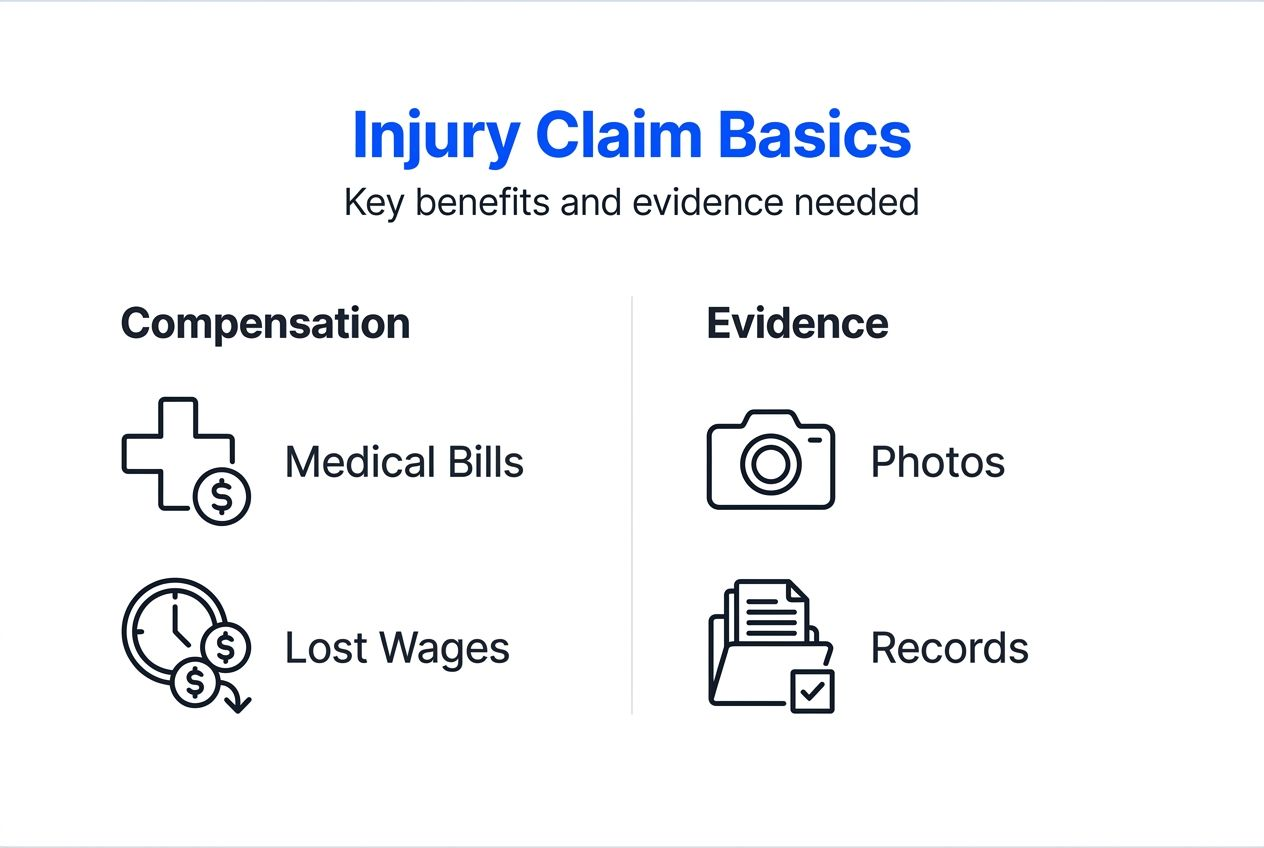
Strong evidence forms the backbone of successful injury claims. Medical records document injury severity and treatment costs, police reports establish accident facts and fault, and witness statements corroborate your account. Legal counsel increases the likelihood of higher settlements by 30%-40% because attorneys know which evidence insurers value most and how to present it persuasively.
Proper evidence collection influences both claim validity and compensation size. Clear photos of accident scenes, damaged vehicles, and visible injuries provide visual proof that strengthens your case. Medical documentation linking injuries directly to the accident prevents insurers from claiming pre-existing conditions caused your damages. Every piece of evidence counters potential insurer objections.
Attorneys negotiate more effectively than accident victims can alone. Importance of evidence and legal representation becomes clear during settlement discussions. Insurance adjusters make low initial offers hoping you’ll accept quickly out of desperation or ignorance. Experienced lawyers recognize unfair offers immediately, counter with detailed evidence-based demands, and refuse to settle until you receive fair compensation.
Legal expertise helps avoid procedural errors and claim denials. Filing deadlines, paperwork requirements, and legal standards vary by jurisdiction and claim type. Attorneys handle these complexities, ensuring every form is completed correctly, every deadline met, and every procedural requirement satisfied. One missed deadline or incomplete form can destroy an otherwise valid claim.
Pro Tip: Document every injury detail immediately after accidents. Take photos of injuries daily as they heal, save all medical receipts, and write down how pain affects your daily activities to build a comprehensive evidence file.
- Collect medical records, police reports, and witness contact information immediately.
- Photograph accident scenes, vehicle damage, and visible injuries from multiple angles.
- Keep journals documenting pain levels, activity limitations, and emotional impacts.
- Obtain expert opinions from medical professionals linking injuries to accidents.
- Let attorneys handle evidence presentation to maximize persuasive impact.
Consequences of not filing an injury claim
Victims who don’t file claims often bear full medical costs and lost wages, risking permanent financial hardship. Without claims, no legal mechanism forces at-fault parties or their insurers to reimburse you. You’re stuck paying hospital bills, prescription costs, and physical therapy fees out of pocket while also losing income during recovery.
Financial hardship from unpaid accident costs can become permanent and severe. Medical debt damages credit scores, making it harder to secure loans, rent apartments, or even find employment. Families drain savings accounts, max out credit cards, and sometimes face bankruptcy trying to cover accident-related expenses that insurance should have paid.
Not filing eliminates access to legal compensation for pain and suffering. These non-economic damages often represent significant portions of total claim values, acknowledging that accidents harm quality of life beyond financial costs. Without claims, you receive nothing for chronic pain, emotional distress, or permanent disabilities that limit your activities and relationships.
- Full medical expenses and lost income fall entirely on you without claims.
- No legal recourse forces at-fault parties to take responsibility.
- Financial hardship can destroy credit and push families into bankruptcy.
- Lost opportunity for pain and suffering damages goes uncompensated.
- Delays or non-filing severely limit future recovery options.
Insurers have no obligation to negotiate or pay without formal claims. Even if the at-fault party admits fault and promises to help, promises mean nothing legally. Only filed claims create enforceable obligations. Relying on informal agreements or assuming insurers will do the right thing voluntarily leaves you vulnerable to being ignored or underpaid.
How Jewkes Firm can help accident victims in South Atlanta
Navigating personal injury claims while recovering from accident injuries feels overwhelming. Jewkes Firm removes that burden by handling every legal aspect of your case, from evidence collection through final settlement or trial. We offer free consultations to evaluate your claim strength and explain your legal options without any upfront costs or obligations.

Our contingency fee arrangement means you pay nothing unless we win your case. This structure aligns our interests with yours, motivating us to secure maximum compensation because our payment depends on your success. We’ve recovered millions for South Atlanta accident victims, handling complex cases involving auto accidents, trucking crashes, medical malpractice, and wrongful death with proven track records of success.
Experience matters when fighting insurance companies determined to minimize payouts. Our attorneys understand Georgia personal injury law, statute requirements, and negotiation tactics insurers use. We guide you through filing your personal injury claim within legal deadlines, ensuring procedural compliance while you focus on healing. When you hire a personal injury lawyer from Jewkes Firm, you gain dedicated advocates committed to protecting your rights and maximizing your compensation.
Frequently asked questions
How long do I have to file an injury claim in Georgia?
You have two years from the accident date to file a personal injury claim in Georgia under the statute of limitations. Missing this deadline permanently bars you from recovering compensation, regardless of injury severity or financial hardship.
What types of damages can I recover through an injury claim?
Claims cover medical expenses, lost wages, property damage, pain and suffering, emotional distress, and loss of enjoyment of life. Economic damages reimburse financial costs while non-economic damages compensate for quality of life impacts.
Do I need a lawyer to file a personal injury claim?
While not legally required, hiring a lawyer increases compensation by 30-40% and reduces claim denial risks. Attorneys handle complex paperwork, meet deadlines, and negotiate effectively with insurance companies on your behalf.
Will filing a claim hurt my relationship with the at-fault party?
Claims target insurance companies, not individuals personally. The at-fault party’s insurance policy exists specifically to cover accident costs, so filing protects your financial future without personally attacking anyone.
What if my injuries seemed minor at first but worsened later?
File a claim even if injuries initially seem minor, as up to 35% of minor injury cases develop complications. Filing preserves your rights if symptoms worsen, ensuring you can claim compensation for ongoing treatment and complications.
How much does it cost to hire a personal injury lawyer?
Most personal injury attorneys work on contingency fees, meaning you pay nothing upfront and only pay if they win your case. The fee typically comes from your settlement or award, making legal representation accessible without financial risk.