

Many Georgia accident victims lose thousands in compensation because of simple filing mistakes. Late or improper insurance notification causes 25% of claim denials. This guide walks you through every essential step and requirement to file your personal injury claim successfully in Georgia, helping you gain confidence and maximize your fair compensation.
Table of Contents
- Prerequisites: What You Need Before Filing
- Step 1: Reporting the Accident and Notifying Insurers
- Step 2: Consulting a Personal Injury Attorney
- Step 3: Filing the Personal Injury Claim
- Common Mistakes to Avoid When Filing
- Expected Timelines and Outcomes
- Need Expert Help Filing Your Claim?
- Frequently Asked Questions
Key Takeaways
| Point | Details |
|---|---|
| Georgia’s statute of limitations for injury claims is 2 years | You must file within two years of your accident date or lose your right to compensation |
| Early evidence collection strengthens your case | Gather medical records, police reports, photos, and witness contacts immediately after the incident |
| Consulting a personal injury attorney increases settlement success by 3.5x | Professional legal representation dramatically improves your chances of fair compensation |
| Timely insurance notification prevents denial | Notify all insurers immediately to avoid automatic claim rejection |
| Avoid social media oversharing and filing delays | These common mistakes can reduce or eliminate your settlement entirely |
Prerequisites: What You Need Before Filing
Before you start the filing process, you need to understand Georgia’s legal requirements and gather essential documentation. Georgia’s 2-year statute of limitations for injury claims starts the day your accident occurs. Missing this deadline means losing your right to compensation permanently.
Start collecting evidence immediately while details remain fresh. You’ll need medical records documenting all injuries and treatments, police reports if law enforcement responded, photos of the accident scene and your injuries, and contact information for any witnesses. The sooner you begin this process, the stronger your claim becomes.
Key documents to gather include:
- Complete medical records from all healthcare providers who treated your injuries
- Official police or incident reports filed at the accident scene
- Photographs showing property damage, hazardous conditions, and visible injuries
- Witness statements and contact details for follow up testimony
- Pay stubs or employment records proving lost wages
- Insurance policy documents for all parties involved
Understanding your insurer’s notification requirements protects your claim from automatic denial. Most policies require notification within 24 to 72 hours after an accident. Read your policy carefully and note all deadlines. Understanding personal injury law prerequisites helps you avoid costly procedural errors that weaken your position.
Step 1: Reporting the Accident and Notifying Insurers
Your first action after receiving necessary medical care is reporting the accident to authorities and notifying all relevant insurance companies. Failing to notify the insurance company promptly can lead to claim denial or reduced settlements in up to 25% of cases in Georgia. This makes immediate reporting absolutely critical.
Follow these notification steps in order:
- Call 911 or local police if the accident involves injuries, significant property damage, or safety hazards
- Contact your own insurance company within 24 hours even if you weren’t at fault
- Notify the at fault party’s insurer if their information is available
- Request claim numbers and adjuster contact information from each insurer
- Document all conversations including dates, times, and names of representatives
When speaking with insurance adjusters, stick to basic facts about the accident. Never speculate about fault, minimize your injuries, or provide recorded statements without legal counsel. Insurers train adjusters to gather information that reduces claim values. Understanding insurance notification requirements protects you during these critical early conversations.
Pro Tip: Send your insurance notification via email or certified mail in addition to phone calls. Written documentation creates an indisputable record of timely insurance notification that protects against later disputes about reporting deadlines.
Keep detailed records of every communication with insurance companies. Note the date, time, person’s name, and summary of what was discussed. These records become valuable evidence if disputes arise about what was said or promised during the claims process.
Step 2: Consulting a Personal Injury Attorney
Consulting a personal injury attorney improves compensation success rates by about 3.5 times compared to self representation in Georgia accident cases. This dramatic difference reflects attorneys’ expertise in negotiation, understanding of fair compensation values, and ability to counter insurer tactics designed to minimize payouts.

Georgia personal injury lawyers typically work on contingency fee arrangements. You pay no upfront legal fees and nothing out of pocket for case expenses. Your attorney only collects payment if they recover compensation for you, usually taking 33% to 40% of the final settlement. This structure aligns your lawyer’s interests with yours and makes quality legal representation accessible regardless of your financial situation.
When evaluating potential attorneys, consider these factors:
- Specific experience with Georgia personal injury law and cases similar to yours
- Clear communication style and willingness to answer your questions thoroughly
- Proven track record with settlements and verdicts in your claim type
- Resources to handle complex investigations and expert witness testimony
- Client reviews and testimonials reflecting their professionalism and results
Schedule free legal consultation in Georgia with multiple attorneys before making your decision. Most personal injury lawyers offer no cost initial consultations where they evaluate your case and explain your legal options. Use these meetings to assess communication styles and determine who you trust to represent your interests.
Pro Tip: Bring all documentation to your first consultation including medical records, photos, insurance correspondence, and a written timeline of events. This preparation helps attorneys provide accurate case assessments and demonstrates your commitment to the process.
Legal representation becomes especially valuable when dealing with insurance company tactics. Adjusters know unrepresented claimants often accept lowball settlements because they don’t understand true claim values. An experienced attorney protects you from these strategies while handling all negotiations and paperwork. Choosing a personal injury attorney who understands Georgia law and has strong negotiation skills directly impacts your final compensation.
Step 3: Filing the Personal Injury Claim
Once you’ve consulted with an attorney, the formal filing process begins. Your lawyer prepares all required documents including the complaint that initiates your lawsuit. The personal injury claim filing process must occur within Georgia’s two year statute of limitations from your accident date.
Your attorney will follow these filing steps:
- Draft a detailed complaint outlining the accident, injuries, damages, and legal basis for your claim
- Gather and organize all supporting evidence including medical records, bills, and expert reports
- File the complaint with the appropriate Georgia court based on accident location and claim value
- Serve the complaint and summons to all defendants through proper legal channels
- File proof of service with the court confirming defendants received the lawsuit
The required documentation varies by case type but typically includes your initial complaint, summons for each defendant, civil case filing information sheet, and payment of court filing fees. Your attorney handles all technical requirements ensuring proper formatting and compliance with local court rules.
| Document Type | Purpose | Timeline |
|---|---|---|
| Complaint | Details your claims and requested damages | Filed at case start |
| Summons | Notifies defendants of lawsuit | Served with complaint |
| Answer | Defendant’s response to your claims | Due 30 days after service |
| Discovery requests | Evidence gathering from opposing party | Begins after answer filed |
| Settlement demand | Formal compensation request | Sent during negotiations |
Keep copies of all filings and proof of submission for your records. Your attorney maintains the official case file but having personal copies helps you stay informed about case progress. Courts also provide electronic filing systems where you can access documents online using your case number.
Most personal injury claims settle before trial through negotiation. However, proper court filing establishes your serious intent and creates leverage during settlement discussions. Insurance companies respond more favorably when they know you’re prepared to pursue your claim through trial if necessary.
Common Mistakes to Avoid When Filing
Many accident victims unknowingly sabotage their own claims through preventable errors. Oversharing details on social media can jeopardize a claim as insurance adjusters monitor these platforms for inconsistencies in your story. Even innocent posts about daily activities can be twisted to suggest your injuries aren’t as severe as claimed.
The most damaging mistakes include:
- Posting photos or updates on social media showing physical activities inconsistent with claimed injuries
- Delaying insurance notification beyond policy deadlines causing automatic claim denial
- Accepting initial settlement offers without understanding full claim value
- Failing to seek immediate medical treatment creating gaps in injury documentation
- Missing the two year statute of limitations deadline eliminating your legal right to compensation
- Providing recorded statements to opposing insurers without attorney guidance
“Insurance adjusters are trained to minimize claim payouts. They look for any inconsistency or delay they can use to deny or reduce your settlement. Protecting your claim means avoiding their traps from day one.”
Documentation gaps severely weaken claims. Skipping medical appointments or delaying treatment gives insurers ammunition to argue your injuries aren’t serious. Follow all treatment plans exactly as prescribed and attend every scheduled appointment. Your medical records become the primary evidence supporting your injury claims and compensation demands.
Failing to notify insurance companies promptly can lead to denial or reduced settlements in up to 25% of cases across Georgia. Even if you think the other party is clearly at fault, notify your own insurer immediately. Your policy requires prompt notification regardless of fault determination. Understanding common mistakes in injury claims helps you avoid these pitfalls that cost thousands in lost compensation.
Set all social media accounts to private and avoid posting anything about your accident, injuries, recovery, or daily activities until your case resolves. Better yet, pause social media use entirely during your claim. What seems like harmless sharing becomes evidence against you when social media risks for claims surface during litigation.
Expected Timelines and Outcomes
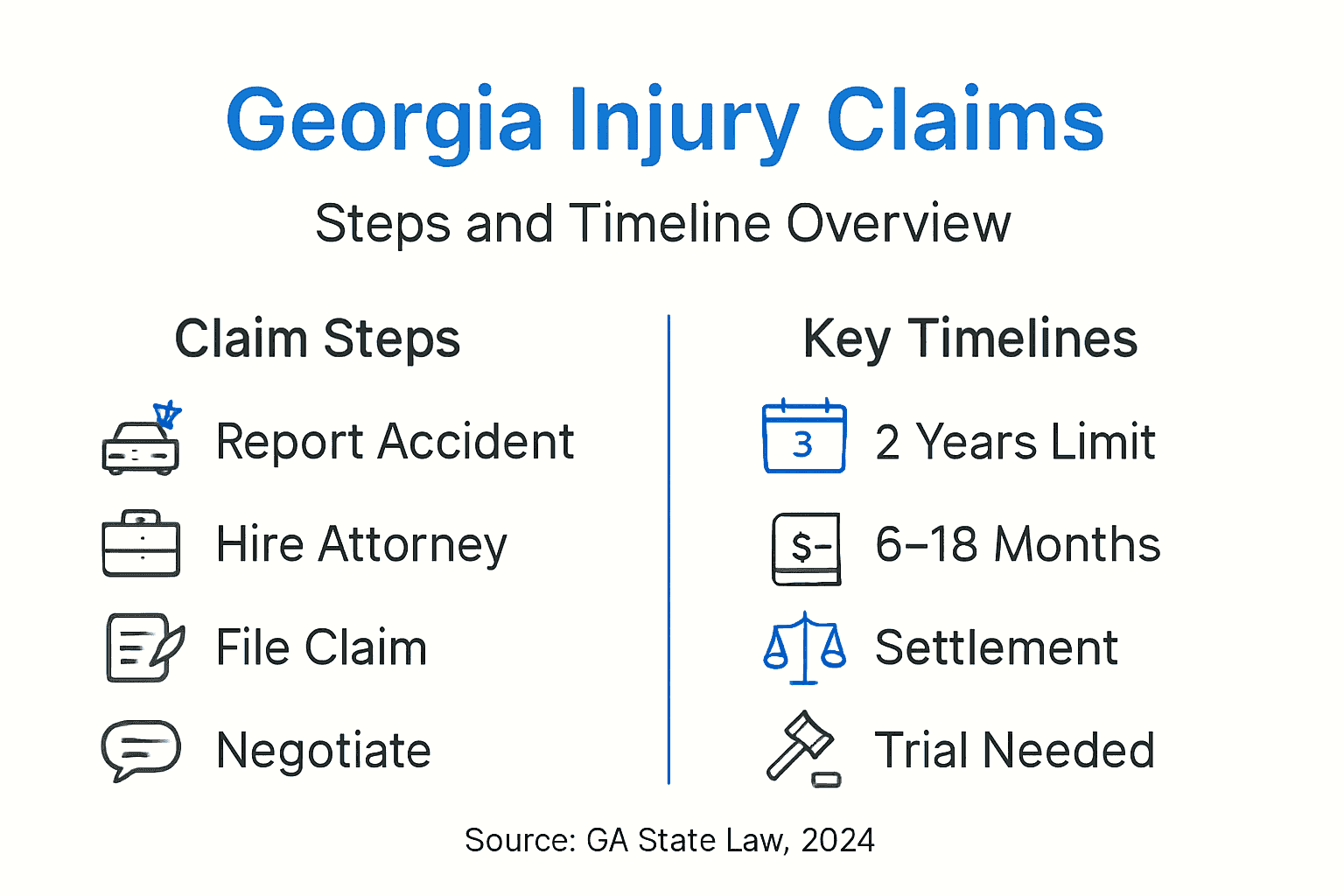
Personal injury claims in Georgia typically settle within 6 to 18 months after filing, though complex cases can take longer. The timeline depends on injury severity, liability disputes, insurance company cooperation, and whether trial becomes necessary. Understanding realistic expectations helps you plan financially and emotionally for the process ahead.
| Case Factor | Average Timeline | Impact on Settlement |
|---|---|---|
| Minor injuries, clear liability | 3 to 6 months | Lower amounts, faster resolution |
| Moderate injuries, some dispute | 6 to 12 months | Mid range settlements |
| Severe injuries, complex liability | 12 to 24 months | Higher compensation, longer negotiation |
| Trial necessary | 18 to 36 months | Potentially maximum recovery |
The average auto injury settlement in Georgia is around $30,000, but this figure varies dramatically based on your specific circumstances. Severe injuries, permanent disabilities, and clear defendant fault typically result in substantially higher compensation. Minor injuries with quick recovery generally settle for less.
Your total compensation should account for:
- All medical expenses including emergency care, surgeries, therapy, and future treatment costs
- Lost wages from missed work during recovery and reduced earning capacity
- Property damage repair or replacement costs
- Pain and suffering reflecting physical discomfort and emotional distress
- Loss of enjoyment of life if injuries prevent previous activities
Timely and organized evidence significantly speeds negotiations and improves final compensation amounts. When you provide clear documentation of every damage element, insurers have less room to dispute claim values. Your attorney uses this evidence to build compelling settlement demands that reflect true case worth.
Understanding settlement timelines and compensation helps you evaluate whether settlement offers are fair or if continuing negotiation or pursuing trial better serves your interests. Your attorney provides guidance based on similar case outcomes and their assessment of your claim’s strength.
Need Expert Help Filing Your Claim?
Navigating Georgia’s personal injury claim process alone puts your compensation at risk. Professional legal guidance improves outcomes significantly by protecting you from insurer tactics and ensuring proper claim valuation.

The Jewkes Firm offers experienced personal injury lawyers who understand Georgia law and fight for maximum compensation. Our team has recovered millions for accident victims across South Atlanta and surrounding counties. We handle all case types including auto accidents, slip and falls, and wrongful death claims.
Free consultations let you discuss your case without financial risk. We work on contingency fees, meaning you pay nothing unless we win your case. Contact our trusted Georgia personal injury lawyers today to learn how we can help you hire a personal injury lawyer and start building your strongest possible claim. Choosing the right attorney makes all the difference in your recovery.
Frequently Asked Questions
What is the deadline for filing a personal injury claim in Georgia?
Georgia’s statute of limitations gives you exactly two years from your accident date to file a personal injury lawsuit. Missing this deadline means permanently losing your right to compensation regardless of injury severity or claim validity.
Do I need a lawyer to file a personal injury claim in Georgia?
While not legally required, hiring an attorney increases your settlement success rate by 3.5 times compared to self representation. Lawyers handle complex negotiations, paperwork, and legal strategy while you focus on recovery.
How much does it cost to hire a personal injury attorney in Georgia?
Most Georgia personal injury attorneys work on contingency fees between 33% and 40% of your final settlement. You pay no upfront costs and nothing out of pocket, only paying if your lawyer wins compensation for you.
What should I do immediately after an accident in Georgia?
Seek necessary medical care first, then report the accident to police and notify your insurance company within 24 hours. Document everything with photos and witness information, and avoid discussing fault or injury details on social media.
How long does it take to settle a personal injury claim in Georgia?
Most claims settle within 6 to 18 months after filing, though complex cases involving severe injuries or disputed liability may take up to 24 months or longer if trial becomes necessary.
Can I still file a claim if I was partially at fault for the accident?
Yes, Georgia follows modified comparative negligence rules allowing recovery if you’re less than 50% at fault. Your compensation reduces by your percentage of fault, so 30% fault means receiving 70% of total damages.