
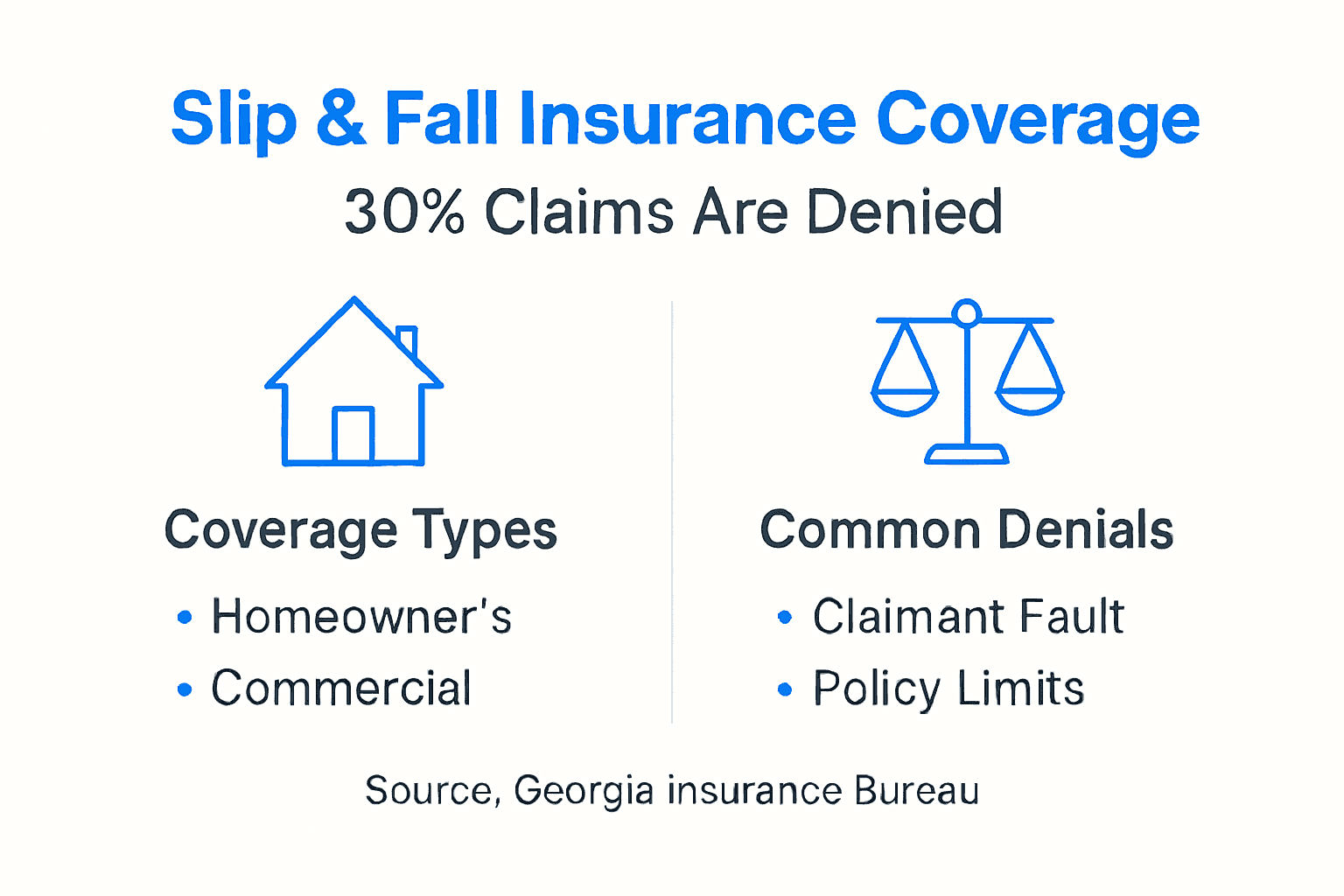
You fell on someone else’s property and got hurt. Now you face mounting medical bills and lost wages. Up to 30% of slip and fall claims are denied due to contributory negligence or policy exclusions. Understanding which insurance policies cover your injuries and how to navigate the claims process can mean the difference between financial recovery and overwhelming debt. This guide walks you through insurance types, legal considerations, and proven strategies to maximize your compensation as a slip and fall victim in South Atlanta.
Table of Contents
- Introduction To Slip And Fall Insurance Coverage
- Types Of Insurance That May Cover Slip And Fall Injuries
- Legal Framework And How Liability Affects Insurance Claims In Georgia
- Common Misconceptions About Slip And Fall Insurance Coverage
- The Claims Process: How To Maximize Insurance Compensation For Slip And Fall Injuries
- Conclusion And Next Steps For South Atlanta Slip And Fall Victims
- Get Expert Legal Help For Your Slip And Fall Case
- Frequently Asked Questions
Key Takeaways
| Point | Details |
|---|---|
| Insurance coverage varies significantly | Homeowner’s, commercial, renter’s, and health insurance each cover different aspects of slip and fall injuries with distinct limits. |
| Georgia premises liability governs claims | Property owners must maintain safe conditions, and proving negligence is essential for successful insurance claims. |
| Common myths derail legitimate claims | Misconceptions about automatic coverage and health insurance scope often lead to denied or undervalued settlements. |
| Strong evidence dramatically improves outcomes | Photos, witness statements, and medical records increase claim approval rates and settlement amounts substantially. |
| Legal representation multiplies compensation | Experienced attorneys navigate policy exclusions, negotiate with insurers, and secure higher settlements for slip and fall victims. |
Introduction to Slip and Fall Insurance Coverage
Slip and fall injuries create financial burdens that extend far beyond immediate medical costs. Slip and fall injuries cause significant medical costs and lost income annually, often reaching tens of thousands of dollars when you factor in emergency care, physical therapy, and missed work.
Insurance exists to manage these financial risks, but not all policies work the same way. Some cover medical expenses only. Others address liability and compensation for pain and suffering. The right insurance depends on where you fell, who owns the property, and the circumstances surrounding your accident.
Homeowner’s insurance differs substantially from commercial liability coverage. Renter’s policies offer limited protection compared to business premises policies. Medical payments coverage operates under different rules than general liability insurance. Each policy type comes with specific coverage limits, exclusions, and claim requirements that directly impact your financial recovery.
Understanding your insurance options before filing a claim prevents costly mistakes that can reduce or eliminate your compensation.
Knowing which insurance applies to your situation helps you pursue the right claims through the correct channels. This knowledge reduces delays, increases approval chances, and maximizes your settlement amount.
Types of Insurance That May Cover Slip and Fall Injuries
Multiple insurance policies might apply to your slip and fall injury depending on where the accident occurred and who owns the property. Each policy type offers different coverage scope, limits, and claim processes.
Homeowner’s Insurance Coverage
Homeowner’s insurance typically includes two components relevant to slip and fall injuries. Personal liability coverage pays for injuries to visitors on the property when the homeowner is found negligent. Medical payments coverage handles minor medical expenses regardless of fault, usually capped at $1,000 to $5,000 per incident.
Liability coverage generally ranges from $100,000 to $500,000 per occurrence. This covers medical bills, lost wages, pain and suffering, and legal defense costs if the homeowner is sued. The policy activates when you prove the property owner failed to maintain safe conditions or warn of known hazards.
Commercial Liability Insurance Protection
Businesses carry commercial general liability insurance specifically designed to cover customer injuries on their premises. These policies typically offer higher limits than homeowner’s coverage, often starting at $1 million per occurrence.

Commercial policies cover slip and fall injuries in retail stores, restaurants, office buildings, and other business locations. They pay for medical expenses, rehabilitation costs, lost income, and compensation for permanent injuries or disability. Understanding the types of slip and fall injuries explained helps you document your claim properly for maximum compensation.
Renter’s Insurance Limitations
Renter’s insurance provides minimal slip and fall protection compared to homeowner’s or commercial policies. Most renter’s policies include only medical payments coverage, typically limited to $1,000 to $5,000, covering guests injured in your rented space.
Renter’s insurance does not cover liability for injuries in common areas like hallways, stairwells, or parking lots. The property owner’s insurance handles those claims. This limited coverage makes renter’s policies insufficient for serious slip and fall injuries requiring extensive medical treatment.
Medical Payments Coverage Benefits
Medical payments coverage, often called MedPay, expedites payment for minor injuries without requiring liability determination. This coverage pays quickly for emergency room visits, doctor appointments, and initial treatments regardless of who caused the fall.
MedPay limits are low, usually $1,000 to $10,000 per person. While helpful for immediate expenses, it does not cover lost wages, pain and suffering, or long term disability costs. You still need to pursue a liability claim for full compensation.
| Insurance Type | Coverage Scope | Typical Limits | What It Covers |
|---|---|---|---|
| Homeowner’s Liability | Injuries on private property | $100,000 to $500,000 | Medical bills, lost wages, pain and suffering |
| Commercial General Liability | Business premises injuries | $1,000,000+ | All injury costs plus legal defense |
| Renter’s Insurance | Guest injuries in rented unit only | $1,000 to $5,000 | Medical payments only |
| Medical Payments Coverage | Quick payment regardless of fault | $1,000 to $10,000 | Immediate medical expenses only |
Pro Tip: Always pursue both medical payments coverage for immediate costs and liability coverage for full compensation. Medical payments provide quick relief while liability claims secure complete financial recovery.
Legal Framework and How Liability Affects Insurance Claims in Georgia
Georgia premises liability law determines which insurance coverage applies to your slip and fall injury and how much compensation you can recover. Property owners have a legal duty to maintain safe conditions and warn visitors of known hazards.
Liability hinges on proving three elements: the property owner knew or should have known about the dangerous condition, they failed to fix it or warn you, and this negligence directly caused your fall and injuries. Without establishing negligence, insurance companies deny claims regardless of injury severity.
Negligence Standards Under Georgia Law
Georgia applies different duty of care standards based on your status when injured. Invitees, people on the property for business purposes, receive the highest protection. Property owners must inspect regularly, fix hazards promptly, and warn of dangers they cannot immediately remedy.
Licensees, social guests invited onto property, receive moderate protection. Owners must warn them of known dangers but do not have to inspect actively for hazards. Trespassers receive minimal protection, with owners liable only for intentional harm or gross negligence.
How Fault Affects Insurance Payouts
Georgia follows a modified comparative negligence rule. If you are less than 50% at fault for your fall, you can still recover compensation reduced by your percentage of fault. For example, if your damages total $100,000 but you are 20% at fault, you recover $80,000.
Insurance companies aggressively argue claimant fault to reduce payouts or deny claims entirely. They claim you were distracted, wearing inappropriate shoes, or ignoring obvious hazards. Strong evidence countering these arguments protects your full compensation.
- Property owners must maintain safe premises under Georgia common law standards
- Liability requires proving knowledge of hazards and failure to remedy or warn
- Your comparative fault percentage directly reduces insurance payouts
- Insurance coverage depends on liability findings and policy specific exclusions
- Legal representation helps establish negligence and counter fault arguments effectively
Pro Tip: Document the exact location and condition that caused your fall immediately. Take photos from multiple angles, measure dimensions, and note lighting conditions. This evidence proves negligence and counters insurance company fault arguments.
Common Misconceptions About Slip and Fall Insurance Coverage
Misunderstandings about insurance coverage lead many slip and fall victims to file incorrect claims, miss deadlines, or accept inadequate settlements. Clearing up these myths helps you pursue the right coverage and maximize your compensation.
Myth: Health Insurance Covers All Slip and Fall Costs
Your health insurance pays for medical treatment but nothing else. It does not cover lost wages from missed work, pain and suffering, permanent disability, or reduced earning capacity. Health insurance also does not address property damage like torn clothing or broken glasses.
Furthermore, health insurers often place liens on personal injury settlements, demanding repayment for medical bills they covered. This reduces your net recovery unless your attorney negotiates lien reductions.
Myth: Property Owners Always Have Adequate Insurance
Many property owners carry minimal liability coverage or none at all. Some homeowners drop coverage to save money. Small businesses sometimes operate with expired or insufficient policies. Even when coverage exists, policy limits may fall short of your actual damages.
You must verify insurance coverage early in the claims process. If the property owner lacks adequate insurance, you may need to explore alternative recovery options like umbrella policies or personal assets.
Myth: You Can Handle Insurance Claims Without Legal Help
Insurance adjusters work for insurance companies, not you. They minimize payouts by disputing liability, downplaying injuries, and pressuring quick settlements before you know the full extent of damages. Professional legal representation levels this imbalance.
Attorneys specializing in slip and fall cases understand policy language, know fair settlement values, and negotiate effectively with insurers. They also handle denials, appeals, and litigation when necessary.
- Health insurance pays medical bills only, not lost income or pain and suffering
- Many property owners lack sufficient coverage to fully compensate serious injuries
- Insurance companies prioritize profits over fair compensation for claimants
- Policy exclusions and fine print often surprise unrepresented claimants
- Legal expertise significantly increases settlement amounts and claim success rates
Insurance adjusters seem helpful initially but work to minimize your payout. Never provide recorded statements or sign releases without legal consultation.
The Claims Process: How to Maximize Insurance Compensation for Slip and Fall Injuries
Successfully recovering compensation requires methodical evidence gathering, timely claim submission, and strategic negotiation. Each step influences your final settlement amount.
Step 1: Gather Comprehensive Evidence Immediately
Detailed evidence like photos, witness statements, and medical records boosts claim approval by 40%. Document the accident scene thoroughly before conditions change. Take photos of the hazard from multiple angles, including wide shots showing context and close ups highlighting the specific danger.
Collect contact information from witnesses who saw you fall. Their independent accounts corroborate your version of events and counter insurance company skepticism. Obtain incident reports if the property owner or manager created one.
Seek immediate medical attention even for seemingly minor injuries. Delays between the accident and treatment give insurers ammunition to argue your injuries resulted from something else. Medical records linking your injuries directly to the fall strengthen your claim substantially.
Step 2: Notify All Potentially Liable Parties Promptly
Inform the property owner or manager about your fall in writing immediately. This creates a documented record of notice. Request copies of any incident reports they prepare.
Identify all insurance policies that might cover your injuries. This includes the property owner’s homeowner’s or commercial liability insurance, your health insurance, and any umbrella policies. The slip and fall settlement process involves navigating multiple insurers simultaneously.
Step 3: Submit Complete, Well Documented Claims
Prepare detailed claim packages including medical records, bills, wage loss documentation, photos, witness statements, and a clear narrative explaining how negligence caused your injuries. Incomplete claims trigger denials or lowball offers.
Include a demand letter specifying the compensation you seek and why it is justified. Break down damages into categories: past medical expenses, future medical costs, lost wages, reduced earning capacity, pain and suffering, and permanent disability.
Step 4: Respond Strategically to Lowball Offers and Denials
Insurance companies routinely deny valid claims or offer settlements far below fair value hoping you will accept out of desperation. Do not panic. Denials can be appealed with additional evidence or legal representation.
Never accept the first settlement offer without consulting an attorney. Initial offers typically represent 10% to 30% of fair value. Understanding the guide to hiring injury lawyer helps you find experienced representation to negotiate aggressively.
Step 5: Leverage Legal Expertise for Maximum Compensation
Georgia personal injury lawyers specializing in slip and fall cases know policy interpretation, fair settlement ranges, and effective negotiation tactics. They handle all communications with insurers, protecting you from making damaging statements.
Attorneys access medical and economic experts who calculate your total damages accurately, including future costs insurers try to ignore. They also recognize when settlement negotiations stall and litigation becomes necessary to secure fair compensation. The guide to choosing a personal injury attorney helps you select representation matched to your specific situation.
- Document the accident scene with detailed photos and witness information immediately
- Seek medical treatment right away to establish injury causation
- Notify all potentially liable parties in writing within 24 hours
- Compile complete claim packages with medical records, bills, and damage calculations
- Consult experienced legal counsel before accepting any settlement offers
- Maintain detailed records of all expenses, communications, and impacts on daily life
| Claim Stage | Timeline | Critical Actions | Common Pitfalls |
|---|---|---|---|
| Immediate Response | 0 to 24 hours | Document scene, seek medical care, notify property owner | Failing to photograph conditions before cleanup |
| Evidence Gathering | 1 to 7 days | Collect witness statements, obtain incident reports, start treatment | Delaying medical treatment or missing witnesses |
| Claim Submission | 1 to 4 weeks | File with all relevant insurers, include complete documentation | Submitting incomplete claims or missing deadlines |
| Negotiation | 1 to 6 months | Respond to requests, counter lowball offers, calculate full damages | Accepting first offer or providing recorded statements |
| Resolution | 2 to 12 months | Finalize settlement or proceed to litigation if necessary | Settling before knowing full injury extent |
Pro Tip: Never sign a medical release allowing insurers direct access to your entire medical history. Provide only records directly related to your slip and fall injuries to protect your privacy and prevent fishing expeditions for pre existing conditions to devalue your claim.
Be aware of Georgia’s two year statute of limitations for personal injury claims. Missing this deadline bars you from recovering any compensation regardless of your injuries’ severity. Free legal consultation for accident victims helps you understand deadlines specific to your case.
Conclusion and Next Steps for South Atlanta Slip and Fall Victims
Navigating slip and fall insurance coverage requires understanding multiple policy types, Georgia’s premises liability standards, and strategic claims management. Homeowner’s, commercial, and medical payments insurance each serve different purposes with distinct coverage limits and exclusions.
Successful claims depend on proving property owner negligence, gathering compelling evidence immediately, and countering insurance company tactics designed to minimize payouts. Your comparative fault percentage directly impacts compensation, making strong documentation essential.
Common misconceptions about automatic coverage and health insurance scope derail many legitimate claims. Professional legal guidance helps you identify all applicable insurance policies, calculate fair compensation including future costs, and negotiate effectively with adjusters trained to reduce payouts.
If you suffered a slip and fall injury in South Atlanta, consulting a personal injury attorney specializing in premises liability cases significantly improves your chances of maximum compensation. Most firms offer free consultations and work on contingency, meaning you pay nothing unless they win your case.
Get Expert Legal Help for Your Slip and Fall Case
Slip and fall insurance claims involve complex policy language, aggressive insurer tactics, and nuanced liability determinations. Without specialized legal knowledge, you risk accepting inadequate settlements or missing compensation you legally deserve.

Experienced personal injury attorneys understand exactly which insurance policies apply to your situation and how to maximize payouts from each. They handle all communications with adjusters, protecting you from damaging statements while building the strongest possible case for full compensation.
Contacting a qualified South Atlanta law firm for a free case evaluation costs nothing and provides clarity on your legal options. When choosing a personal injury attorney, look for demonstrated slip and fall case success and contingency fee arrangements ensuring you pay nothing until you win. The right hiring injury lawyer guide helps you select representation that fights for every dollar you deserve. Georgia personal injury lawyers with premises liability expertise level the playing field against insurance companies and secure substantially higher settlements than unrepresented claimants achieve.
Frequently Asked Questions
What Insurance Typically Covers Slip and Fall Injuries?
Homeowner’s and commercial liability insurance cover most slip and fall injuries depending on where the accident occurred. Homeowner’s policies protect injuries on residential property when negligence is proven. Commercial general liability insurance covers customer injuries at business locations. Renter’s insurance provides only minimal medical payments coverage, typically insufficient for serious injuries.
How Does Georgia Law Determine Liability in Slip and Fall Cases?
Georgia applies common law premises liability requiring property owners to maintain reasonably safe conditions and warn of known hazards. Liability depends on proving the owner knew or should have known about the dangerous condition and failed to remedy it or provide adequate warning. Your legal status as invitee, licensee, or trespasser affects the duty of care owed to you.
What Are Common Reasons Slip and Fall Insurance Claims Are Denied?
Claims face denial most often due to allegations of claimant fault exceeding 50%, making you ineligible under Georgia’s comparative negligence rule. Late reporting raises suspicion about whether the fall actually occurred as claimed. Lack of photographic evidence, witness statements, or immediate medical treatment allows insurers to dispute causation. Policy exclusions for certain hazard types or claimant categories also trigger denials.
Why Should I Consult a Lawyer for a Slip and Fall Insurance Claim?
Attorneys specializing in slip and fall cases increase claim approval rates and compensation amounts substantially. They interpret complex policy language, identify all applicable insurance coverage, and calculate fair settlement values including future damages insurers try to ignore. Lawyers negotiate aggressively with adjusters, counter fault arguments effectively, and pursue litigation when necessary to secure maximum compensation you cannot obtain alone.
Recommended
- Slip and Fall Settlements: What Georgia Victims Need
- 6 Common Types of Slip and Fall Injuries Explained
- Essential Guide to Hiring Injury Lawyer for Your Case
- Step-by-Step Guide to Choosing a Personal Injury Attorney
- Preventing Injuries in Kitchens: Safety Tips for 2025 – Probe IT
- Vitamin C for Joints: How It Eases Pain and Stiffness – Asli Nutrition