

Facing an accident in South Atlanta quickly turns life upside down. Medical bills pile up, income suffers, and dealing with insurance companies feels overwhelming when you just want to recover. A personal injury lawyer levels the playing field and pursues fair compensation for your losses, whether from an auto collision or medical negligence. Learn how expert legal guidance protects your rights and helps you rebuild financially and emotionally after serious injuries.
Table of Contents
- Understanding Personal Injury Lawyer Roles
- Key Situations Requiring Legal Help
- Navigating Georgia’s Personal Injury Laws
- Maximizing Settlements and Compensation
- Costs, Fees, and Financial Benefits
Key Takeaways
| Point | Details |
|---|---|
| Role of Personal Injury Lawyers | Personal injury lawyers advocate for victims, managing legal complexities and negotiations with insurance companies while clients focus on recovery. |
| Importance of Timely Legal Assistance | Seeking a lawyer promptly after an accident helps protect your rights and prevents costly mistakes in the claim process. |
| Understanding Georgia Laws | Familiarity with Georgia’s fault-based system and modified comparative negligence is essential for maximizing compensation in personal injury claims. |
| Cost Structure of Legal Services | Most personal injury attorneys work on a contingency fee basis, meaning you pay only if you win, aligning their success with your recovery. |
Understanding Personal Injury Lawyer Roles
When you’re injured in an accident, you’re facing more than just physical recovery. You’re dealing with medical bills, lost wages, and the stress of figuring out what comes next. A personal injury lawyer becomes your advocate through this process, handling the legal complexities while you focus on healing.
Personal injury attorneys serve as your voice when insurance companies and opposing parties won’t listen. They investigate your case thoroughly, gather evidence, and build a strong claim on your behalf.
What Personal Injury Lawyers Actually Do
Personal injury attorneys handle several critical tasks throughout your case:
- Initial consultation and case evaluation
- Thorough investigation of the accident or incident
- Negotiating with insurance companies to secure fair settlements
- Preparing all legal documentation and paperwork
- Representing you in court if settlement talks fail
- Advocating for compensation covering medical expenses, lost income, and pain and suffering
In South Atlanta, accident cases range from straightforward auto collisions to complex medical negligence situations. Your lawyer knows the local insurance practices and court procedures that affect your outcome.
A skilled personal injury lawyer levels the playing field between you and insurance companies that have teams of adjusters working to minimize your claim.
Common Case Types Personal Injury Lawyers Handle
Personal injury lawyers in Georgia handle diverse accident scenarios:
- Auto accidents from other drivers’ negligence
- Medical malpractice when healthcare providers fail to meet proper standards
- Slip and fall incidents on someone else’s property
- Workplace injuries beyond workers’ compensation coverage
- Product liability from defective or dangerous products
Each case type requires specific knowledge. An attorney experienced with auto accidents understands Georgia’s specific liability rules and insurance requirements. A medical malpractice attorney needs to understand clinical standards and expert witness requirements.
Here’s a quick reference to help you understand the most common types of personal injury cases and their legal complexity:
| Case Type | Typical Cause | Key Legal Challenge |
|---|---|---|
| Auto Accident | Negligent driving | Proving liability, insurance limits |
| Medical Malpractice | Improper medical care | Establishing breach of clinical standards |
| Slip and Fall | Unsafe property conditions | Demonstrating owner negligence |
| Workplace Injury | Non-compliant employer practices | Clarifying coverage, third-party fault |
| Product Liability | Defective product design or manufacture | Identifying responsible manufacturer |
Why You Need Someone in Your Corner
Insurance companies employ trained professionals to evaluate claims and protect their profits. They’re not on your side. Without legal representation, you’re negotiating alone against people who do this every day.
A lawyer handles communication with insurers, removes emotion from negotiations, and ensures nothing you say is used against you later. This protection alone prevents costly mistakes that could reduce your compensation.
Your attorney also knows the legal deadlines that apply to your case. Missing a statute of limitations deadline in Georgia could mean losing your right to compensation entirely.
Pro tip: Schedule your free consultation early—Georgia’s statute of limitations for personal injury claims is typically two years, but gathering evidence and building your case takes time. Starting sooner protects your legal rights and strengthens your position.
Key Situations Requiring Legal Help
Not every accident requires a lawyer, but certain situations demand legal guidance immediately. Understanding when to call an attorney protects your rights and prevents costly mistakes that could reduce your compensation. In South Atlanta, accident victims often wait too long before seeking representation.
The difference between handling a claim yourself and having professional representation can mean thousands of dollars in your pocket or out of it.
When You Absolutely Need a Lawyer
You should hire a personal injury lawyer if any of these situations apply:
- You suffered significant injuries requiring ongoing medical treatment
- The accident involved multiple vehicles or complex liability questions
- Insurance offered a settlement that seems too low
- An insurance company denied your claim entirely
- The at-fault party lacked adequate insurance coverage
- You cannot work due to your injuries and face mounting bills
- The other party is disputing who caused the accident
- You received a serious diagnosis like spinal injuries or traumatic brain injury
In medical malpractice cases, you need legal help even faster. These cases involve specialized knowledge about healthcare standards and expert witness requirements that only trained attorneys can navigate.
If an insurance company has already contacted you, you need a lawyer before responding—anything you say can be used against you.
Auto Accidents That Need Legal Representation
Many South Atlanta residents think minor fender-benders don’t warrant legal help. That’s often a mistake. Negotiating with insurance companies after any accident can determine whether you recover fairly.
You need immediate legal help if:
- Someone suffered injuries, even seemingly minor ones
- Property damage exceeds several thousand dollars
- The police report contains inaccuracies
- Witnesses dispute fault for the collision
- You received a low settlement offer within days
Whiplash injuries and soft tissue damage don’t always show up immediately. Waiting weeks to get diagnosed and then trying to negotiate with an insurer puts you at a disadvantage. An attorney protects you from accepting lowball offers before you understand the full extent of your injuries.
Serious Injury and Medical Malpractice Cases
When injuries prevent you from working or require ongoing care, the stakes are much higher. Medical bills accumulate quickly, and lost wages compound your financial stress.

Medical malpractice cases demand immediate legal attention. Healthcare providers carry liability insurance and have legal teams. Attempting to handle these cases alone puts you at a severe disadvantage when proving that a medical professional breached the standard of care.
Pro tip: Contact a personal injury attorney within the first week after your accident or injury—early investigation and evidence preservation make the strongest claims, and your attorney can advise you on whether to accept any settlement offers.
Navigating Georgia’s Personal Injury Laws
Georgia’s personal injury laws create both opportunities and obstacles for accident victims. Understanding how these laws work directly impacts how much compensation you can recover. South Atlanta victims face specific rules that differ from other states, and knowing these distinctions protects your rights.
These laws determine whether you can win your case and how much you’ll receive.
Georgia’s Fault-Based System
Georgia operates under a fault-based system, meaning the person who caused the accident bears legal responsibility for your damages. This differs from “no-fault” states where your own insurance covers injuries regardless of fault.
In a fault-based system:
- You must prove the other party caused the accident through negligence or intentional harm
- The at-fault party’s liability insurance typically pays your claim
- You can pursue damages for medical bills, lost wages, pain and suffering, and other losses
- The burden falls on you to demonstrate what happened and why the other party is responsible
This system rewards victims who can build strong cases with solid evidence.
Georgia’s fault-based approach means gathering evidence immediately after your accident is critical—photos, witness statements, and police reports create the foundation for your claim.
Modified Comparative Negligence Rule
Georgia applies a modified comparative negligence standard that affects your recovery. This rule acknowledges that sometimes both parties share fault for an accident.
Here’s how it works:
- You can only recover damages if you are less than 50% at fault for the accident
- Your compensation decreases by your percentage of fault
- If you’re 30% at fault and win $100,000, you receive $70,000
- If you’re 50% or more at fault, you recover nothing
This rule makes liability determination crucial. Insurance companies and opposing parties will argue you’re more at fault to reduce their payouts. An experienced attorney counters these arguments with evidence and expert testimony about comparative fault standards.
Critical Deadlines You Cannot Miss
Georgia’s statute of limitations is the absolute deadline for filing your lawsuit. Most personal injury claims must be filed within two years from the date of injury.
Miss this deadline and you lose your right to sue permanently. No exceptions. No extensions based on hardship.
Other important deadlines include:
- Notifying insurance companies of claims promptly
- Responding to settlement offers within specified timeframes
- Providing discovery documents in litigation
- Meeting court-imposed deadlines for evidence submission
Attorneys track these dates carefully. One missed deadline can cost you thousands in lost compensation.
Economic and Non-Economic Damages
Georgia law allows you to recover two types of damages:
Economic damages are measurable losses:
- Medical bills and ongoing treatment costs
- Lost wages and reduced earning capacity
- Property damage
- Rehabilitation and therapy expenses
Non-economic damages address intangible harm:
- Pain and suffering
- Emotional distress and anxiety
- Loss of enjoyment of life
- Scarring or permanent disfigurement
Insurance companies fight harder over non-economic damages since they’re subjective. Your attorney must present compelling evidence of how your injuries affect daily life.
Pro tip: Document your pain and suffering from day one—keep a journal describing daily struggles, physical limitations, and emotional impacts, as this becomes powerful evidence when valuing non-economic damages.
Maximizing Settlements and Compensation
Getting a settlement offer doesn’t mean you’re getting fair value. Insurance companies often lowball initial offers hoping you’ll accept quickly without understanding your claim’s true worth. Maximizing your compensation requires strategy, documentation, and experienced negotiation.
The difference between an initial offer and a final settlement can easily exceed $50,000 or more.
Building a Strong Damage Claim
Your compensation depends on the strength of your evidence. Insurance adjusters evaluate claims based on documentation, medical records, and expert opinions.
To maximize your settlement:
- Collect all medical records and bills from every healthcare provider
- Maintain receipts for medication, medical equipment, and supplies
- Document lost wages with pay stubs and employer letters
- Photograph injuries at different stages of healing
- Gather witness contact information and statements
- Preserve accident scene photos and vehicle damage images
- Keep a detailed journal of pain levels and daily limitations
- Obtain expert opinions on permanent disabilities or disfigurement
This documentation creates an undeniable record of your damages. Without it, you’re asking an insurance company to take your word for losses they want to minimize.
Insurance adjusters evaluate claims based on hard evidence—medical records, receipts, and expert testimony—not emotional appeals or generic pain descriptions.
Understanding Your Claim’s Real Value
Calculating fair compensation involves multiple factors that insurance companies use strategically to justify low offers.
Key value factors include:
- Severity and permanence of injuries
- Cost of current and future medical treatment
- Lost income during recovery and any permanent earning loss
- Non-economic damages like pain and suffering
- Strength of liability evidence
- Insurance policy limits available
- Comparative negligence percentages
- Local jury trial verdicts in similar cases
Insurance companies count on victims not knowing how much their claims are worth. An attorney with trial experience knows what juries award for similar injuries, which strengthens negotiation leverage considerably.
Settlement Negotiation Strategy
Negotiating directly with insurance adjusters puts you at a disadvantage. They’re trained to minimize payouts and exploit your emotional state following an accident.
A personal injury attorney handles negotiation by:
- Presenting a detailed demand letter supported by medical evidence
- Countering lowball offers with comparable case settlements
- Threatening litigation to increase settlement pressure
- Managing your communications to prevent damaging statements
- Walking away from unreasonable offers
- Preparing for trial if settlement negotiations fail
Insurance companies increase offers significantly when they know your attorney is prepared to litigate. They understand that trials are expensive and unpredictable from their perspective.
When to Accept or Reject Offers
Not every settlement offer deserves rejection, but many do. Understanding whether to accept requires medical certainty about your recovery.
Accept a settlement when:
- Your medical condition has stabilized and future needs are clear
- The offer covers documented damages plus reasonable pain and suffering
- Your attorney confirms the offer exceeds what a jury would likely award
- Continuing litigation costs exceed potential additional recovery
Reject offers when:
- You have recent diagnoses suggesting long-term treatment needs
- The offer covers only a portion of medical bills
- Liability is strong and future complications are possible
- Your attorney believes trial would yield significantly more
Timing matters significantly. Settling too quickly before understanding your full injury leaves money on the table permanently.
For fast decision-making, here’s a summary of when to accept or reject a settlement offer:
| Decision Factor | Accept Settlement | Reject Settlement |
|---|---|---|
| Medical Recovery | Condition is stable | Needs ongoing treatment |
| Offer Value | Covers all damages | Only partial coverage |
| Comparative Fault | Minimal risk | Liability strongly contested |
| Attorney Advice | Offer exceeds jury average | Trial likely brings higher compensation |
Pro tip: Never accept an insurance company’s first settlement offer—initial offers are typically 30 to 50 percent below what your claim is actually worth, and experienced attorneys routinely increase settlements substantially through negotiation.
Costs, Fees, and Financial Benefits
Worrying about attorney costs shouldn’t prevent you from seeking legal help after an accident. Most personal injury lawyers work on contingency, meaning you pay nothing upfront and only if you win. This arrangement aligns your attorney’s interests with yours—they succeed when you recover maximum compensation.
Understanding the fee structure removes financial barriers to legal representation.
How Contingency Fees Work
Contingency fee arrangements mean your attorney advances all costs and takes a percentage of your final settlement or judgment. You pay nothing out of pocket.
Here’s how it works:
- Your attorney covers all case expenses upfront
- You owe nothing if your case loses
- You pay attorney fees only from your settlement or jury verdict
- Typical contingency fees in Georgia range from 30% to 40%
- The percentage depends on case complexity and whether litigation occurs
This structure removes the risk of hiring an attorney. If your lawyer doesn’t believe in your case, they won’t take it. This quality control benefits accident victims because attorneys carefully select cases they can win.
With contingency fees, your attorney’s success depends entirely on your success—they only earn money when you recover compensation.
Out-of-Pocket Costs Beyond Attorney Fees
While you don’t pay attorney fees upfront, some case expenses still require coverage. Your attorney typically advances these costs, deducting them from your final settlement.
Common case expenses include:
- Court filing and service fees
- Medical record retrieval charges
- Expert witness consultation and testimony
- Investigation and accident scene reconstruction
- Deposition transcript preparation
- Trial exhibit preparation
- Copy and document costs
- Postage and courier services
Personal injury legal costs in Georgia vary based on case complexity. Simple settlement cases cost less than trials requiring expert testimony and extensive discovery.
Most cases settle before trial, keeping overall expenses lower. Your attorney manages these costs efficiently, knowing they’re deducted from your recovery.
Settlement vs. Trial Cost Impact
Where your case resolves dramatically affects total costs. Settlement cases cost significantly less than litigation.
Settlement cases typically involve:
- Lower attorney fees (often 33% for cases settling before litigation)
- Minimal court costs
- Limited expert witness expenses
- Reduced document preparation
Trial cases require:
- Higher attorney fees (often 40% for cases going to trial)
- Substantial court filing fees
- Multiple expert witnesses
- Extensive discovery and document review
- Trial preparation and attendance costs
Your attorney discusses fee adjustments based on case progression. Most cases settle without trial, resulting in lower total costs and faster resolution.
Financial Benefits Justify Legal Investment
Hiring an attorney costs money from your final settlement, but the financial benefits far exceed the fees.
Attorneys typically increase settlements through:
- Negotiation expertise that insurance companies respect
- Knowledge of case value based on comparable settlements and verdicts
- Evidence gathering that strengthens your position
- Protection against accepting inadequate offers
- Trial preparation that motivates settlement increases
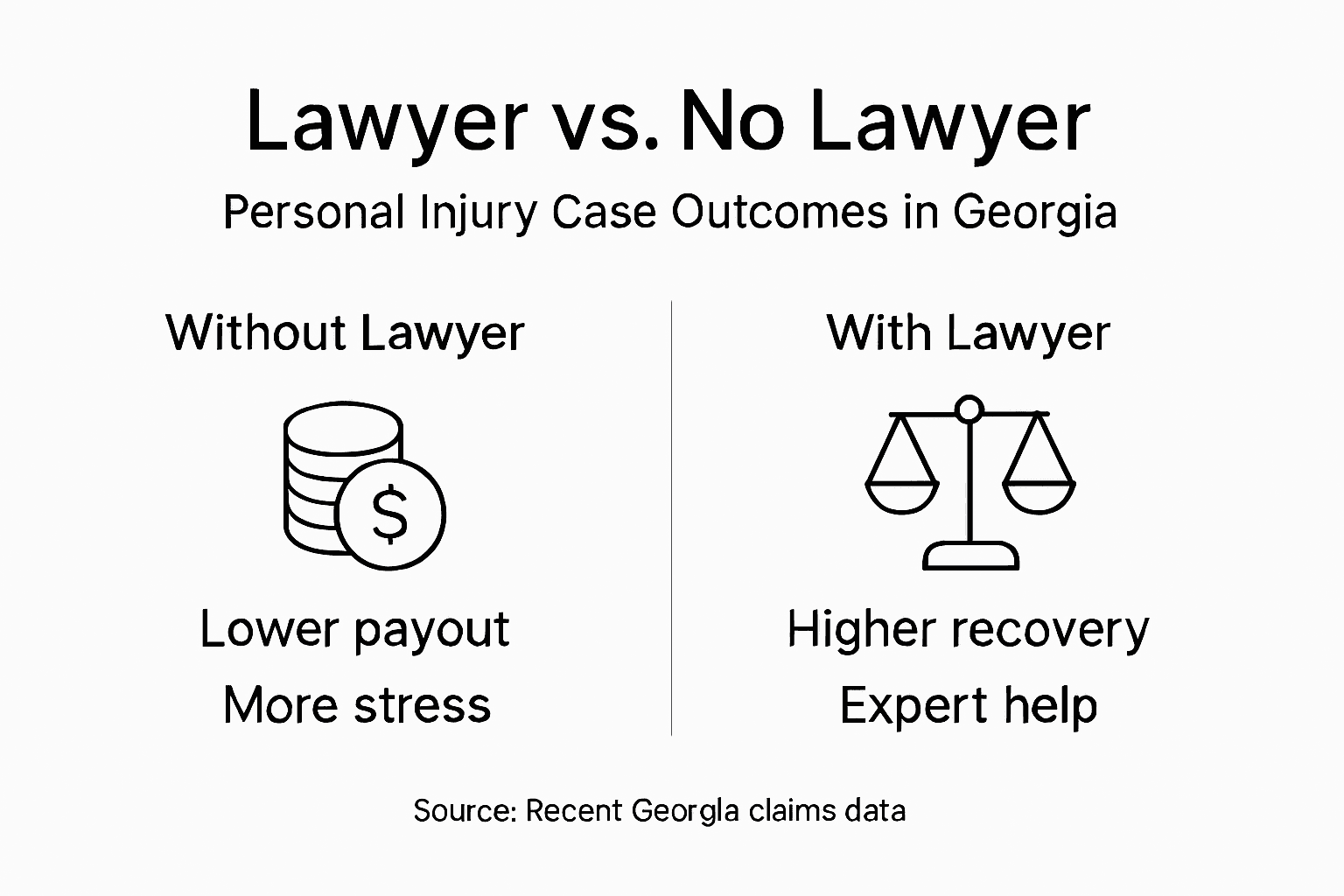
Studies show that accident victims represented by attorneys recover 3 to 4 times more than unrepresented victims. A victim recovering $100,000 instead of $30,000 nets $50,000 extra after paying 40% attorney fees—a clear financial advantage.
Pro tip: Ask your attorney about their fee structure and cost estimates during your free consultation—reputable firms clearly explain contingency percentages, case expenses, and how different case outcomes affect your net recovery.
Protect Your Rights with Expert Personal Injury Representation in Georgia
If you are facing the challenges outlined in this article such as dealing with insurance companies, navigating Georgia’s fault-based system, or maximizing your compensation after an accident, you are not alone. Jewkes Firm provides trusted legal support tailored to South Atlanta and surrounding counties, helping you overcome hurdles like comparative negligence and statute of limitations deadlines.

Don’t let insurance adjusters minimize your claim or miss critical deadlines that could cost you thousands. Visit Jewkes Firm today to schedule your free consultation and learn how our experienced attorneys can fight for the full compensation you deserve. Whether you need help with auto accidents, medical malpractice, or other personal injury matters, our client-focused team is ready to guide you every step of the way. Take control of your future now by contacting Jewkes Firm.
Frequently Asked Questions
What does a personal injury lawyer do?
A personal injury lawyer advocates for your rights after an accident, handling legal complexities, negotiating with insurance companies, gathering evidence, and fighting for fair compensation on your behalf.
Why is it important to hire a lawyer for my personal injury claim?
Hiring a lawyer ensures you have professional representation against insurance companies, helping you navigate complex legal processes, avoid costly mistakes, and maximize your potential compensation.
When should I contact a personal injury attorney?
You should contact a personal injury attorney if you suffer significant injuries, if the accident involved multiple parties, if an insurance company has denied your claim, or if you’re uncertain about liability in your case.
How does Georgia’s modified comparative negligence rule affect my claim?
Under Georgia’s modified comparative negligence rule, you can only recover damages if you’re less than 50% at fault for the accident. Your compensation will be reduced by your percentage of fault, making liability determination crucial for your case.