
TL;DR:
- Slip and fall accidents in Georgia are often caused by wet surfaces, clutter, or uneven surfaces.
- Prompt reporting, documentation, and legal guidance are crucial for successful injury claims.
- Property owners must maintain safe conditions, but individuals also share responsibility with proper footwear and attention.
Slip and fall accidents are one of the leading causes of serious injuries and personal injury claims across Georgia. If you were recently hurt on someone else’s property in South Atlanta, you are not alone, and you are not without options. Slips, trips, and falls happen due to insufficient friction, unexpected obstacles, or simple loss of balance. The decisions you make in the hours and days after an incident can shape both your physical recovery and the strength of your legal claim. This guide walks you through prevention strategies and the critical legal steps that follow.
Table of Contents
- Understand how and why slip and fall accidents happen
- Top slip and fall safety tips for prevention
- Situational hazards: South Atlanta and Georgia-specific risks
- What to do after a slip and fall: Protecting your health and legal rights
- Prevention vs. response: Georgia law and premises liability essentials
- Why quick, informed action matters most after a Georgia slip and fall
- Connect with experienced South Atlanta slip and fall attorneys
- Frequently asked questions
Key Takeaways
| Point | Details |
|---|---|
| Immediate response matters | Quick action after a fall boosts recovery and improves legal claim outcomes. |
| Preventive steps are key | Most slip and fall accidents are avoidable with proactive safety measures. |
| Georgia rules affect claims | Understanding Georgia’s fault and claim deadline laws gives your case the best chance. |
| Evidence is essential | Photos, witness information, and prompt reporting make legal claims stronger. |
Understand how and why slip and fall accidents happen
To take action, it’s vital to first understand what causes these accidents. Not all falls are the same, and the distinction matters both for prevention and for proving liability.
A slip happens when there is not enough friction between your footwear and the surface beneath you. Think wet grocery store floors, freshly mopped tiles, or an icy parking lot. A trip occurs when your foot catches on something, like clutter in a hallway, an uneven sidewalk edge, or a loose floor mat. A fall can result from either, or from a sudden loss of balance with no clear external cause. NIOSH research confirms that slips stem from surface friction failures while trips come from foot contact with objects or uneven surfaces.
Here are the most common causes of slip and fall incidents:
- Wet or freshly mopped floors without warning signs
- Spills left unattended in retail or restaurant settings
- Ice, snow, or rain tracked inside from outdoor surfaces
- Clutter, boxes, or cords left across walkways
- Uneven flooring, cracked pavement, or raised thresholds
- Poor lighting in stairwells, parking lots, or hallways
- Loose or missing handrails on stairs and ramps
The numbers behind these incidents are striking. Slip, trip, and fall incidents rank among OSHA’s top three injury causes, with over 211,000 incidents and 805 deaths recorded in 2020 alone. These are not freak accidents. They are predictable, preventable, and often the direct result of a property owner’s failure to maintain safe conditions.
| Incident type | Primary cause | Common location |
|---|---|---|
| Slip | Wet or slick surface | Stores, kitchens, parking lots |
| Trip | Obstacle or uneven surface | Sidewalks, hallways, warehouses |
| Fall | Balance loss or height | Stairs, ramps, elevated platforms |
Under Georgia slip and fall liability law, property owners have a legal duty to maintain reasonably safe conditions. When they fail, and you are hurt as a result, that failure can form the foundation of a valid premises liability claim.
Top slip and fall safety tips for prevention
Once you understand the risks, here’s exactly how to prevent them. Whether you own a home, manage a business, or simply move through public spaces daily, these steps make a real difference.
- Clean up spills immediately. Don’t wait. A wet floor left unattended for even a few minutes is a liability waiting to happen. Use absorbent materials and place warning signs right away.
- Keep walkways clear at all times. Remove boxes, cords, bags, and any clutter from hallways, aisles, and entryways. A clear path is a safe path.
- Fix uneven surfaces promptly. Raised thresholds, cracked tiles, or buckled flooring above one quarter of an inch are recognized trip hazards. Address them before someone gets hurt.
- Wear slip-resistant footwear. Shoes with proper grip dramatically reduce your risk, especially in wet or high-traffic environments. This matters in both prevention and legal context.
- Install and use handrails. Stairs and ramps without secure handrails are accident zones. Make sure they are firmly anchored and at the correct height.
- Improve lighting in high-risk areas. Stairwells, parking lots, and entryways need adequate lighting. Shadows and dim bulbs hide hazards until it’s too late.
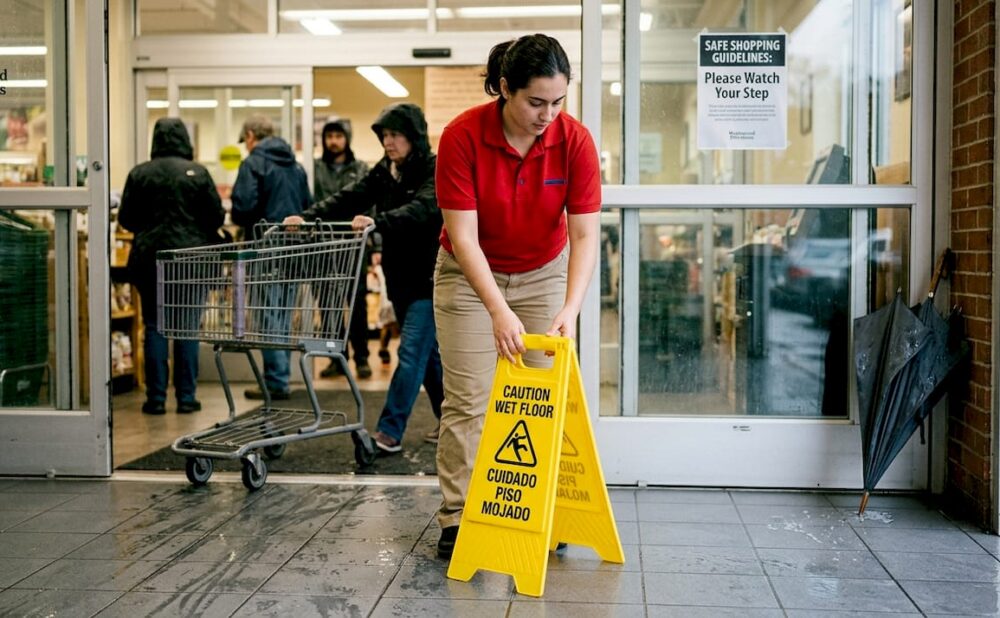
- Post warning signs for wet or cleaned floors. A simple wet floor sign can prevent injury and demonstrates that a property owner took reasonable precautions.
The NIOSH prevention framework emphasizes that these combined measures, not any single fix, are what consistently reduce incidents.
“A slip-resistant shoe and a clean floor are both necessary. One without the other still leaves you at risk.”
Pro Tip: If you are injured and did not have slip-resistant footwear, document everything else at the scene. Footwear is one factor, but property owner negligence often outweighs it. Review the full injury checklist for Georgia claims to make sure you haven’t missed a critical step.
Situational hazards: South Atlanta and Georgia-specific risks
Besides general tips, some risks are unique to South Atlanta and Georgia. The region’s climate, infrastructure, and high-traffic commercial areas create specific conditions that demand extra awareness.
Georgia’s warm, humid seasons bring frequent rain. That moisture gets tracked indoors constantly, creating slick entryways in grocery stores, office buildings, and restaurants. During the occasional winter freeze, ice forms quickly on surfaces that aren’t designed for it. The penguin walk method is recommended for icy conditions: short, flat-footed steps with your center of gravity directly over your feet.
Here are the most common Georgia-specific hazards to watch for:
- Rain and mud tracked inside retail and commercial spaces
- Ice on parking lots and walkways during brief winter freezes
- Elevation changes greater than one quarter of an inch at doorways and ramps
- Water pooling near building entrances without drainage
- Distracted walking in high-traffic areas like shopping centers and event venues
| Hazard type | Georgia risk level | Prevention approach |
|---|---|---|
| Rain-tracked water | High (year-round) | Entrance mats, frequent mopping, signage |
| Ice or frost | Moderate (winter months) | Sand, salt, slow deliberate steps |
| Uneven thresholds | High (older buildings) | Repair, marking, or ramp installation |
| Distracted walking | High (urban areas) | Awareness, phone-free walking zones |
Pro Tip: In South Atlanta’s busy commercial corridors, distractions are a serious risk factor. Phone use while walking significantly reduces your awareness of floor hazards. Put the phone away before you step into a store or cross a parking lot.
If you are hurt in one of these situations, knowing how to report slip and falls in South Atlanta is essential. The way you report the incident affects your access to the compensation guide for South Atlanta options available to you.
What to do after a slip and fall: Protecting your health and legal rights
If a slip or fall does happen, taking these steps can dramatically impact your recovery and case. Time is critical. Every hour that passes is an hour that evidence can disappear.
- Seek medical attention immediately. Even if you feel fine, some injuries, like concussions or soft tissue damage, appear hours later. A medical record from the day of the incident is powerful evidence.
- Document the scene. Photograph the hazard, your surroundings, any signage (or lack of it), and your injuries. Do this before anything is cleaned up or changed.
- Collect witness information. Names and phone numbers from anyone who saw what happened can be decisive later.
- Report the incident to the property owner or manager. Ask for a written copy of the incident report. Don’t leave without confirmation that it was filed.
- Do not give detailed statements or sign anything before speaking with an attorney. Insurance adjusters move fast, and early statements can be used against you.
| Action | Why it matters |
|---|---|
| Immediate medical visit | Creates a dated record of injuries |
| Scene photographs | Proves the hazard existed at the time |
| Witness contacts | Corroborates your account |
| Incident report copy | Establishes formal notice to property owner |
| Attorney consultation | Protects your rights before errors occur |
Georgia law gives you two years from the date of your incident to file a claim, under the statute of limitations for Georgia claims. Georgia also follows a modified comparative fault rule. If you are less than 50 percent responsible for the fall, you can still recover damages. Prompt reporting is tied to a 43 percent higher success rate in South Atlanta cases. Understanding Georgia evidence requirements from the start gives your case the foundation it needs. Make sure you also understand the full process of reporting slip and falls in Georgia so nothing gets missed.

Prevention vs. response: Georgia law and premises liability essentials
Finally, knowing the law puts your prevention and response into the right legal context. Georgia premises liability law draws a clear line between what a property owner must do and what you are responsible for as a visitor.
Property owners are legally required to inspect, maintain, and correct hazards on their premises. Standardized cleaning schedules, regular inspections, and staff training reduce incidents more consistently than any single flooring product or surface treatment. Process beats products every time.
The legal framework also considers your own behavior. Courts look at:
- Whether you were wearing appropriate footwear
- Whether you were distracted at the time of the fall
- Whether warning signs were visible and ignored
- Whether you had prior knowledge of the hazard
The American Bar Association’s analysis highlights the tension between engineering controls, like testing floor friction coefficients, and behavioral factors, like individual awareness and footwear choices. Both sides matter in a Georgia courtroom.
| Responsibility | Property owner | Visitor |
|---|---|---|
| Inspect and maintain floors | Required | Not applicable |
| Post hazard warnings | Required | Not applicable |
| Wear appropriate footwear | Not applicable | Expected |
| Avoid distractions | Not applicable | Expected |
If you are less than 50 percent at fault, Georgia law allows you to recover damages proportional to the owner’s share of responsibility. Understanding the Georgia settlement process and what insurance covers slip and fall injuries gives you a clearer picture of what a fair outcome looks like.
Why quick, informed action matters most after a Georgia slip and fall
Here’s a perspective shaped by years of handling these cases across South Atlanta and surrounding Georgia counties. Most people assume that if the hazard was obvious, the case is straightforward. That assumption costs injured victims every year.
The truth is, Georgia slip and fall cases turn on documentation speed and fault percentages more than they turn on how dangerous the hazard looked. Evidence disappears fast. Floors get mopped. Surveillance footage gets overwritten. Witnesses move on. The window to build a strong case is shorter than most people realize.
Georgia’s modified comparative fault rule means the property owner’s legal team will look for any reason to push your share of fault above 50 percent. Your footwear, your phone, your awareness, all of it becomes relevant. Prompt documentation is tied directly to a 43 percent higher claim success rate in South Atlanta. That is not a small margin.
Knowing how to collect slip and fall evidence immediately after an incident is the single most impactful thing you can do. Don’t wait to feel worse. Don’t wait to see if it resolves on its own. Act fast, document everything, and get legal guidance before the other side gets ahead.
Connect with experienced South Atlanta slip and fall attorneys
Ready to take the safest next step? You’ve learned what causes these accidents, how to prevent them, and what to do if one happens to you. Now the most important move is getting experienced legal support before critical evidence is lost or deadlines pass.

The South Atlanta slip and fall attorneys at The Jewkes Firm are dedicated to protecting injured clients from the common mistakes that derail valid claims. We offer FREE consultations with no obligation, and you pay nothing unless we win. Whether you need to understand your compensation options for South Atlanta or are ready to move forward with a claim, we are here to fiercely protect your rights. Call today. Your path to recovery starts with one conversation.
Frequently asked questions
How soon should I report a slip and fall in Georgia?
Report the incident as soon as possible. Prompt reporting is directly linked to a 43 percent higher claim success rate in South Atlanta cases, so every hour matters.
What type of evidence helps my slip and fall case?
Photographs of the hazard, witness contact information, dated medical records, and proof of the property condition at the time of the fall are the most effective. Document hazards immediately to establish owner knowledge and breach of duty.
Can I still recover damages if I was partly at fault?
Yes. Georgia’s modified comparative fault rule allows you to recover damages as long as you are found to be less than 50 percent responsible for the incident.
How long do I have to file a slip and fall claim in Georgia?
Georgia’s statute of limitations gives you two years from the date of your slip and fall to file a claim. Missing this deadline typically bars you from recovering any compensation.