

Stumbling on a slick floor in a South Atlanta grocery store can change your day in an instant. Suddenly, medical bills pile up and missing work becomes a reality. Understanding how a slip and fall settlement works is your first step in holding property owners accountable when their negligence causes your injury. Learn how local laws protect your rights and what evidence strengthens your claim for fair compensation.
Table of Contents
- Defining Slip and Fall Accident Settlements
- Common Causes and Case Types in Georgia
- Liability, Evidence, and Legal Rights
- Settlement Timeline and Negotiation Steps
- Mistakes to Avoid and Maximizing Recovery
Key Takeaways
| Point | Details |
|---|---|
| Understanding Liability | Property owners have a duty to maintain safe premises; proving negligence is crucial for a successful claim. |
| Importance of Documentation | Gather evidence immediately after an accident to strengthen your case, including photos and witness statements. |
| Settlement Process Timeline | Slip and fall settlements typically take 6 to 18 months from the incident to payment, involving investigation and negotiation phases. |
| Avoid Common Mistakes | Delaying medical treatment or accepting the first settlement offer can significantly reduce your compensation. |
Defining Slip and Fall Accident Settlements
A slip and fall settlement is a legal agreement where a property owner or their insurance company agrees to pay you compensation for injuries you sustained on their premises. This falls under premises liability law, which holds property owners responsible when their negligence causes harm to visitors.
When you slip, trip, or fall on someone else’s property due to unsafe conditions, you have the right to pursue a claim. The property owner’s liability arises from their control or ownership of the premises where your injury occurred. This is why the location where you fell matters so much in your case.
What Makes It Different From Other Personal Injury Claims
Slip and fall cases are a specific category within personal injury law. Unlike other injury claims, these cases focus on one key question: Did the property owner fail to maintain a safe environment?
The defendant (usually the property owner) must have either created the hazardous condition, known about it, or should reasonably have known about it. Their failure to address the danger is what makes them liable for your injuries.
Key Elements You’ll Need to Prove
To win a settlement, you need to establish specific facts about what happened:
- The property owner owed you a duty of care to maintain safe premises
- They breached that duty by failing to fix or warn of the hazard
- Your fall resulted directly from their negligence
- You suffered actual damages (medical bills, lost wages, pain and suffering)
This is why understanding negligence requirements is critical to your claim’s success.
Settlement vs. Trial Verdict
Most slip and fall cases settle before trial. A settlement means both sides agree on a payment amount without going to court. You receive compensation faster, avoid the uncertainty of a jury decision, and skip the stress of litigation.
If your case doesn’t settle, you may proceed to trial where a judge or jury decides the outcome. Settlements typically happen because the evidence clearly shows negligence, or the property owner’s insurance company wants to avoid higher trial costs.
What Compensation Covers
Your settlement should reimburse you for:
- Medical treatment and ongoing care
- Lost wages from time unable to work
- Pain and suffering from your injury
- Permanent disability or scarring
- Loss of quality of life
In some cases, structured settlements provide periodic payments over time instead of a lump sum, especially for serious long-term injuries.
A settlement amount reflects both your actual losses and the strength of your evidence proving the property owner’s negligence. The stronger your case, the higher the offer tends to be.
Why Location Matters
Georgia law applies different standards depending on your status when you fell. Were you a customer, invited guest, or trespasser? Your legal standing affects what the property owner owed you in terms of safety.
In South Atlanta, local establishments—from shopping centers to restaurants to office buildings—must maintain reasonably safe conditions. If they fail and you’re injured, you have grounds for a claim.
Pro tip: Document everything immediately after your fall: take photos of the hazard, get witness contact information, and report the incident to the property owner in writing so there’s an official record of when they learned about the condition.
Common Causes and Case Types in Georgia
Slip and fall accidents in Georgia happen for predictable reasons. Most incidents stem from unsafe conditions that property owners should have prevented or corrected. Understanding what caused your fall strengthens your case because it proves negligence on the defendant’s part.
The Most Common Hazards
You likely encountered one of these conditions before your accident:
- Wet or slippery floors from spills, rain, or recent cleaning
- Loose rugs, mats, or carpeting that catch your foot
- Obstructions blocking walking paths or stairs
- Poor lighting that hides hazards from view
- Uneven walking surfaces like cracked pavement or missing stair edges
- Debris scattered across floors or parking lots
Each hazard tells a story about negligence. Did the property owner create the condition? Did they know about it? Should they have known? Your answers matter.
Where Georgia Accidents Happen Most
Slip and fall claims in South Atlanta typically involve specific locations where negligence is common:
- Grocery stores with wet floors from produce displays or spills
- Parking lots with oil stains, potholes, or poor drainage
- Restaurants where kitchen spills reach dining areas
- Shopping centers with entryways that get slippery during rain
- Apartment complexes with broken stairs or inadequate maintenance
- Office buildings where janitorial work creates slip hazards
Retail and food service establishments have higher settlement amounts because juries expect them to maintain pristine floors.

Age and Injury Severity Matter
Falls affect people differently depending on age and physical condition. Older adults often suffer more severe injuries from the same fall that might cause minor bruises for younger victims.
Your case value rises significantly if you’re over 65 or have pre-existing conditions. Your injuries determine compensation—fractures, head trauma, and spinal damage result in higher settlements than sprains.
Types of Georgia Slip and Fall Cases
Not all slip and fall cases are identical. Georgia courts categorize them based on property type and your legal status:
- Invitee cases involve customers or guests invited to premises (highest duty of care owed)
- Licensee cases involve people with permission but no business purpose (moderate duty of care)
- Trespasser cases involve uninvited people (lowest duty of care, rarely successful)
You likely qualify as an invitee if you were shopping, dining, or conducting business when you fell.
Here’s a quick comparison of the three main visitor status categories in Georgia slip and fall cases:
| Visitor Status | Duty of Care Owed by Owner | Likelihood of Successful Claim | Common Example |
|---|---|---|---|
| Invitee | Highest: active inspection and warning | Very high | Restaurant customer |
| Licensee | Moderate: warn of known hazards | Moderate | Friend visiting a tenant |
| Trespasser | Minimal: avoid intentional harm | Very low | Person entering after hours |
Your location and legal status when you fell determine how much care the property owner legally owed you—and directly impact your settlement value.
Documentation Creates Stronger Cases
The strongest Georgia cases have clear evidence: photos of the hazard, witness statements, and incident reports. Without documentation, the property owner’s insurance company disputes your claim about what caused your fall.
They’ll argue the hazard didn’t exist, you weren’t paying attention, or you had a pre-existing condition. Evidence silences those arguments.
Pro tip: If you’re physically able after your fall, photograph the exact spot where you fell, including the hazard that caused it, wide shots showing poor lighting or obstructions, and any warning signs that should have been posted—do this before property owners clean up or repair the area.
Liability, Evidence, and Legal Rights
Proving liability is the foundation of your slip and fall case. You must demonstrate that the property owner’s negligence directly caused your injuries. Georgia law gives you specific weapons to build this argument, but only if you understand how liability works in your state.
Understanding Property Owner Duty
Georgia premises liability law requires property owners to maintain safe conditions for visitors on their property. The amount of care they owe you depends on your classification: invitee, licensee, or trespasser.
As a customer or visitor, you’re almost certainly an invitee. This means the property owner owed you the highest standard of care. They must not only fix known hazards—they must also inspect regularly for hidden dangers and warn you about any risks.
Knowledge Is the Key to Liability
The property owner’s knowledge of the hazard determines their liability. Georgia courts look at two types of knowledge:
- Actual knowledge: They knew the hazard existed because an employee told them, they saw it themselves, or someone reported it
- Constructive knowledge: They should have known because a reasonable property owner would have discovered it during regular inspections
If a spill happened five minutes before you fell, the owner might not have actual knowledge. But if the spill sat there for an hour, constructive knowledge applies—they should have found it.
The Evidence You Need
Strong evidence transforms your case from “he said, she said” into undeniable fact. Gather these types of documentation:
- Photos or videos of the exact hazard
- Witness statements from people who saw the condition
- Incident reports filed with the property owner
- Maintenance records showing neglected upkeep
- Prior complaints from other customers about the same hazard
- Security camera footage from the property
Maintenance records are especially powerful. They reveal whether the owner inspected regularly or ignored safety responsibilities.
Your Right to Compensation
Georgia law entitles you to recover damages for your injuries when a property owner’s negligence caused them. Your settlement should cover:
- Past and future medical expenses
- Lost wages and earning capacity
- Pain and suffering
- Permanent scarring or disability
- Reduced quality of life
The strength of your evidence directly determines your settlement amount. Juries award more money when liability is crystal clear.
Without evidence proving the property owner knew or should have known about the hazard, you cannot establish negligence—no matter how severe your injuries.
Why Georgia’s Rules Favor You
Georgia courts lean toward injured visitors because property owners have the power to prevent accidents. They control the premises, conduct inspections, and hire maintenance staff. When they fail these responsibilities, courts hold them accountable.
Your status as an invitee strengthens your position significantly compared to trespasser cases.
Pro tip: Preserve all evidence immediately: request the property owner’s maintenance logs and inspection records through your attorney, preserve any security footage before it’s automatically deleted, and obtain written statements from witnesses while their memories are fresh—within days, not weeks.
Settlement Timeline and Negotiation Steps
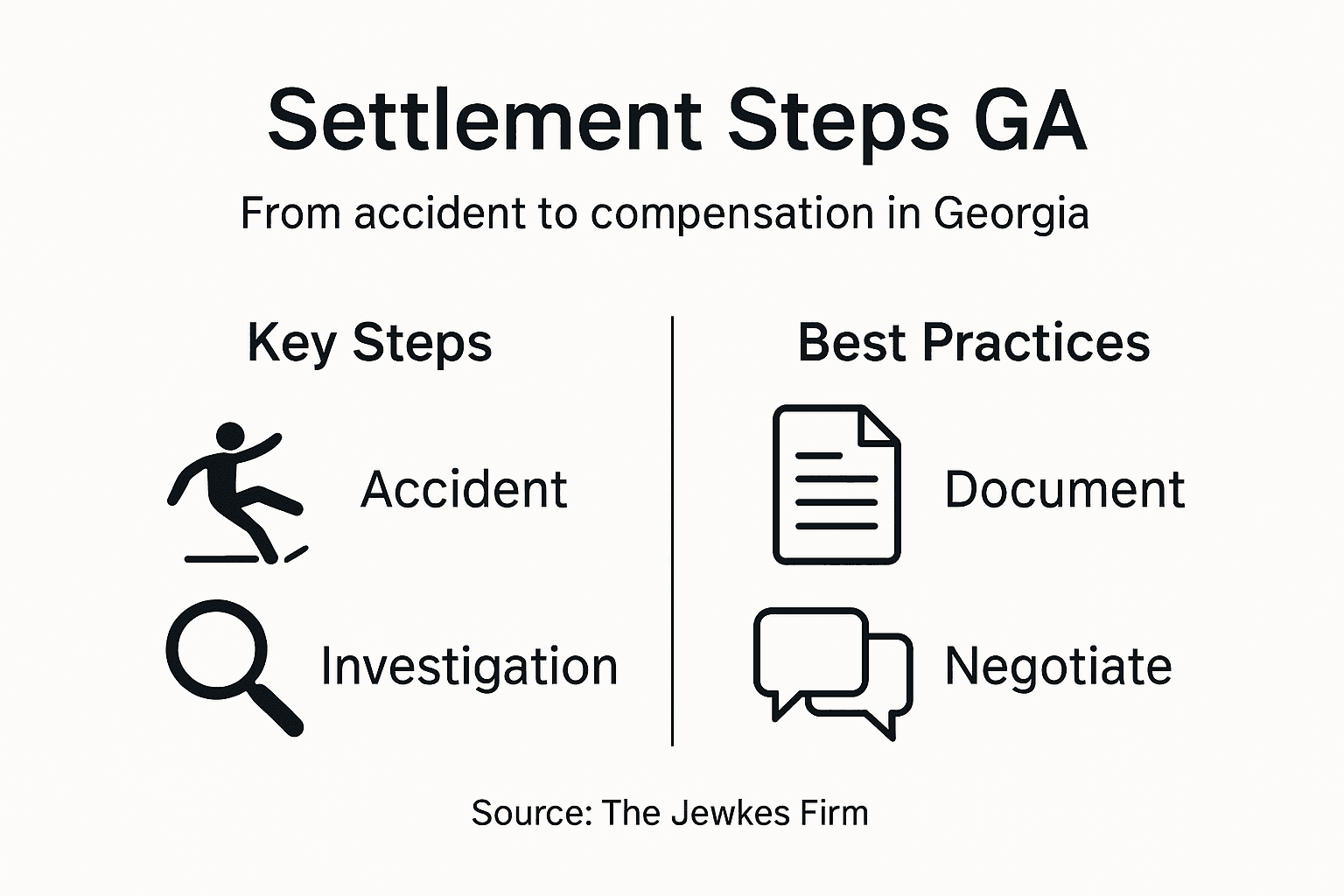
The path from accident to settlement payment takes time. Most slip and fall cases settle within 6 to 18 months, but the process involves several distinct phases. Understanding each step helps you know what to expect and when to push for faster resolution.
Phase One: Investigation and Demand Letter
Your attorney begins by gathering evidence and building your case file. This phase typically takes 2 to 4 months. Your lawyer collects medical records, photographs of the hazard, witness statements, and maintenance documents.
Once the investigation is complete, your attorney sends a demand letter to the property owner’s insurance company. This letter outlines your injuries, damages, and the compensation you’re seeking based on Georgia precedent and similar cases.
Phase Two: Insurance Company Response
The insurer reviews your demand and usually responds with a lower counteroffer. This is normal. Insurance companies almost never accept the first demand because their job is minimizing payouts, not ensuring fair compensation.
Your attorney evaluates their counteroffer and determines whether to negotiate further or prepare for trial. This phase typically lasts 4 to 8 weeks.
The Negotiation Dance
Settlement negotiations involve back-and-forth exchanges of offers and counteroffers. Your attorney submits revised demands with additional evidence supporting higher compensation. The insurer gradually increases their offers as settlement discussions progress.
Most cases settle during this phase when both sides recognize the other’s position has merit. Strong evidence accelerates settlement because insurers fear losing at trial.
Settlement Agreement and Release
Once you and the insurer agree on an amount, a legally binding settlement agreement and release document is drafted. This agreement specifies:
- The exact settlement amount
- That you release all future claims related to this injury
- Payment terms and timeline
- Confidentiality requirements (if applicable)
You must sign this document before receiving payment. Read it carefully—signing means you cannot sue for additional damages later.
Payment Processing
Georgia settlement figures vary significantly depending on injury severity and case circumstances. After you sign the agreement, the defendant’s insurance company processes payment, typically within 2 to 4 weeks.
Payment is usually mailed to your attorney’s office. Your attorney deducts their contingency fee (typically 33% for settlements), reimburses case expenses, and pays you the remaining balance.
Settlement agreements are permanent. Once signed, you cannot reopen your case if your injuries worsen or medical bills exceed initial projections.
Timeline Expectations
Here’s what the overall timeline typically looks like:
- Investigation: 2-4 months
- Demand letter and response: 4-8 weeks
- Negotiation phase: 2-6 months
- Settlement agreement drafting: 2-4 weeks
- Payment processing: 2-4 weeks
Total: 6 to 18 months from accident to payment in your account.
Pro tip: Don’t rush to settle just because you need money immediately; your attorney can negotiate payment plans or request faster processing if you’re facing financial hardship, but accepting the first lowball offer costs you thousands in lost compensation.
Mistakes to Avoid and Maximizing Recovery
One bad decision can cost you tens of thousands in settlement money. Slip and fall victims often sabotage their own cases through preventable mistakes. Knowing what to avoid puts you in control of your recovery outcome.
Don’t Delay Medical Treatment
The biggest mistake victims make is waiting days or weeks to see a doctor. Insurance companies interpret delay as proof your injuries weren’t serious. They’ll argue you’re exaggerating the harm or that your injuries came from something else entirely.
Go to the emergency room or urgent care immediately after your fall. Get a full medical evaluation and keep detailed records of everything the doctor finds. Early documentation creates a clear timeline linking your injuries directly to the accident.
Don’t Post About Your Accident Online
Social media is a gift to insurance companies defending your claim. Posts showing you hiking, exercising, or having fun—even weeks after your accident—contradict your injury claims.
Insurance investigators screenshot and archive everything you post. They use social media against you in settlement negotiations and trial. Assume every post is evidence the defense will weaponize.
Don’t Accept the First Settlement Offer
Insurance companies always start low. Their first offer is typically 30% to 50% of what your case is actually worth. Accepting it means leaving thousands on the table.
Let your attorney negotiate. The insurer expects back-and-forth offers. Your attorney knows how to maximize recovery through evidence-based negotiation strategies that force them to increase their offers.
Don’t Give Recorded Statements to the Other Side
The property owner’s insurance adjuster will call asking for a statement. Politely decline. Anything you say can and will be used against you. Insurance companies train adjusters to ask leading questions designed to get you to minimize your injuries or admit fault.
Your attorney handles all communications with the defense. Never speak directly to their representatives.
Don’t Destroy Evidence
Keep everything related to your accident:
- Clothing you wore when you fell
- Shoes with wear marks from slipping
- Medical receipts and bills
- Photos of the accident scene
- Text messages with witnesses
- Insurance correspondence
The property owner will try to clean up the hazard, repair damage, or remove security footage. You can’t control their actions, but you can preserve your own evidence immediately.
Maximize Recovery Through Documentation
Strong evidence transforms settlements. Build your case by:
Use this table to understand actions that can strengthen or weaken your slip and fall settlement:
| Action | Effect on Settlement | Explanation |
|---|---|---|
| Prompt medical treatment | Increases case value | Shows injuries are directly related |
| Detailed evidence collection | Strengthens negotiations | Makes liability easier to prove |
| Accepting first offer | Reduces compensation | Usually far below claim’s full value |
| Posting accident online | Weakens your case | Insurers may use posts against you |
| Attorney negotiations | Maximizes recovery | Experienced tactics drive up offers |
| Lost or destroyed evidence | Lessens likelihood of win | Harder to prove owner’s negligence |
- Seeking immediate medical care with detailed evaluations
- Obtaining witness contact information at the scene
- Photographing the hazard before it’s cleaned
- Requesting incident reports from the property owner
- Keeping all medical records and bills organized
- Documenting how injuries affect daily life
The difference between a $15,000 settlement and a $75,000 settlement often comes down to documentation quality. Insurance companies pay more when evidence is airtight.
Don’t Ignore Your Attorney’s Advice
Your attorney understands Georgia law, local court procedures, and insurance company tactics. When they advise against settling early or warn you about social media, listen. Their experience prevents costly mistakes that could reduce your compensation by thousands.
Pro tip: Create a settlement notebook immediately after your accident: organize medical records chronologically, keep receipts for all expenses, document lost wages with employer statements, record how your injuries affect work and daily activities in a daily journal, and store everything in one secure location for easy attorney access.
Protect Your Rights After a Slip and Fall in Georgia
Slip and fall accidents can cause serious injuries and complex legal challenges. If you suffered because a property owner neglected their duty of care, you deserve expert help to secure the compensation you need for medical bills, lost wages, and pain and suffering. jewkesfirm specializes in Georgia slip and fall settlements and understands how crucial evidence, liability, and timing are to maximizing your recovery.

Take control of your claim today by contacting jewkesfirm for a free consultation. Our experienced attorneys work on a contingency fee basis, meaning you pay nothing unless we win your case. Do not delay in preserving your rights. Visit rich legal resources and client testimonials and let us guide you through every step toward a successful settlement.
Frequently Asked Questions
What is a slip and fall settlement?
A slip and fall settlement is a legal agreement in which a property owner or their insurance company compensates an individual for injuries sustained on their premises due to unsafe conditions.
How do I prove negligence in a slip and fall case?
To prove negligence, you must show that the property owner owed you a duty of care, breached that duty by failing to maintain safe premises, and that your fall directly resulted from their failure, leading to actual damages.
What types of compensation can I receive from a slip and fall settlement?
Compensation can cover various damages, including medical expenses, lost wages, pain and suffering, and loss of quality of life. In some cases, structured settlements may provide periodic payments for serious long-term injuries.
How long does the settlement process take for a slip and fall case?
The settlement process for a slip and fall case typically takes between 6 to 18 months, depending on the circumstances, including the investigation phase, negotiation, and payment processing.
Recommended
- Georgia Personal Injury Lawyers | jewkesfirm, LLC
- Physical Disability Support in Sandhills | Chamomile Care