
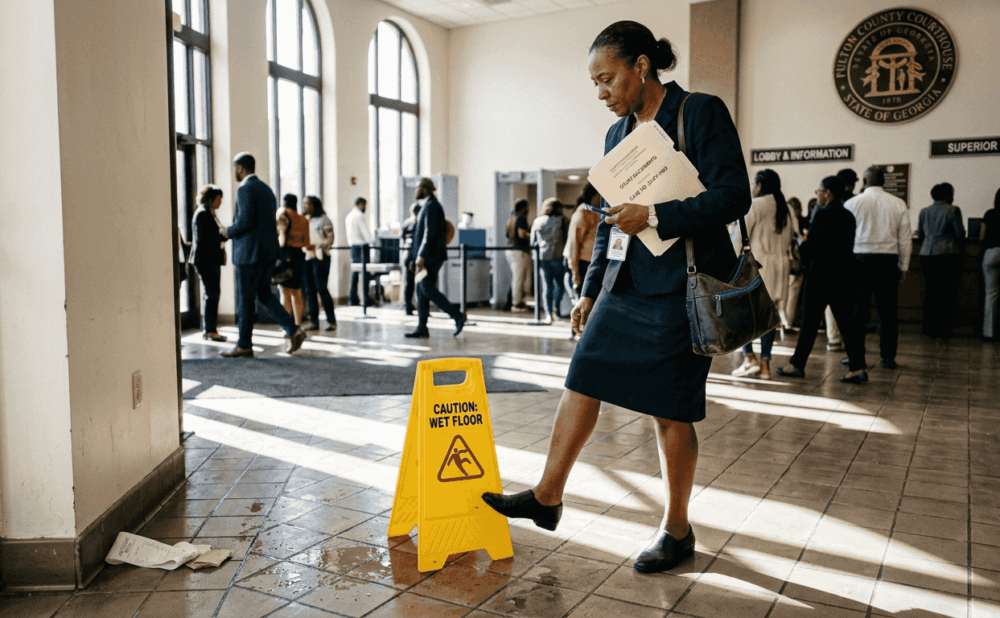
Many people assume slip and fall claims are straightforward, but proving fault in Georgia involves navigating complex legal requirements around premises liability and negligence. Property owners must maintain safe conditions, yet demonstrating they knew about a hazard and failed to act requires specific evidence and legal strategy. Understanding your rights and the compensation process empowers you to protect yourself after an accident. This guide explains what slip and fall claims are, how to prove negligence under Georgia law, potential compensation outcomes, and practical steps to file your claim successfully in South Atlanta and surrounding counties.
Table of Contents
- What Is A Slip And Fall Claim In Georgia?
- How Do You Prove A Slip And Fall Claim In Georgia?
- Typical Compensation And Recent Slip And Fall Case Results In Georgia
- Filing Your Slip And Fall Claim: Practical Steps For South Atlanta Residents
- Get Expert Help With Your Slip And Fall Claim In Georgia
- Frequently Asked Questions About Slip And Fall Claims In Georgia
Key takeaways
| Point | Details |
|---|---|
| Legal basis | Slip and fall claims in Georgia require proving the property owner breached their duty of care through negligence. |
| Knowledge requirement | You must demonstrate the defendant had actual or constructive knowledge of the hazardous condition that caused your injury. |
| Compensation potential | Damages can include medical expenses, lost wages, pain and suffering, and future care costs, with verdicts sometimes reaching millions. |
| Documentation matters | Prompt evidence collection, including photos, witness statements, and medical records, significantly strengthens your claim. |
| Time limits apply | Georgia’s statute of limitations requires filing within specific timeframes to preserve your right to compensation. |
What is a slip and fall claim in Georgia?
A slip and fall claim is a legal action seeking compensation for injuries sustained when someone slips, trips, or falls due to a hazardous condition on another person’s property. These accidents happen in various settings: grocery stores with spilled liquids, office buildings with broken flooring, restaurants with cluttered walkways, or apartment complexes with poorly maintained stairs. The legal framework governing these cases falls under premises liability, which holds property owners and occupiers responsible for maintaining reasonably safe conditions for visitors.
Georgia law establishes a duty of care that property owners owe to people lawfully on their premises. This duty varies based on the visitor’s legal status: invitees (customers, clients) receive the highest protection, licensees (social guests) receive moderate protection, and trespassers generally receive minimal protection. For most slip and fall cases involving businesses or public spaces, injured parties qualify as invitees, meaning the property owner must actively inspect for hazards and either fix them or provide adequate warning.
Proving negligence requires demonstrating four elements: the defendant owed you a duty of care, they breached that duty by failing to maintain safe conditions, their breach directly caused your injuries, and you suffered actual damages. This legal standard means you cannot simply show you fell and got hurt. You must connect the property owner’s specific failure to the dangerous condition that caused your accident.
Common hazardous conditions leading to slip and fall claims include:
- Wet or slippery floors without warning signs
- Uneven pavement or cracked sidewalks
- Poor lighting in stairwells or walkways
- Torn carpeting or loose floor mats
- Ice or snow accumulation in parking lots
- Debris or obstacles blocking walkways
- Broken handrails or missing safety features
Understanding these foundational concepts helps you recognize when a property owner’s negligence may entitle you to compensation. The next critical step involves gathering evidence to prove your case meets Georgia’s legal standards.
How do you prove a slip and fall claim in Georgia?
Successfully proving a slip and fall claim requires meeting specific evidentiary standards under Georgia law. The burden falls on you as the injured party to demonstrate the property owner’s fault through clear, convincing evidence. Many claims fail because injured individuals cannot establish the defendant knew about the hazard or should have discovered it through reasonable inspection.
Follow these essential steps to build a strong case:
-
Establish the defendant had actual or constructive knowledge of the hazardous condition. Actual knowledge means they directly knew about the danger, such as an employee witnessing a spill. Constructive knowledge means the hazard existed long enough that reasonable inspection would have discovered it.
-
Demonstrate the property owner breached their duty of care by failing to repair the hazard or warn visitors. This might involve showing they ignored maintenance requests, skipped routine inspections, or failed to post warning signs around known dangers.
-
Prove the breach directly caused your specific injuries through medical records, expert testimony, and accident scene documentation. You must connect the dangerous condition to your fall and resulting harm.
-
Show you exercised reasonable care for your own safety and did not contribute to the accident through carelessness or distraction.
Direct evidence includes surveillance footage showing the hazard, maintenance logs revealing inspection failures, or witness testimony from employees who knew about the condition. Circumstantial evidence might involve photos showing wear patterns suggesting a long-standing problem, weather records for outdoor hazards, or expert analysis of how long a substance takes to create a slippery surface.
Georgia follows a modified comparative negligence rule, meaning your compensation reduces proportionally if you share fault. If you are 50% or more responsible for your accident, you recover nothing. This makes proving the defendant’s negligence while minimizing your own contribution absolutely critical.
Pro Tip: Take photos and videos of the accident scene immediately, capturing the hazard from multiple angles, surrounding conditions, lighting levels, and any warning signs or their absence. This evidence degrades quickly as property owners clean up or make repairs, so document everything before leaving if physically possible.
The strength of your evidence directly impacts settlement negotiations and trial outcomes. Property owners and their insurers scrutinize claims carefully, looking for weaknesses in your proof. Hiring a slip and fall lawyer experienced in Georgia premises liability law helps you gather compelling evidence and counter defense strategies effectively.
Typical compensation and recent slip and fall case results in Georgia
Slip and fall victims in Georgia can recover various types of damages depending on their injury severity and case circumstances. Understanding potential compensation categories helps you evaluate settlement offers and pursue fair recovery for your losses.
| Damage Category | Examples |
|---|---|
| Economic damages | Hospital bills, surgery costs, physical therapy, prescription medications, medical equipment |
| Lost income | Missed work during recovery, reduced earning capacity, lost business opportunities |
| Non-economic damages | Physical pain, emotional distress, loss of enjoyment of life, permanent disability |
| Future costs | Ongoing medical treatment, long-term care needs, home modifications for disabilities |
Compensation amounts vary dramatically based on several factors:
- Injury severity and permanence (minor bruises versus traumatic brain injury or spinal damage)
- Medical treatment costs and duration of recovery
- Impact on your ability to work and earn income
- Degree of property owner negligence and knowledge of the hazard
- Quality and quantity of evidence supporting your claim
- Comparative fault percentage assigned to you
Recent verdicts demonstrate the potential for substantial recovery in serious cases. A Gwinnett County jury awarded $2.3 million to a slip and fall accident victim, showing that Georgia juries recognize the devastating impact these injuries can have on victims’ lives. This case involved significant medical expenses, permanent injuries, and clear evidence of the property owner’s negligence in maintaining safe premises.
Most slip and fall claims settle before trial, with amounts ranging from a few thousand dollars for minor injuries to hundreds of thousands for severe, life-altering harm. Insurance companies typically offer low initial settlements, hoping injured parties will accept quick payment without understanding their claim’s true value. Understanding the slip and fall settlement process helps you negotiate effectively and avoid accepting inadequate compensation.
Pro Tip: Consult with an experienced personal injury attorney before accepting any settlement offer, even if it seems generous. Insurance adjusters know most people lack legal expertise and may pressure you to settle quickly before you fully understand your injury’s long-term impact and associated costs.
Maximizing your compensation requires thorough documentation of all damages, expert testimony on future medical needs, and skilled negotiation with insurance companies backed by willingness to take your case to trial if necessary.
Filing your slip and fall claim: Practical steps for South Atlanta residents
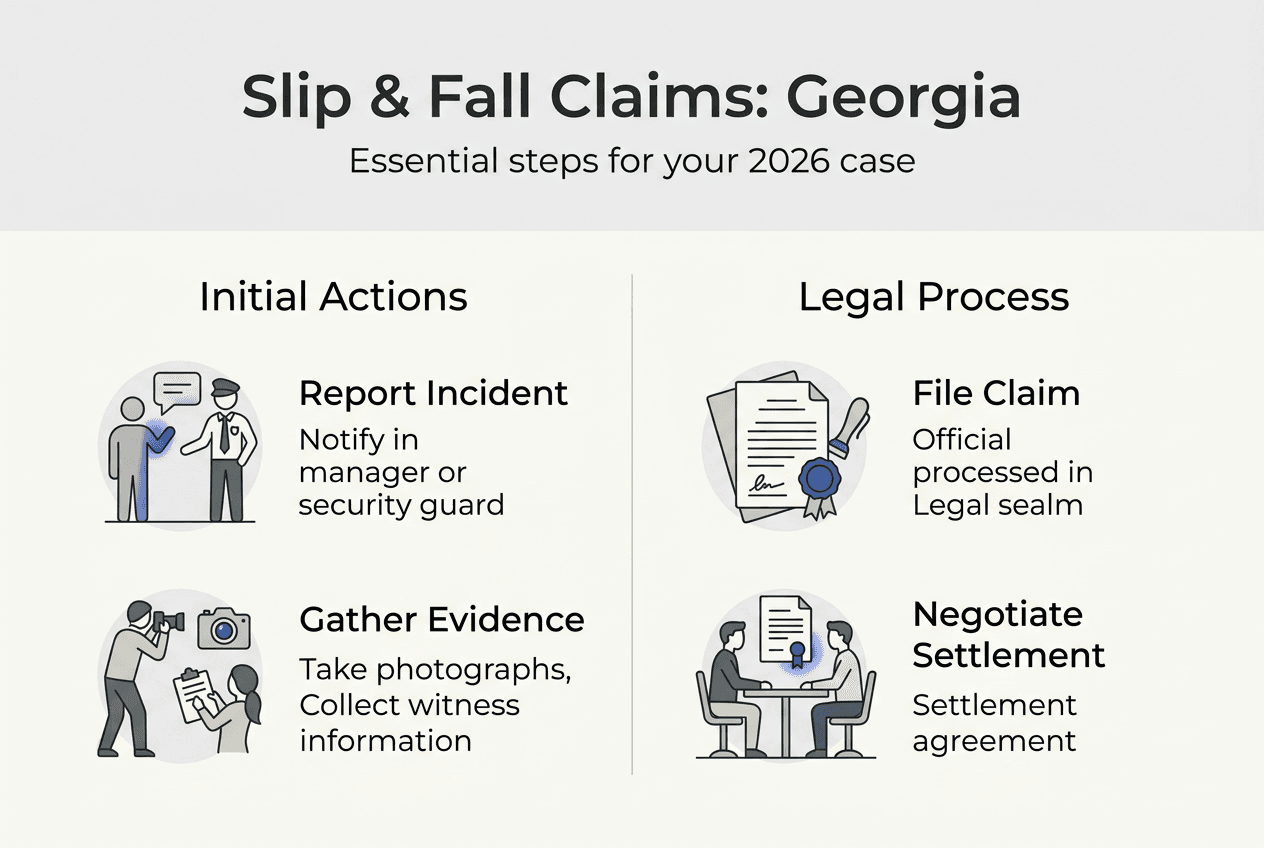
Taking prompt, organized action after a slip and fall accident protects your legal rights and strengthens your claim. Many injured people delay seeking help, allowing critical evidence to disappear and deadlines to pass. Follow these practical steps to build a strong foundation for your case.
-
Get medical care immediately, even if your injuries seem minor. Some serious conditions like concussions or internal injuries show delayed symptoms. Medical records create an official injury timeline and demonstrate you took your health seriously.
-
Report the accident to the property owner, manager, or business operator as soon as possible. Request they document the incident in writing and ask for a copy of the report. This creates an official record before they can claim ignorance of the accident.
-
Document the scene thoroughly with your phone camera. Photograph the hazard that caused your fall, surrounding area, lighting conditions, any warning signs or their absence, and your visible injuries. Collect contact information from witnesses who saw the accident occur.
-
Notify your insurance company about the accident, but avoid giving detailed recorded statements without legal advice. Insurance adjusters may use your words against you to minimize your claim’s value or deny coverage entirely.
-
Consult with a Georgia personal injury lawyer experienced in premises liability cases. Most firms offer free consultations and work on contingency fees, meaning you pay nothing unless they recover compensation for you.
-
File your claim or lawsuit within Georgia’s statute of limitations, typically two years from the accident date for personal injury cases. Missing this deadline permanently bars you from seeking compensation, regardless of how strong your case might be.
Reporting slip and falls promptly protects your rights and improves claim success by preserving evidence and establishing a clear accident record. Property owners often make repairs immediately after incidents, eliminating physical proof of the hazard. Delayed reporting also gives defendants ammunition to argue your injuries came from another source or that the accident never happened as you described.
Understanding the filing injury lawsuit guide helps you navigate the legal process confidently, from initial claim submission through potential trial. Many cases resolve through settlement negotiations, but having an attorney prepared to litigate demonstrates your seriousness and often leads to better settlement offers.
Timely action separates successful claims from denied ones. Property owners and insurers look for reasons to avoid paying compensation, and procedural mistakes or delayed reporting provide easy grounds for denial.
Get expert help with your slip and fall claim in Georgia
Navigating slip and fall claims without experienced legal guidance often results in denied claims or inadequate settlements that fail to cover your full losses. Property owners and their insurance companies employ teams of lawyers and adjusters trained to minimize payouts, making it essential you have skilled representation protecting your interests.

Georgia personal injury lawyers at The Jewkes Firm understand the complexities of premises liability law and have recovered millions for injured clients throughout South Atlanta and surrounding counties. We offer free consultations to evaluate your case, explain your legal options, and outline a clear path toward fair compensation. Our contingency fee structure means you pay nothing unless we win your case, removing financial barriers to quality legal representation.
Our comprehensive services for slip and fall victims include:
- Thorough investigation of accident circumstances and evidence collection
- Expert consultation to establish causation and future medical needs
- Aggressive negotiation with insurance companies to maximize settlements
- Trial preparation and litigation when insurers refuse fair compensation
- Guidance through every step of the claims process with personalized attention
Understanding the benefits of hiring a slip and fall lawyer helps you make informed decisions about your case. Legal representation significantly improves outcomes by leveling the playing field against well-funded defendants and ensuring you meet all procedural requirements. Contact us today to discuss your slip and fall injury and learn how we can help you pursue the compensation you deserve.
Frequently asked questions about slip and fall claims in Georgia
What qualifies as a slip and fall injury in Georgia?
Any injury resulting from slipping, tripping, or falling due to a hazardous condition on someone else’s property can qualify as a slip and fall claim. Common injuries include broken bones, head trauma, spinal injuries, soft tissue damage, and bruising. The key factor is proving the property owner’s negligence caused the dangerous condition that led to your fall and resulting harm.
How long do I have to file a slip and fall claim in Georgia?
Georgia’s statute of limitations gives you two years from the accident date to file a personal injury lawsuit for slip and fall cases. Missing this deadline permanently bars you from seeking compensation through the courts. However, you should begin the claims process immediately to preserve evidence and meet insurance company reporting requirements that may have shorter deadlines.
What insurance typically covers slip and fall injuries?
Property owners’ general liability insurance or homeowners insurance usually covers slip and fall injuries occurring on their premises. Business owners carry commercial general liability policies specifically designed to cover customer injuries. Your own health insurance may initially pay medical bills, but you can seek reimbursement from the at-fault party’s insurer. Understanding insurance coverage for slip and fall injuries helps you identify all potential compensation sources.
Can I handle a slip and fall claim without a lawyer?
While you can legally represent yourself, doing so significantly reduces your chances of fair compensation. Insurance companies exploit unrepresented claimants’ lack of legal knowledge, offering low settlements or denying valid claims based on technical defenses. Attorneys understand Georgia premises liability law, know how to value claims accurately, and have negotiation skills that typically result in substantially higher settlements than self-represented individuals achieve.
What evidence is most important to keep after a slip and fall?
Photographs of the accident scene and hazard, medical records documenting your injuries and treatment, witness contact information and statements, incident reports filed with the property owner, clothing and shoes worn during the fall, and records of all expenses related to your injury are critical evidence. Video surveillance footage often provides the strongest proof, so request preservation of any security camera recordings immediately. This evidence deteriorates or disappears quickly, making prompt collection essential to your claim’s success.