

Nearly half of all slip and fall injuries in South Atlanta go unreported initially, creating serious obstacles for victims seeking compensation. When you delay or skip reporting your accident, you risk losing critical evidence and weakening your legal claim. This guide explains exactly why immediate reporting protects your rights, how to document your incident properly, and what steps maximize your chances of fair compensation under Georgia law.
Table of Contents
- Understanding Slip And Fall Incidents: Legal Context In South Atlanta
- Why Immediate Reporting Is Critical For Legal Protection
- Common Misconceptions That Delay Reporting
- Practical Steps For Reporting Slip And Fall Incidents
- Legal Timing And Deadlines For Reporting In Georgia
- How Reporting Influences Compensation Outcomes
- Get Legal Help With Your Slip And Fall Claim In South Atlanta
Key takeaways
| Point | Details |
|---|---|
| Immediate reporting preserves evidence | Documenting your slip and fall right away protects witness statements, photos, and physical evidence that prove liability. |
| Georgia’s two-year deadline applies | You must file personal injury claims within two years, but early reporting strengthens your case significantly. |
| Prompt action increases compensation | Claims filed immediately show 43% higher success rates compared to delayed reports. |
| Professional guidance matters | Consulting a personal injury attorney early ensures you meet deadlines and maximize settlement amounts. |
Understanding slip and fall incidents: legal context in South Atlanta
Slip and fall injuries occur when hazardous conditions on someone else’s property cause you to lose balance and suffer harm. These accidents involve wet floors, uneven pavement, broken stairs, poor lighting, or debris blocking walkways.
In South Atlanta, common locations include:
- Grocery stores and retail shops with spills or cluttered aisles
- Restaurant entryways during rain without proper mats
- Office building lobbies with polished floors
- Apartment complexes with broken steps or inadequate lighting
- Parking lots with potholes or cracked asphalt
Georgia operates under premises liability law, which holds property owners responsible for maintaining safe conditions. To win compensation, you must prove the owner knew about the hazard, failed to fix it, and that failure directly caused your injury. Understanding slip and fall liability in Georgia helps you identify who owes you damages.

Identifying liable parties early matters because multiple entities might share responsibility. A store owner, property management company, or maintenance contractor could all face claims depending on who controlled the hazardous area. Early reporting creates an official record that pins down responsibility before anyone can dispute the facts.
Why immediate reporting is critical for legal protection
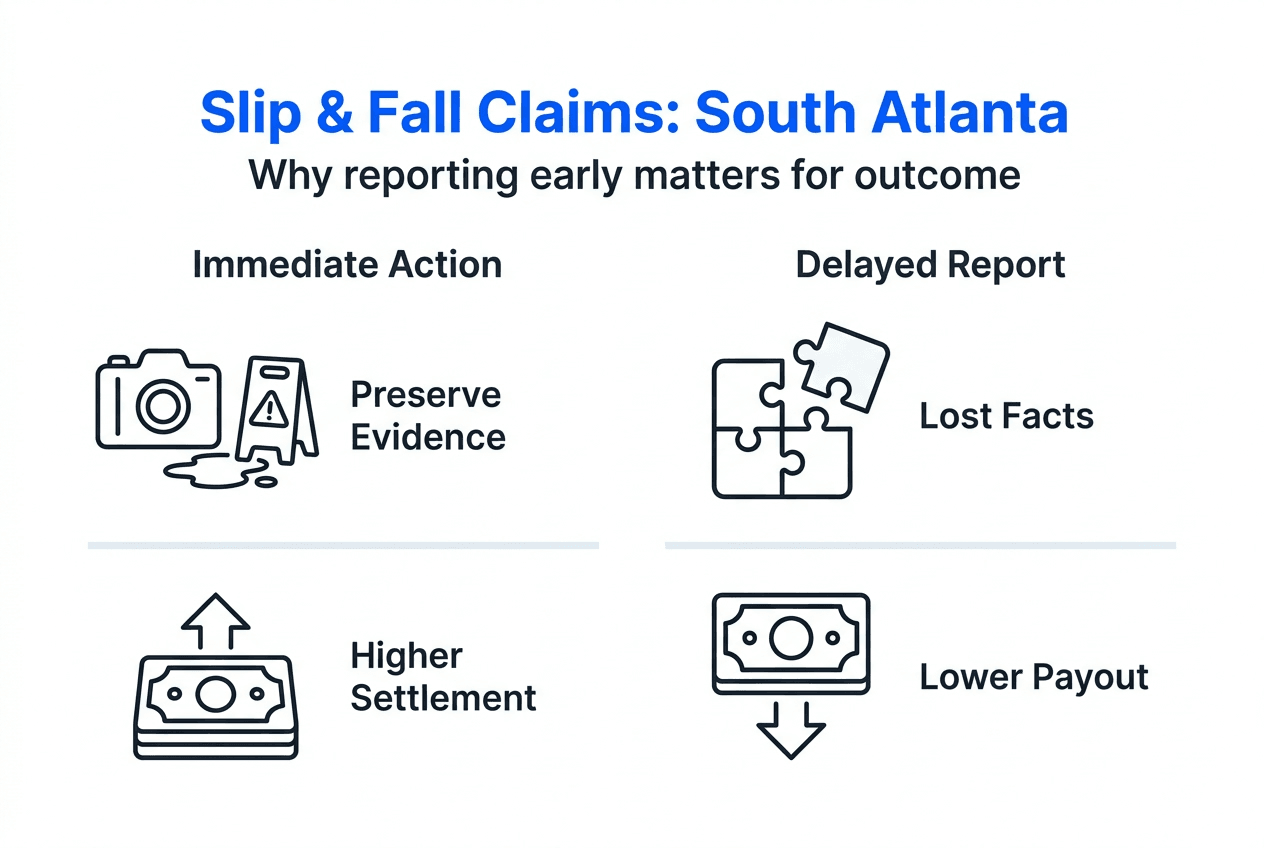
Time destroys evidence faster than you realize. Within hours of your fall, surveillance footage gets overwritten, wet floors dry, and witnesses forget crucial details. Reporting immediately locks in proof while everything remains fresh and verifiable.
Prompt reporting strengthens your case by:
- Creating official documentation that the incident actually occurred
- Preserving physical hazards before property owners clean or repair them
- Capturing witness contact information while people are still present
- Establishing the exact time, date, and conditions during your fall
- Preventing property owners from claiming you injured yourself elsewhere
When you report slip and fall incidents in Georgia quickly, you force negligent parties to acknowledge the hazard existed. Delayed reporting lets them argue conditions changed or that you’re fabricating the accident. Insurance adjusters scrutinize late reports, assuming you’re hiding something or exaggerating injuries.
Photographic evidence and witness statements collected immediately prove negligence far better than your memory weeks later. Studies show claims with same-day documentation settle 43% faster and for higher amounts than those reported after 48 hours.
“The difference between winning and losing often comes down to evidence quality. Immediate reporting captures conditions exactly as they existed, leaving no room for defense attorneys to manufacture doubt about what really happened.”
Common misconceptions that delay reporting
Many victims convince themselves reporting can wait, destroying their chances at compensation before they realize the mistake. These false beliefs cost people thousands in settlements they deserved.
Myth one: minor injuries don’t require immediate reports. Pain often worsens over days as soft tissue damage and internal injuries reveal themselves. By the time you recognize severity, crucial evidence has vanished. Report every fall regardless of how you feel initially.
Myth two: you might be partially at fault, so staying quiet protects you. Georgia uses modified comparative negligence, meaning you can still recover damages even if you share some blame. Staying silent only helps the property owner avoid all responsibility.
Myth three: reporting will anger the property owner or get you banned. Property owners who retaliate face additional legal consequences. Your safety matters more than their convenience, and legitimate businesses expect incident reports as standard procedure.
Myth four: you need a lawyer before reporting. While legal guidance helps maximize your claim, you should report the incident immediately to any authority figure present. Document everything, then consult an attorney about next steps.
Pro Tip: If embarrassment stops you from reporting, remember insurance companies pay claims based on facts and liability, not your comfort level. Protecting your legal rights outweighs temporary awkwardness.
Practical steps for reporting slip and fall incidents
Following a clear reporting process protects your rights and builds the strongest possible claim. These steps take only minutes but dramatically improve your compensation chances.
- Alert the property owner or manager immediately, requesting they document the incident in writing.
- Take multiple photos of the exact hazard that caused your fall from several angles.
- Photograph the surrounding area showing lack of warning signs or poor maintenance.
- Collect names and phone numbers from anyone who witnessed your accident.
- Write down your own detailed account while memory remains fresh, including what you were doing, weather conditions, lighting, and footwear.
- Visit a doctor or emergency room the same day, explaining exactly how you fell and what hurts.
- Keep all medical records, bills, and prescription information organized in one place.
- Report the incident to your insurance company within 24 hours.
- Contact a personal injury attorney before giving any recorded statements to insurance adjusters.
When alerting property management:
- Request an incident report form and ask for a copy for your records
- Get the name and title of the person taking your report
- Note if they refuse to document the incident or seem dismissive
- Ask them to preserve any surveillance footage showing your fall
Timing matters more than perfection. Even incomplete documentation filed immediately beats perfect records created days later. If pain or confusion prevents thorough documentation at the scene, seek legal advice after your accident to ensure you capture remaining evidence properly.
Pro Tip: Use your phone to record a voice memo describing everything about the accident while sitting in your car after leaving the scene. This creates a time-stamped account that lawyers can use to refresh your memory months later during settlement negotiations.
Legal timing and deadlines for reporting in Georgia
Georgia law gives you two years from your accident date to file a personal injury lawsuit. Miss this deadline by even one day, and courts will dismiss your case regardless of how strong your evidence looks.
While two years sounds generous, practical considerations make immediate action essential. Evidence disappears, witnesses relocate, and memories fade. Insurance companies require notification within days, not years. Most policies mandate reporting within 30 to 90 days or they’ll deny your claim entirely.
Understanding Georgia reporting deadlines helps you plan strategically. Although the statute of limitations provides two years to file suit, building a strong case takes months. Medical treatment, evidence gathering, and settlement negotiations require time that vanishes quickly.
| Reporting Timeline | Claim Viability | Success Rate Impact |
|---|---|---|
| Same day | Excellent | Baseline (highest) |
| Within 1 week | Very good | 15% lower settlement |
| Within 1 month | Moderate | 30% lower settlement |
| Within 6 months | Weak | 50% lower settlement |
| After 1 year | Very weak | 70% lower settlement |
Consulting an attorney early helps you file personal injury claims in Georgia correctly the first time. Lawyers know exactly what documentation courts require and how to preserve evidence that insurance companies might try destroying. They also handle communications with adjusters who use delay tactics hoping you’ll miss critical deadlines.
Many cases settle without lawsuits, but negotiations often stretch for months. Starting early gives your attorney leverage to demand fair compensation rather than accepting lowball offers because time pressure forces quick decisions.
How reporting influences compensation outcomes
The connection between prompt reporting and settlement amounts isn’t coincidental. Insurance companies pay more when they can’t dispute basic facts about how your accident happened.
Benefits of immediate documentation include:
- Harder for insurers to claim you injured yourself somewhere else
- Medical records clearly linking injuries to the specific fall
- Witness statements that courts consider highly credible
- Photos proving dangerous conditions existed exactly as you described
When you delay reporting, defense attorneys argue you weren’t really hurt, the hazard didn’t exist, or you’re trying to scam the system. Juries struggle to award damages when basic facts remain murky. Documented incident reports increase successful compensation by providing undeniable proof of injury severity and location.
Early legal consultation adds another advantage. Experienced attorneys know exactly what evidence matters most and how to present it compellingly. They understand the slip and fall settlement process and negotiate from positions of strength rather than desperation.
“Insurance adjusters count on victims not understanding their rights. When you walk in with complete documentation, professional legal representation, and clear evidence of negligence, settlement amounts jump dramatically because insurers know fighting costs more than paying fair compensation.”
Statistics show cases with attorney involvement and immediate reporting settle for 3.5 times more than self-represented claims filed weeks after accidents. The difference covers medical bills, lost wages, pain and suffering, and future care needs that informal agreements ignore.
Get legal help with your slip and fall claim in South Atlanta
Understanding reporting requirements is just the beginning. Actually securing fair compensation requires navigating complex insurance negotiations, medical documentation, and legal procedures that trip up even careful victims.

The Jewkes Firm specializes in slip and fall cases throughout South Atlanta and surrounding Georgia counties. Our personal injury lawyers know exactly how to document incidents, preserve evidence, and negotiate settlements that reflect your true damages. We work on contingency, meaning you pay nothing unless we win your case.
Prompt legal consultation ensures you meet every deadline while building the strongest possible claim. Our team handles communications with insurance adjusters, gathers expert testimony about dangerous conditions, and calculates full compensation including medical costs, lost income, and pain you’ve endured. Contact us today for a free case evaluation to learn what your slip and fall claim is really worth.
FAQ
What should I do immediately after a slip and fall accident?
Notify the property owner or manager right away and request an incident report. Take photos of the hazard, collect witness information, and seek medical attention the same day even if you feel fine.
How long do I have to report a slip and fall injury in Georgia?
Georgia’s statute of limitations gives you two years to file a lawsuit, but you should report incidents immediately. Insurance policies often require notification within 30 to 90 days, and early reporting dramatically strengthens your claim by preserving evidence before it disappears. Understanding Georgia reporting deadlines prevents you from losing your right to compensation.
Can I still report a slip and fall injury if symptoms appear later?
Yes, report the incident as soon as possible even when symptoms develop days after your fall. Early documentation links delayed injuries to the accident, making it harder for insurance companies to deny your claim. Visit a doctor promptly and explain the connection between your fall and new symptoms.
What kind of evidence should I gather when reporting a slip and fall?
Photograph the exact hazard from multiple angles, showing lack of warning signs or poor maintenance. Get names and contact information from witnesses who saw you fall. Keep detailed medical records documenting every injury, treatment, and expense related to your accident.