

Recovering from a serious car or trucking accident in South Atlanta can leave you with more questions than answers. When medical bills pile up and insurance companies make things complicated, knowing where to start is tough. You deserve clear guidance on finding a personal injury lawyer who can handle your complex claim and help you secure a fair recovery for the injuries you never expected.
Table of Contents
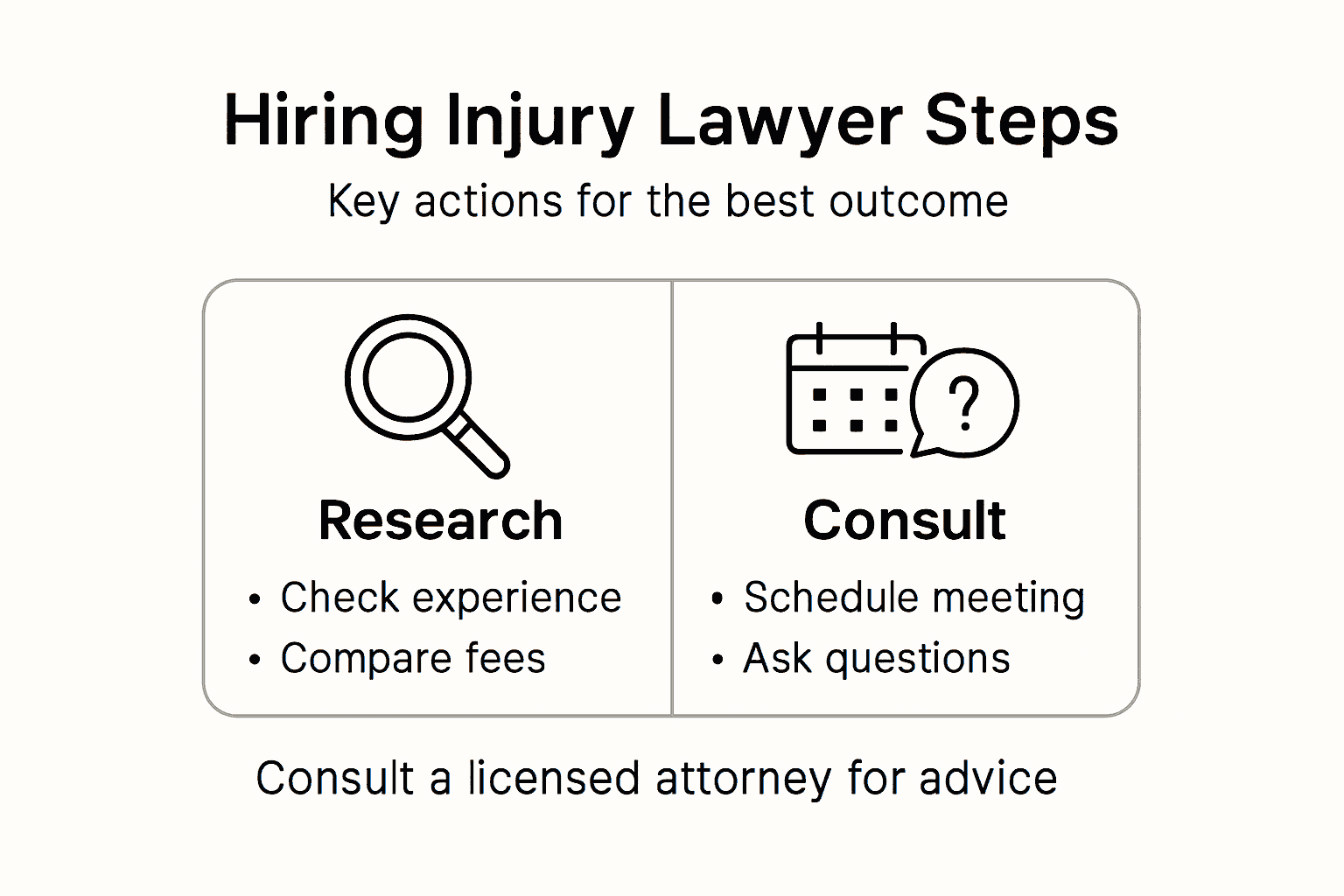
- Step 1: Assess Your Legal Needs
- Step 2: Research Qualified Injury Lawyers
- Step 3: Schedule Consultations With Top Choices
- Step 4: Evaluate Lawyer Experience and Fit
- Step 5: Confirm Fee Structure and Agreement
Quick Summary
| Key Point | Explanation |
|---|---|
| 1. Assess your legal needs first | Determine if you have a legitimate claim and whether an attorney is necessary before proceeding. |
| 2. Research qualified injury lawyers | Focus on finding specialized attorneys with expertise in cases like yours and check their backgrounds for any misconduct. |
| 3. Schedule free consultations | Meet with potential lawyers to evaluate their understanding of your case and see if you can communicate effectively. |
| 4. Compare experience and fit | Look for attorneys with relevant experience, a strong track record, and a communication style that suits your preferences. |
| 5. Understand fee structure clearly | Confirm the contingency fee percentage and any additional costs prior to signing an agreement to avoid future misunderstandings. |
Step 1: Assess Your Legal Needs
Before hiring a personal injury lawyer, you need to understand what your case actually involves. This step helps you determine whether you have a legitimate claim and whether professional representation makes sense for your situation.
Start by identifying the type of injury you suffered and how it happened. Did you get injured in a car accident, trucking collision, slip and fall, or something else entirely? The nature of your incident shapes everything about your case, from the type of evidence needed to the potential liable parties.
Next, consider whether someone else’s negligence or intentional actions caused your injury. You’ll need to establish that another party had a legal duty, broke that duty, and directly caused your harm. This is the foundation of any personal injury claim.
Common situations requiring legal representation include:
- Auto and truck accidents with serious injuries
- Slip and fall incidents on commercial property
- Medical malpractice or surgical errors
- Defective products that caused injury
- Workplace accidents outside workers’ compensation scope
Assess the complexity of your case honestly. Simple cases with clear liability and straightforward injuries might not require an attorney, but situations that require a personal injury lawyer often involve multiple parties, significant damages, or disputed responsibility.
Consider your injuries’ severity and financial impact. Are your medical bills substantial? Will you face long-term treatment? Did you lose income? The bigger the damages, the more valuable legal representation becomes.
Your goal in this step is clarity, not certainty. You’re building a realistic picture of whether your claim has merit and whether an attorney can help maximize your recovery.
Also think about your comfort level with legal processes. Can you gather evidence, communicate with insurance companies, and negotiate settlements on your own? Many South Atlanta injury victims underestimate how complex these interactions become, especially when insurers push back.
You can also explore alternatives like consulting a lawyer for limited-scope advice or using legal clinics that offer case evaluations before committing to full representation.
Here’s a quick comparison of legal alternatives and their potential benefits for injury victims:
| Legal Option | Typical Cost | Level of Support | Best For |
|---|---|---|---|
| Full Attorney Representation | Contingency fee (25-40%) | Comprehensive case management | Complex or high-value cases |
| Limited-Scope Consultation | Hourly or flat fee | Advice only, client manages case | Simple claims, cost-sensitive clients |
| Legal Clinic Evaluation | Often free or low-cost | Basic review and suggestions | Early case assessment, unsure claimants |
Once you’ve assessed your situation honestly, you’ll know whether you need professional help.
Pro tip: Write down your injury details, how it happened, who was involved, and your current medical bills and missed work days. This summary makes your initial lawyer consultation far more productive and helps attorneys evaluate your case faster.
Step 2: Research Qualified Injury Lawyers
Now that you understand your legal needs, it’s time to find an attorney who can handle your case effectively. Quality matters more than quantity when choosing representation.
Start your search by identifying personal injury lawyers in the South Atlanta area with experience handling cases like yours. Look for attorneys who specialize in auto accidents, trucking collisions, or whatever incident caused your injury. General practitioners rarely have the depth of knowledge needed for complex cases.
Check bar disciplinary records to ensure your candidates have clean histories. The State Bar of Georgia maintains public records showing any ethics violations, suspensions, or complaints against attorneys. A lawyer with a clean record demonstrates professional responsibility and client protection.
Use online directories to find candidates efficiently. Resources like the LII Attorney Directory allow you to search licensed lawyers by specialty and location, making it easier to compare qualifications across multiple candidates.
When researching potential lawyers, focus on these key indicators:
- Years of experience handling personal injury cases
- Track record of settlements and verdicts in cases similar to yours
- Board certification or specialization in personal injury law
- Client testimonials and online reviews
- Office location convenient to your home or medical providers
Read client reviews carefully, but remember that online feedback isn’t always complete. Negative reviews sometimes come from unrealistic expectations, while glowing reviews may be from satisfied clients with straightforward cases.
Check whether candidates offer free consultations. Most personal injury attorneys work on contingency, meaning you pay nothing unless they win. A free initial consultation lets you assess their communication style and trustworthiness without financial risk.
The best lawyer for you isn’t necessarily the one with the flashiest website or biggest ads. It’s someone with relevant experience, a proven track record, and genuine interest in your recovery.
Narrow your list to three to five strong candidates. You’ll contact each for initial consultations in the next step, so focusing your list prevents overwhelm and wasted time.
Verify that any attorney you’re considering is licensed to practice in Georgia and handles cases in your specific county or region. Local experience matters because attorneys familiar with local courts, judges, and opposing counsel often achieve better results.
Pro tip: Ask each potential lawyer how many cases similar to yours they’ve handled in the past year and what the average settlement or verdict was. This gives you concrete data about their real-world success, not just promises.
Step 3: Schedule Consultations With Top Choices
You’ve narrowed your search to three to five qualified attorneys. Now it’s time to meet them and evaluate who’s the best fit for your case.
Contact each law firm and request a free initial consultation. Most personal injury attorneys offer these at no cost, so take advantage. This meeting lets you assess whether the lawyer understands your situation and whether you trust them.
When scheduling, ask how long the consultation typically lasts. Most run 15 to 30 minutes, though some firms allow longer discussions for complex cases. Knowing the timeframe helps you prepare your thoughts and questions.
Prepare before each consultation by organizing your information. Gather medical records, photos of the accident scene, insurance documents, and any correspondence with the other party’s insurance company. This preparation shows respect for the attorney’s time and ensures you cover everything important.
Develop a list of questions to ask each lawyer:
- How many cases similar to mine have you handled?
- What was the typical outcome or settlement range?
- How do you communicate with clients during the case?
- What percentage do you charge as a contingency fee?
- Who else will work on my case besides you?
- How long do you expect my case to take?
- What happens if we disagree on strategy or settlement offers?
During consultations, pay attention to how each attorney listens. Do they ask detailed questions about your injury and circumstances? Or do they seem rushed and focused on signing you up? When interviewing multiple lawyers, you’re assessing both expertise and communication style.
Notice whether they explain things clearly or use confusing legal jargon. You need someone who can break down complex concepts so you understand every step. If they talk over your head, that’s a red flag.
Trust your instincts during these meetings. You need a lawyer you can communicate with honestly for months or years, not just the one with the most impressive credentials.
Also discuss fees explicitly. Most personal injury attorneys work on contingency, typically taking 25 to 40 percent of your settlement or verdict. Understand what percentage they charge and what costs you’re responsible for.
After meeting all your candidates, take time to reflect before deciding. Compare their experience, communication styles, and how confident you felt with each one.
Pro tip: Bring a notebook to each consultation and take notes about what the attorney says. This helps you remember details later and shows the lawyer you’re serious. Reviewing your notes at home makes comparing candidates much easier.
Step 4: Evaluate Lawyer Experience and Fit
You’ve met with your top candidates. Now comes the critical task of comparing them honestly to find the best match for your case.
Start by assessing years of experience in personal injury law. A lawyer with 10 years handling auto accident cases knows the system far better than someone with 2 years across multiple practice areas. Specialization matters more than general experience.

Compare their track records directly. Ask each attorney for specific numbers: How many cases did they settle last year? What was the average settlement amount? How many went to trial? These concrete metrics reveal who actually wins cases, not just who talks about winning them.
Evaluate whether they have experience with cases similar to yours. Trucking accident cases differ significantly from slip and fall incidents. A lawyer experienced with your specific injury type understands the unique challenges, liable parties, and evidence needed.
Assess the essential qualities that make attorneys effective:
- Clear communication that you can actually understand
- Genuine empathy for your situation and recovery
- Strong analytical thinking about case strategy
- Professional ethics and integrity
- Initiative in pursuing your claim aggressively
- Teamwork and collaboration with medical experts
These skills successful lawyers need directly impact how well they’ll handle your case and explain developments to you.
Consider the team behind each lawyer. Will an experienced attorney personally handle your case, or will paralegals and junior associates do most of the work? Larger firms may have more resources but less personal attention. Smaller firms might offer more direct access but fewer staff specialists.
Think about communication preferences. Do you prefer frequent updates, or does that feel like harassment? Will they call, email, or use a client portal? Some attorneys proactively contact clients; others only respond to client-initiated contact. Your comfort level matters here.
The right lawyer for your case combines relevant experience with genuine interest in your recovery. Perfect credentials mean nothing if you don’t trust them.
Review what you learned about their licensing status and professional reputation. Lawyers practice under rigorous education requirements, but their individual records and client satisfaction vary significantly.
Now make your decision. Trust your instincts alongside the facts. Which lawyer seemed most confident in your case? Who asked the best questions? Who made you feel heard and valued?
Pro tip: Before deciding, call the bar association and ask if they received any recent complaints about your top choice. Clean records and quick complaint resolutions show professionalism. Then check their settlement numbers one more time to confirm what they told you.
Step 5: Confirm Fee Structure and Agreement
Before signing any contract, you must fully understand how your lawyer will be paid and what costs you’re responsible for. This conversation protects both you and your attorney.
Most personal injury attorneys work on contingency, meaning they only get paid if you win. This aligns their interests with yours, but you need to know the exact percentage they’ll take. Typical contingency fees range from 25 to 40 percent of your settlement or verdict.
Ask whether the percentage changes depending on circumstances. Some attorneys charge 25 percent if the case settles early, 33 percent if it goes to trial, and 40 percent if you appeal. Others use a flat rate regardless. Understanding these variations prevents disputes later.
Discuss what costs you’ll cover separately. Even if your attorney works on contingency, you typically pay court filing fees, expert witness fees, medical record retrieval costs, and investigation expenses. These costs come out before you receive your settlement.
Confirm important financial details:
- The exact contingency fee percentage
- When costs are paid (upfront or from settlement)
- Whether interest accrues on unpaid costs
- What happens if you lose the case
- How long the attorney typically keeps cases open
- Whether you can terminate representation and how
Request a written fee agreement before hiring. The American Bar Association requires attorneys to provide clear written statements detailing fees and cost responsibilities. Never rely on verbal agreements or vague understandings.
Read the entire agreement carefully. Don’t sign anything you don’t understand completely. Ask the attorney to explain any unclear language before committing.
Verify that fee arrangements are reasonable and transparent. Your attorney should clearly explain why their fee structure makes sense for your specific case and what value you’re receiving.
A good fee agreement protects you both. It eliminates confusion about money, which is one of the most common sources of client-lawyer disputes.
Also ask about billing practices. Will your attorney send regular statements showing costs incurred? How often? Can you request an accounting of expenses at any time?
Here’s a summary of typical contingency fee structures and potential client costs:
| Fee Structure Type | Common Percentage Range | When Costs Are Paid | Key Considerations |
|---|---|---|---|
| Standard Contingency | 25-40% of settlement | Deducted from settlement | No fee if case lost |
| Tiered Contingency | Varies by stage (25%-40%) | Usually after case closes | Higher fees for trial or appeal |
| Court Costs/Expenses | Fixed, varies by case | Often upfront or from award | Covers filings, experts, records |
Finally, confirm what happens if you want to settle before trial. Does your attorney’s percentage change? Will they pressure you to go to trial to increase their fee? Their answers reveal whether they prioritize your interests or their own.
Pro tip: Keep a copy of your signed fee agreement in a safe place and bring it to every appointment. If anything changes about costs or strategy, ask your attorney to provide written amendments to the original agreement.
Take Control of Your Injury Case with Trusted South Atlanta Lawyers
Hiring the right personal injury lawyer can feel overwhelming when you face complex legal decisions, confusing fee structures, and the challenge of proving fault after an accident. This guide breaks down those hurdles and highlights how crucial clear communication and experienced guidance are for maximizing your recovery. If you are dealing with serious injuries from auto crashes, medical malpractice, or slip and falls, you need a legal team that understands your unique situation and fiercely advocates on your behalf.

At The Jewkes Firm, we specialize in personal injury cases across South Atlanta and Georgia with a focus on client-centered care, a proven track record, and contingency fee arrangements that ensure you pay nothing unless we win your case. Our attorneys provide free consultations to answer your questions honestly about fees, case strategy, and expected outcomes. Don’t wait to protect your rights and secure the compensation you deserve. Start your journey with us today by visiting the Jewkes Firm main page and learn why so many accident victims trust us to fight for their future.
Frequently Asked Questions
What should I consider when assessing my legal needs for a personal injury case?
Before hiring a personal injury lawyer, evaluate the type of injury and how it occurred. Determine if a negligent party is involved and assess the severity of your injuries, including medical costs and lost income. Write down your injury details for clarity and to help when consulting a lawyer.
How do I find qualified injury lawyers in my area?
Start by searching for personal injury attorneys who specialize in cases similar to yours. Check online directories and read reviews to assess their experience and track record. Aim to create a list of three to five potential lawyers to consult further.
What questions should I ask during my initial consultation with a personal injury lawyer?
Prepare questions about the lawyer’s experience with similar cases, their typical outcomes, and their fee structure. Inquire about their communication style and who else will work on your case. Taking notes during these meetings will help you compare your options.
How do I evaluate a lawyer’s experience and fit for my personal injury case?
Assess each lawyer’s years of experience and track record in personal injury law, focusing on relevant case types. Consider their communication skills and empathy towards your situation. Trust your instincts and select a lawyer who makes you feel confident and valued.
What should I expect regarding the fee structure when hiring a personal injury lawyer?
Most personal injury lawyers work on a contingency fee basis, typically ranging from 25% to 40% of your settlement. Discuss all potential costs that you may need to cover and ensure you understand the agreement fully before signing. It’s essential to know when and how fees will be deducted from your recovery.
How can I ensure a positive working relationship with my personal injury lawyer?
Establish clear communication from the beginning by discussing preferences for updates and information sharing. Maintain organized records of your case and actively participate in meetings. Foster trust by being open about your case expectations and concerns.