

Every crash throws life off course, and for many across South Atlanta, the path to fair compensation starts with the right steps after an accident. Gathering detailed accident evidence and comprehensive medical records is the foundation for a strong legal claim, helping you stand up to insurance companies and secure what you need for recovery. This practical guide explains how to take control of your case and find a qualified attorney who offers free consultations and works on a contingency fee basis.
Table of Contents
- Step 1: Gather Essential Accident Details And Medical Records
- Step 2: Research Qualified Local Personal Injury Attorneys
- Step 3: Evaluate Attorney Credentials And Track Records
- Step 4: Schedule Free Consultations And Ask Targeted Questions
- Step 5: Review Fees, Communication, And Client Testimonials
- Step 6: Finalize Your Attorney Selection And Confirm Engagement
Quick Summary
| Key Point | Explanation |
|---|---|
| 1. Gather detailed accident evidence | Document accident details like location, time, and parties involved, along with photographs to support your case. |
| 2. Collect medical records comprehensively | Obtain all medical documentation from providers regarding your injuries to substantiate your legal claims. |
| 3. Research qualified local attorneys | Identify attorneys with specializing experience and strong local knowledge to effectively handle your personal injury case. |
| 4. Ask strategic questions in consultations | In initial meetings, inquire about the attorney’s experience, fees, and case management to assess their suitability. |
| 5. Review fees and client feedback | Understand the attorney’s fee structure and gather client testimonials to avoid unexpected costs and ensure strong representation. |
Step 1: Gather essential accident details and medical records
Documenting the details of your accident and collecting comprehensive medical records are critical first steps in building a strong personal injury case. By meticulously preserving evidence and medical documentation, you create a solid foundation for potential legal action and insurance claims.
Begin by gathering critical information at the accident scene. Take detailed notes about the crash including precise location, time, weather conditions, and contact information for all parties involved. Use your smartphone to capture photographs of vehicle damage, license plates, insurance cards, and the surrounding environment. These visual records can provide powerful evidence later.
Next, focus on collecting medical documentation. HIPAA regulations give you the right to obtain complete medical records documenting your injuries and treatments. Request copies from every healthcare provider you’ve visited since the accident, including:
- Emergency room records
- Physician examination notes
- Diagnostic test results (X-rays, MRIs, CT scans)
- Prescription records
- Physical therapy documentation
- Specialist consultation reports
Make sure to keep these records organized chronologically and create both digital and physical backup copies. Each document serves as critical evidence of the accident’s impact on your health and potential compensation claim.
The more detailed your documentation, the stronger your legal case becomes.
Pro tip: Request a certified medical record summary that includes all treatment details, which can streamline the legal process and provide a comprehensive overview of your medical journey.
Compare typical accident scene evidence to essential medical documentation:
| Evidence Type | Examples Collected | Purpose |
|---|---|---|
| Accident Scene | Photos, notes, contacts | Prove liability details |
| Medical Records | Treatment summaries, diagnostics | Prove injury extent and costs |
Step 2: Research qualified local personal injury attorneys
Finding the right personal injury attorney can make or break your legal case. Your goal in this step is to methodically research and identify attorneys who have the expertise, local knowledge, and track record to effectively represent your specific type of injury claim.
Start by investigating attorneys specializing in personal injury law with deep experience in your specific type of case. Not all personal injury lawyers are created equal – you want someone who understands the nuanced legal landscape of your particular situation.
When conducting your research, focus on these critical evaluation criteria:
- Local jurisdictional experience
- Specific practice area specialization
- Track record of successful settlements
- Client testimonials and reviews
- Professional credentials and bar association standing
- Free initial consultation offerings
Local legal expertise matters significantly when navigating complex injury claims. An attorney familiar with regional court systems, judges, and local legal precedents can strategically position your case for the best possible outcome.
Thorough research now can prevent costly mistakes later in your legal journey.
Consider leveraging multiple research channels to build a comprehensive understanding of potential attorneys. Use online directories, bar association referral services, personal recommendations, and detailed online reviews to create a robust shortlist of qualified candidates.
Pro tip: Schedule initial consultations with at least three attorneys to compare their approach, communication style, and genuine interest in your specific case.
Step 3: Evaluate attorney credentials and track records
Determining the right personal injury attorney goes beyond a simple recommendation or impressive website. You’ll need to conduct a comprehensive evaluation of their professional background, proven success, and ability to handle your specific case with expertise.

Professional credentials matter immensely when selecting a personal injury attorney. Start by thoroughly investigating their educational background, state bar membership, and any specialized certifications that demonstrate advanced legal expertise.
Key areas to examine during your credentials assessment include:
- State bar association standing
- Years of personal injury practice
- Advanced legal certifications
- Specific case type experience
- Professional misconduct history
- Peer and client review ratings
Legal rating services provide valuable insights into an attorney’s professional reputation and track record. Look for attorneys with consistent high ratings, demonstrable case success, and recognition from professional legal organizations.
A thorough background check can reveal an attorney’s true professional capabilities.
Don’t rely solely on online information. Request documented case histories, settlement amounts, and references from previous clients who have experienced similar injury scenarios to yours. This direct approach will give you the most transparent view of the attorney’s actual performance.
Pro tip: Request a detailed breakdown of the attorney’s last five personal injury case outcomes to gain a concrete understanding of their real-world success rates.
Step 4: Schedule free consultations and ask targeted questions
Free initial consultations are your opportunity to evaluate potential attorneys and determine who will best represent your personal injury claim. This critical meeting allows you to assess not just the attorney’s legal expertise, but also their communication style and commitment to your case.
Personal injury attorneys typically offer complimentary consultations that provide a strategic chance to explore your legal options without financial risk. Preparation is key to making the most of these meetings.
Critical questions to ask during your consultation include:
- Specific experience with cases similar to yours
- Estimated timeline for case resolution
- Potential compensation range
- Fee structure and payment expectations
- Who will directly manage your case
- Communication frequency and preferred methods
Legal consultation meetings help assess attorney compatibility and provide crucial insights into how they might approach your specific situation. Pay attention not just to their answers, but to their overall demeanor and willingness to explain complex legal concepts clearly.
Your consultation is a two-way interview – you are evaluating them as much as they are evaluating your case.
Bring all relevant documentation to your initial meeting, including medical records, accident reports, insurance correspondence, and any evidence related to your injury. This allows the attorney to provide a more accurate initial assessment of your potential claim.
Pro tip: Take detailed notes during consultations and schedule meetings with multiple attorneys to create a comprehensive comparison of potential legal representation.
Step 5: Review fees, communication, and client testimonials
Selecting the right personal injury attorney involves a comprehensive evaluation of their financial structure, communication approach, and proven track record. This critical step ensures you find a legal representative who not only has the expertise to handle your case but also aligns with your expectations and needs.
Personal injury attorneys typically operate on contingency fees which means they only get paid if you win your case. Understanding this payment structure is crucial for managing your financial expectations.
Key aspects to carefully examine include:
- Exact percentage of contingency fee
- Additional case-related expenses
- Payment timeline and structure
- Frequency of case updates
- Communication response times
- Availability for direct questions
Client testimonials provide critical insights into an attorney’s actual performance and client satisfaction. Look beyond surface-level reviews and seek detailed accounts of previous clients’ experiences with similar injury cases.
Your attorney should be both a skilled legal advocate and a transparent communicator.
Request documentation that breaks down the full fee structure, including potential additional costs like court filing fees, expert witness expenses, and administrative charges. A reputable attorney will be completely transparent about all potential financial obligations.
Pro tip: Request a written breakdown of fees and communicate your preferred communication method upfront to establish clear expectations from the beginning.
Step 6: Finalize your attorney selection and confirm engagement
With careful research and thoughtful consultations complete, you’re now ready to officially solidify your legal representation. This final step transforms your attorney selection from potential to actual representation, establishing a clear legal partnership.
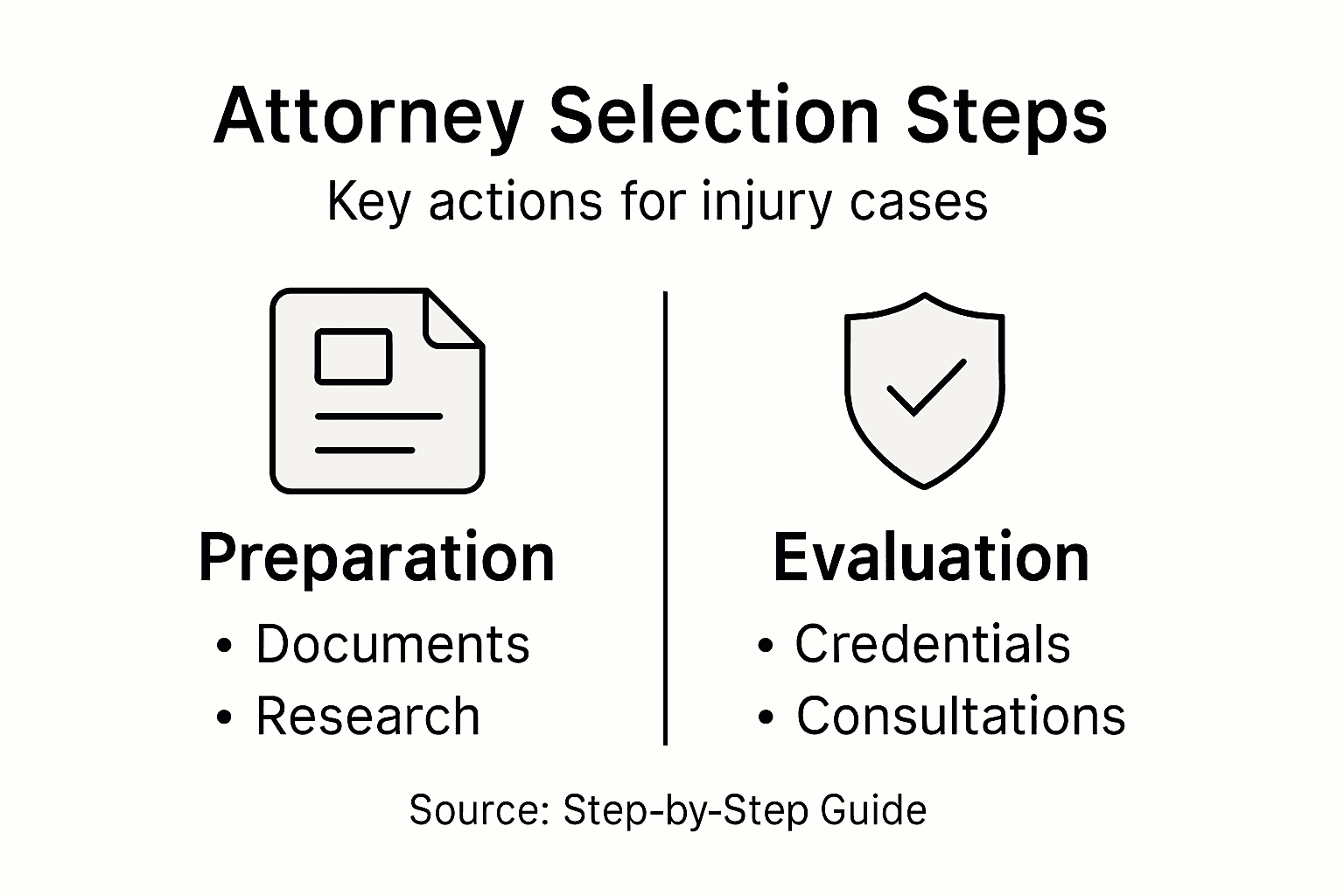
Formalizing your attorney engagement requires a comprehensive written agreement that outlines every critical aspect of your legal relationship. This document serves as your roadmap and protection throughout the legal process.
Key components to verify in your engagement agreement include:
- Exact contingency fee percentage
- Specific case responsibilities
- Communication protocols
- Estimated case timeline
- Potential additional expenses
- Termination conditions
Legal representation begins with a signed retainer agreement that clarifies mutual expectations and legal obligations. Carefully review every section, asking questions about any terms you do not fully understand.
A well-crafted engagement agreement protects both you and your attorney.
Remember that this agreement is a two-way commitment. Your chosen attorney should demonstrate transparency, answer all your questions thoroughly, and make you feel confident in their ability to represent your interests effectively.
Pro tip: Request a copy of the engagement agreement to review at home before signing, and never feel pressured to sign immediately during your initial consultation.
Here’s a summary of how each step contributes to choosing the best personal injury attorney:
| Step | Primary Focus | Main Outcome | Added Benefit |
|---|---|---|---|
| 1 | Gather documents | Strong evidence base | Smoother insurance claims |
| 2 | Attorney research | Qualified shortlist | Avoids inexperience pitfalls |
| 3 | Evaluate credentials | Verify expertise | Reduces risk of poor fit |
| 4 | Consultations | Assess compatibility | Compare communication styles |
| 5 | Review fees/testimonials | Set clear expectations | Prevent financial surprises |
| 6 | Finalize engagement | Legal partnership | Protects client rights |
Find the Right Personal Injury Attorney with Confidence
Choosing the best personal injury attorney can feel overwhelming when you are facing the stress of an accident and its aftermath. From gathering detailed accident and medical records to evaluating legal credentials and fee structures, the process requires clear guidance and trusted support. If you want to avoid costly mistakes and ensure your case is handled by proven professionals with local expertise, you need a team that understands your pain points and stands ready to fight for your rights.
The Jewkes Firm specializes in personal injury law throughout South Atlanta and surrounding Georgia counties. With a client-focused approach, free consultations, and contingency fees that mean you pay nothing unless they win your case, their experienced attorneys help you navigate complex claims from auto accidents to wrongful death. Don’t face your legal challenges alone — benefit from millions recovered on behalf of accident victims just like you. Visit The Jewkes Firm today to learn how to start building a strong case with professional guidance.

Ready to take the next step in securing your future after an injury? Schedule your free consultation now with The Jewkes Firm. Access trusted resources and expert answers to your questions on personal injury law and let their skilled attorneys provide the tailored support your claim deserves.
Frequently Asked Questions
What should I gather before meeting with a personal injury attorney?
Start by collecting detailed accident information and medical records. Document the accident scene, including photos and notes, and obtain all relevant medical documentation to support your claim.
How can I research personal injury attorneys effectively?
Begin by looking for attorneys who specialize in personal injury law and have experience in cases similar to yours. Utilize online directories, bar association referrals, and client reviews to compile a list of qualified candidates.
What questions should I ask during a consultation with a personal injury attorney?
Ask about the attorney’s experience with cases like yours, their fee structure, and who will manage your case. Prepare questions regarding case timelines and communication preferences to gauge compatibility.
How do I evaluate an attorney’s credentials and track record?
Review their state bar membership, years of experience, and any specialized certifications. Additionally, request documented case histories and references to understand their success rates and client satisfaction.
What should be included in the engagement agreement with my attorney?
Ensure the agreement outlines the contingency fee percentage, specific case responsibilities, communication protocols, and any potential additional expenses. Carefully review the document and ask questions about any unclear terms before signing.
How do I know I’ve selected the right personal injury attorney?
You can confirm your choice by assessing how well the attorney communicated during your consultations and their experience with similar cases. Trust your instincts; if you feel comfortable and confident in their ability, you likely have made the right selection.