
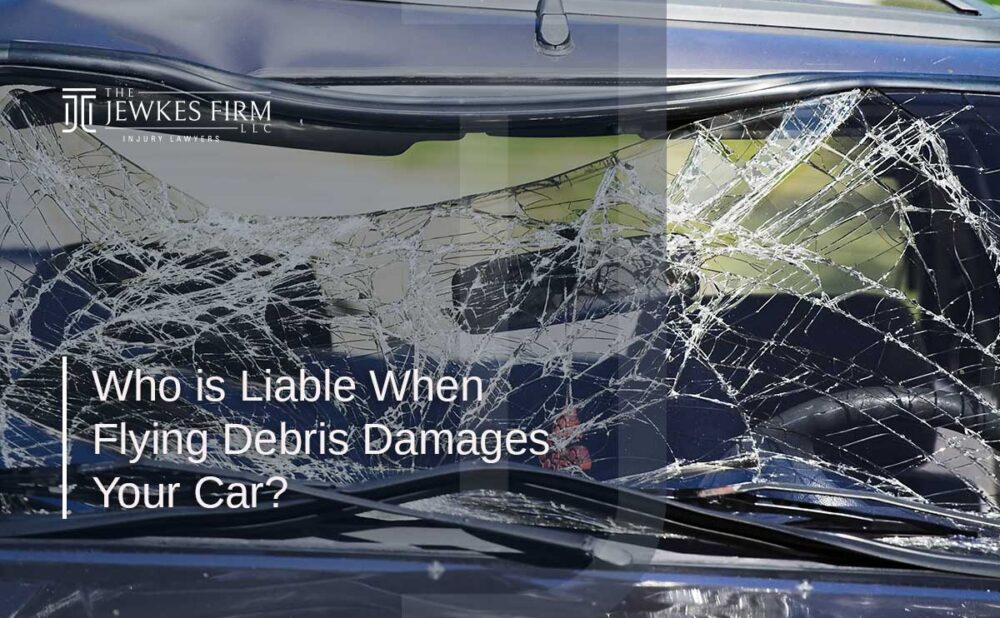
Who is Liable When Flying Debris Damages Your Car?
Encountering flying debris while driving can be a frightening and dangerous experience. Whether it’s a piece of cargo falling off a truck, construction materials blowing onto the road, or debris tossed by reckless drivers, the impact on your vehicle can lead to costly damage, injuries, and overwhelming stress.
Understanding who is responsible — and how Georgia law treats these cases — can make the difference between losing thousands out of pocket and securing the compensation you deserve. At jewkesfirm, Attorney Jordan Jewkes understands the complexities of personal injury law and property damage claims involving flying debris incidents. This guide offers a comprehensive look at liability issues, steps to take after an incident, and how our firm can help protect your rights.
Understanding Flying Debris Incidents on Georgia Roads
Flying debris incidents encompass scenarios where objects strike vehicles while in transit, often causing property damage or bodily harm. Common examples include:
- Cargo or tools accidentally dropped or improperly secured on vehicles or trucks
- Construction materials or trash tumbling onto the highway
- Items tossed or thrown from other vehicles
- Natural debris (such as tree branches) dislodged by weather or road maintenance
These incidents can lead to accidents, requiring immediate attention to safety and legal recourse.
Injured By Flying Debris? Contact Us For A Free Consultation
Injured By Flying Debris?
Why Flying Debris Cases Are Unique
Unlike typical car accidents involving another driver’s vehicle contacting yours directly, flying debris cases raise special questions:
- Who actually caused the debris to be where it ended up?
- Was it truly “unavoidable,” or was someone negligent?
- Is the debris from another driver, a commercial vehicle, or a defective part that fell off?
Because of this, determining liability requires careful investigation and prompt action.
Step 1 — What To Do If Flying Debris Hits Your Car
If flying debris strikes your vehicle, follow these important steps:
- Ensure safety first. Safely pull over and turn on hazard lights. Check yourself and passengers for injuries.
- Seek medical attention. Injuries from flying debris can be serious. Even if injuries aren’t immediately obvious, early documentation protects your claim.
- Report the incident. Call local law enforcement and file a report, especially if injuries or significant property damage occurred. An official report not only provides documentation but can help establish liability later.
- Document the scene. Take photos and video of your vehicle damage, the debris (if present), the road, and any nearby vehicles. If possible, capture license plates and dashcam footage.
- Collect information. If possible, get contact and insurance information from involved parties, including truck drivers or other motorists.
- Notify your insurance provider. Report the accident and damage to your insurer, providing clear and honest information.
Taking these steps quickly improves the strength of your claim if another party is at fault.
Step 2 — Who Might Be Liable? Understanding Georgia Law
Georgia law does not assign automatic liability for flying debris incidents. Georgia follows an at‑fault insurance and negligence system, meaning the person or party whose negligent actions caused the harm is generally responsible for covering damages. Fault typically depends on several factors including:
Source of the Debris
Identifying where the debris came from is crucial. Liability may rest with a commercial truck driver, construction company, property owner, or another motorist.
Another Driver Failed to Properly Secure a Load (Negligence and Duty of Care)
If the debris came from another vehicle — especially a truck or trailer — liability often hinges on whether that driver or company negligently failed to secure cargo. Examples include:
- Truck drivers failing to properly secure cargo in violation of FMCSA regulations
- Construction companies neglecting to contain materials on-site
- Drivers recklessly tossing items from their vehicles
Georgia law requires drivers to secure anything they are hauling. Simply posting a disclaimer on the back of a dump truck does not eliminate liability. Trucking companies and drivers have legal duties under state and federal safety regulations. When they breach these duties, they may be liable for resulting damage and injury.
Vehicle Part Failure or Manufacturer Defect
Sometimes debris results from a defective part — such as a tire coming off a vehicle due to a design or manufacturing flaw. In such cases:
- The manufacturer or distributor of the defective part might be liable under product liability principles.
Roadway Conditions and Government Liability
If debris came from a roadway hazard — poor maintenance, construction materials left behind, or inadequate warnings — a governmental entity may have responsibility.
- Georgia law imposes duties on cities, counties, and the state to maintain roads, and liability can arise if they knew or should have known about a dangerous condition.
- Claims against government entities are more complex and typically require special notice and strict procedures.
Government Immunity Considerations
If debris originated from a public roadway or government work, liability may be limited due to sovereign immunity protections unless negligence or failure to maintain a safe environment is demonstrated.


Comparative Negligence: What Happens if You Share Fault?
Under Georgia’s modified comparative negligence rule, you can still recover damages even if you are partially responsible — as long as your share of fault is less than 50%.
For example, if debris hits your car and your own actions contributed to the crash (e.g., you were following too closely), your compensation could be reduced based on your percentage of fault — but you can still recover if you are under 50% at fault.
This makes it essential to have a skilled personal injury lawyer evaluate and protect your case early.
Legal Options and Compensation
Victims of flying debris incidents may recover damages to cover:
- Vehicle repair or replacement costs
- Medical expenses and ongoing treatment
- Lost wages due to injury-related absences
- Pain and suffering or emotional distress
- Other out‑of‑pocket losses
In cases involving negligent truck drivers or companies, additional claims can be pursued under federal safety regulations that require proper securing of cargo. Construction companies or property owners can also be held liable if they neglected safety protocols.
An experienced attorney will work to calculate the full cost of your losses and negotiate with insurers or litigate in court if necessary.
The Clock Is Ticking: Georgia’s Deadlines
Most personal injury and property damage claims must be filed within two years from the date of the incident in Georgia. Waiting too long can jeopardize your right to compensation.
Because evidence — like surveillance footage, witness testimony, and physical debris — can disappear quickly, timely action is crucial.

GEORGIA PERSONAL INJURY LAWYER NEAR ME
Why Legal Representation Matters
Flying debris incidents are deceptively complex. Identifying the responsible party — especially when the source of debris is unclear — requires investigative skill, knowledge of traffic and commercial vehicle law, and experience dealing with insurance companies.
At jewkesfirm, Attorney Jordan Jewkes has helped Georgia clients recover compensation in cases where others thought they had “no claim.” If debris hit your car and you’ve suffered damage or injury, we can help you understand your rights and pursue the best possible outcome.
If flying debris hit your car and you’re unsure where to turn, don’t wait. Contact jewkesfirm at (770) 771-5130 for a free, no-obligation consultation. Attorney Jordan Jewkes and our team are committed to protecting your rights and helping you obtain the justice and compensation you deserve.
Frequently Asked Questions
Who is responsible if flying debris hits my car in Georgia?
Liability typically depends on whether someone was negligent in securing cargo or maintaining safe conditions. This can include truck drivers, construction companies, other motorists, or property owners.
Can I file a claim if debris from a commercial vehicle hit my car?
Yes, you can file a claim if the debris came from a commercial vehicle. In many cases, trucking companies or their drivers may be liable for damages if they failed to properly secure their load. Our team at jewkesfirm can help you investigate the details of your claim.
What should I do immediately after flying debris damages my vehicle?
Ensure safety first, document the scene with photos, gather information, seek medical attention if needed, file a police report, and notify your insurance provider.
How long do I have to file a claim in Georgia for flying debris damage?
In Georgia, the statute of limitations for most personal injury claims is two years from the date of the accident. Acting quickly is essential to protect your rights and gather crucial evidence before it disappears.
What compensation can I recover for a flying debris accident in Georgia?
If you win your claim, you can recover damages for vehicle repairs or replacement, medical expenses, lost wages, pain and suffering, and other related losses. Our team at jewkesfirm can help ensure you pursue the full extent of your compensation.
Can I recover compensation if a tree branch or natural debris hits my car?
It depends on the circumstances. If a government entity was negligent in maintaining the road or removing hazards, you might have a claim. Consult an attorney to explore your options.
Does Georgia’s comparative negligence rule affect flying debris claims?
Yes. If you are partially at fault, your compensation may be reduced proportionally. For example, speeding may lower what you recover.
How can jewkesfirm help me after a flying debris accident?
We investigate your case, identify liable parties, negotiate with insurers, and fight for the maximum compensation—all with no fees unless we win.