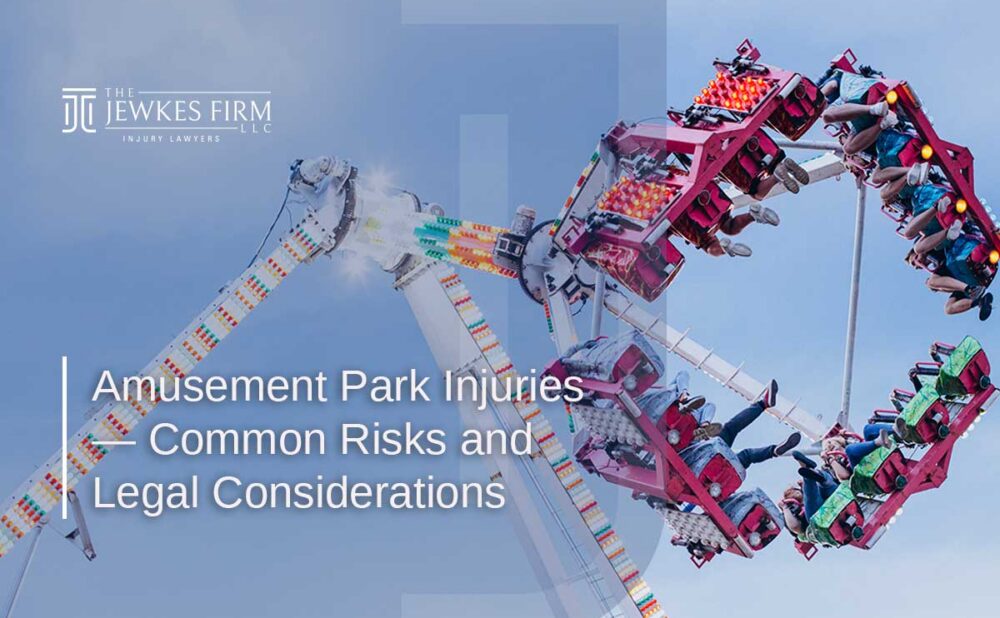
Amusement Park Injuries in Georgia — Common Risks and Legal Considerations
A day at an amusement park should be exciting and memorable — not be marred by medical bills, pain, and legal headaches. While most visits to parks like Six Flags Over Georgia and other Georgia attractions are enjoyable, accidents do happen. When they do, understanding the kinds of risks that commonly lead to amusement park injury claims under Georgia law can help injured visitors and their families protect their rights.
At The Jewkes Firm, we’ve helped many clients hold negligent parties accountable after suffering harm at amusement parks. Understanding the common risks and scenarios that cause amusement park injury claims is the first step in protecting yourself and your loved ones.
Hurt At An Amusement Park? Contact Us For A Free Consultation
Hurt At An Amusement Park?
Common Causes of Amusement Park Injuries
Mechanical Failures and Ride Malfunctions
Mechanical failure is one of the most significant causes of amusement park injuries. Faulty brakes, seat harness malfunctions, or structural defects in rides like roller coasters, water rides, or spinning attractions can result in riders being jolted, thrown off, or trapped. Amusement park rides are complex machines, and defects — whether due to design flaws, poor maintenance, or manufacturing issues — can lead to catastrophic injuries. Parks and manufacturers have a legal duty to ensure that rides are reasonably safe for guests. Improper maintenance or aging equipment often contributes to these dangerous failures.
Operator Error or Inadequate Training
Even properly designed and maintained rides can become dangerous if they’re not operated safely. Ride operators at amusement parks play a crucial role in keeping guests safe. Operator error can include:
- Loading or securing riders incorrectly
- Ignoring weight or height restrictions
- Running rides too fast
- Operating rides without adequate training
- Failing to halt operation when issues arise
Careless operators may expose passengers to serious harm. In Georgia, parks must train and supervise staff so that they prevent foreseeable harm. A failure to do so can form the basis of a negligence claim.
Slip, Trip, and Fall Hazards
Not all amusement park injuries involve rides. Guests often walk long distances across varied surfaces. Uneven surfaces, wet floors from water rides, poorly maintained stairways, and lack of sufficient warning signs can all cause slip and fall accidents. Common hazards include:
- Wet or uneven walkways
- Loose cables, debris, or poorly maintained paths
- Inadequate lighting in pedestrian areas
- Loose animals or unexpected obstacles in walkways
Many of these accidents occur in common areas like walkways, food courts, or near restrooms. Slip and fall incidents can lead to fractures, head injuries, and other serious harm — and when caused by a hazard the park knew (or should have known) about, they may support a premises liability claim.
Inadequate Safety Warnings or Improper Signage
Amusement parks must provide clear instructions and warnings regarding ride restrictions, health risks, and behavior rules. Failure to adequately warn guests—such as people with heart conditions, pregnant women, or those under the influence—may lead to injury. If warnings are vague, hidden, or absent, the park may be liable.
Poor Crowd Control and Safety Management
Large crowds and poor crowd control can create hazardous situations. Overcrowding may cause trampling, pushing, or inability to access emergency exits promptly. Such scenarios can escalate quickly, particularly in panic situations or after a ride accident.
When parks fail to anticipate and control these risks, injuries can occur from falls, collisions, or panic incidents — situations that may support a legal claim when caused by negligent safety management.
Defective Ride Design or Manufacturing
Sometimes, injuries result from inherent defects in the design or manufacture of rides. If a ride’s safety features are inadequate or flawed from the outset, the manufacturer and park operators may be responsible for resulting injuries.
Food Poisoning or Allergic Reactions
Amusement parks with food concessions may face claims related to foodborne illnesses or allergic reactions due to improper food handling, cross-contamination, or failure to disclose allergens.
Assault or Negligence in Security
While less common, some injury claims happen when insufficient security measures on park premises allow assailants to assault or harm guests. Failure to provide adequate staffing or respond promptly to threats may constitute negligence.
Secondary Hazards
Injuries at amusement parks can also arise from non‑ride sources. These kinds of incidents often fall under premises liability when they stem from negligent maintenance or lack of reasonable care.
Catastrophic Events and Fatalities
Although rare, tragic events do occur. Historic incidents at parks like Six Flags Over Georgia have included severe accidents where guests were fatally struck after entering restricted areas or encountering dangerous conditions.
These incidents highlight that even well‑known attractions can pose serious hazards when safety boundaries aren’t respected or enforced — and they underscore the importance of legal accountability when negligence is a factor.

GEORGIA PERSONAL INJURY LAWYER NEAR ME
Georgia’s Legal Framework for Amusement Park Injury Claims
Under Georgia premises liability law, amusement park owners and operators owe a duty to keep their property reasonably safe for visitors — who are typically classified as invitees. That duty includes inspecting rides and facilities, maintaining equipment, training staff, and warning of known hazards.
If a dangerous condition exists and responsible parties fail to fix it or warn guests, injured visitors may be able to pursue compensation for:
- Medical expenses
- Lost income
- Pain and suffering
- Permanent disability
- Emotional distress
- Wrongful death (when applicable)
Importantly, Georgia law generally gives victims two years from the date of injury to file a lawsuit. Acting promptly preserves your right to justice and compensation.
Protecting Your Rights After an Amusement Park Injury
Amusement park injury claims can be legally complex. Parks and their insurers often have teams of attorneys ready to defend against claims. Attorney Jordan Jewkes specializes in personal injury cases involving complex amusement park accidents. At The Jewkes Law Firm offers compassionate support through your recovery journey plus dedicated litigation to pursue maximum compensation for your claim. At The Jewkes Firm, we:
- Conduct thorough investigations into what caused your injury.
- Identify all potentially liable parties — including park operators, ride manufacturers, and maintenance contractors.
- Work with experts to understand ride mechanics, safety standards, and deviations from best practices.
- Fight for full and fair compensation for your losses.
If you or someone you care about gets hurt at an amusement park in Georgia, it’s important to get medical help right away. Documenting the accident scene, obtaining witness statements, and preserving evidence can significantly strengthen your injury claim. The sooner you seek experienced legal counsel, the stronger your case can be. Contact The Jewkes Firm Injury Lawyers today at (770) 771-5130 for a free consultation and case evaluation. Let us help you hold negligent parties accountable and pursue the justice you deserve.
Frequently Asked Questions
What are the most common causes of amusement park injuries in Georgia?
Common causes include mechanical ride failures, operator negligence, slip and fall accidents, inadequate safety warnings, crowd-related incidents, defective ride designs, and sometimes security lapses or food poisoning.
Can I file a claim if I got hurt due to a ride malfunction?
Yes. If a ride malfunction caused your injury, you may have grounds to file a claim against the park or the ride manufacturer, depending on liability.
How long do I have to file an amusement park injury claim in Georgia?
In Georgia, the statute of limitations for personal injury claims, including amusement park injuries, is typically two years from the date of the accident. It’s important to act quickly to preserve evidence and protect your legal rights.
What kind of compensation can I receive for an amusement park injury?
If you win your injury claim, you may recover compensation for medical expenses, lost wages, pain and suffering, emotional distress, and other damages. The amount varies based on the severity of your injuries and other factors.
How soon should I seek legal help after an amusement park injury?
It’s important to seek legal advice as soon as possible to preserve evidence, meet Georgia’s statute of limitations, and protect your rights.
Does The Jewkes Firm handle amusement park injury cases on a contingency basis?
Yes. We handle personal injury cases on a contingency fee basis, meaning you don’t pay unless we win your case. The Jewkes Firm can investigate the cause of your injury, determine liability, and advocate for fair compensation. Our experienced team works to hold negligent parties accountable, ensuring you get the justice you deserve.