

Not all train accident cases follow the same rules in Georgia. In fact, the law that governs your claim depends heavily on who you are, where the accident happened, and what caused it. Georgia ranks high in train accidents, particularly at crossings, with preventable causes like human error and track defects appearing repeatedly in federal data. Whether you are a railroad worker, a motorist struck at a crossing, or a pedestrian, your legal rights and remedies are very different. Understanding those differences is the first step toward protecting yourself and pursuing the compensation you deserve.
Table of Contents
- Understanding train accident liability in Georgia
- FELA: Rights and remedies for railroad employees
- State law negligence: Motorists, pedestrians, and other victims
- Comparative fault: How shared blame affects compensation
- Edge cases, exceptions, and strict liability
- Next steps: Preserving your rights and evidence
- Connect with a Georgia train accident attorney
- Frequently asked questions
Key Takeaways
| Point | Details |
|---|---|
| Different laws for employees and non-employees | Railroad workers rely on federal FELA protections while other victims use Georgia negligence law. |
| Comparative fault shapes compensation | Partial responsibility affects recovery; Georgia law is stricter for non-employees than FELA. |
| Multiple parties may be liable | Railroads, municipalities, or equipment makers can all be held responsible for train accidents. |
| Timely evidence is critical | Preserving accident evidence and acting quickly is vital for building a strong claim. |
| Legal expertise matters | Consulting an experienced Georgia attorney increases your chance of receiving the compensation you deserve. |
Understanding train accident liability in Georgia
Georgia’s train accident liability framework is not one-size-fits-all. The law draws a sharp line between railroad employees and everyone else. That distinction determines which legal system applies to your claim, what you must prove, and how much you can recover.
Liability in Georgia distinguishes between railroad employees and non-employees such as motorists or pedestrians at crossings. Employees fall under a federal statute called FELA (the Federal Employers’ Liability Act). Everyone else, including drivers, pedestrians, and bystanders, pursues claims under Georgia state negligence law. For a broader overview of accident liability in Georgia, it helps to understand how fault is assigned across different case types.
Multiple parties can share liability in a train accident. Potentially responsible parties include:
- The railroad company
- Train operators or crew members
- Equipment manufacturers (for defective parts)
- Municipalities (for poorly maintained crossings)
- Third-party contractors
Here is a quick comparison of the two main legal tracks:
| Factor | FELA (railroad employees) | Georgia negligence law (non-employees) |
|---|---|---|
| Governing law | Federal | State |
| Causation standard | Lower threshold | Standard negligence proof |
| Fault system | Pure comparative negligence | Modified comparative negligence |
| Recovery bar | Only if 100% at fault | Barred at 50% or more at fault |
| Who it covers | Railroad workers | Motorists, pedestrians, bystanders |
FRA accident statistics confirm that many Georgia incidents involve preventable factors, which means liability is often contested and complex.
FELA: Rights and remedies for railroad employees
If you work for a railroad and were injured on the job, federal law is on your side. FELA was designed specifically to protect railroad workers, and it gives you stronger protections than standard workers’ compensation.
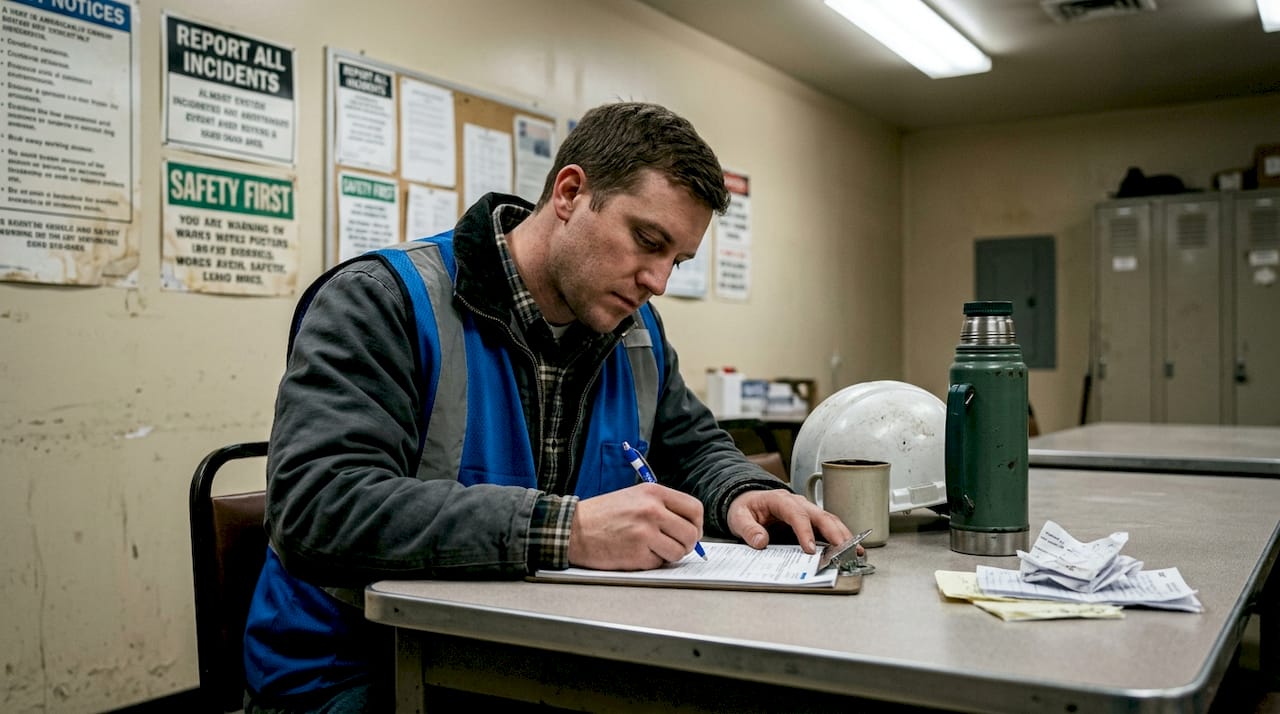
Under FELA (45 U.S.C. §51), employers are liable for injuries resulting in whole or in part from their negligence. The causation standard is lower than common law, meaning you do not need to prove the railroad’s negligence was the primary cause. You only need to show it played some part.
Key protections under FELA include:
- Duty and breach: The railroad must provide a reasonably safe workplace
- Automatic negligence: Violations of federal safety statutes (like the Federal Safety Appliance Act) constitute negligence per se
- Comparative fault: Your damages are reduced by your percentage of fault, not eliminated
- No recovery bar: You can still recover even if you were partly at fault, as long as you were not 100% responsible
“FELA uses pure comparative negligence: damages are diminished by the plaintiff’s fault percentage, with no recovery bar unless the worker is 100% at fault.”
This is a critical advantage. If you were 30% at fault for your injury, you still recover 70% of your damages. Understanding the full Georgia personal injury process can help you see how FELA claims fit into the broader legal landscape.
Pro Tip: Railroad companies often have experienced legal teams working against injured employees from day one. Do not give recorded statements or sign anything before consulting an attorney.
State law negligence: Motorists, pedestrians, and other victims
If you are not a railroad employee, Georgia state law governs your claim. The rules are different, and the stakes are just as high.
Non-employee victims pursue negligence claims under Georgia law against railroads, operators, municipalities, and manufacturers. To succeed, you must prove four elements:
- Duty: The defendant owed you a legal duty of care
- Breach: They failed to meet that duty
- Causation: Their breach directly caused your injuries
- Damages: You suffered actual, measurable harm
Multiple parties can be named in a single claim. A crossing accident, for example, might involve a railroad that failed to maintain signals, a municipality that neglected road conditions, and an equipment manufacturer whose faulty gate contributed to the crash.
Georgia uses a modified comparative negligence system. Under O.C.G.A. §51-12-33, you cannot recover any damages if you are found 50% or more at fault. If you are less than 50% at fault, your compensation is reduced by your fault percentage. Reviewing examples of accident liability and handling negligence claims in Georgia can clarify how these rules play out in real cases.
| Fault percentage | Recovery outcome |
|---|---|
| 0% at fault | Full compensation |
| 25% at fault | 75% of damages recovered |
| 49% at fault | 51% of damages recovered |
| 50% or more at fault | No recovery allowed |
Comparative fault: How shared blame affects compensation
Fault is rarely black and white in train accident cases. Both FELA and Georgia law use percentage-based fault allocation, but they do it differently, and that difference can mean thousands of dollars.
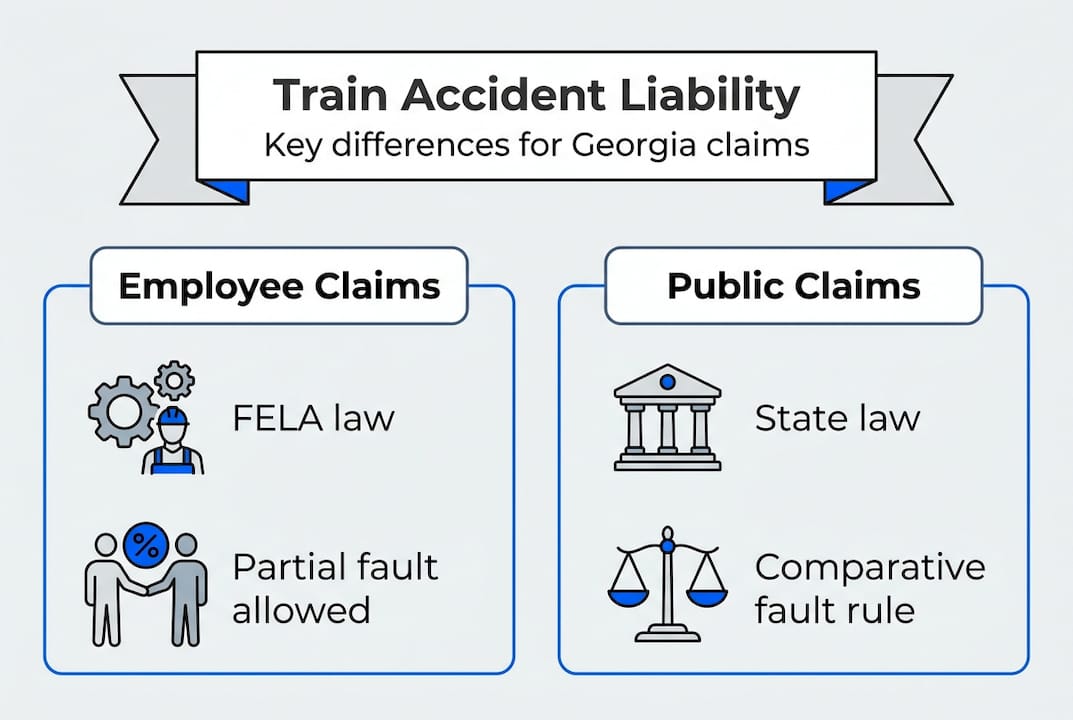
Under FELA’s pure comparative negligence standard, a railroad worker injured on the job can recover damages even if they were 90% responsible. Their payout is simply reduced by that percentage. Georgia’s modified comparative negligence rule is stricter. Cross the 50% fault threshold and you walk away with nothing.
Here is why this matters in practice:
- Railroads and their insurers will aggressively argue that you share blame
- Even a small shift in fault percentage can dramatically reduce your payout
- Evidence quality, witness testimony, and expert analysis all influence fault allocation
- An experienced attorney can challenge inflated fault assignments and protect your recovery
For context, a Georgia liability guide covering similar fault principles shows how courts weigh shared responsibility across different accident types.
Pro Tip: Never admit fault at the scene of a train accident. Even casual statements like “I didn’t see the signal” can be used to increase your assigned fault percentage and reduce your compensation.
Edge cases, exceptions, and strict liability
Some train accident scenarios fall outside standard negligence rules. These edge cases can actually make it easier to establish liability, but they require specific legal knowledge to pursue effectively.
Defective signals, malfunctioning gates, and faulty equipment can trigger strict liability. A Macon $60M lawsuit alleged defective signals and poor crossing design, illustrating how equipment failures can anchor massive claims. Under the Federal Safety Appliance Act (FSAA), defective couplers and other equipment failures create automatic liability without requiring proof of negligence.
Other important edge cases include:
- Vicarious liability: Railroads are generally responsible for their employees’ actions under respondeat superior, but exceptions exist for independent contractors and situations where employees deviate significantly from their duties
- Crew immunity: Under O.C.G.A. §46-8-197, train crew members acting under orders are generally not personally liable
- FRA violations: The FRA’s FY2024 enforcement report cited thousands of violations, including 508 grade crossing signal issues, underscoring how systemic failures contribute to accidents
Evidence preservation is critical in these cases. Physical evidence disappears fast. Proper evidence preservation in accident claims is a skill that experienced attorneys bring to every case from day one.
Next steps: Preserving your rights and evidence
Knowing the law matters. Acting on it quickly matters even more. Train accident claims in Georgia are time-sensitive, and delays can cost you your right to recover.
Here is what you should do immediately after a train accident:
- Seek medical attention right away, even if injuries seem minor. Medical records establish the link between the accident and your injuries.
- Document the scene by taking photos and videos of the crossing, signals, vehicle damage, and any visible injuries.
- Gather witness information including names and contact details of anyone who saw the accident.
- Preserve physical evidence such as damaged clothing, vehicle parts, or any equipment involved.
- Avoid speaking to railroad representatives or their insurers without legal counsel present.
- Consult an attorney immediately. Georgia’s statute of limitations gives you two years to file a personal injury claim. FELA claims carry the same two-year deadline. Missing it means losing your right to compensation entirely.
If you are unsure how to file an injury lawsuit in Georgia, a dedicated attorney can walk you through every step of the process.
Pro Tip: Railroad companies begin their own investigations immediately after an accident. The sooner you have legal representation, the sooner your attorney can request evidence preservation and prevent critical records from being lost or destroyed.
Connect with a Georgia train accident attorney
Train accident cases are among the most legally complex personal injury claims in Georgia. The rules shift depending on who you are, what caused the accident, and which laws apply. Getting those details wrong can cost you everything.

The Georgia personal injury lawyers at The Jewkes Firm understand how to navigate both FELA claims and state negligence cases. We work on a contingency fee basis, meaning you pay nothing unless we win. Our team is dedicated to leveling the playing field against well-funded railroad companies and their insurers. If you want to understand why consulting legal experts early makes such a difference in complex accident claims, we are ready to talk. Contact us today for a FREE CONSULTATION and let us fight for the maximum compensation you deserve.
Frequently asked questions
Who is liable for train accidents in Georgia?
Liability in Georgia depends on whether the victim is a railroad employee, motorist, or pedestrian, and may include railroads, municipalities, or equipment manufacturers. The applicable law, either FELA or Georgia state negligence law, determines how liability is assigned.
What is the statute of limitations for train accident injury claims in Georgia?
You generally must file your claim within two years of the accident date under both FELA and Georgia personal injury law. Waiting longer risks losing your right to any compensation.
Can I recover damages if I am partly at fault for a train accident?
FELA allows recovery unless you are 100% at fault, while Georgia’s modified comparative negligence bars recovery if you are 50% or more responsible. In both systems, your compensation is reduced proportionally to your share of fault.
What should I do after a train accident in Georgia?
Collect evidence immediately, seek medical care, and contact an attorney as soon as possible. FRA enforcement data shows that systemic violations are common, making early evidence preservation essential to building a strong claim.