

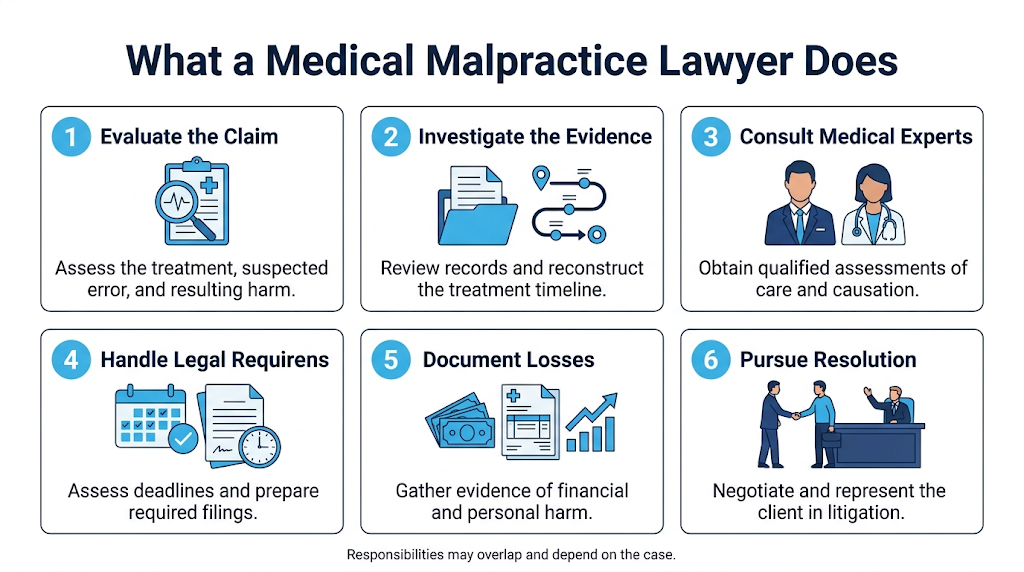
A medical malpractice lawyer investigates whether negligent healthcare caused an injury and helps patients pursue compensation when the evidence supports a claim. Their work includes reviewing medical records, consulting qualified medical experts, identifying responsible parties, and documenting losses. They also handle legal filings, negotiate settlements, and represent clients in court when necessary.
If you suspect a doctor, nurse, surgeon, or hospital harmed you or a family member, you may not know whether what happened qualifies as malpractice. An unexpected complication or unsuccessful treatment does not automatically establish negligence. A lawyer helps assess what happened, whether the care met the applicable standard, and whether a failure caused additional harm.
For patients in Georgia, that work also involves assessing state filing deadlines and expert requirements. This guide explains each responsibility, what you may need to provide, and what to expect when seeking legal help.
Evaluate Whether You Have a Medical Malpractice Claim
A medical malpractice lawyer begins by assessing whether your concerns may support a legal claim. This involves reviewing the treatment you received, the suspected mistake, and the resulting harm. The initial consultation helps identify what needs further investigation; it does not necessarily establish that malpractice occurred.
Assess the Standard of Care and Resulting Harm
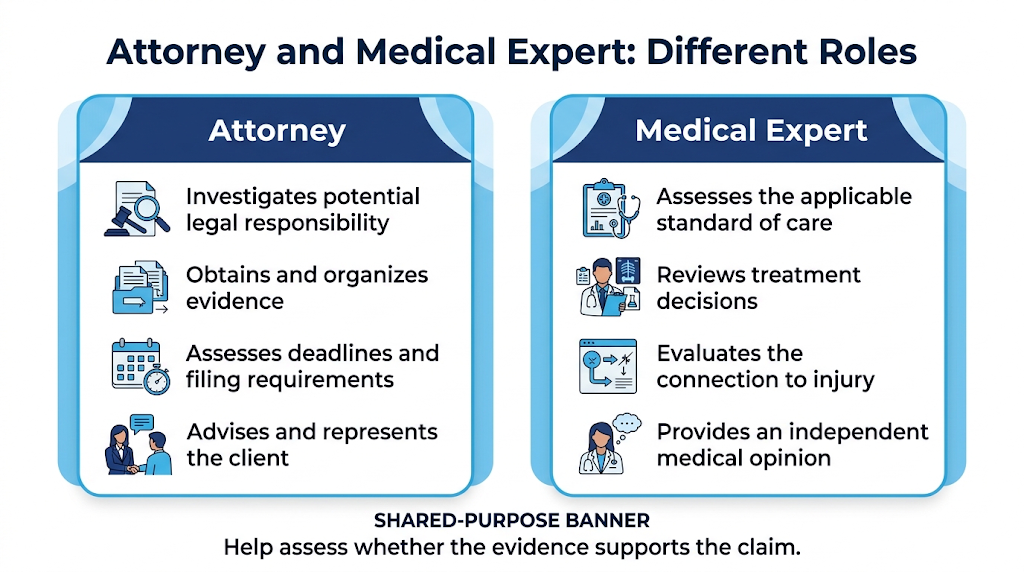
The standard of care concerns the care and skill required of a healthcare provider under the circumstances. An attorney works with qualified medical experts to assess whether the provider fell below that standard and whether the failure caused your injury. Georgia’s expert testimony requirements help determine who can provide those opinions.
For example, an infection after surgery does not automatically prove negligence. A lawyer may investigate whether appropriate precautions were taken, warning signs were recognized, and treatment was provided when needed.
The evaluation also considers whether the suspected failure caused additional harm, such as further surgery, a longer recovery, or lasting limitations. This connection is called causation.
Identify Potentially Responsible Providers
Several professionals may have participated in your care. The attorney examines who made treatment decisions, administered medication, reviewed test results, or handled follow-up.
That investigation may involve:
- Identifying each provider’s role in the suspected error.
- Reviewing communication between departments or facilities.
- Assessing whether individual conduct or a facility’s practices contributed to the harm.
A hospital is not automatically responsible for every treating provider. The lawyer investigates the relevant relationships before deciding which parties may properly be included in a claim.
Investigate the Treatment and Gather Medical Evidence
A medical malpractice lawyer investigates what happened before, during, and after the suspected error. This work helps establish a treatment timeline, identify gaps in the evidence, and determine which questions need medical expert review.
Review Medical Records and Reconstruct the Timeline
The attorney obtains available records with appropriate authorization and compares information across providers. Relevant evidence may include:
- Physician and nursing notes.
- Laboratory results and diagnostic imaging.
- Medication orders and administration records.
- Surgical reports and discharge instructions.
- Follow-up visits and treatment for later complications.
The lawyer examines when symptoms appeared, what information providers had, and how they responded. Records from earlier treatment can also help distinguish an existing condition from additional harm.
For example, a hypothetical investigation into a delayed diagnosis might compare the date an abnormal test result became available with when it was reviewed, communicated, and acted upon. Missing information prompts further investigation; it does not automatically prove negligence.
Work With Qualified Medical Experts
Medical experts help assess whether the treatment met the applicable standard of care and whether a departure caused injury. The lawyer identifies experts whose qualifications fit the medical issues and Georgia’s requirements for expert testimony.
The attorney organizes the evidence and develops the legal claim. The expert provides an independent medical assessment, which may support the concern, identify another explanation, or show that further information is needed.
As the client, you can help by identifying providers, supplying available documents, and explaining symptoms or conversations that may need clarification.
Handle Georgia’s Filing and Expert Requirements
A medical malpractice lawyer identifies the legal requirements that apply to your claim and prepares the necessary filings if representation moves forward. This includes assessing deadlines, arranging expert review, and checking that the complaint meets Georgia’s procedural rules.
Assess Filing Deadlines and Special Rules
Georgia generally requires a medical malpractice lawsuit to be filed within two years after the injury or death resulting from the alleged negligence. A separate five-year statute of repose generally runs from the negligent act or omission. These are different deadlines; the five-year rule does not give every patient five years to sue.
The attorney reviews treatment dates, when the injury occurred, and whether special rules or exceptions affect the claim. Do not assume that discovering a possible mistake starts a new filing period.
Contacting a firm or requesting medical records does not itself stop the filing clock. Ask whether the firm has accepted responsibility for your claim and any approaching deadlines.
Coordinate the Expert Affidavit
Under O.C.G.A. § 9-11-9.1, a complaint alleging medical professional negligence generally must be accompanied by an affidavit from an expert competent to testify. The affidavit must identify at least one alleged negligent act or omission and the facts supporting it. Limited exceptions apply to the filing requirement.
The lawyer assesses the requirement and coordinates appropriate expert review. An affidavit supports the filing; it does not establish every element needed to win the case.
You do not need to obtain an affidavit before contacting an attorney.
Calculate Losses and Assess Potential Compensation
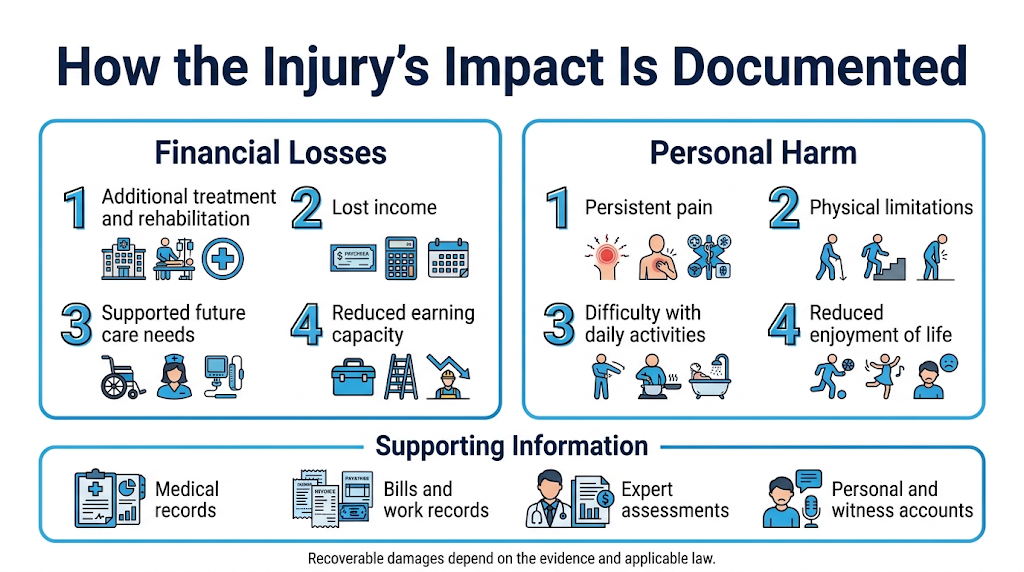
A medical malpractice lawyer documents how the alleged negligence affected your finances, health, and daily life. Potential compensation may include economic losses, such as medical expenses and lost earnings, alongside noneconomic harm, such as pain and suffering. What can be recovered depends on the evidence and applicable law.
Document Medical Costs, Lost Income, and Future Needs
The attorney gathers records that support financial losses connected to the injury, including:
- Bills for additional treatment, rehabilitation, and medication.
- Employment records showing missed work and lost pay.
- Medical assessments identifying ongoing care needs.
- Evidence of reduced ability to earn a living.
For lasting injuries, the lawyer may consult medical, vocational, or financial experts to assess future needs. Estimates should have supporting evidence rather than rely on assumptions.
Assess Pain, Physical Limitations, and Other Noneconomic Harm
Some consequences do not appear on a bill. The attorney may use medical records, your account, and observations from others to explain persistent pain, reduced mobility, or difficulty managing everyday activities.
Specific examples help show the impact: needing assistance to dress, being unable to lift your child, or giving up a regular activity. The lawyer uses this information to support a damages assessment without promising a particular settlement.
Negotiate a Settlement or Represent You in Court
A medical malpractice lawyer presents the evidence supporting your claim and addresses disputes about negligence, causation, and damages. Depending on how the case develops, this work may involve settlement negotiations, litigation, or both. Filing a lawsuit does not necessarily mean the case will reach trial.
Present the Claim and Explain Settlement Offers
The attorney organizes medical opinions, treatment records, and evidence of your losses to explain why compensation is warranted. They communicate with the opposing attorneys or insurer, respond to challenges, and negotiate potential settlement terms.
When an offer arrives, your lawyer should explain:
- How it compares with the documented losses.
- Which factual or legal disputes could affect the outcome.
- The costs and risks of continuing litigation.
- How fees, expenses, and repayment obligations could affect your proceeds.
You decide whether to accept a settlement. The lawyer advises you, but Georgia’s professional conduct rules require attorneys to respect the client’s settlement decision.
Conduct Discovery and Prepare for Trial
If litigation proceeds, the attorney uses discovery, the formal exchange of evidence, to investigate disputed issues. This may include requesting documents, submitting written questions, and taking depositions, testimony given under oath outside the courtroom.
The lawyer also prepares you and other witnesses, works with medical experts, and addresses motions that may affect the evidence or claims.
At trial, the attorney presents your case, questions witnesses, and challenges the defense’s evidence. Trial preparation can also inform settlement discussions as both sides learn more about the claim’s strengths and weaknesses.
Guide You Through Communication, Fees, and Next Steps
A medical malpractice lawyer should help you understand the progress of your claim, the decisions ahead, and your financial obligations. Before representation begins, ask who will provide updates and how to contact the team with questions.
Explain Contingency Fees and Litigation Expenses
A contingency fee ties the attorney’s payment to a recovery. Georgia requires a written agreement explaining how that fee is calculated, including how litigation expenses are deducted.
Expenses are separate from payment for legal services. They may include expert review, filing fees, and deposition costs. Ask who advances those expenses, whether they are deducted before or after the attorney’s percentage, and what you could owe if no compensation is recovered.
Keep You Informed and Explain Your Responsibilities
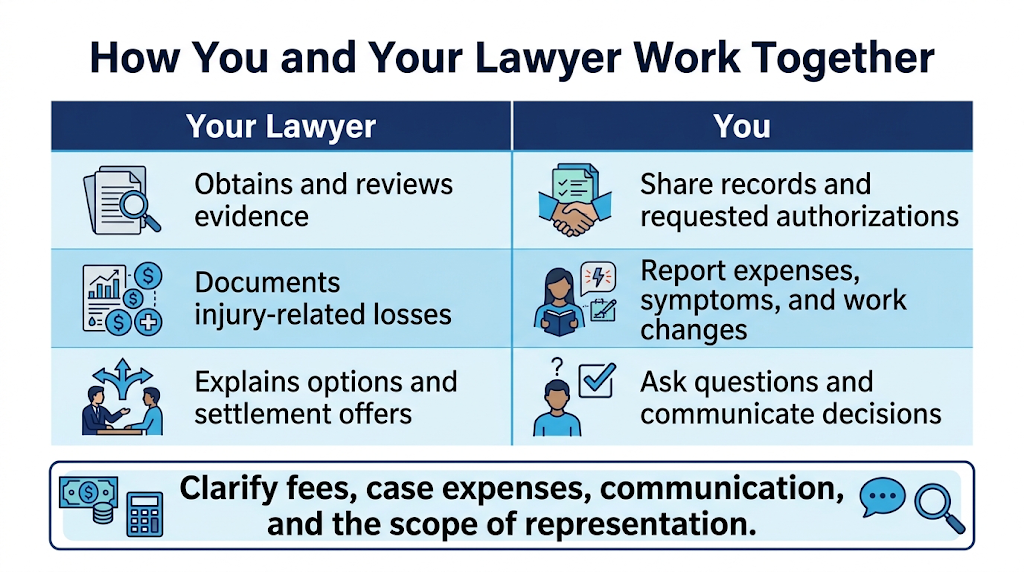
Your attorney should explain important developments and request the information needed to move forward. You can help by responding accurately and reporting changes in your treatment, expenses, or ability to work.
| Lawyer’s responsibility | Your contribution |
| Obtain and review evidence | Supply available records and requested authorizations |
| Document injury-related losses | Keep bills, work records, and symptom notes |
| Explain options and settlement offers | Ask questions and communicate your decisions |
Confirm what work the firm has agreed to handle and what happens next.
Working With The Jewkes Firm in Georgia
The Jewkes Firm offers free consultations for people concerned about injuries caused by negligent medical care. You can explain what happened, share available records, and ask whether further investigation may be appropriate.
Relevant Experience and Local Consultation Options
The firm’s medical malpractice practice covers concerns involving surgical errors, medication mistakes, diagnostic failures, and birth injuries. During your consultation, ask how the team would investigate your concerns, arrange medical expert review, and keep you informed.
The Tyrone office is located at 1155 Senoia Road, Suite 102, Tyrone, GA 30290. Contact the office before visiting to arrange a consultation and confirm any accessibility or meeting requirements.
Client Feedback on Communication
In a published Avvo review, Ronnie Johnson described the experience:
“Great experience always helpful. Great communication always kept me up to date on my case.” , Ronnie Johnson Tyrone, GA Personal Injury Lawyer
This feedback concerns the reviewer’s service experience; it does not establish a medical malpractice outcome or predict another client’s results.
Frequently Asked Questions
Does a Medical Malpractice Lawyer Need to Be a Doctor?
No. A medical malpractice lawyer is a legal professional and does not need a medical degree. Lawyers work with qualified medical experts to assess treatment, identify possible departures from the standard of care, and evaluate whether those failures caused harm. Georgia sets specific requirements for expert testimony.
Can a Lawyer Help If I Do Not Have My Medical Records?
Yes. You can make an initial inquiry using provider names, treatment dates, and a brief explanation of your concerns. Ask whether the firm can help obtain records with your authorization. Missing documents should not stop you from contacting counsel promptly.
Will My Medical Malpractice Case Go to Trial?
Not necessarily. A claim may resolve through settlement, while disputed cases may proceed to trial. Your lawyer should explain the available options and prepare for litigation when appropriate. Neither a settlement nor a favorable verdict is guaranteed.
What Is the Difference Between Attorney Fees and Case Expenses?
Attorney fees pay for legal services. Case expenses cover items such as medical experts, court filings, and depositions. Review the written agreement to understand how each is calculated, when expenses are deducted, and what you could owe if there is no recovery.
Request a Georgia Medical Malpractice Consultation
If you suspect negligent medical care caused you or a loved one harm, contact The Jewkes Firm to discuss your concerns. You can share your treatment timeline, explain how the injury affected you, and ask about possible next steps, even if you are still gathering records.
Speak with a Georgia Medical Malpractice Attorney to request a free consultation. A case review can help clarify your options; it does not guarantee representation or compensation.
The Jewkes Firm
Address: 1155 Senoia Rd #102, Tyrone, GA 30290
Phone: (770) 771-5130