

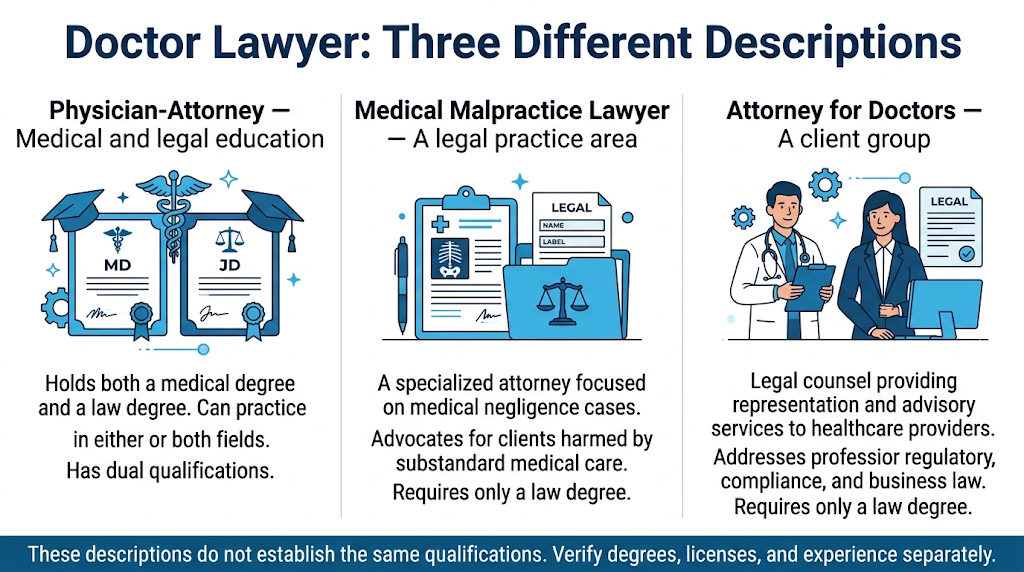
A “doctor lawyer” may refer to someone with both medical and legal degrees, such as an MD and a JD. Combined MD–JD programs bring these fields together, but the phrase can also be confused with a lawyer who handles medical matters or represents doctors. Those descriptions do not establish the same qualifications.
If you are choosing a Georgia Medical Malpractice Attorney, look beyond the label. Check the attorney’s professional standing, relevant experience, and approach to working with medical experts. This guide explains the different roles, how to verify credentials, and which questions to ask before seeking representation.
What Does “Doctor Lawyer” Mean?
“Doctor lawyer” can describe different backgrounds or types of work. Before choosing a professional, clarify whether the phrase refers to their education, legal practice, or clients.
A Professional With Medical and Legal Degrees
A physician-attorney has training in both medicine and law. An MD–JD combines a Doctor of Medicine with a Juris Doctor; a physician with osteopathic medical training may instead hold a DO and JD.
These degrees may be earned through a combined program or separately. Holding both degrees does not establish that someone currently practices both professions. AAMC describes MD–JD programs as integrating medical study with legal training.
A Medical Malpractice Lawyer
A medical malpractice lawyer handles legal claims involving allegedly negligent healthcare. The practice-area description does not tell you whether the attorney also holds a medical degree.
Ask about relevant legal experience and how the attorney obtains qualified medical opinions.
An Attorney Who Represents Doctors
An attorney for doctors may handle employment agreements, licensing matters, business disputes, or malpractice defense. The phrase identifies the clients served, rather than confirming physician qualifications.
| Description | What it identifies |
| Physician-attorney | Medical and legal training; verify degrees and licenses |
| Medical malpractice lawyer | A legal practice area |
| Attorney for doctors | A client group |
What Qualifications Does a Physician-Attorney Hold?
A physician-attorney’s background involves medical and legal education. To understand what that person can currently do, check their degrees, professional licenses, and relevant experience separately.
Medical Education and the MD or DO Degree
An MD, or Doctor of Medicine, and a DO, or Doctor of Osteopathic Medicine, are medical degrees. Neither abbreviation alone tells you the person’s current license status, clinical specialty, or recent treatment experience.
If someone claims a clinical background, ask about postgraduate training, specialty certification, and whether they still treat patients. Georgia’s Medical Board publishes separate requirements for physician licensure.
Legal Education and the Juris Doctor Degree
A JD, or Juris Doctor, is a law degree. Some professionals complete medical and legal education through a combined program; others earn the degrees separately.
Program requirements and timelines vary. Completing both degrees should not be confused with completing every requirement to practice both professions.
Separate Requirements to Practice Medicine and Law in Georgia
Medical practice and legal practice have separate authorization requirements. Check each claimed professional status through the appropriate Georgia authority.
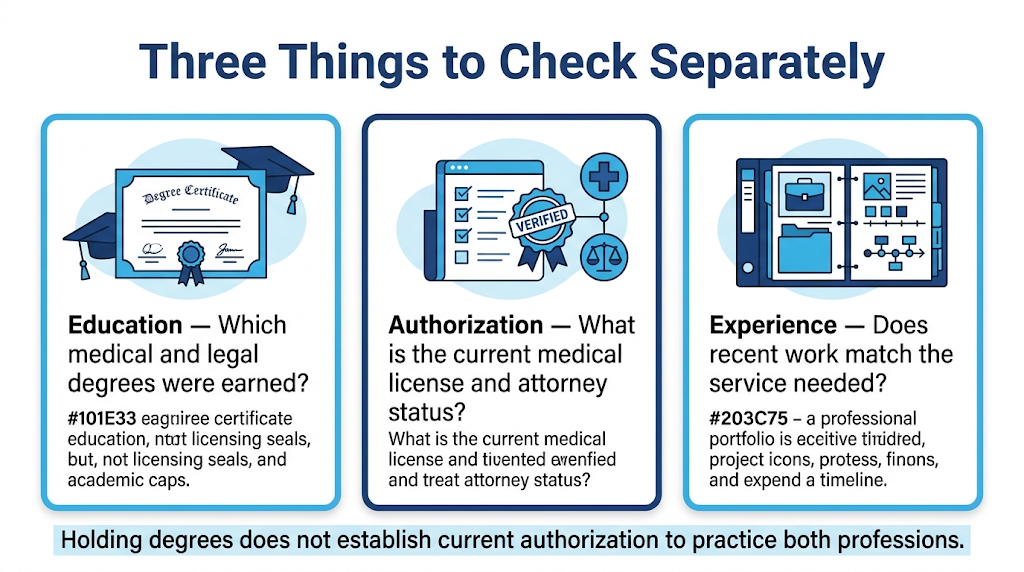
Before relying on a professional’s description, verify:
- Education: Which medical and legal degrees did they earn?
- Authorization: What is their current medical license and attorney status?
- Experience: Does their recent work relate to your particular concern?
A dual-degree background can be relevant, but it does not establish expertise in every medical specialty or legal matter.
Where Do Medicine and Law Overlap?
Medical and legal knowledge can support several kinds of work. A professional’s responsibilities depend on their position, qualifications, and clients, not simply whether they hold two degrees.
Medical Malpractice Litigation
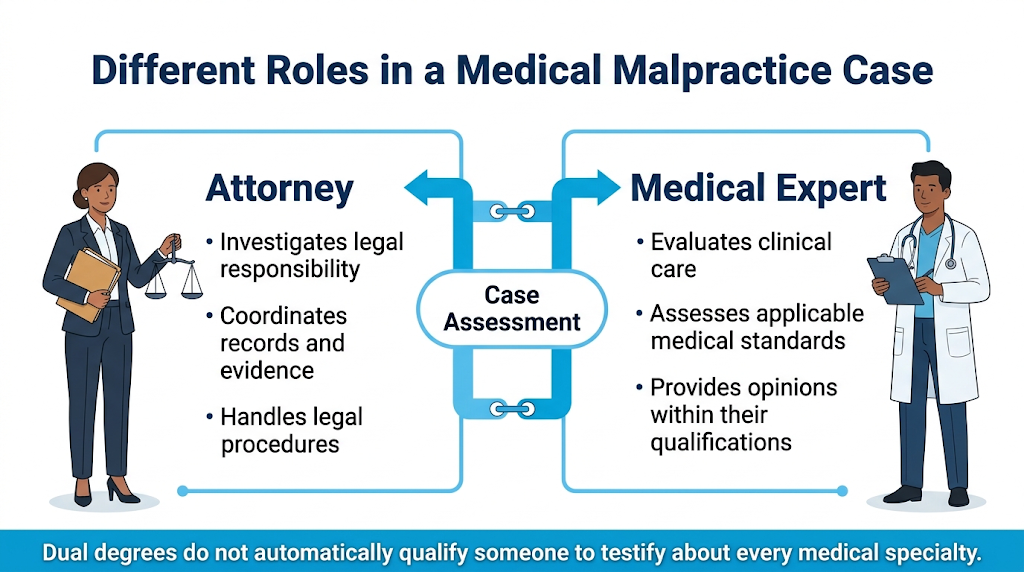
Malpractice cases involve questions about treatment, professional standards, injury, and legal responsibility. Attorneys investigate claims and manage legal proceedings, while qualified medical experts evaluate clinical issues.
A physician-attorney may bring medical training to that work, but the person’s specialty and relevant litigation experience still matter. Ask whether they represent injured patients, healthcare providers, or insurers.
Healthcare Compliance and Physician Representation
Healthcare attorneys may advise doctors or organizations about contracts, licensing, privacy, and regulatory obligations. For example, an attorney might review a physician’s employment agreement or help respond to a licensing investigation.
These services differ from representing a patient pursuing compensation. “Attorney for doctors” describes whom the attorney serves; it does not establish that the attorney is also a physician.
Bioethics, Public Policy, and Healthcare Administration
Combined training may also support work involving patient consent, research ethics, healthcare access, or organizational policy. University MD–JD program information identifies health law, healthcare systems, and policy among possible career directions.
| Field | Example responsibility | What to verify |
| Malpractice litigation | Investigating an alleged treatment error | Relevant legal experience and expert support |
| Physician representation | Reviewing an employment contract | Experience with physician agreements |
| Healthcare policy | Assessing a proposed policy’s implications | Relevant policy and healthcare background |
Does a Medical Malpractice Lawyer Need to Be a Doctor?
No. A medical degree is not a requirement for practicing medical malpractice law in Georgia. Legal practice requires appropriate authorization, while medical opinions used in a case must meet separate expert-evidence requirements.
The Attorney’s Role in Investigating a Claim
The attorney evaluates whether the available facts support a legal claim. That work may include obtaining records, identifying potentially responsible parties, examining losses, and coordinating qualified medical review.
An unfavorable outcome alone does not establish malpractice. The investigation must address whether care fell below the applicable standard and whether that failure caused injury. The attorney also manages procedural requirements and presents the supporting evidence.
The Medical Expert’s Role in Evaluating Care
A medical expert assesses clinical questions within their qualifications. These may include what care was appropriate, whether the provider departed from that standard, and how the alleged error affected the patient.
Georgia imposes specific requirements on medical experts in professional malpractice cases. Holding an MD and JD does not automatically qualify someone to give expert opinions about every procedure or specialty.
Why Dual Degrees Do Not Guarantee Better Representation
Combined training can offer useful perspective, but degrees alone do not establish case-specific experience or predict results.
When choosing an attorney, ask about:
- Experience with the medical issues involved.
- Access to appropriately qualified experts.
- Resources for investigating and pursuing the claim.
- Communication, fees, and representation scope.
How Georgia’s Medical Expert Requirements Affect a Case
Georgia’s malpractice rules help explain why an attorney’s qualifications and a medical expert’s qualifications serve different purposes. A lawyer’s medical degree does not automatically satisfy the requirements for expert evidence.
The Purpose of an Expert Affidavit
Under O.C.G.A. § 9-11-9.1, covered professional malpractice lawsuits generally require an affidavit from an expert competent to testify. The affidavit must identify at least one claimed negligent act or omission and the factual basis supporting it. Specific exceptions and procedural provisions apply.
This affidavit supports the allegations at the filing stage. It does not establish every element of the case or guarantee that the patient will recover compensation.
Why Case-Specific Expert Qualifications Matter
O.C.G.A. § 24-7-702 sets requirements for expert testimony, including additional qualifications in professional malpractice cases. Relevant practice or teaching experience and the care being questioned can affect whether an expert qualifies.
For a prospective client, useful questions include:
- What clinical expertise does this claim require?
- Who will evaluate the treatment records?
- How will the attorney assess the proposed expert’s qualifications?
The focus should be on matching qualified expertise to the disputed care. An MD–JD credential alone cannot answer those questions.
How to Check Credentials and Choose the Right Professional
Start by identifying the service you need: legal representation, medical treatment, or advice about a healthcare business matter. Then verify the professional’s credentials and relevant experience separately.
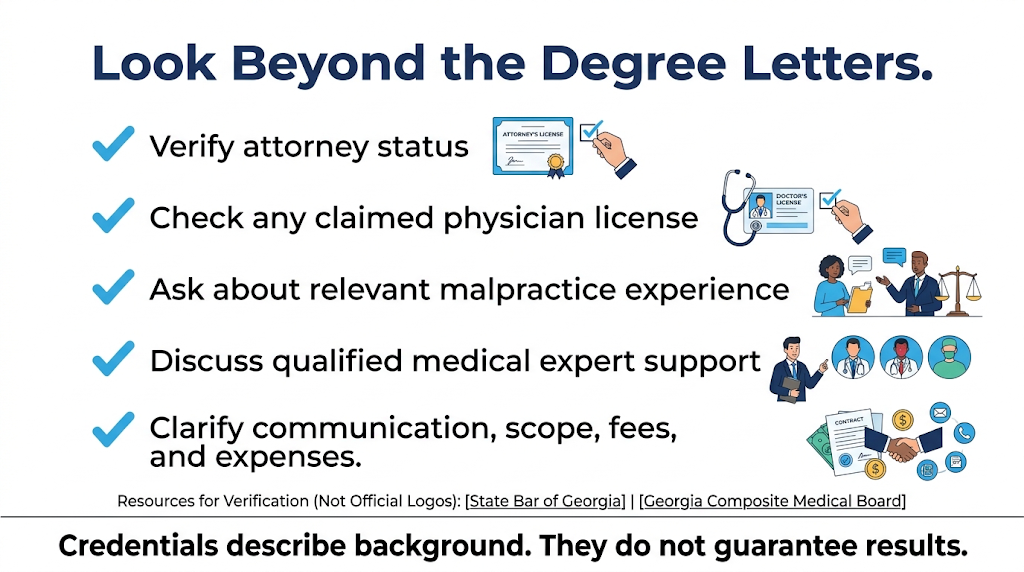
Verify Georgia Attorney Status
Search the State Bar of Georgia’s Member Directory using the attorney’s full name. The directory provides membership information and public disciplinary history. Contact the Bar if the listing leaves questions about the attorney’s status.
A law firm biography can explain experience, but it should supplement official verification.
Verify Any Claimed Physician License
If someone claims to be a Georgia-licensed physician, use the Georgia Composite Medical Board’s verification tool. Match the name carefully and review the available license information.
Do not assume that a medical degree listed beside an attorney’s name means they currently treat patients.
Ask About Relevant Experience, Resources, and Communication
For a medical malpractice inquiry, ask:
- Have you handled claims involving similar treatment issues?
- How do you identify appropriately qualified medical experts?
- Who will investigate the records and communicate with me?
- What would representation cover, and how would fees and expenses work?
Use the answers to assess whether the professional’s work fits your needs. Degrees provide background; they do not predict the outcome of your case.
Working With The Jewkes Firm in Georgia
If your question about a “doctor lawyer” comes from concern about medical care, focus on finding an attorney whose experience fits the legal issue. The Jewkes Firm handles medical malpractice matters and offers free initial consultations.
Medical Malpractice Services and Scope of Representation
Explain the treatment involved, the injury you experienced, and what remains unclear. Ask whether the firm accepts that type of claim and what investigation would be needed before it could agree to represent you.
Confirm the proposed scope of representation, fees, and expenses before hiring.
Relevant Experience and Medical Expert Coordination
Jordan Jewkes’ published biography lists medical malpractice-related publications and presentations. Ask how the attorney assigned to your inquiry would assess the records and coordinate appropriate medical expertise.
Local Consultation Options and Verified Client Feedback
The firm’s Tyrone office is at 1155 Senoia Road, Suite 102, Tyrone, GA 30290. Confirm meeting arrangements before visiting.
Frequently Asked Questions
Is a Juris Doctor the Same as a Medical Doctor?
No. A Juris Doctor (JD) is a law degree. A Doctor of Medicine (MD) is a medical degree. The word “doctor” in the JD title does not mean the graduate is qualified to treat patients. Combined MD–JD programs provide education in both fields.
Can Someone Practice Both Medicine and Law?
Yes, provided they meet the applicable requirements for each profession. In Georgia, medical licensure and authorization to practice law involve separate processes. Holding both degrees does not confirm that someone currently maintains both professional authorizations.
Is an Attorney for Doctors Also a Physician?
Not necessarily. “Attorney for doctors” describes the clients the lawyer represents. Their work might involve employment contracts, licensing matters, or other legal concerns affecting physicians. Verify any claimed medical qualifications separately.
Can a Physician-Attorney Testify About Any Medical Specialty?
No. Medical and legal degrees alone do not establish qualification to testify about every treatment issue. Georgia’s expert-evidence rules require a case-specific assessment of qualifications, including relevant professional experience.
Should I Choose a Malpractice Attorney Based on Degrees Alone?
No. Consider relevant litigation experience, access to qualified medical experts, communication, resources, and the proposed fee agreement. Ask how the attorney would investigate your particular concern. Credentials help you understand someone’s background, but they do not guarantee a successful claim.
Speak With a Georgia Medical Malpractice Attorney
If you suspect negligent medical care caused an injury, contact The Jewkes Firm to discuss what happened and ask about possible next steps. Share the treatment timeline, available records, and your main concerns.
Request a consultation with a Georgia Medical Malpractice Attorney. The firm offers free initial case evaluations, giving you an opportunity to ask about investigation, representation, and proposed fees.
The Jewkes Firm
Address: 1155 Senoia Rd #102, Tyrone, GA 30290
Phone: (770) 771-5130