
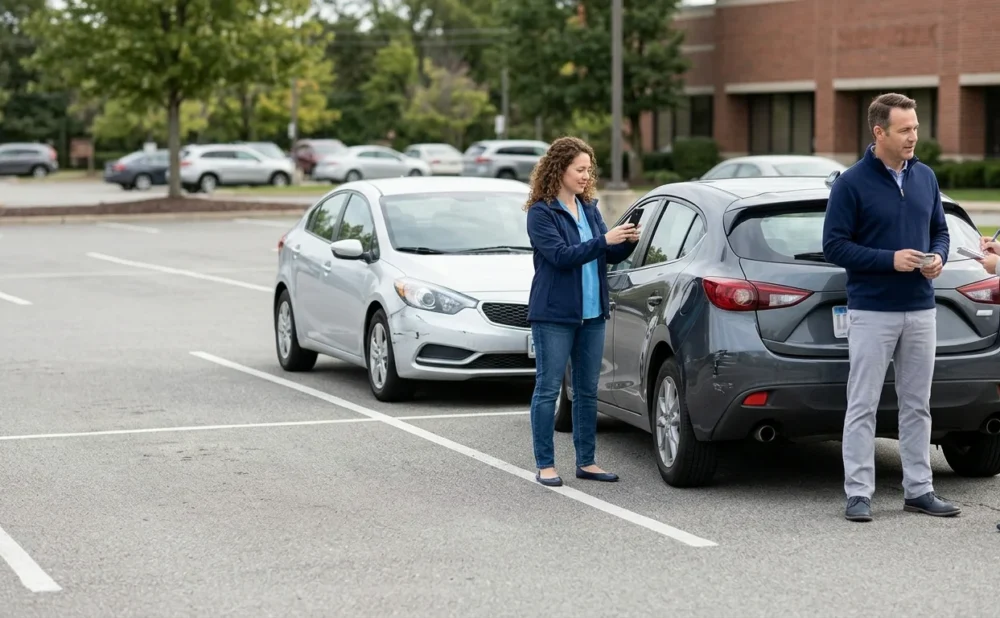
You may not need a lawyer for a straightforward, property-damage-only accident with clear responsibility and an insurer covering the documented losses. However, legal advice may help if injuries emerge, fault is disputed, coverage is unclear, or a settlement offer leaves important losses unresolved.
For Georgia drivers, the decision involves more than the size of a dent. Your medical needs, repair findings, insurance terms, and applicable deadlines all matter.
This guide explains when handling a claim yourself may be reasonable and when a consultation could help you assess your options. Asking for advice does not commit you to hiring an attorney or filing a lawsuit.
When You May Be Able to Handle the Claim Yourself
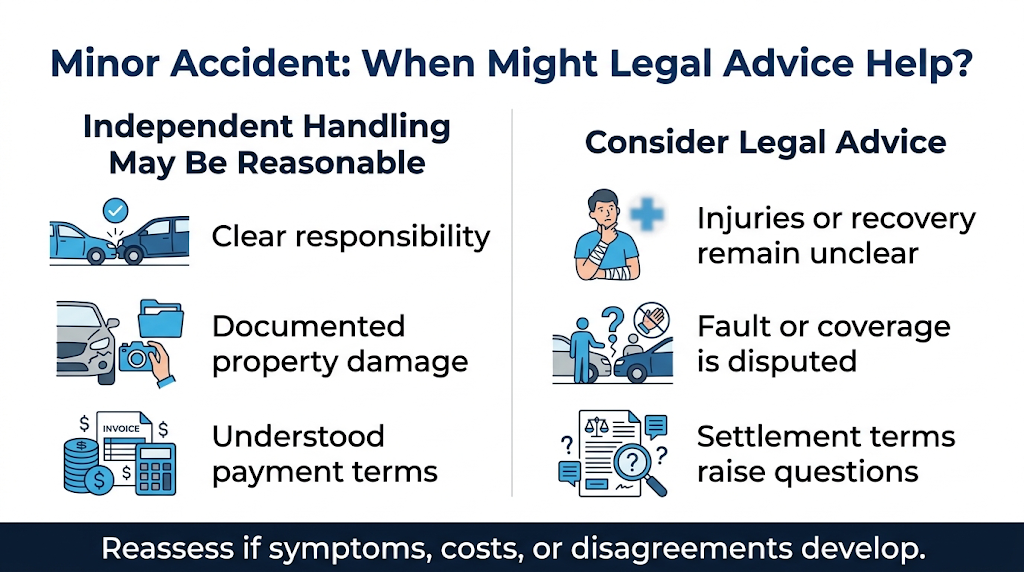
Not every minor collision requires an attorney. If the claim involves only vehicle damage, responsibility is accepted, and the insurer addresses the documented losses, handling it yourself may be reasonable.
Property Damage, Clear Responsibility, and Cooperative Insurance Handling
Start by gathering photographs, repair estimates, receipts, and written communications. Ask the adjuster to explain what the proposed payment covers and how additional accident-related damage discovered during repairs would be addressed.
A straightforward claim may involve:
- No identified injury or unresolved medical concern.
- Agreement about responsibility.
- A repair assessment that supports the payment.
- Clear answers about coverage and any applicable deductible.
Before signing a release, understand which claims it resolves. Do not assume a document concerns only repairs because the discussion focused on vehicle damage.
Changes That Should Prompt You to Reassess
Consider seeking advice if symptoms develop, the repair estimate changes substantially, responsibility becomes disputed, or coverage is denied.
| Independent handling may be reasonable | Legal advice may help |
| Documented repairs are being addressed | Supported losses remain disputed |
| Responsibility is accepted | You are being blamed |
| Payment terms are clear | A release or coverage position is unclear |
Feeling fine at the scene does not settle every medical question. Seek appropriate assessment if symptoms arise.
Signs a Minor Accident May Warrant Legal Advice
A collision that initially seems straightforward can raise questions about injuries, responsibility, or insurance coverage. A consultation may help you understand those issues before deciding whether to hire an attorney.
Symptoms or Treatment Needs Remain Unclear
If symptoms develop or persist, seek appropriate medical assessment. Some concussion symptoms may not appear until hours or days after an injury, according to the CDC. That does not mean every minor collision causes a concussion or that every later symptom resulted from the accident. Tell the clinician when symptoms began and describe the collision accurately. Keep treatment records and document missed work or daily limitations.
Legal advice may help when ongoing treatment makes it difficult to assess an offer or understand which losses remain unresolved.
Fault Is Disputed, or Several Parties Are Involved
Conflicting accounts can complicate even a low-speed collision. Another driver may deny responsibility, claim you stopped unexpectedly, or blame someone else involved.
Useful evidence may include:
- Photographs of vehicle positions, damage, and road conditions.
- Witness names and contact information.
- Available dashcam or nearby surveillance footage.
- The crash report and relevant communications.
An attorney can assess how that evidence affects responsibility. A police report or insurer’s decision can be relevant without automatically settling the legal question.
The Offer, Denial, or Coverage Position Does Not Match the Evidence
Compare an offer with documented repairs, treatment expenses, missed income, and other potentially recoverable losses. Ask what the insurer included, excluded, or still needs to evaluate.
For example, an estimate may omit damage identified during repairs. A claim denial may involve disputed fault, a coverage exclusion, or missing information. Those situations require different responses.
Not every initial offer is unfair, and not every delay amounts to misconduct. Advice can be useful when the explanation remains unclear, supported losses are disputed, or you are being asked to sign a release you do not understand.
Why Vehicle Damage Alone Does Not Answer the Question
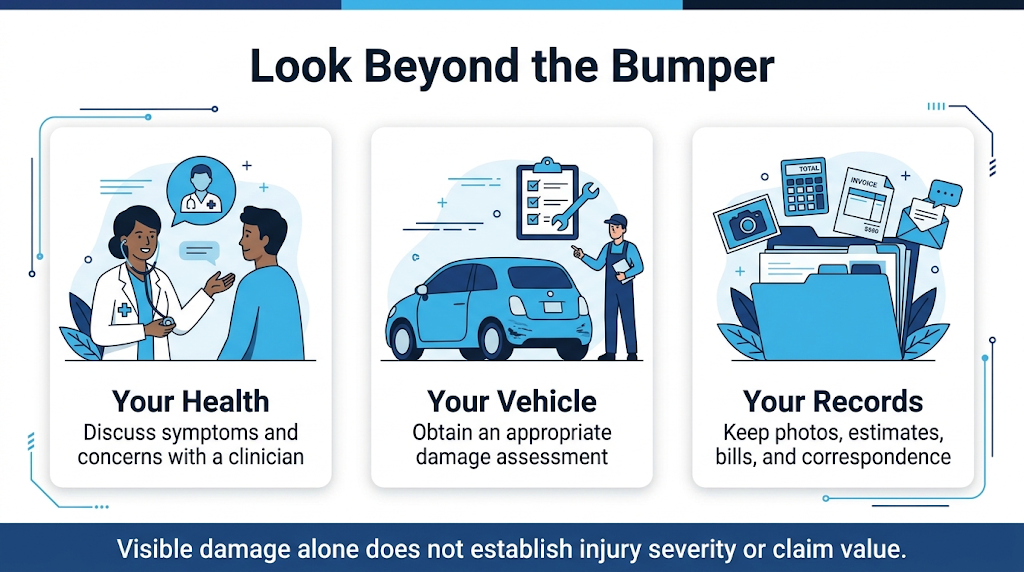
The size of a dent does not tell you everything about a claim. Vehicle condition, repair findings, and medical concerns require separate assessments.
Visible Damage Versus Repair Inspection Findings
An initial estimate may cover only damage visible before repairs begin. A repair shop may identify additional accident-related work during inspection or disassembly.
Ask the shop to document its findings and explain how supplemental estimates are submitted to the insurer. Additional damage does not automatically establish coverage or guarantee payment, so keep the supporting photographs, estimates, and communications.
Vehicle Repairs and Medical Assessment Address Different Questions
A repair estimate evaluates the vehicle; it does not diagnose an occupant. Likewise, medical symptoms do not establish which vehicle repairs are necessary.
If symptoms arise, seek appropriate clinical assessment and describe the collision accurately. When deciding whether legal advice could help, consider unresolved injuries, repair disputes, and coverage questions together rather than relying solely on how the vehicles look.
Georgia Rules That Can Affect Your Decision
Even an apparently minor collision can trigger reporting duties and legal deadlines. These obligations are separate from whether you hire an attorney.
Accident Reporting and Insurance Notification
Under O.C.G.A. § 40-6-273, drivers must immediately notify the appropriate law enforcement agency when an accident causes injury, death, or apparent property damage of $500 or more. Damage can be difficult to estimate at the scene, so do not assume a small dent falls below that threshold.
Notifying police does not replace notifying your insurer. Georgia’s insurance regulator recommends contacting your insurer or agent promptly, even when another driver caused the collision. Check your policy’s notice and cooperation requirements.
Shared Fault and Its Effect on Recovery
Georgia generally reduces recoverable damages according to your share of responsibility. If you are 50% or more responsible for the injury or damages claimed, recovery is barred under the comparative-fault statute. If responsibility is disputed, preserving photographs, witness details, and available footage can help an attorney assess the competing accounts.
Personal Injury, Property Damage, and Other Deadlines
Georgia generally allows two years for personal injury lawsuits and four years for vehicle property-damage claims, measured from when the claim accrues, typically the collision date. Exceptions can affect the calculation. Policy deadlines and special notice requirements, including those involving government entities, may require earlier action. Settlement negotiations do not themselves file a lawsuit or necessarily preserve your rights.
What a Lawyer Can Do, and What Representation Costs
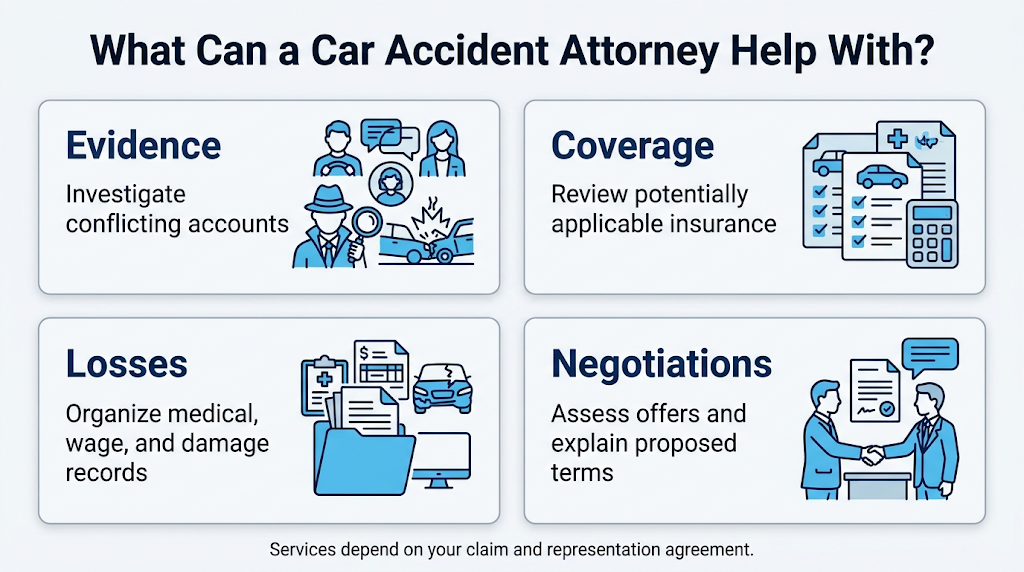
A lawyer can help identify unresolved issues and assess whether representation would be useful. The value depends on the work your claim requires, the proposed fees, and the outcome, not simply whether the accident was described as minor.
Investigate Evidence, Assess Losses, and Review Coverage
An attorney may obtain records, review conflicting accounts, preserve available evidence, and examine relevant insurance policies. They can also help document treatment expenses, missed income, and other supported losses.
Confirm whether the firm would handle your bodily injury claim, vehicle damage claim, or both. Do not assume that accepting one part means handling every issue arising from the collision.
Negotiate and Explain Settlement Terms
A lawyer can present supporting evidence, respond to disputed issues, and negotiate with insurers. They can explain what an offer covers, which questions remain unresolved, and what a proposed release would mean.
Representation does not guarantee a larger settlement. The attorney should explain the available options and risks so you can make an informed decision.
Compare Attorney Fees, Expenses, and Potential Client Benefit
Under a contingency arrangement, the attorney’s fee depends on a recovery. Case expenses are separate, and the written agreement should explain the calculation and reimbursement terms. Georgia requires contingency agreements to specify whether expenses are deducted before or after calculating the fee.
Ask for a worked example showing potential deductions. For a straightforward property-only claim, the likely benefit of representation deserves particular attention.
What to Do Before Accepting a Settlement
Before accepting an offer, check what it covers and whether important questions remain unanswered. A quick payment may resolve the claim, but its terms deserve careful review.
Check Unresolved Medical and Repair Questions
Compare the offer with the information available:
- Have you obtained appropriate assessment for symptoms?
- Are treatment needs or work restrictions still uncertain?
- Has the repair shop completed its inspection?
- Does the estimate include all identified accident-related damage?
- Has the insurer explained any excluded losses?
An unresolved issue does not automatically make an offer unfair. Ask what further documentation is needed and request an explanation of the calculation.
Understand Which Claims the Release Covers
Read any release before signing. Determine whether it concerns vehicle damage, bodily injury, or a broader set of claims. Do not assume that a repair-related discussion means the document settles only repairs.
If the wording is unclear, legal advice may help you understand its effect. Also distinguish requests from the other driver’s insurer from duties under your own policy. Ask about unclear statements or authorizations while continuing to meet applicable notice and cooperation requirements.
What to Bring to a Free Consultation
Bring the information you already have. You do not need a complete file before asking whether legal advice could help.
Useful documents include:
- Collision details: Date, location, crash report, photographs, and witness contacts.
- Vehicle information: Repair estimates, inspection findings, receipts, and rental expenses.
- Medical information: Available treatment records, bills, and a brief symptom timeline.
- Work records: Documentation of missed time or reduced earnings.
- Insurance documents: Relevant policies, claim numbers, correspondence, offers, and proposed releases.
Prepare a short list of questions about fault, coverage, settlement terms, and fees. Identify missing information without guessing what it would show.
Before ending the consultation, confirm whether the firm has accepted representation, which claims it would handle, and who is responsible for approaching deadlines.
Working With The Jewkes Firm in Georgia
The Jewkes Firm offers free consultations for people seeking guidance after a Georgia car accident. You can discuss the collision, available evidence, and unresolved insurance questions before deciding whether representation fits your circumstances.
Relevant Experience and Scope of Representation
Ask how the firm would assess disputed fault, injury-related losses, or an unclear settlement offer. Confirm whether representation would cover bodily injury, vehicle damage, or both.
For example, an apparently minor rear-end collision may require further assessment if symptoms develop or repair findings change. This is a hypothetical situation, not a documented Jewkes Firm case. Medical causation requires appropriate clinical evidence rather than assumptions based on visible damage.
Local Consultation Options and Verified Client Feedback
The Tyrone office is located at 1155 Senoia Road, Suite 102, Tyrone, GA 30290. Contact the office before visiting to confirm meeting arrangements, parking, and accessibility requirements.
A published client review describes the firm’s communication:
“Great experience always helpful. Great communication always kept me up to date on my case.” Ronnie Johnson
This feedback reflects one client’s experience. It does not establish a particular accident result or predict your outcome.
Frequently Asked Questions
Do I Need a Lawyer If There Is Only Vehicle Damage?
Not necessarily. You may be able to handle a straightforward claim when responsibility is accepted and documented repairs are being addressed. Advice may help if repair costs, coverage, or release terms remain disputed. Confirm whether a firm accepts property-damage-only matters.
What If Symptoms Appear After I Initially Felt Fine?
Seek appropriate medical assessment and explain when symptoms began. Some concussion symptoms can appear hours or days after an injury, but later symptoms do not automatically establish an accident-related injury. Keep accurate treatment records.
Should I Talk to the Other Driver’s Insurance Company?
You may need to exchange information to pursue a claim, but ask what any recorded statement, authorization, or release involves before agreeing. The other insurer’s requests differ from your obligations under your own policy. Obtain advice if responsibility or the request’s scope is unclear.
Does Hiring a Lawyer Mean Filing a Lawsuit?
No. Representation may involve investigation, coverage review, and settlement negotiations. A lawsuit may become appropriate if disputes remain unresolved, but hiring counsel does not guarantee either litigation or settlement.
What If I Am Being Blamed or Sued?
Notify your liability insurer promptly and forward any lawsuit documents immediately. Ask whether coverage includes a defense. An attorney pursuing your injury claim does not automatically represent you against another person’s claim. Uncovered allegations or potential exposure beyond policy limits may warrant separate advice.
Request a Free Georgia Car Accident Consultation
If you are unsure whether a minor collision warrants legal help, contact The Jewkes Firm to discuss your injuries, vehicle damage, and insurance concerns.
Request a free consultation with a Georgia Auto Accidents Attorney to explore your options. Ask whether representation would cover your injury claim, property damage, or both. A consultation does not commit you to filing a lawsuit or guarantee representation or compensation.
The Jewkes Firm
Address: 1155 Senoia Rd #102, Tyrone, GA 30290
Phone: (770) 771-5130