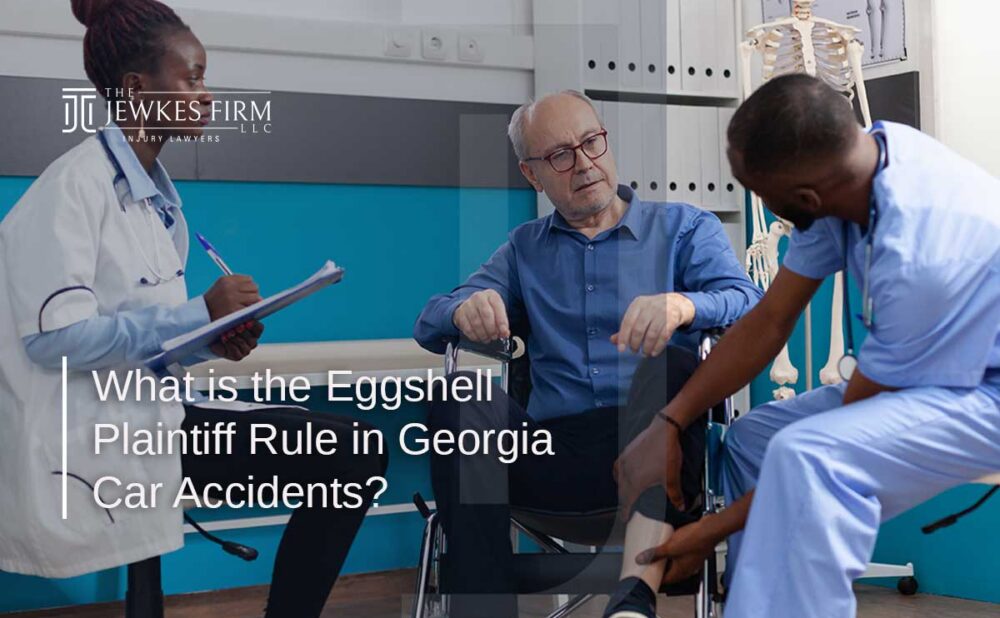
What is the Eggshell Plaintiff Rule in Georgia Car Accidents?
When you’re injured in a car accident, the aftermath can be overwhelming. Beyond the physical pain and emotional distress, you may wonder how Georgia law treats your claim, especially if you had pre-existing vulnerabilities. In Georgia car accident claims, one of the most important legal principles that can affect your right to full compensation is the Eggshell Plaintiff Rule. This rule is fundamental to personal injury law and applies directly to cases where an accident causes unexpectedly severe injuries because of a victim’s pre‑existing health condition.
Understanding the Eggshell Plaintiff Rule
The Eggshell Plaintiff Rule—sometimes called the “Thin Skull Rule”—is a legal doctrine in tort law that holds the person who caused the accident legally responsible for every injury that results, even if the injured person was especially vulnerable because of a pre‑existing condition. The law says the negligent party must take the victim as they find them.
Imagine someone with an “eggshell” thin skull who suffers a minor accident that causes a fracture or serious injury. Although most people wouldn’t have suffered as severely, the defendant cannot argue that the injury was minor or diminished because the plaintiff was more vulnerable than usual.
This rule recognizes that people come into accidents with different health histories — but no one should ever use that against them.
Injured In A Car Wreck? Contact Us For A Free Consultation
Injured In A Car Wreck?
Why This Rule Matters in Georgia Car Accident Claims
Georgia roots its version of the eggshell plaintiff doctrine in long‑standing tort law: a negligent defendant cannot reduce their liability simply because the victim was more susceptible to injury. If someone else’s negligence made your pre-existing condition worse, you may recover compensation for that aggravation — whether it’s increased pain, prolonged recovery time, or additional medical treatment.
For many accident victims, this rule makes the difference between receiving a fair settlement or being unfairly denied compensation. Insurance companies often try to diminish or reject claims by pointing to pre‑existing conditions. But under Georgia law, that argument doesn’t reduce liability if the accident worsened the condition.
How the Eggshell Plaintiff Rule Applies in Georgia Car Accidents
In the context of Georgia car accident claims, the Eggshell Plaintiff Rule means that if another driver’s negligence cause the crash, the liable party is responsible for all the resulting harm, even if your injuries are more severe due to:
- Pre-existing medical conditions (e.g., osteoporosis, arthritis)
- Prior injuries or surgeries
- Other vulnerabilities that make you more susceptible to injury
Example: If two people are in the same car accident and both suffer injuries, but you experience a spinal injury that a previous back injury worsened, the negligent driver’s insurance or legal liability covers your full damages—no reduction based on your prior condition.
Common Examples in Car Accident Cases
Here are some ways the eggshell plaintiff rule might apply after a Georgia car crash:
- A rear‑end collision aggravates a pre‑existing back injury that was previously manageable, but after the crash, causes debilitating pain requiring additional treatment.
- Arthritis or degeneration worsens into a serious mobility issue because of accident trauma.
- Head or neck injuries flare up and necessitate surgery when previously only mild discomfort existed.
In each example, even if someone without that condition might have suffered only minor harm, the at‑fault driver is still responsible for your actual damages.
How Georgia Law Protects Eggshell Plaintiffs
Georgia courts have affirmed time and again that negligent actors must bear the risk that a victim’s physical condition may amplify the harm caused. This aligns with the long‑held doctrine that a defendant must take you — in all your unique physical circumstances — as they find you. In practice, this means:
- The responsible party owes full compensation for all injuries directly caused or aggravated by the accident.
- Insurance companies cannot argue that a plaintiff’s pre‑existing condition should limit liability.
- Courts base damages on actual harm, even if that harm is greater than what an average person would have suffered.
However, it’s also important to understand that the plaintiff still has the burden of showing — through medical evidence and expert testimony — that the crash caused or materially aggravated their condition.
Working With Evidence and Medical Documentation
Because the eggshell plaintiff rule requires a clear connection between the accident and worsened injury, successful claims typically involve:
- Detailed medical records from before and after the accident.
- Opinions from medical experts who explain how the crash aggravated the condition.
- Consistent documentation of symptoms, treatment, and how the injuries affect daily life.
This isn’t just paperwork — it’s the foundation for proving your case to an insurer or a jury.
Need a Free Consultation? Need a Skilled Attorney?
Free Consultation
Call (770) 771-5130
If you’ve been injured, you need to hire the best legal care to assist you with your claim. Get a FREE consultation today!
Eggshell Plaintiffs and Comparative Fault in Georgia
It’s also worth noting that Georgia uses a modified comparative negligence system. [ Even if you bear some fault for the accident, the court has the authority to proportionately decrease your damages — provided that your level of responsibility is below 50%. This is distinct from the eggshell rule but is another legal aspect that can affect your recovery.
The Bottom Line
In Georgia car accident injury cases:
- A pre‑existing condition does not bar your claim.
- You can recover damages for injuries aggravated by the accident.
- The at‑fault driver must compensate you fully — even if the injury severity was unforeseeable.
If you’ve been hurt in a crash and have questions about how your prior health affects your claim, it’s important to speak with an experienced Georgia personal injury attorney who can help you protect your rights and pursue the compensation you deserve.
Why Is the Eggshell Plaintiff Rule Important for Your Claim?
- Protects vulnerable victims. The defendant cannot deny those with delicate health full compensation just because their injuries are more serious.
- Prevents unfair blame-shifting. Defendants cannot exploit your medical history to minimize their responsibility.
- Focuses on the defendant’s negligence cause. The rule emphasizes that once the negligent act aggravates injuries, the defendant must compensate for the entire harm.
What Types of Damages Can You Recover Under This Rule?
Under Georgia law, damages you may claim include:
- Medical expenses (past and future)
- Lost wages and earning capacity
- Pain and suffering
- Emotional distress
- Permanent disability or disfigurement
The Eggshell Plaintiff Rule supports recovering these damages to the fullest extent justified by your injuries.
Are There Exceptions?
Generally, the Eggshell Plaintiff Rule applies widely, but claimants still need to prove causation—that the defendant’s negligence directly caused or worsened their injuries. If the injury is mainly due to an unrelated cause, or if the plaintiff’s condition was too remote, the court might limit recovery.
For example, if your prior condition had deteriorated independently or unrelated to the accident, that portion of your injury might not be compensable.

GEORGIA PERSONAL INJURY LAWYER NEAR ME
Protect Your Rights and Secure the Maximum Recovery Possible
At The Jewkes Firm, LLC, we understand how insurance companies use technical legal concepts like the Eggshell Plaintiff Rule to try and limit your recovery. Attorney Jordan Jewkes has years of experience advocating for accident victims throughout Georgia — ensuring you’re not penalized for conditions that were not your fault. We’re here to fight for your full compensation and hold negligent drivers accountable.
If you’re injured in a car accident in Georgia, your unique health circumstances do not diminish your right to fair compensation. The Eggshell Plaintiff Rule ensures that negligent parties are held fully accountable for the damages they cause—even if your injuries are worse than others might have sustained. Contact The Jewkes Firm Injury Lawyers today at (770) 771-5130 to discuss for your car accident case.
Frequently Asked Questions
What is the Eggshell Plaintiff Rule in Georgia?
The Eggshell Plaintiff Rule is a legal doctrine that holds negligent parties responsible for all injuries caused, even if the victim had a pre-existing condition or fragile health that made the injury worse.
Does the Eggshell Plaintiff Rule apply to Georgia car accidents?
Yes, in Georgia, this rule applies to car accident claims, meaning you can recover full damages even if prior conditions aggravate your injuries.
What types of damages can I recover under this rule?
You may recover medical expenses, lost wages, pain and suffering, and more—all related to the actual injury caused or worsened by the accident.
Can insurance companies deny claims because of prior medical conditions?
No, under the Eggshell Plaintiff Rule, defendants are responsible for the full extent of the injuries caused in the accident, regardless of prior vulnerabilities.
Do I need medical proof to use the Eggshell Plaintiff Rule?
Yes. Medical records, expert opinions, and documentation showing how the accident worsened your condition are essential to proving your claim.
Does comparative fault affect eggshell plaintiff cases in Georgia?
Georgia follows a modified comparative negligence rule. If you are less than 50% at fault, you may still recover damages — though the court could reduce your compensation proportionally.
Should I hire a lawyer for an eggshell plaintiff claim?
Absolutely. Typically, these cases are challenged by insurance companies. An experienced Georgia personal injury attorney can gather medical evidence, handle insurers, and fight for full compensation.