

You’ve just been hurt in a car accident on I-285 or a slip and fall in a Clayton County parking lot. Your injuries are real, your bills are piling up, and you have one burning question: how long is this going to take? That feeling of uncertainty is one of the hardest parts of any personal injury claim. The good news is that Georgia personal injury cases follow a relatively predictable sequence of stages. Once you understand what each phase involves and how long it typically lasts, you can move forward with far less anxiety and far more focus on healing.
Table of Contents
- What affects your personal injury case timeline?
- Step-by-step breakdown: your Georgia personal injury case
- Common bottlenecks and how to avoid delays
- What to expect: timeline summary and case outcomes
- Why the real timeline depends on your choices
- Get local help for your Georgia injury case
- Frequently asked questions
Key Takeaways
| Point | Details |
|---|---|
| Time varies by case | Georgia personal injury cases typically last from 6 to 18 months depending on several factors. |
| Preparation speeds up process | Gathering evidence and staying organized helps keep your case moving forward. |
| Most cases settle | Settlements are reached before trial in the majority of Georgia injury cases. |
| Avoid common delays | Completing medical treatment and partnering with the right attorney can prevent slowdowns. |
What affects your personal injury case timeline?
Now that you see why knowing the timeline matters, let’s look at what actually shapes how fast or slow your case moves.
No two personal injury cases are identical. A fender bender with a minor soft-tissue injury resolves very differently from a serious trucking accident involving multiple defendants, disputed liability, and life-changing medical treatment. Several key factors determine whether your case wraps up in a matter of months or stretches out over a couple of years.
Injury severity and medical treatment duration sit at the top of the list. Attorneys and insurers generally wait until you reach maximum medical improvement, meaning the point where doctors determine your condition has stabilized. Rushing a settlement before that milestone often means leaving significant compensation on the table. If your recovery takes eight months, your case will not settle before then.
Insurance company behavior matters just as much. Some carriers respond quickly to claims and negotiate in good faith. Others stall, dispute liability, or make lowball offers to pressure you into accepting less than you deserve. This alone can add weeks or months to the process.
Evidence quality and availability also plays a major role. Surveillance footage, medical records, police reports, and witness statements all take time to collect. The stronger your documentation from the outset, the faster an attorney can build your case. Review the Georgia injury claim process to understand how early preparation affects your Georgia lawsuit timeline at every step.
Liability disputes are another major variable. When the at-fault party denies responsibility, or when multiple parties share blame, negotiations become far more complicated. Georgia follows a modified comparative fault rule, which means your compensation can be reduced if you are found partially at fault. Disputes over that percentage add time.
Here is a quick look at how each factor influences your timeline:
| Factor | Low impact | High impact |
|---|---|---|
| Injury severity | Minor, short recovery | Severe, long-term care |
| Insurance cooperation | Prompt, good faith | Delays, bad faith |
| Evidence availability | Abundant, well-documented | Sparse, disputed |
| Liability clarity | Clear single at-fault party | Multiple parties, shared fault |
| Settlement vs. trial | Settles in negotiation | Goes to jury trial |
Key factors that shape your timeline at a glance:
- Severity and duration of your injuries
- How quickly medical records become available
- Whether liability is clearly established
- The insurer’s willingness to negotiate fairly
- Whether the case requires a lawsuit to be filed
Pro Tip: Start gathering documents and evidence on day one. Photographs, medical bills, written accounts of the incident, and contact information for witnesses are all valuable. Early preparation protects your claim and helps your attorney move faster.
Step-by-step breakdown: your Georgia personal injury case
Once you know what affects your timeline, it’s easier to follow the process step by step.
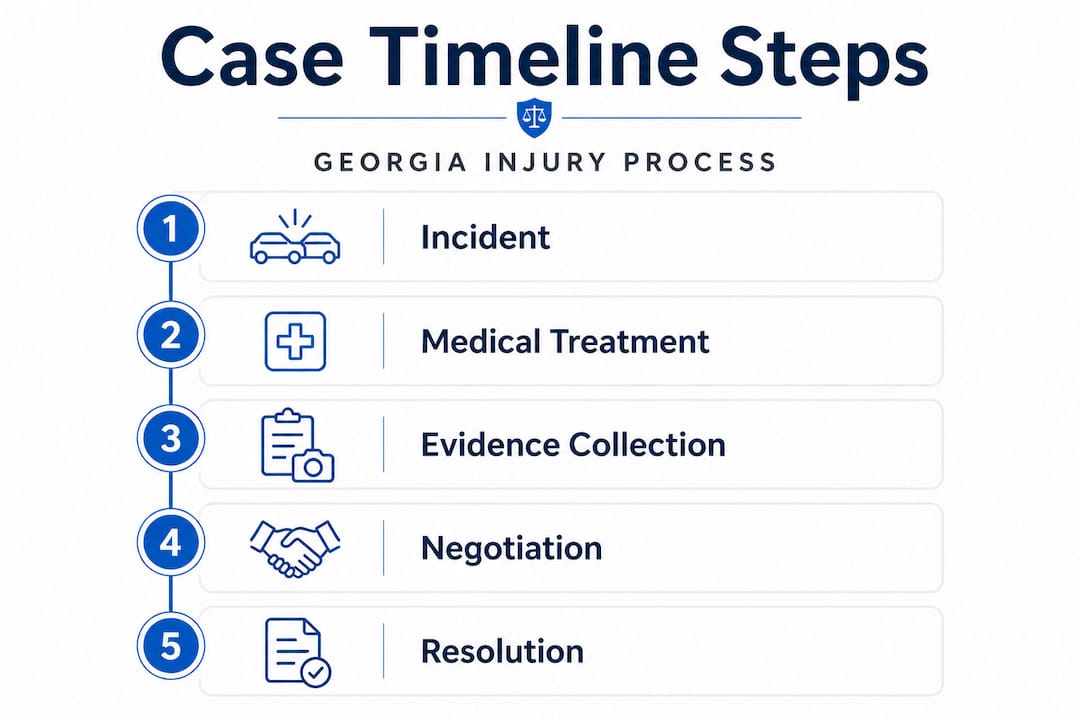
The step-by-step injury process in Georgia follows a recognizable arc from the moment of injury through final resolution. Here is how each stage typically unfolds.
- Immediate response (days 1 to 14). Seek emergency or urgent medical care right away, even if you feel okay. Document the accident scene with photos and video. File a police report if applicable. Notify your own insurance company of the incident. These early steps protect your health and preserve your legal rights.
- Attorney consultation and case investigation (weeks 2 to 8). A personal injury attorney reviews your situation, evaluates liability and damages, and begins gathering evidence. This includes ordering medical records, obtaining the police report, and interviewing witnesses. Many attorneys work on contingency, meaning you pay nothing unless they win.
- Medical treatment and reaching maximum medical improvement (weeks 4 to 52, depending on injuries). You continue receiving treatment. Your attorney monitors your progress and waits for your doctors to indicate your condition has stabilized before initiating settlement talks. This stage is often the longest single phase in the entire process.
- Demand letter and pre-lawsuit negotiations (months 1 to 3 after treatment ends). Your attorney sends a formal demand letter to the at-fault party’s insurer outlining your injuries, damages, and the compensation you are seeking. The insurer typically has 30 days to respond. Negotiations follow. Many cases settle at this stage.
- Filing a lawsuit (if no fair settlement is reached). If negotiations stall, your attorney files a complaint in the appropriate Georgia court. This formally initiates the litigation process. Note that lawsuit filing timing is critical because Georgia’s statute of limitations gives you two years from the date of injury to file.
- Discovery period (months 4 to 12 of litigation). Both sides exchange information through depositions, interrogatories, and document requests. Expert witnesses may be retained. Motions are filed. This phase is thorough, and it takes time, but it is where strong cases are built.
- Mediation and settlement conferences. Before trial, courts often require the parties to attempt mediation. A neutral mediator helps both sides reach an agreement. Many cases resolve here, even after litigation has begun.
- Trial (if no settlement is reached). Trial preparation and the trial itself add several months to the process. Georgia trials can last anywhere from a few days to several weeks depending on complexity.
- Appeals (rare). Either side may appeal the verdict, which adds additional time. Most cases do not reach this stage.
“The goal is always to reach a fair resolution as efficiently as possible without sacrificing the value of your claim. Patience in the early stages often leads to significantly better outcomes.”
Pro Tip: Most Georgia personal injury cases resolve within 6 to 18 months. Complicated cases involving serious injuries, disputed liability, or multiple defendants can stretch to two years or beyond. Setting realistic expectations from the beginning helps you stay focused on recovery rather than frustration.
Here is a comparison of how settlement and trial paths differ in practice:
| Path | Typical duration | Cost to client | Outcome certainty |
|---|---|---|---|
| Negotiated settlement | 6 to 18 months | Lower legal costs | More predictable |
| Trial verdict | 18 months to 3 years | Higher overall costs | Less predictable |
| Appeal | Adds 1 to 2 years | Significant additional cost | Uncertain |
Common bottlenecks and how to avoid delays
Understanding the typical sequence helps, but it’s just as important to know what slows cases down and how you can stay on track.
Even well-prepared cases hit snags. Knowing where the most common delays occur puts you in a position to avoid them. According to South Atlanta personal injury law guidance, the biggest delays come from incomplete medical treatment, insurance disputes, and a lack of organized documentation. Let’s break those down.
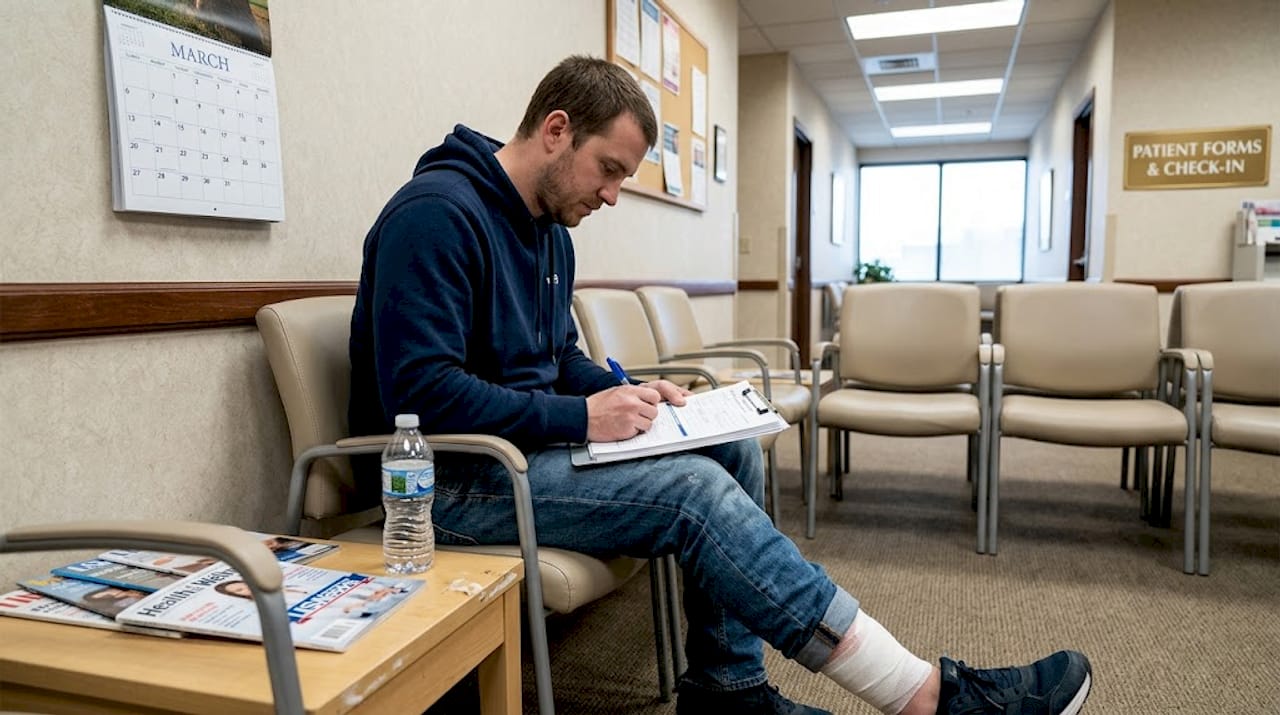
Gaps in medical treatment are one of the most damaging things you can do to your case. If you skip appointments, ignore follow-up care, or wait too long before seeing a specialist, the insurer will argue that your injuries were not as serious as claimed or that you failed to mitigate your damages. Treatment consistency tells a consistent story.
Poor communication with insurers slows everything down. Failing to respond promptly to requests for information, submitting incomplete paperwork, or allowing communication gaps to drag on can add weeks to your claim. Your attorney handles most insurer contact, but you still need to be responsive to your legal team.
Liability disputes and contested facts are among the lengthiest bottlenecks. When the other driver claims you were at fault, or when there is no clear evidence of negligence in a premises liability case, expect extended negotiations or even litigation.
Ways to stay on track and maximize case value:
- Attend every medical appointment and follow your treatment plan
- Keep receipts and records of every expense related to your injury
- Respond quickly to requests from your attorney or the insurer
- Avoid posting on social media about your accident or physical activities
- Understand the injury lawyer’s role in managing communication and strategy on your behalf
Pro Tip: Create a dedicated physical folder or digital folder for your case. Include every bill, correspondence, medical report, and photo. Label and date everything. This simple habit can shave weeks off your attorney’s work and ensure nothing falls through the cracks.
Important: Never accept the first settlement offer from an insurance company without fully understanding your long-term medical needs. Early offers are often designed to close the case before the full extent of your injuries becomes clear.
What to expect: timeline summary and case outcomes
To wrap up the process, let’s pull it all together with a summary table and clear expectations.
The majority of Georgia personal injury cases settle before they ever reach a courtroom. Settlement is generally faster, less expensive, and less emotionally draining than trial. Juries are unpredictable, and even strong cases can produce unexpected outcomes. Most experienced attorneys use litigation as a tool to pressure fair settlements, not as a first resort.
According to real case examples from South Atlanta, most Georgia cases resolve within 6 to 18 months, while complex cases can last two years or more.
| Case type | Low end | Typical | Complex |
|---|---|---|---|
| Minor auto accident | 3 to 6 months | 6 to 12 months | 12 to 18 months |
| Moderate injury claim | 6 to 12 months | 12 to 18 months | 18 to 24 months |
| Serious injury or death | 12 to 18 months | 18 to 24 months | 2 to 3 years |
| Trial required | 18 to 24 months | 2 to 3 years | 3 or more years |
What typically determines your outcome:
- Settlement: Reached during negotiation or mediation; faster, more certain resolution
- Trial verdict: Decided by a jury; longer timeline, higher stakes
- Appeal: Filed when one party contests the verdict; rare and time-consuming
Key takeaway: your case is most likely to settle before trial, especially with strong documentation, consistent medical treatment, and an experienced attorney advocating for maximum compensation.
Why the real timeline depends on your choices
Most articles about personal injury timelines focus on what the legal system does to your case. Here is the insight those articles often miss: your own decisions play a larger role in the timeline than most people realize.
We have seen cases in Georgia that could have settled in eight months drag out to two years, not because the system was slow, but because the client waited three months to see a doctor, ignored attorney requests for documents, or declined mediation out of pride. Conversely, well-prepared clients who stayed organized and followed their attorney’s guidance consistently moved through the process faster.
Choosing the right lawyer is arguably the most significant variable you control. An attorney who communicates clearly, moves proactively, and has strong relationships with local courts and insurers in South Atlanta and surrounding counties can realistically cut months off your timeline. Someone who is difficult to reach or manages cases reactively can do the opposite.
There is also a myth worth challenging: many injured clients believe that delays are always caused by courts or opposing counsel. In reality, delays often stem from internal factors, including clients who are slow to provide information, inconsistent in their medical care, or who change their minds about settlement halfway through negotiations. Understanding the importance of your attorney relationship goes both ways. Your attorney fights for you, but you need to show up as an active partner in your own recovery.
Pro Tip: When you meet with a prospective attorney, ask directly: “What does my timeline look like, and what can I do on my end to help move this forward?” Their answer tells you a great deal about how they communicate and whether they see you as a partner in the case.
The bottom line is this: timelines are not entirely out of your hands. Strategic preparation, strong attorney selection, and consistent follow-through give you real leverage over how your case unfolds.
Get local help for your Georgia injury case
If you want clear answers about your specific timeline or case, expert support is close by.
The uncertainty surrounding a personal injury case can feel overwhelming, especially when you are dealing with medical bills, missed work, and an insurer that seems in no hurry to help you. That uncertainty fades quickly when you have a dedicated local attorney walking you through every step with honesty and clarity.

The Jewkes Firm serves injured clients across South Atlanta and the surrounding Georgia counties with a focused, client-first approach. From the first call to final resolution, the team provides real guidance on your real situation, not generic answers. Their consultations are completely free, and they work on a contingency fee basis, meaning you pay nothing unless they win your case. If you are ready to stop wondering about your timeline and start moving forward, reach out today for a FREE CONSULTATION and get the answers you deserve.
Frequently asked questions
How long does a personal injury case usually take in Georgia?
Most Georgia personal injury cases settle within 6 to 18 months, but complex cases involving serious injuries or trials may last two years or longer.
What can I do to speed up my injury case?
Gather all documents early, complete your medical treatment without gaps, and stay in close contact with your attorney, because delays from medical treatment and poor documentation are among the most common causes of prolonged cases.
Is it possible to settle my Georgia personal injury case without going to court?
Yes, the majority of cases settle before trial through negotiation or mediation, which saves time, reduces legal costs, and avoids the unpredictability of a jury verdict.
What is the statute of limitations for personal injury cases in Georgia?
Generally, you have two years from the date of your injury to file a personal injury lawsuit in Georgia, and missing this deadline typically means losing your right to compensation entirely.
Do I need a lawyer for my personal injury case timeline?
Working with an experienced Georgia injury attorney can speed up your process significantly and helps you avoid the documentation gaps, communication errors, and negotiation mistakes that most commonly cause delays.