

Thorough injury documentation is the foundation of every successful trucking accident claim. Without a clear, organized record connecting your injuries to the crash, insurance adjusters and defense attorneys will challenge both causation and the value of your damages. This guide to documenting trucking accident injuries walks you through every step, from the first moments at the scene to the medical records and daily journals that build an airtight case. The difference between a strong claim and a denied one often comes down to what you collected, when you collected it, and how consistently you maintained it.
What are the essential records and tools you need after a trucking accident?
Effective trucking accident injury documentation starts with knowing exactly what to gather. Trucking crashes involve layers of evidence that standard car accidents do not, including federal carrier data, electronic logging devices, and commercial vehicle compliance records. Missing any one of these can weaken your claim significantly.
Scene and vehicle evidence:
- Photos and video of all vehicle positions, damage, skid marks, and road conditions
- The DOT number on the truck cab, which is the key identifier that unlocks the carrier’s federal safety record and supports negligence arguments
- The truck’s MC number and the driver’s commercial license information
- Names, phone numbers, and statements from all witnesses
Medical and legal records:
- Emergency room reports, diagnostic test results, and treatment plans
- Police report number and the responding officer’s name and badge number
- Written preservation letters sent to the trucking company demanding retention of dashcam footage, black box data, and GPS logs
- Copies of all prescriptions, referrals, and specialist notes
Financial impact documents:
- Medical bills and itemized statements from every provider
- Pay stubs and employer letters documenting missed work
- Receipts for transportation to appointments, medications, and medical equipment
Pro Tip: Photograph the DOT number on the truck cab before you leave the scene. That number alone can pull the carrier’s entire federal safety history, which is often central to proving negligence.
A complete trucking accident injury checklist covers each of these categories in detail and is worth reviewing before you speak with any insurer.
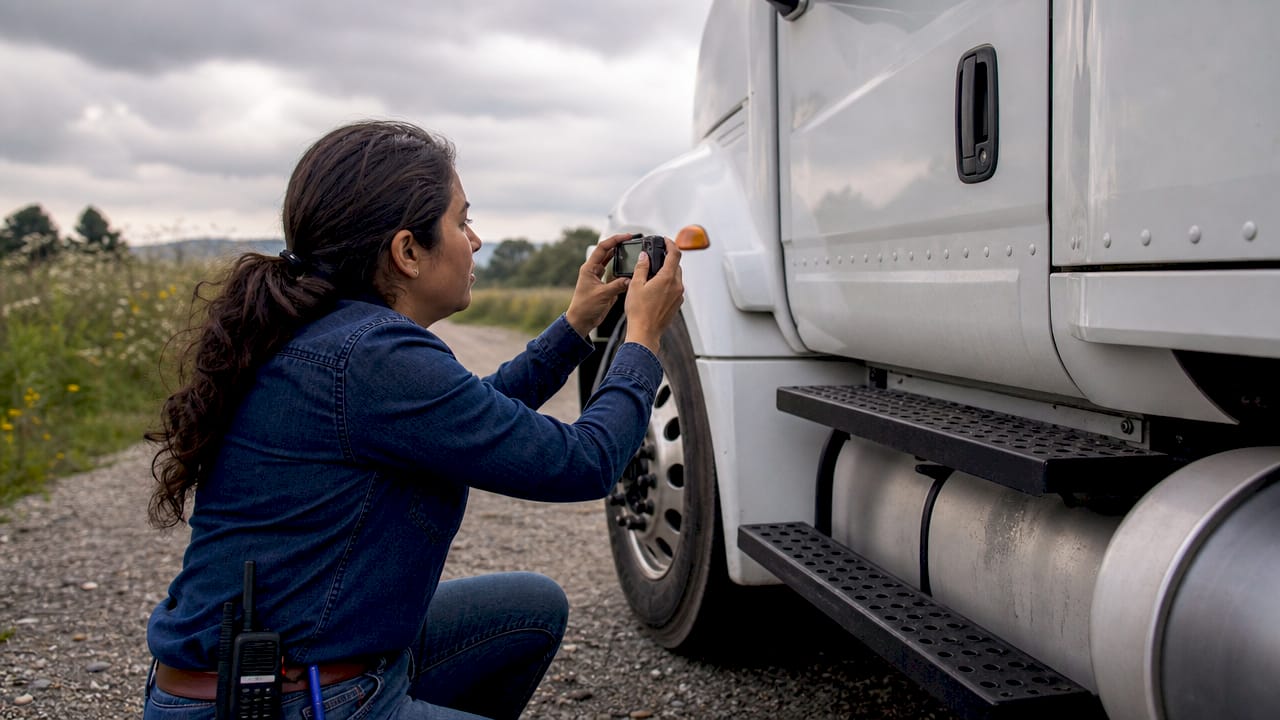
How do you capture and preserve evidence at the accident scene?
Speed matters more at a trucking accident scene than most people realize. The steps you take in the first hour shape the entire claim.
- Photograph everything immediately. Capture vehicle positions before anything moves. Get close-up shots of the truck’s damage, your vehicle’s damage, license plates, and the truck’s DOT and MC numbers. Wide-angle shots showing the full scene establish context.
- Record video with narration. Walk the scene and describe what you see out loud. Video captures details that photos miss, including skid mark length, debris patterns, and road conditions.
- Collect witness information on the spot. Witnesses disappear quickly, and their unbiased accounts carry far more weight than statements from drivers or trucking companies. Get full names, phone numbers, and a brief recorded statement if the witness agrees.
- Get the police report details. Ask the responding officer for the report number, their name, and the precinct. Police reports often lack detailed commercial vehicle compliance information, so your own witness contacts and photographs fill those gaps.
- Send a preservation letter immediately. Dashcam footage can be permanently deleted by company protocols in as little as 7 to 30 days after an accident. A written preservation letter creates a legal obligation for the trucking company to retain black box data, GPS records, and dashcam footage. This is the only reliable method to prevent that evidence from disappearing.
- Seek medical attention before leaving. Even if you feel fine, go directly to an emergency room or urgent care. Adrenaline masks pain, and symptoms like whiplash, internal injuries, and traumatic brain injuries often appear hours or days later.
Pro Tip: If you cannot send a preservation letter yourself from the scene, call an attorney that day. The 7-to-30-day deletion window is not a guideline. It is a hard deadline.
What is the role of medical documentation in a truck accident claim?
Medical records serve two distinct legal roles in a trucking accident claim. They document your economic damages, including bills, treatment costs, and lost earning capacity. They also establish non-economic damages like pain, suffering, and the impact on your daily life. Documentation that bridges both categories maximizes settlement value.
The ER visit is your most important first step. The ER visit creates a timestamped medical record that directly links your injuries to the accident. Without that timestamp, insurers will argue your injuries came from another source.
How to build a strong medical record trail:
- Tell every provider about the accident. Always describe symptoms in detail and mention the crash explicitly. Causation statements from doctors are critical, and they only appear in your records if you give providers the full picture.
- Attend every follow-up appointment. Defense adjusters look for gaps in treatment and use them to argue that your injuries were not serious or that you failed to mitigate your damages.
- Report all symptoms, including emotional ones. Anxiety, sleep disruption, and depression after a crash are legitimate damages. They need to appear in your medical records to be compensable.
- Request copies of every record. Verify that each document accurately reflects what you reported. Errors in medical records are more common than people expect, and they can undermine your claim.
- Keep records organized by date and provider. A clear chronological file makes it far easier for your attorney to build the causation narrative.
Pro Tip: Never downplay symptoms to a doctor because you feel embarrassed or want to seem tough. Underreporting creates gaps that insurers exploit. Describe every symptom, every time, at every visit.
For a broader look at how these principles apply across vehicle accidents, Jewkesfirm’s guide on documenting car accident injuries covers overlapping strategies worth reviewing.
How can tracking your symptoms and expenses daily support your injury claim?
A daily injury journal is one of the most underused tools in personal injury claims. Insurance adjusters and juries respond to concrete, specific accounts of how an injury affects real life. Vague statements about “ongoing pain” carry far less weight than a dated journal entry describing that you could not lift your child, missed your daughter’s soccer game, or needed help showering.
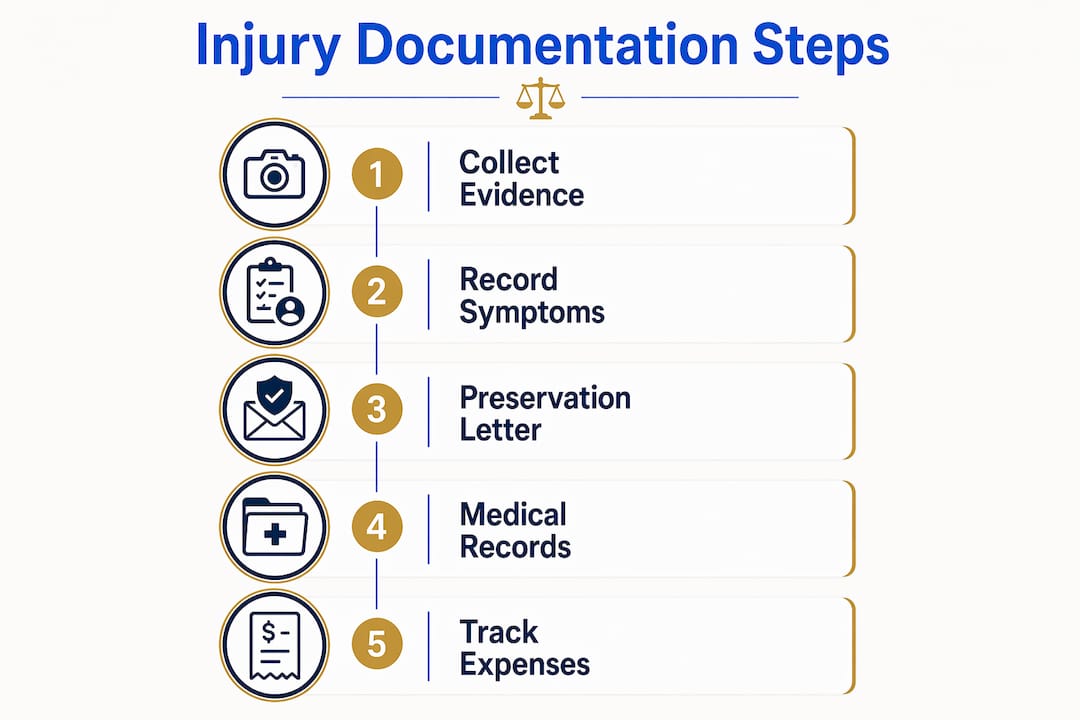
A symptom journal showing a continuous pattern of suffering is powerful evidence precisely because it shows progression over time rather than isolated complaints. It also demonstrates that your limitations are real and consistent, which directly counters insurer arguments that you exaggerated your injuries.
What to record every day:
- Pain level on a 1–10 scale, with specific descriptions of location and type
- Sleep quality and any disruptions caused by pain or anxiety
- Activities you could not perform or had to modify
- Emotional changes, including mood, concentration, and mental health
- All medical appointments, medications taken, and side effects
What to log for financial impact:
- Every medical bill and the date received
- Prescription costs and over-the-counter medical supplies
- Transportation costs to and from appointments
- Pay stubs and employer documentation reflecting missed workdays and lost wages
Honesty and consistency are non-negotiable in your journal. Write entries the same day events occur. Do not reconstruct entries from memory days later. Inconsistencies in dates or descriptions give defense attorneys material to attack your credibility.
Pro Tip: Use a dedicated notebook or a private notes app with automatic date-stamping. The timestamp on digital entries adds a layer of credibility that handwritten journals alone cannot provide.
Understanding how to handle insurer communications alongside your documentation is equally important. Jewkesfirm’s resource on insurance after a trucking crash explains what to say and what to avoid when adjusters call.
Key Takeaways
Thorough, consistent, and prompt documentation is the single most important factor in protecting the value of a trucking accident injury claim.
| Point | Details |
|---|---|
| Preserve digital evidence fast | Send a preservation letter within days. Dashcam and black box data can be deleted in 7–30 days. |
| Start with the ER | An emergency room visit creates a timestamped record that links your injuries directly to the crash. |
| Close every treatment gap | Missed appointments give adjusters grounds to argue your injuries were minor or self-resolved. |
| Keep a daily symptom journal | Dated entries showing pain levels and activity limits build a continuous, credible evidence record. |
| Organize financial records | Medical bills, pay stubs, and receipts are the foundation of your economic damages calculation. |
What I’ve learned about documentation that most guides get wrong
Most injury guides treat documentation as a checklist you complete once and file away. That framing costs people real money. Documentation is an ongoing process that runs from the moment of impact through the final settlement negotiation.
The mistake I see most often is people waiting to see how they feel before going to the ER. They feel okay at the scene, they go home, and by the time symptoms appear two days later, the insurer already has a narrative that the injuries were not accident-related. That gap is nearly impossible to close after the fact.
The second mistake is inconsistency in symptom reporting. People feel better on a good day and tell their doctor so. Then they report severe pain the following week. Defense attorneys use that fluctuation to argue exaggeration. The fix is simple: always report your worst symptoms and your average symptoms, not just how you feel in the moment of the appointment.
The third mistake is underestimating the digital evidence window. Most people have never heard of a preservation letter. Trucking companies know exactly how long they are legally required to retain data, and they do not keep it a day longer than necessary. An attorney can send that letter the same day you call. That single action can be the difference between having black box data and having nothing.
Early legal involvement does not mean rushing to file a lawsuit. It means having someone who knows the evidence rules in your corner before critical data disappears. The documentation phase of a trucking accident claim is where cases are won or lost, long before anyone sets foot in a courtroom.
— Ali
Jewkesfirm is ready to protect your claim from day one
If you were injured in a trucking accident in South Atlanta or the surrounding Georgia counties, the evidence clock is already running.

Jewkesfirm helps clients build complete, legally sound documentation from the start. The team sends preservation letters to protect black box and dashcam data, reviews medical records for gaps and inconsistencies, and manages all insurer communications so you can focus on recovery. Jewkesfirm operates on a contingency fee basis, meaning you pay nothing unless they win. To get a free case review and protect your rights before critical evidence disappears, contact Jewkesfirm today.
FAQ
How soon should I seek medical care after a truck accident?
Go to an emergency room or urgent care the same day, even if you feel fine. An ER visit creates a timestamped record that directly links your injuries to the accident, which is critical for proving causation.
What is a preservation letter and why does it matter?
A preservation letter is a written legal demand requiring the trucking company to retain electronic evidence like dashcam footage, black box data, and GPS logs. Dashcam footage can be deleted in as little as 7 days, so sending this letter immediately is the only way to prevent that evidence from being destroyed.
What should I include in a daily injury journal?
Record your pain level, sleep quality, activity limitations, emotional changes, and all medical appointments each day. Dated, consistent entries showing a continuous pattern of suffering carry significant weight with insurers and juries.
Can gaps in my medical treatment hurt my claim?
Yes. Defense adjusters specifically look for gaps in treatment and use them to argue that your injuries were not serious. Attend every scheduled appointment and follow all treatment recommendations to keep your medical record consistent.
What financial records do I need to document my losses?
Keep all medical bills, prescription receipts, transportation costs, and pay stubs showing missed workdays. Organized financial records are the foundation of your economic damages calculation and are required to prove actual losses in a claim.