
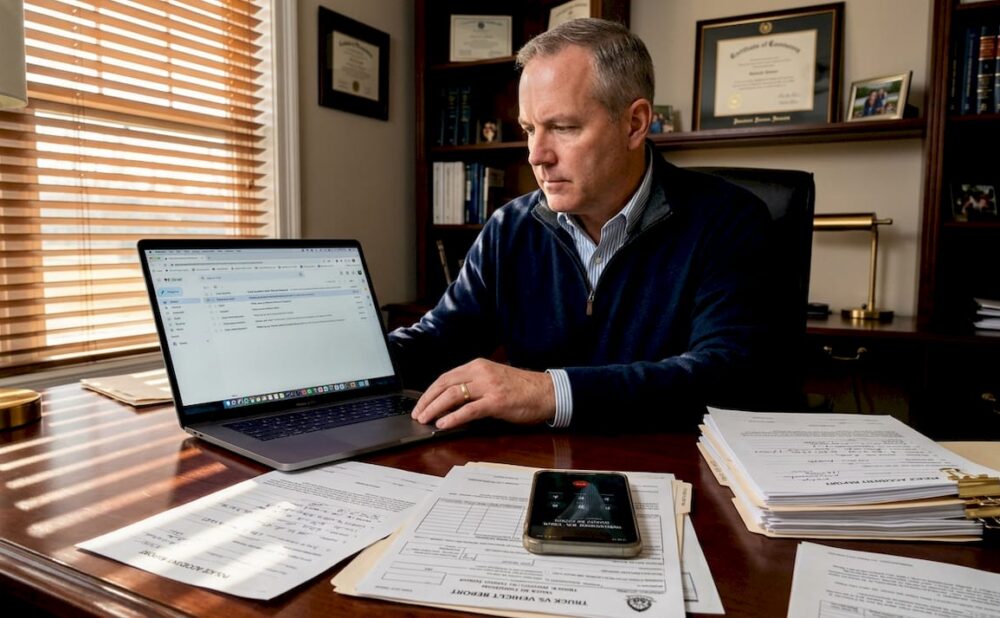
Knowing how to handle insurance after a trucking crash is the difference between full compensation and a settlement that barely covers your hospital bills. Trucking accident claims, the formal term used by insurers and courts, are far more complex than standard car accident claims because multiple insurance policies, federal regulations, and corporate legal teams are involved from the moment of impact. The steps you take in the first 24 to 72 hours directly shape what you recover. This guide walks you through every critical stage, from the scene to settlement, so your rights stay protected.
What Immediate Actions Should You Take for Insurance After a Trucking Crash?
The first actions you take after a trucking crash determine the strength of every insurance claim that follows. Immediate steps include seeking medical attention, calling police to generate an official report, gathering evidence at the scene, and notifying your insurer promptly without giving recorded statements before consulting an attorney.
Follow this sequence to protect your claim from the start:
- Call 911 immediately. A police report is a foundational document for any insurance claim after a trucking accident. Without it, the trucking company’s insurer will question the facts of the crash.
- Seek medical care the same day. Even if you feel fine, internal injuries from truck crashes often appear hours or days later. A gap in medical care gives insurers grounds to argue your injuries were not caused by the accident.
- Document the scene thoroughly. Photograph vehicle positions, road conditions, skid marks, cargo spills, and your injuries. Collect the names and contact information of all witnesses.
- Exchange insurance information. Get the truck driver’s commercial carrier policy details, not just personal auto insurance. Commercial trucking policies are issued separately and carry much higher limits.
- Notify your own insurer promptly. Most policies require timely reporting. Give only basic facts: date, location, and that a crash occurred.
- Do not give a recorded statement to the trucking company’s insurer. You are not legally required to do so, and doing it without legal advice can seriously reduce your settlement value.
Pro Tip: Separate your accident notice from any evidentiary statement. Notifying an insurer that a crash occurred meets your contractual obligation. Describing what happened in detail is a separate act, and one you should only do with an attorney present.
How to Manage Communication with Insurance Companies Effectively

Insurance adjusters assigned to trucking crash claims work for the trucking company, not for you. Their job is to pay as little as possible, and they are trained to use your own words against you. Understanding this reality is the foundation of effective communication.
Key rules for every interaction with insurers:
- Never give a recorded statement to the opposing insurer without an attorney. Recorded statements become legal evidence the insurer scrutinizes to deny or minimize your claim. Adjusters use leading questions designed to extract admissions of fault or inconsistencies.
- Keep all communication in writing. Emails and letters create a paper trail. Phone calls do not. If an adjuster calls, take notes immediately after and confirm any agreements in writing.
- Limit what you say. Confirm the crash happened, that you were injured, and that you are represented or seeking representation. Nothing more.
- Know which insurer to contact and when. Notify your own insurer right away. Contact the trucking company’s insurer only after consulting an attorney, and only to open a formal claim, not to discuss fault or injuries.
- Do not sign anything early. Medical authorizations, release forms, or settlement agreements presented in the first weeks are almost always designed to limit your recovery.
Notices and statements are legally distinct. A notice tells the insurer a crash occurred. A statement provides evidence about how it occurred. You are required to give the first. You are not required to give the second on the insurer’s timeline.
Pro Tip: If an adjuster pressures you for a recorded statement within days of the crash, that pressure itself is a signal. Adjusters move fast after trucking crashes because rapid response teams are deployed specifically to gather evidence and shift blame before victims have legal representation.
What Insurance Coverages Apply and How Medical Bills Are Handled
Understanding which policies cover your losses prevents costly surprises during the claims process. Multiple insurance layers typically apply after a trucking crash.
| Coverage Type | Who It Covers | What It Pays |
|---|---|---|
| Trucking company liability insurance | Victims injured by the truck driver | Medical bills, lost wages, pain and suffering after settlement |
| Your health insurance | You, immediately after the crash | Hospital bills, treatment costs subject to subrogation |
| Personal Injury Protection (PIP) | You, in no-fault states | PIP covers 80% of medical bills plus some lost wages |
| MedPay | You, regardless of fault | Deductibles, co-pays, and gaps in health coverage |
| Uninsured/Underinsured Motorist | You, if the truck driver lacks adequate coverage | Compensates when the at-fault policy is insufficient |
The trucking company’s liability insurer pays a single lump sum at settlement, not ongoing bills. This means your health insurance or PIP covers treatment costs while your claim is pending, which can take months or years. That creates a subrogation lien: your health insurer has a legal right to be reimbursed from your settlement for what it paid.
Subrogation liens require expert negotiation to reduce the amounts deducted from your final recovery. An experienced attorney can often negotiate these liens down significantly, which directly increases what you take home. If you are uninsured or underinsured, a Letter of Protection (LOP) allows you to receive medical treatment with the provider agreeing to be paid from your eventual settlement. This keeps your care moving without out-of-pocket costs during a financially stressful time.
Accepting an early settlement from the trucking company’s insurer before your treatment is complete is one of the most damaging mistakes a victim can make. Early offers routinely ignore future medical needs, long-term disability, and lost earning capacity.
How to Collect and Preserve Evidence for Your Insurance Claim
Evidence gathered in the hours and days after a trucking crash is the foundation of a strong insurance claim. Once lost, most of it cannot be recovered.
Prioritize these evidence types immediately:
- Photos and video from the scene. Capture every angle of both vehicles, road conditions, traffic signs, weather, and your visible injuries. Time-stamped photos carry more weight with insurers.
- Witness information. Names, phone numbers, and brief written accounts from bystanders are powerful third-party evidence that insurers cannot easily dismiss.
- The official police report. Request a copy as soon as it is filed. It documents the responding officer’s observations and any citations issued to the truck driver.
- Dashcam and GPS data. Commercial trucks are required to carry electronic logging devices (ELDs) under Federal Motor Carrier Safety Administration (FMCSA) regulations. This data records speed, hours of service, and location. It can prove driver fatigue or speeding.
- Surveillance and traffic camera footage. Send a preservation letter to businesses and municipalities near the crash site within days. Most footage is overwritten within 30 to 72 hours.
- Your medical records and treatment timeline. Every doctor visit, prescription, and therapy session creates a documented link between the crash and your injuries.
- A pain and symptom journal. Write daily entries describing your pain levels, limitations, and emotional impact. This personal record supports non-economic damages like pain and suffering.
- All accident-related receipts. Transportation to appointments, prescription costs, and home care expenses are all compensable losses that require documentation.
Pro Tip: Use the WreckMatch evidence guide to build a systematic checklist for preserving every category of evidence. Missing even one item, like dashcam footage, can cost you tens of thousands of dollars in a trucking claim.
A well-prepared demand letter anchors your settlement negotiation. Attorneys typically demand two to three times the minimum acceptable amount to create negotiating leverage. That leverage only exists when your evidence file is complete.
Key Takeaways
Handling insurance after a trucking crash requires immediate action, strategic communication, and organized evidence to protect your right to full compensation.
| Point | Details |
|---|---|
| Act within hours, not days | File a police report, seek medical care, and document the scene before evidence disappears. |
| Notify your insurer, not the opposing one | Report the crash to your own insurer promptly, but delay detailed statements to the trucking company’s insurer until you have legal advice. |
| Know your coverage layers | PIP, MedPay, health insurance, and liability policies each play a different role in paying your bills and funding your settlement. |
| Preserve digital evidence fast | ELD data, dashcam footage, and surveillance video can be overwritten within 72 hours. Send preservation letters immediately. |
| Negotiate subrogation liens | Reducing health insurer reimbursement claims directly increases your net recovery from the settlement. |
What I’ve Learned from Watching Victims Lose Winnable Trucking Claims
The most preventable losses I see come from the first 48 hours. A victim speaks to an adjuster on the phone, answers a few questions that seem harmless, and unknowingly hands the trucking company’s legal team exactly what they need to undervalue the claim. The adjuster sounded friendly. The questions seemed routine. The damage was permanent.
The second pattern is settling too fast. Trucking companies and their insurers move quickly after a crash because speed benefits them. An early offer that covers your immediate bills feels like relief when you are injured and out of work. But if your injuries require surgery six months later, that settlement check is already spent and the case is closed.
What actually works is patience combined with preparation. Victims who consult an attorney before speaking to any opposing insurer, who document every symptom and expense from day one, and who wait until their medical picture is clear before negotiating, consistently recover more. The trucking accident claims process in Georgia has specific timelines and rules that affect every decision you make. Knowing those rules before you make a move is not optional. It is the strategy.
— Ali
Get the Legal Support Your Trucking Claim Deserves
Trucking crash insurance claims are not like standard car accident claims. The policies are larger, the legal teams are more aggressive, and the evidence windows close fast. Jewkesfirm represents truck crash victims across South Atlanta and surrounding Georgia counties, handling every step of the insurance process so you never face a corporate adjuster alone. From preserving critical evidence to negotiating subrogation liens and building demand letters that command real settlements, the team at Jewkesfirm fights to protect what you are owed. Consultations are free, and you pay nothing unless they win your case. If you are ready to understand your rights and options, speak with a truck accident lawyer at Jewkesfirm today.
GET A FREE CASE REVIEW at jewkesfirm.com
FAQ
What Should I Say to the Insurance Company Right After a Truck Crash?
Report the crash to your own insurer with basic facts: date, location, and that an accident occurred. Decline to give a recorded statement to the trucking company’s insurer until you have spoken with an attorney.
How Long Does a Trucking Insurance Claim Take to Settle?
Most trucking accident claims take several months to over a year to resolve, depending on injury severity and liability disputes. Accepting an early offer before your treatment is complete almost always results in a lower recovery than waiting for a full medical assessment.
Who Pays My Medical Bills While My Truck Accident Claim Is Pending?
Your own health insurance, PIP, or MedPay covers treatment costs while the claim is active. The trucking company’s liability insurer pays only at settlement, not on an ongoing basis.
Do I Have to Give a Recorded Statement to the Trucking Company’s Insurer?
No. You are required to notify your own insurer promptly, but recorded statements to the opposing insurer are voluntary. Giving one without legal counsel is one of the most common ways victims weaken their own claims.
What Evidence Is Most Important for an Insurance Claim After a Trucking Accident?
The truck’s electronic logging device (ELD) data, dashcam footage, police report, and your medical records form the core of a strong claim. Send preservation letters for surveillance footage within 24 to 72 hours because most systems overwrite automatically.