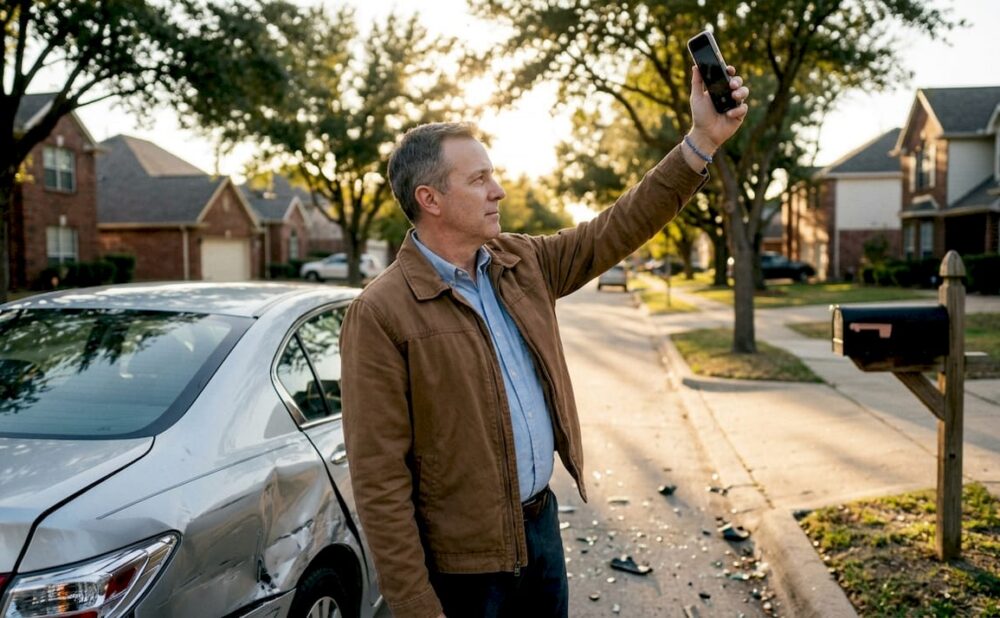
Accident evidence documentation is the process of systematically capturing and preserving physical and digital proof to support legal claims after a vehicle collision. Knowing how to document accident evidence correctly separates a strong claim from a dismissed one. Police reports, medical records, and photographic evidence form the foundation of any successful personal injury case. The steps you take in the first hours after a crash directly shape what compensation you can recover. This guide walks you through exactly what to collect, how to capture it, and how to keep it organized for the long haul.
What types of accident evidence should you collect?
The strongest accident claims rest on multiple layers of evidence, not just one or two photos. Each category fills a different gap in your story, and gaps are exactly what insurance adjusters look for.
Physical and visual evidence:
- Photographs and videos of all vehicle damage, from wide shots to tight close-ups
- Images of skid marks, debris, traffic signals, and road conditions
- Damage to property beyond the vehicles, such as guardrails or fences
- Your visible injuries, photographed immediately and in the days that follow
Official documents:
- Police report, which establishes a neutral record critical during settlement negotiations, even when not legally required
- Insurance declarations pages from all drivers involved
- Vehicle registration and license information from every party
Witness and medical records:
- Names, phone numbers, and addresses of all witnesses at the scene
- Emergency room records, urgent care notes, and follow-up treatment summaries
- Seek medical attention within 24 to 72 hours to create a formal record linking the collision to your symptoms
- Receipts for prescriptions, physical therapy, and any out-of-pocket medical costs
Digital and hidden evidence:
- Surveillance footage from nearby businesses, traffic cameras, or doorbell cameras
- Telematics data from the vehicles involved, which records speed and braking behavior
- Cell phone records that can confirm distracted driving
Hidden sources like telematics and phone records often prove decisive when witness accounts conflict. These sources can be overwritten or deleted quickly, so requesting preservation early is non-negotiable.
Pro Tip: Save every receipt connected to the accident, including rideshare costs, parking at medical appointments, and over-the-counter medications. These small expenses add up and belong in your claim.
How to document vehicle damage and the accident scene
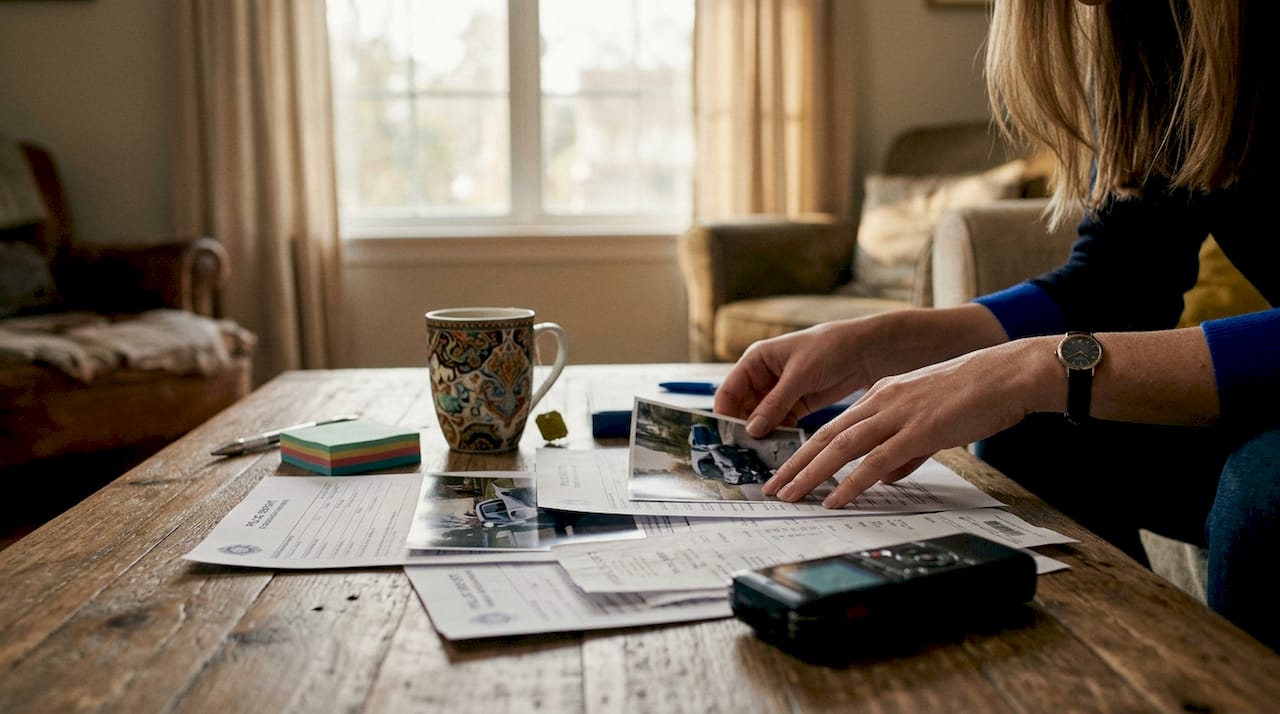
Capturing the scene correctly takes about 10 minutes but can make or break your case. Follow these steps in order while you are still at the scene.
- Start wide, then go close. Photograph the full accident scene from a distance that shows both vehicles, their positions, and surrounding landmarks. Then move in for close-up shots of each point of impact.
- Capture every license plate. Photograph the plates of all vehicles involved, including any witnesses who stop. This prevents disputes about which vehicles were present.
- Document road conditions. Photograph skid marks, potholes, faded lane markings, missing signage, and any debris. Wide-angle and close-up shots together provide compelling visual proof for legal reviews.
- Record environmental factors. Note the time of day, weather conditions, and visibility. A voice memo recorded at the scene captures these details accurately before memory fades.
- Shoot a short video walkthrough. Walk around both vehicles while narrating what you see. Video captures depth, scale, and context that still photos miss.
- Sketch a diagram if needed. A simple hand-drawn diagram showing vehicle positions, direction of travel, and point of impact can clarify complex multi-vehicle crashes.
| Documentation method | Best use | Key detail to capture |
|---|---|---|
| Wide-angle photos | Scene overview | Vehicle positions, road layout |
| Close-up photos | Damage and injuries | Impact points, license plates |
| Video walkthrough | Context and scale | Full scene narration |
| Voice memo | Environmental notes | Weather, time, visibility |
| Hand-drawn diagram | Complex crashes | Directions, positions, impact point |
Pro Tip: Never apply filters or edit accident photos. Preserve them in their original format and back them up to a cloud service immediately. Edited images can be challenged in court as altered evidence.
What steps should you take immediately after the accident?
The first 48 hours after a crash are the most critical window for preserving evidence. After that window closes, witnesses forget details, surveillance footage gets overwritten, and physical evidence disappears.
- Call 911 and request a police report. Even in minor crashes, an official report creates a neutral, timestamped record. Ask the responding officer for the report number before you leave the scene.
- Exchange information carefully. Collect the other driver’s name, license number, insurance company, and policy number. Do not admit fault or apologize, as those statements can be used against you.
- Collect witness contacts immediately. Witnesses can move, forget details, or become unreachable within days. Get names and phone numbers before anyone leaves the scene.
- Send written preservation notices. Insurance companies often do not preserve electronic evidence, and surveillance footage may be overwritten within 7 to 14 days. Send written notices to businesses, insurers, and relevant parties requesting they retain all digital data.
- Notify your insurance company. Notify your insurer within 24 hours to maintain claim eligibility. Provide your initial photos and witness information at that time.
- Seek medical evaluation. Go to an emergency room or urgent care clinic even if you feel fine. Delayed symptoms like whiplash and concussion are common, and a gap in medical care weakens your claim.
Pro Tip: Use your phone’s voice memo app to record your observations immediately after the crash. Describe what happened, road conditions, and how you feel physically. This contemporaneous account carries real weight in legal proceedings.
How to organize and maintain accident evidence over time
Collecting evidence is only half the work. Keeping it organized and accessible over weeks or months is what actually supports your attorney and your claim.
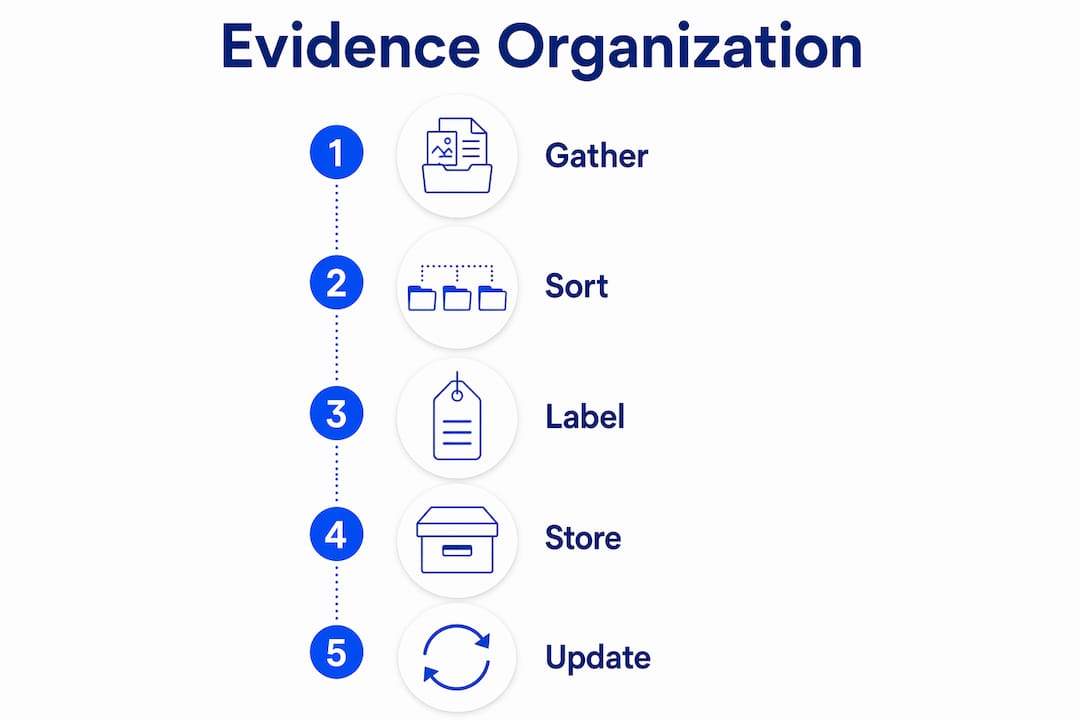
A well-organized evidence file follows a clear folder structure. Create labeled subfolders for photos and videos, police and official reports, medical records and bills, insurance correspondence, repair estimates, and personal notes. Store digital copies in a cloud service and keep physical copies in a dedicated folder at home.
A chronological timeline listing the accident time, symptom onset, medical visits, and insurer contacts helps attorneys reconstruct your claim efficiently. Build this timeline starting on day one and update it after every relevant event. Lawyers benefit far more from an organized timeline than from a box of unsorted paperwork.
A daily personal injury journal is one of the most underused tools in evidence gathering. Recording pain levels and life impact each day provides contemporaneous documentation of non-economic damages that medical records alone cannot capture. Write down how the injury affects your sleep, your ability to work, your relationships, and your daily activities. This journal complements your injury documentation strategy and gives your attorney concrete language to use when calculating damages.
Common mistakes to avoid:
- Deleting photos to free up phone storage before backing them up
- Failing to follow up with witnesses after the initial contact
- Letting medical appointments lapse, which creates gaps in your treatment record
- Sharing accident details or photos on social media before your case is resolved
- Waiting weeks to start a personal injury journal, which reduces its credibility
Pro Tip: Set a weekly calendar reminder to update your injury journal and add any new medical bills or insurance letters to your evidence folder. Consistency in documentation signals credibility to insurers and courts alike.
Key takeaways
Thorough, organized accident evidence documentation is the single most reliable way to protect your legal rights and maximize your compensation after a vehicle crash.
| Point | Details |
|---|---|
| Start within 48 hours | Prompt evidence gathering prevents loss of witness accounts, footage, and physical proof. |
| Collect multiple evidence types | Combine photos, police reports, medical records, and digital data for a complete picture. |
| Send preservation notices early | Written notices stop insurers and businesses from deleting surveillance footage within days. |
| Keep a daily injury journal | Recording pain and life impact daily documents non-economic damages medical records miss. |
| Organize from day one | A labeled folder system and chronological timeline give your attorney a clear, usable record. |
What I’ve learned about documenting accident evidence that most guides skip
Most accident documentation guides stop at “take photos and call the police.” That advice is correct but incomplete. The cases I have seen fall apart rarely do so because of missing photos. They fall apart because of missing digital evidence and disorganized records.
The evidence that surprises people most is telematics data. Modern vehicles record speed, braking force, and steering input. That data can confirm or contradict what any driver claims happened. The problem is that it disappears fast. If you do not send a written preservation notice within days of the crash, that data is gone. The same applies to surveillance footage from nearby businesses. Most systems overwrite footage on a 7 to 14 day cycle.
The other thing I consistently recommend is starting a personal injury journal on the day of the accident, not a week later. Insurers and defense attorneys look for gaps. A journal that starts three weeks after the crash looks like an afterthought. One that starts on day one looks like a credible, real-time account of your suffering and limitations.
My honest recommendation is to involve a personal injury attorney as early as possible, ideally within the first week. An attorney can send preservation notices with legal authority, identify evidence sources you would not think to check, and build the accident scene documentation into a coherent legal narrative. Documentation is the foundation. Legal counsel is what builds the case on top of it.
— Ali
Jewkesfirm is ready to help you build your case
Collecting evidence after an accident is the right first step. Knowing what to do with it is where Jewkesfirm makes the difference for injured clients across South Atlanta and surrounding Georgia counties.

Jewkesfirm offers free consultations to review your collected evidence, identify gaps, and advise on next steps. The firm works on a contingency fee basis, meaning you pay nothing unless they win your case. From obtaining additional digital evidence to filing your claim correctly, the team at Jewkesfirm handles the legal complexity so you can focus on recovery. If you have been in a vehicle accident, contact Jewkesfirm today to get a free case review and protect your right to maximum compensation.
FAQ
What is the most important evidence to collect after an accident?
Photographs of vehicle damage and the scene, a police report, and medical records are the three most critical evidence types. Digital sources like surveillance footage and telematics data are equally important but must be preserved within days before they are overwritten.
How soon should I seek medical attention after a crash?
Seek medical attention within 24 to 72 hours of the accident. This timeframe creates a formal medical record that directly links the collision to your injuries, which is the primary way to prove causation in an injury claim.
How do I preserve surveillance footage after an accident?
Send a written preservation notice to the business or property owner as soon as possible after the crash. Surveillance systems typically overwrite footage on a 7 to 14 day cycle, so acting within the first few days is critical.
What should I include in a personal injury journal?
Record your daily pain levels, physical limitations, sleep disruption, and how the injury affects your work and relationships. A daily injury journal documents non-economic damages that medical records alone cannot capture.
Do I need a lawyer to document accident evidence?
You can collect evidence on your own, but an attorney can send legally binding preservation notices, identify hidden evidence sources, and organize your documentation into a case-ready file. Involving legal counsel early significantly strengthens your position.
Recommended
- Why Document Accident Scenes: Protect Your Claim
- Why document accident evidence? Strengthen your injury claim
- Why Document Accident Scene: Protect Your Claim
- Personal Injury Checklist 2026: Protect Your Claim