

TL;DR:
- Insurance transfers financial risk from at-fault parties to insurers, who determine settlement values within policy limits. Claimants should understand insurer tactics like early lowball offers, settlement anchors, and delay strategies to avoid accepting less compensation. Proper lien management and legal representation significantly increase settlement amounts and protect claimants’ rights.
Insurance is the financial engine behind nearly every personal injury settlement. The role of insurance in settlements is to transfer financial risk from the at-fault party to an insurance company, which then negotiates, values, and pays compensation to injured claimants. Three parties drive every claim: the claimant, the insurance adjuster, and the insurer’s legal team. Understanding how each one operates gives you a real advantage before you ever sit down at the negotiating table.
Insurance adjusters calculate settlement value using four core factors: medical expenses, lost wages, pain and suffering, and policy limits. Their job is to close claims for as little as possible. The insurer’s financial interest runs directly opposite to yours. Knowing that from the start changes how you respond to every offer.
How do insurance policies and coverage limits affect your settlement?
Policy limits cap compensation regardless of how severe your injuries are. A driver carrying only Georgia’s minimum liability coverage of $25,000 per person cannot legally be forced to pay more than that limit through their insurer, even if your medical bills far exceed it. That ceiling is the single most important number in any settlement negotiation.
Umbrella policies and excess liability coverage change that math significantly. When an at-fault party carries an umbrella policy, the available compensation pool grows well beyond the primary policy limit. Identifying all applicable coverage layers early in your claim is one of the highest-value steps you can take.
The table below shows how coverage levels shape realistic settlement outcomes.
| Policy scenario | Available coverage | Settlement impact |
|---|---|---|
| Minimum liability only | $25,000 | Hard cap; severe injuries often go undercompensated |
| Standard auto policy | $100,000 | Covers moderate injuries and lost wages in most cases |
| Commercial or fleet policy | $1,000,000+ | Sufficient for catastrophic injuries and long-term care |
| Umbrella policy added | Varies, often $1M–$5M | Expands recovery potential significantly |
Uninsured and underinsured motorist coverage on your own policy can fill gaps when the at-fault driver carries too little insurance. Many Georgia claimants overlook this option entirely. Reviewing your own policy before accepting any offer is a step that pays off.
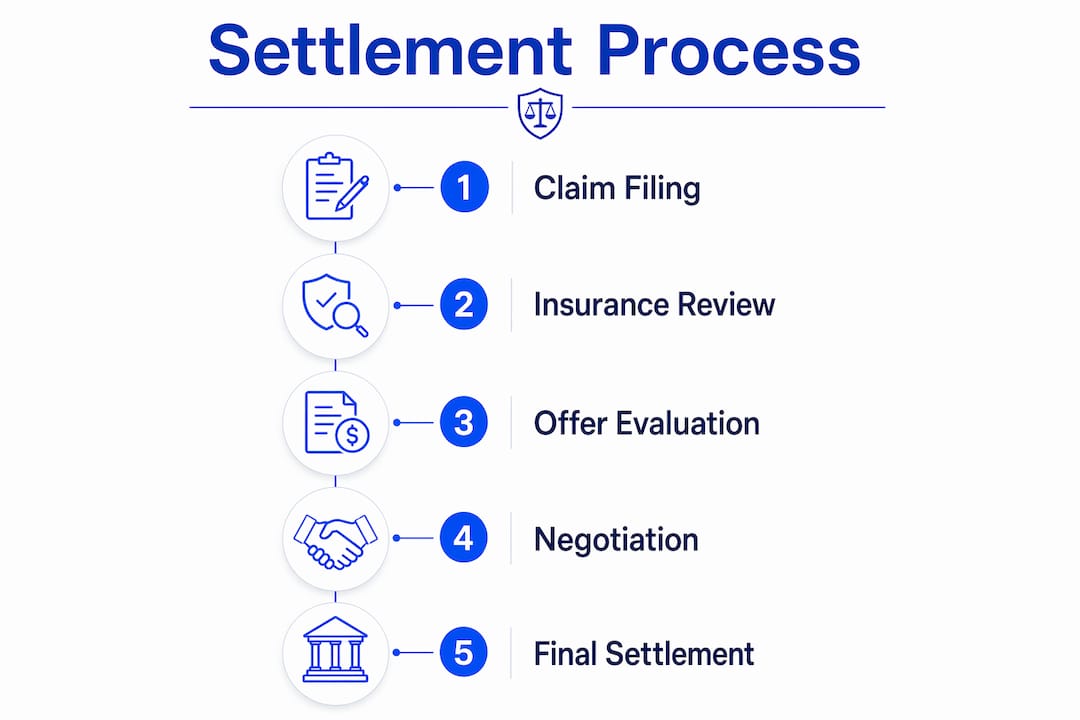
What tactics do insurance companies use during settlement negotiations?
Insurance companies use a predictable set of strategies to minimize payouts. Recognizing them protects you from accepting far less than your claim is worth.
- Early lowball offers. Insurers routinely offer $2,000–$3,000 in the first days after an accident. These offers come with full release paperwork, which permanently closes your claim. Signing early means you cannot seek more compensation even if your injuries worsen.
- Anchoring with software valuations. Insurance valuation software like Colossus produces conservative initial offers by design. That low number becomes the anchor for all future negotiations, pulling the final settlement downward.
- Speed pressure. Insurers prioritize fast settlements to close claims before the full extent of your injuries is known. Once you sign a release, the claim is gone permanently, even if you need surgery six months later.
- Delay, Deny, Defend. Some insurers delay responses, deny valid claims on technical grounds, or aggressively defend low offers in court. Each tactic is designed to wear down claimants who lack legal support.
Pro Tip: Never accept a first settlement offer without consulting a personal injury attorney. The first offer is almost never the best offer, and signing a release is permanent.
The role of insurance companies in claims is not neutral. Adjusters work for the insurer, not for you. Every conversation with an adjuster is a negotiation, even when it feels like a routine check-in.

How do medical bills, liens, and health insurance affect your settlement?
Many accident victims believe that using their personal health insurance will reduce their settlement. That belief is wrong. Using health insurance does not hurt settlement value. Unmanaged medical liens are what cause financial loss, not the act of using coverage.
A medical lien is a legal claim placed on your settlement by a provider or insurer who paid for your care. Medicare, Medicaid, and private health insurers all have statutory rights to reimbursement from your settlement. If those liens are not identified and negotiated down before you settle, they can consume a large portion of your recovery.
Here is what to track from day one:
- All medical bills, including emergency room, specialist, and physical therapy charges
- Health insurance payments made on your behalf and any lien notices received
- Medicare or Medicaid correspondence, which carries federal repayment requirements under the Medicare Secondary Payer Act
- Letters from any provider asserting a lien against your future settlement
Pro Tip: Organize every medical bill and lien notice in a single folder from the start of your claim. Your attorney can negotiate lien reductions that directly increase your net recovery.
Proper lien management is one of the most underrated tools in personal injury law. A skilled attorney can often negotiate medical liens down by a meaningful amount, which puts more money in your pocket even if the gross settlement number stays the same.
What are structured settlements and how does insurance shape payment options?
A structured settlement is an agreement where the insurer pays compensation in periodic installments over time rather than in a single lump sum. Under IRC Section 104(a)(2), payments from structured settlements for personal physical injuries are fully tax-free at the federal level. That tax advantage is significant for large settlements involving long-term care or lost earning capacity.
Insurers facilitate structured settlements by purchasing annuity contracts from life insurance companies. The insurer pays a lump sum to the annuity provider, which then makes scheduled payments to you. The insurer benefits because the present cost of funding the annuity is lower than the total payout value over time.
| Feature | Lump sum | Structured settlement |
|---|---|---|
| Tax treatment | Taxable on investment gains | Fully tax-free under IRC 104(a)(2) |
| Immediate access | Full amount available at once | Payments on a fixed schedule |
| Financial discipline | Requires self-management | Built-in spending structure |
| Long-term security | Depends on investment choices | Guaranteed income stream |
| Flexibility | High | Low once agreed upon |
The right choice depends on your financial situation, the size of your settlement, and your long-term care needs. A claimant with permanent disabilities may benefit more from guaranteed periodic payments than from a lump sum that could be depleted. Discuss both options with your attorney before agreeing to any payment structure.
What steps can claimants take to protect their rights with insurers?
Taking the right steps early in your claim directly affects how much compensation you recover. Follow this sequence to protect your position.
- Report the claim promptly. Notify the at-fault party’s insurer and your own insurer as soon as possible after the accident. Delays can be used against you.
- Document everything. Photograph injuries, vehicle damage, and the accident scene. Keep records of every medical visit, prescription, and day of missed work.
- Get a Georgia settlement guide specific to your state. Georgia has specific statutes of limitations and comparative fault rules that affect your claim.
- Hire an attorney before speaking extensively with adjusters. Claimants with legal representation receive settlements 3.5 times larger than those without counsel. That gap is not a coincidence. Attorneys know how to counter anchoring tactics and software-driven valuations.
- Never sign a release without legal review. A release is permanent. Once signed, you cannot reopen the claim regardless of how your injuries progress.
- Understand the adjuster’s role in your claim. Adjusters are trained negotiators working for the insurer. Treating every interaction as a formal negotiation protects your interests.
Avoiding common mistakes is just as important as taking the right steps. The most costly errors are accepting the first offer, missing medical appointments, and posting about your injuries on social media. Insurers monitor public profiles and use inconsistencies to reduce offers.
Key takeaways
Insurance policy limits, adjuster tactics, and lien management are the three factors that most directly determine how much compensation a personal injury claimant actually receives.
| Point | Details |
|---|---|
| Policy limits cap your recovery | The at-fault party’s coverage ceiling is the maximum the insurer will pay, regardless of injury severity. |
| Early offers are anchors, not fair value | First offers of $2,000–$3,000 are designed to close claims fast, not to reflect your true damages. |
| Health insurance use does not hurt you | Unmanaged medical liens reduce net recovery; using health coverage does not. |
| Legal representation multiplies settlements | Represented claimants recover settlements 3.5 times larger than those who negotiate alone. |
| Structured settlements offer tax-free income | IRC Section 104(a)(2) makes periodic injury payments fully tax-free, a major advantage for large claims. |
What I’ve learned watching claimants face insurers alone
The single most predictable pattern I see is this: a claimant gets hurt, the insurer calls within days with a sympathetic adjuster and a fast offer, and the claimant signs. They feel relieved. Then, three months later, they need surgery and have no legal recourse because the release is permanent.
Insurance companies are not villains, but they are businesses. Their financial incentive is to close your claim quickly and cheaply. The speed and friendliness of that first call is not goodwill. It is a tactic backed by software, legal teams, and decades of claims data.
What changes outcomes is information and timing. Claimants who wait until they reach maximum medical improvement before settling consistently recover more. Claimants who hire an attorney before their first recorded statement with the adjuster consistently recover more. These are not opinions. The data on legal advice after an accident is clear and consistent.
The emotional pressure to settle fast is real. Medical bills pile up, income stops, and the insurer’s offer feels like relief. Resist that pressure. The difference between a fast settlement and a fair one can be tens of thousands of dollars, and you only get one chance to make the right call.
— Ali
How Jewkesfirm helps claimants get fair settlements
Jewkesfirm has recovered millions for accident victims across South Atlanta and surrounding Georgia counties. The firm’s attorneys understand exactly how insurers value claims, how adjusters use software anchors, and how to counter lowball offers with documented evidence and legal pressure.
Jewkesfirm works on a contingency fee basis. You pay nothing unless the firm wins your case. That arrangement means the firm’s interests are fully aligned with yours from day one. Whether your claim involves an auto accident, a trucking crash, a slip and fall, or a wrongful death, Jewkesfirm is ready to level the playing field. Contact Jewkesfirm today for a free case review and find out what your claim is actually worth.
FAQ
What is the role of insurance in a personal injury settlement?
Insurance transfers financial liability from the at-fault party to their insurer, which then negotiates and pays compensation to the injured claimant. The insurer’s policy limits, adjuster practices, and claims software all directly shape the final settlement amount.
Can insurance policy limits prevent me from getting full compensation?
Yes. Policy limits cap the maximum payout an insurer will pay, regardless of your actual damages. If the at-fault driver carries minimum coverage, your recovery from their insurer is capped at that amount even if your injuries are far more severe.
Does using my health insurance reduce my personal injury settlement?
No. Using health insurance does not reduce your settlement. Unmanaged medical liens from providers or insurers who paid your bills are what reduce your net recovery if left unaddressed.
Why do insurance companies make such low first offers?
Insurers make early low offers to anchor negotiations and close claims before the full extent of injuries is known. Signing a release at that stage permanently ends your right to seek additional compensation, even if your condition worsens.
How much more can an attorney get for my settlement?
Claimants with legal representation recover settlements 3.5 times larger than those who negotiate alone. Attorneys counter software-driven valuations, negotiate medical liens, and prevent claimants from signing premature releases.