

TL;DR:
- Insurance companies pool premiums to manage risk and investigate claims thoroughly before paying out benefits.
- Claimants should document all evidence early, understand insurer obligations under law, and respond promptly to settlement offers.
Insurance companies are defined as risk managers that pool premiums from policyholders to pay covered losses when accidents, injuries, or property damage occur. The role of insurance companies in claims goes far beyond writing a check. Insurers investigate losses, confirm coverage, negotiate settlements, and close files according to strict policy terms and state regulations. If you or a family member is dealing with a personal injury claim right now, understanding how this process works gives you a real advantage. What insurers do, and what they are legally required to do, are two things every claimant deserves to know.
How do insurance companies manage and process claims?
Insurance companies manage risk by collecting premiums into a shared fund, then drawing from that fund to pay valid claims under policy conditions. This is not a passive function. Every claim triggers a structured workflow designed to protect the insurer’s financial reserves while meeting its contractual obligations to you.
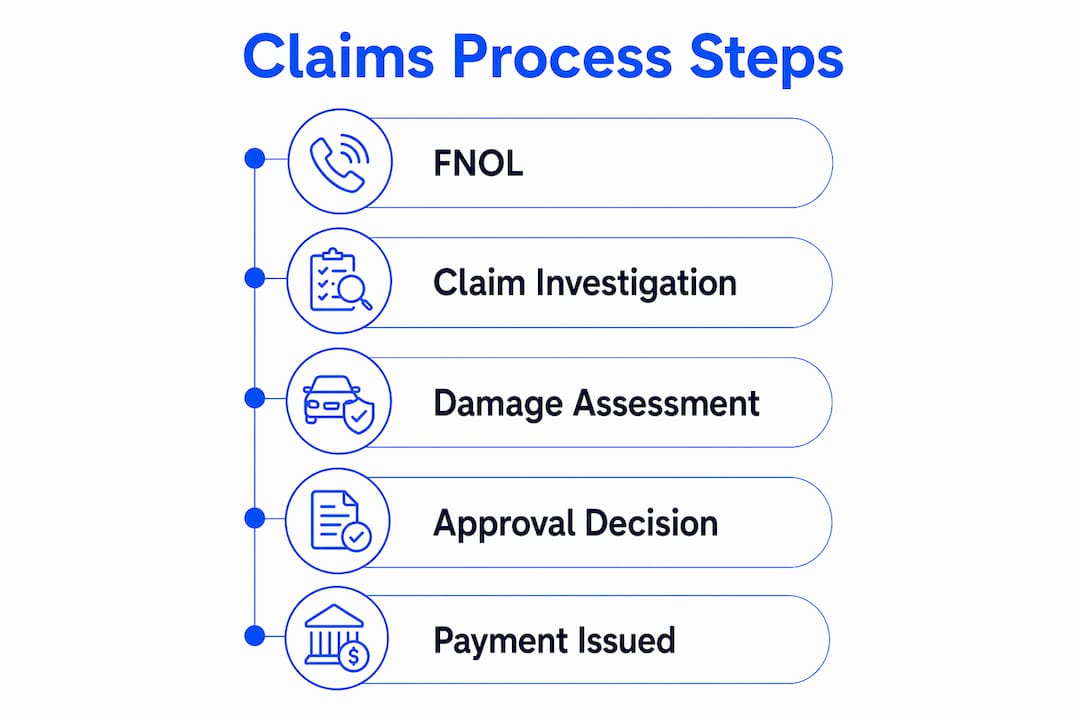
The insurance claims process follows a defined lifecycle from start to finish:
- First Notice of Loss (FNOL): You report the incident to the insurer, triggering the claim file.
- Assignment: The insurer assigns a claims adjuster to your file.
- Investigation: The adjuster gathers evidence, reviews police reports, interviews witnesses, and inspects damages.
- Coverage confirmation: The insurer reviews your policy to determine what is and is not covered.
- Decision: The insurer approves, partially approves, or denies the claim based on policy language and evidence.
- Payment: Approved amounts are issued to the claimant or repair vendors.
- Claim closure: The file is closed and archived for audit and legal review.
Connected claims workflows from FNOL through payment reduce delays and improve the overall customer experience. When each step feeds directly into the next, adjusters spend less time chasing missing documents and more time resolving your claim.
Pro Tip: Document everything from day one. Photographs, written records of conversations, and copies of every submission you make to the insurer create a paper trail that can protect you if the claim is disputed later.

Insurers increasingly use AI-assisted tools and automated triage systems to route claims by complexity. Straightforward property claims may resolve in days. Personal injury claims, which require medical records, liability analysis, and damage calculations, take considerably longer. Knowing this upfront helps you set realistic expectations.
What responsibilities do insurers have when handling claims?
Insurers carry specific legal obligations in the claims process, and these are not optional. Claims practices are regulated by state insurance departments using National Association of Insurance Commissioners (NAIC) model standards to enforce good faith handling and fair settlement practices.
The core insurance company responsibilities include:
- Good faith investigation: Insurers must investigate claims promptly and thoroughly before making a coverage decision.
- Timely acknowledgment: Most states require insurers to acknowledge a claim within a set number of business days after receiving notice.
- Written explanation of denial: If a claim is denied, the insurer must provide a written reason tied to specific policy language.
- Prompt payment: Once a claim is approved, payment must follow within statutory deadlines.
- No unreasonable delay: Stalling tactics designed to pressure claimants into accepting low settlements violate good faith standards.
Texas prompt-payment laws illustrate how specific these obligations can be. Texas requires insurers to acknowledge a claim within 15 business days, make a coverage decision within 15 business days of receiving all required items, and issue payment within 5 business days of approval. Violations carry penalties of 18% per year interest plus attorney fees. This shows that state law treats insurer delay as a serious financial offense, not a minor procedural lapse.
When insurers cross the line from slow to unreasonable, bad faith claims become available to claimants. Remedies can include double damages and attorney fees, depending on the state. Colorado, for example, has specific statutes that allow courts to award enhanced damages when an insurer’s conduct is found to be unreasonable. This legal framework exists precisely because the power imbalance between a large insurer and an individual claimant is real.
How do insurance adjusters impact the claims process?
Adjusters are the human engine of claims management by insurance companies. Claims adjusters investigate losses, assess damage and liability, estimate claim values, set financial reserves, negotiate settlements, and manage files through to closure. They are the insurer’s primary representative in every interaction with you.
Not all adjusters are the same. Understanding the differences matters:
| Adjuster Type | Who They Represent | Key Role |
|---|---|---|
| Staff adjuster | The insurance company | Handles claims as a salaried employee of the insurer |
| Independent adjuster | The insurance company (contracted) | Hired during high-volume periods or for specialized claims |
| Public adjuster | The claimant | Hired and paid by you to advocate for a higher settlement |
| Specialist adjuster | The insurance company | Handles complex claims such as medical malpractice or catastrophic injury |
Adjusters use software tools like Colossus to calculate injury values and operate within settlement authority limits set by their supervisors. Initial settlement offers typically run 30 to 50 percent below final settlements as a standard negotiation practice. That first offer is a starting point, not a final answer.
Coverage decisions depend on policy language, documented evidence, and coverage limits. Outcomes include full approval, partial approval, or denial. Adjusters apply contractual standards to the facts you provide, which is why the quality and completeness of your documentation directly shapes the outcome.
Pro Tip: Never give a recorded statement to an insurance adjuster without first consulting an attorney. Adjusters use recorded statements to establish facts early in the process, and inconsistencies between your statement and later medical records can be used to reduce your settlement.
What practical steps can claimants take to work with insurers effectively?
Understanding how insurers handle claims is only useful if you act on that knowledge. Claim files maintain a paper trail for audit and legal review, and what you submit and when directly impacts your claim outcome. Claimants who treat documentation as a priority from the first day consistently experience fewer disputes.
Here are the most effective steps you can take:
- Submit complete documentation early. Medical records, police reports, photographs, and witness contact information should be gathered and submitted as soon as possible. Gaps in documentation give adjusters grounds to delay or reduce your claim.
- Track every communication. Log the date, time, name of the representative, and summary of every phone call or email exchange with the insurer. This record becomes critical if you need to challenge a denial or delay.
- Understand your policy limits. Know your coverage caps before negotiations begin. Insurers will not pay beyond policy limits, and understanding this constraint helps you evaluate settlement offers accurately.
- Respond to settlement offers in writing. Verbal acceptances create ambiguity. Written responses create a clear record and preserve your ability to counter-offer or dispute terms.
- Seek legal advice before signing a release. Once you sign a release, your claim is closed permanently. An attorney can review the offer against your actual damages before you commit.
For Georgia residents, handling accident claims step-by-step requires specific knowledge of state deadlines and insurer obligations. Georgia has its own prompt-payment standards and bad faith statutes that affect how you should respond to insurer conduct.
Pro Tip: Submit medical records and bills as they become available rather than waiting until treatment is complete. Early submission keeps your claim moving and prevents the insurer from using delayed documentation as a reason to stall.
Key takeaways
Insurance companies are legally obligated to investigate, decide, and pay claims in good faith within state-mandated deadlines, and claimants who document thoroughly and understand adjuster tactics consistently achieve better outcomes.
| Point | Details |
|---|---|
| Insurers follow a structured lifecycle | Claims move from FNOL through investigation, decision, payment, and closure in a defined workflow. |
| Legal obligations are enforceable | State prompt-payment laws and NAIC standards impose real deadlines and penalties on insurers who delay or deny in bad faith. |
| Adjusters negotiate, not just evaluate | Initial offers run 30 to 50 percent below final settlements, making counter-offers a normal and expected part of the process. |
| Documentation drives outcomes | What you submit and when directly affects claim progression, dispute potential, and final settlement value. |
| Legal advice protects your rights | Consulting an attorney before giving recorded statements or signing releases prevents costly, irreversible mistakes. |
What I’ve learned about dealing with insurance companies in claims
After years of watching personal injury claimants interact with insurers, the most common mistake I see is treating the insurer as a neutral party. Insurers are not neutral. They are businesses with financial incentives to resolve claims at the lowest defensible value. That is not a criticism. It is simply the reality of how claims management by insurance companies operates, and understanding it changes how you engage.
The second mistake is underestimating documentation. Claimants often assume the insurer will gather the evidence needed to support their claim. Insurers gather evidence to evaluate their exposure, not to build your case. The difference is significant. Every record you submit, every communication you log, and every deadline you track shifts the balance in your favor.
Technology is changing the claims experience in ways most claimants do not see. AI-assisted triage, automated reserve-setting, and digital file management mean that decisions about your claim are increasingly influenced by algorithms before a human adjuster ever reviews your file. This makes early, complete, and consistent documentation more important than ever.
The claimants who fare best are those who treat the process as a negotiation from day one, know their rights under state law, and are not afraid to push back on low offers or unreasonable delays. Knowing when to protect your injury claim and when to escalate to legal representation is the single most important judgment call in any personal injury case.
— Ali
How Jewkesfirm can help you navigate insurance claims
Dealing with an insurer after a serious accident is not something you should do alone. Jewkesfirm has recovered millions for accident victims across South Atlanta and surrounding Georgia counties, helping clients challenge low settlement offers, fight bad faith delays, and secure the maximum compensation they deserve.

When an insurer’s offer does not reflect your actual damages, Jewkesfirm levels the playing field. The firm handles auto accidents, trucking crashes, slip and falls, medical malpractice, and wrongful death cases on a contingency fee basis. You pay nothing unless they win. If you are ready to have your voice heard, contact Jewkesfirm today for a FREE CONSULTATION and find out exactly what your claim is worth.
FAQ
What is the role of insurance companies in claims?
Insurance companies assess, investigate, and pay valid claims according to policy terms while managing financial risk. Their responsibilities include good faith investigation, timely decisions, and prompt payment under state-regulated deadlines.
How long does an insurer have to respond to a claim?
Deadlines vary by state. Texas, for example, requires acknowledgment within 15 business days and a coverage decision within 15 business days of receiving all required documentation. Most states impose similar prompt-payment standards with financial penalties for violations.
What does a claims adjuster actually do?
Adjusters investigate losses, assess damages and liability, set financial reserves, and negotiate settlements on behalf of the insurer. They are the insurer’s representative in your claim, not a neutral evaluator.
What happens if an insurer acts in bad faith?
Unreasonable delay or denial of a valid claim can trigger bad faith litigation. Depending on the state, remedies include double damages, attorney fees, and statutory interest penalties. Georgia and most other states have specific statutes governing insurer bad faith conduct.
Should I hire an attorney to deal with my insurance claim?
For personal injury claims involving significant medical expenses, lost wages, or disputed liability, legal representation consistently produces better outcomes. An attorney can review settlement offers, handle adjuster communications, and file bad faith claims if the insurer acts unreasonably.