

Atlanta highway accident claims are personal injury claims filed by crash victims seeking compensation for injuries, vehicle damage, and related losses after a collision on Georgia’s highways and interstates. Explaining Atlanta highway accident claims means understanding three core elements: Georgia’s fault rules, the evidence required to prove your case, and the steps to file before legal deadlines expire. Georgia operates under the Modified Comparative Negligence standard, codified in O.C.G.A. Section 51-12-33, which directly controls how much money you can recover. Jewkesfirm has guided Atlanta-area accident victims through this process, and the guidance below reflects what actually works.
How does fault work in Atlanta highway accident claims?
Georgia’s Modified Comparative Negligence rule bars recovery entirely if you are found 50% or more at fault for the accident. Below that threshold, your compensation is reduced by your percentage of fault. If a jury finds you 30% responsible for a $100,000 claim, you collect $70,000. That math matters enormously when insurance adjusters start assigning blame.

Fault in Atlanta car accident claims is not simply a matter of opinion. Police reports, witness statements, physical evidence, and expert testimony all shape fault determinations. A citation issued at the scene carries weight, but it is not the final word. Courts and insurance companies weigh the full picture.
Common fault patterns on Atlanta highways include:
- Rear-end collisions: The trailing driver is typically presumed at fault, though sudden stops or brake failures can shift that.
- Left-turn accidents: The turning driver usually bears fault unless the oncoming driver ran a red light.
- Lane-change crashes: Fault follows whoever failed to check blind spots or signal properly.
- Multi-vehicle pileups: Fault can be split across several drivers, making evidence even more critical.
Pro Tip: Request the official police report within days of the crash. Errors in that report can be disputed, and correcting them early protects your fault percentage.
What evidence do you need to support an Atlanta highway accident claim?
Strong evidence is the foundation of every successful Atlanta accident compensation claim. Insurance companies and courts require concrete proof to establish fault, injuries, and damages. Without it, adjusters have room to minimize or deny your claim entirely.
The most useful types of evidence include:
- Police report: Documents the official account of the crash, including citations and officer observations.
- Photographs: Capture vehicle positions, road conditions, skid marks, traffic signs, and visible injuries.
- Witness statements: Independent accounts from bystanders carry significant weight with adjusters and juries.
- Dashcam and telematics data: Electronic records from your vehicle or a commercial truck can confirm speed, braking, and impact timing.
- Medical records: Connect your injuries directly to the accident, which is required for any compensation claim.
Scene evidence disappears fast. Documenting the accident scene with photos and witness contact information before the road is cleared preserves details that cannot be recreated later. Debris gets swept away, skid marks fade, and memories blur within hours.
| Evidence type | Why it matters | When to gather it |
|---|---|---|
| Police report | Official fault record used by insurers and courts | Request within 3–5 days of crash |
| Scene photographs | Preserves physical details before cleanup | At the scene, immediately |
| Witness statements | Independent accounts that support your version | At the scene or within 24 hours |
| Dashcam footage | Objective video record of the collision | Download and preserve same day |
| Medical records | Links injuries to the accident for compensation | Ongoing throughout treatment |

Pro Tip: If you are injured and cannot document the scene yourself, ask a passenger, bystander, or family member to photograph everything before emergency crews clear the area.
Why does medical documentation matter in Atlanta accident claims?
Medical documentation is the direct link between your injuries and your right to compensation. Without it, insurance adjusters treat your injuries as unproven, regardless of how much pain you are in. Delayed onset injuries like whiplash, soft tissue damage, and concussions are common after highway crashes, and victims frequently underestimate them in the hours immediately following impact.
Victims often delay seeking specialized medical care because initial symptoms feel mild. That delay weakens both their health outcomes and their legal claim. An emergency room visit establishes a baseline, but a focused evaluation by an injury specialist documents the full scope of trauma in the detail that courts and insurers require.
Key steps for protecting your medical evidence:
- Visit an emergency room or urgent care center on the day of the accident, even if you feel fine.
- Follow up with a specialist who treats accident-related injuries, such as an orthopedist or neurologist.
- Attend every scheduled appointment. Gaps in treatment signal to insurers that your injuries are not serious.
- Keep all bills, prescriptions, referrals, and discharge notes organized in one place.
Establishing documented medical care matters even when initial ER results appear normal. A specialist may identify injuries that emergency scans miss, and that documentation becomes central to your claim value.
Pro Tip: Tell every treating provider that your injuries resulted from a highway accident. That notation in your medical records creates a direct, documented connection between the crash and your treatment.
How do you file an Atlanta highway accident claim?
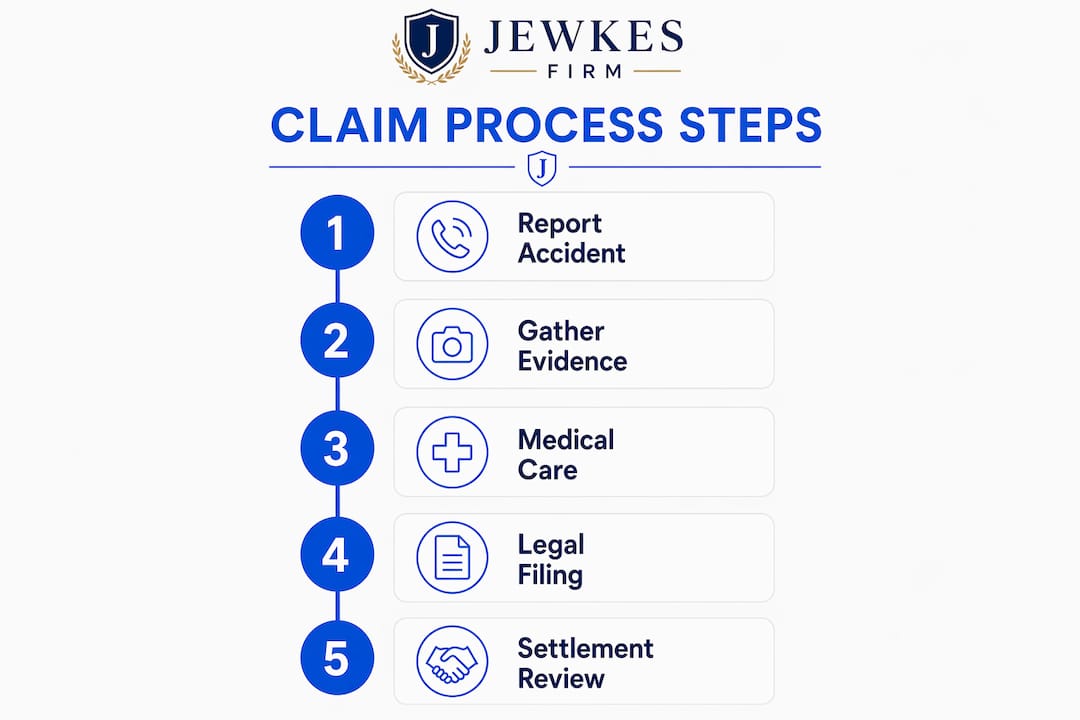
Filing a highway accident claim in Georgia follows a clear sequence. Skipping steps or rushing through them creates gaps that insurers exploit. The Georgia claim filing process works best when you treat each step as a building block for the next.
- Call 911 immediately. A police report is required for any serious injury or significant property damage. Do not leave the scene without one.
- Exchange information. Collect the other driver’s name, license number, insurance carrier, and policy number. Photograph their license plate.
- Notify your insurance company. Report the accident promptly, but limit your initial statement to basic facts. Do not speculate about fault.
- Seek medical care the same day. Document injuries before symptoms worsen or adjusters argue they were pre-existing.
- Consult a personal injury attorney. Early legal advice protects your rights before insurers begin building their defense.
- Avoid giving recorded statements to the other driver’s insurer. Statements to adjusters made while you are still on medication or unsure of details can shift fault allocation against you later.
- File within Georgia’s statute of limitations. Georgia law gives you two years from the accident date to file a personal injury lawsuit. Missing that deadline forfeits your right to compensation entirely.
Most Atlanta car accident claims settle before trial. However, if the insurer disputes fault or undervalues your injuries, litigation becomes necessary. An attorney who knows Georgia’s fault rules can push back effectively on low settlement offers.
What practical tips help maximize your Atlanta accident compensation?
Maximizing your compensation requires consistent effort from the day of the crash through the final settlement. The strongest claims are built on organized records, disciplined medical follow-through, and careful communication.
- Keep a daily pain and symptom journal. Write down how your injuries affect your daily life, work, and sleep. This record supports claims for pain and suffering, which are harder to quantify than medical bills.
- Save every receipt. Medical copays, prescription costs, transportation to appointments, and lost wages all count as compensable damages.
- Do not post about the accident on social media. Insurance adjusters monitor public profiles. A photo of you at a family event can be used to argue your injuries are exaggerated.
- Follow your doctor’s treatment plan exactly. Deviating from prescribed care gives insurers grounds to argue you failed to mitigate your damages.
- Seek legal advice early. Early legal consultation is directly associated with better settlement outcomes in personal injury claims.
Understanding how to file a personal injury claim in Georgia gives you a real advantage. Insurers count on claimants being uninformed. When you know the rules, you are harder to lowball.
Pro Tip: Before accepting any settlement offer, have an attorney review it. Once you sign a release, you cannot go back for additional compensation, even if your injuries worsen.
Key takeaways
Atlanta highway accident claims succeed when victims act quickly, document thoroughly, and understand Georgia’s fault rules from day one.
| Point | Details |
|---|---|
| Georgia’s fault threshold | You cannot recover damages if you are 50% or more at fault under O.C.G.A. Section 51-12-33. |
| Evidence gathered at the scene | Photos, witness contacts, and dashcam footage preserve facts that disappear once the road is cleared. |
| Medical documentation | Prompt, specialized medical care links injuries to the accident and directly supports your claim value. |
| Two-year filing deadline | Georgia law requires personal injury lawsuits to be filed within two years of the accident date. |
| Early legal counsel | Consulting an attorney before giving recorded statements protects your fault percentage and claim value. |
What I’ve learned from watching Atlanta accident claims go wrong
The most common mistake I see is not waiting too long to hire an attorney. It is making an uninformed statement to an insurance adjuster in the first 48 hours. Adjusters are trained to ask questions that sound routine but are designed to establish admissions. Saying “I didn’t see them coming” is not just a description. It is potential evidence of inattention.
The second pattern that costs victims real money is delaying specialized medical care. People feel shaken but functional after a crash, so they skip the follow-up appointment. Three weeks later, they have a documented injury with a gap in treatment that the insurer uses to argue the injury was not caused by the accident. That gap is almost impossible to explain away.
Atlanta’s highways, particularly I-285 and I-20, see high-speed, multi-lane collisions where fault is genuinely contested. These are not simple fender-benders. The evidence requirements are higher, the medical stakes are greater, and the insurance adjusters assigned to these claims are experienced. Treating a highway accident claim like a routine fender-bender is the fastest way to leave money on the table.
My honest advice: take the claim as seriously as you take your recovery. The two are connected. Your health outcomes and your legal outcomes both depend on the same thing, which is prompt, documented, consistent action from the day of the crash forward.
— Ali
Jewkesfirm is ready to protect your claim
If you were injured in a highway accident in Atlanta or the surrounding Georgia counties, the time to act is now. Evidence fades, deadlines approach, and insurance companies begin building their case from the moment the crash occurs.

Jewkesfirm specializes in personal injury claims for Atlanta-area accident victims, handling everything from initial evidence review to final settlement negotiations. The firm works on a contingency fee basis, meaning you pay nothing unless they win your case. A free consultation with Jewkesfirm gives you a clear picture of your rights, your claim’s strength, and the steps needed to pursue maximum compensation. Visit Jewkesfirm’s accident claims page to get your free case review and put an experienced advocate in your corner.
FAQ
What is an Atlanta highway accident claim?
An Atlanta highway accident claim is a formal request for compensation filed after a crash on Georgia’s highways or interstates. It covers medical costs, lost wages, vehicle damage, and pain and suffering caused by another driver’s negligence.
How does Georgia’s fault rule affect my compensation?
Georgia’s Modified Comparative Negligence rule reduces your compensation by your percentage of fault and bars recovery entirely if you are 50% or more at fault, under O.C.G.A. Section 51-12-33.
How long do I have to file a highway accident claim in Georgia?
Georgia law gives you two years from the accident date to file a personal injury lawsuit. Missing this deadline means losing your right to any compensation.
Do I need an attorney for an Atlanta highway accident claim?
Hiring an attorney is not legally required, but early legal counsel is directly associated with higher settlement outcomes. Attorneys prevent costly mistakes like uninformed statements to adjusters and missed evidence.
What if my injuries appeared days after the accident?
Delayed injuries like whiplash are common and fully compensable. Seek specialized medical care immediately, even if initial symptoms seem mild, and document every symptom with a treating provider to protect your claim.