

TL;DR:
- Wrongful death laws in Atlanta require filing within two years and in the proper court. Venue choice impacts case speed and outcome, making early strategic filing essential. Proper jurisdiction safeguards families’ rights and prevents costly delays.
Atlanta wrongful death jurisdiction defines the legal authority and venue rules that govern where wrongful death lawsuits must be filed under Georgia law. Under Ga. Code § 51-4-1(2), wrongful death occurs when a person dies as a result of criminal or negligent acts by another party, including cases involving products liability and medical malpractice. Jurisdiction determines not just which court hears your case, but whether your claim moves forward at all. Getting this right from day one protects your family’s right to compensation and prevents costly procedural setbacks.
What is Atlanta wrongful death jurisdiction and how does it work?
Atlanta wrongful death jurisdiction refers to two connected legal concepts: subject matter jurisdiction and venue. Subject matter jurisdiction means the court has the legal authority to hear wrongful death claims under Georgia law. Venue refers to the specific county or court location where the lawsuit is properly filed.

Georgia’s wrongful death statutes, particularly Ga. Code § 51-4-1, establish the legal foundation for these claims. The statute covers deaths caused by negligence, criminal acts, medical malpractice, and defective products. That broad scope means Atlanta wrongful death laws apply to a wide range of fatal incidents across Fulton County and surrounding metro counties.
Jurisdiction also determines procedural rules: which discovery timelines apply, which judges oversee the case, and which appellate courts review any disputes. A case filed in the wrong court can face transfer motions, delays, and in rare situations, dismissal. Understanding jurisdiction for wrongful death is the first step toward protecting your legal rights.
Pro Tip: Consult an attorney before filing anywhere. Choosing the wrong county can cost your family months of delay, even if the mistake is eventually corrected.
Who has the legal right to file wrongful death claims in Atlanta?
Georgia law sets a strict hierarchy for who may bring wrongful death claims in Atlanta. Not every family member qualifies, and the order of priority matters legally.
Eligible claimants under Georgia law include:
- Surviving spouse: The spouse has the first right to file and acts on behalf of any minor children.
- Children: If there is no surviving spouse, the deceased’s children may file the claim.
- Parents: If the deceased had no spouse or children, the parents may bring the action.
- Estate representative: If no immediate family survives, the administrator or executor of the estate files the claim on behalf of all beneficiaries.
This hierarchy is not just procedural. It directly affects who can file and how any recovered damages are distributed. A surviving spouse who files on behalf of minor children must account for the children’s share of any settlement or verdict.
The distinction between filing as a family member versus as an estate representative also carries legal weight. An estate representative files under a separate survival action, which covers the deceased’s own pain, suffering, and medical expenses before death. These are two distinct legal claims, and both may apply in the same case.
Pro Tip: If multiple family members disagree about who should file, a Georgia probate court can appoint an administrator to resolve the dispute and move the case forward.
What venue rules determine where wrongful death cases are filed in Atlanta?
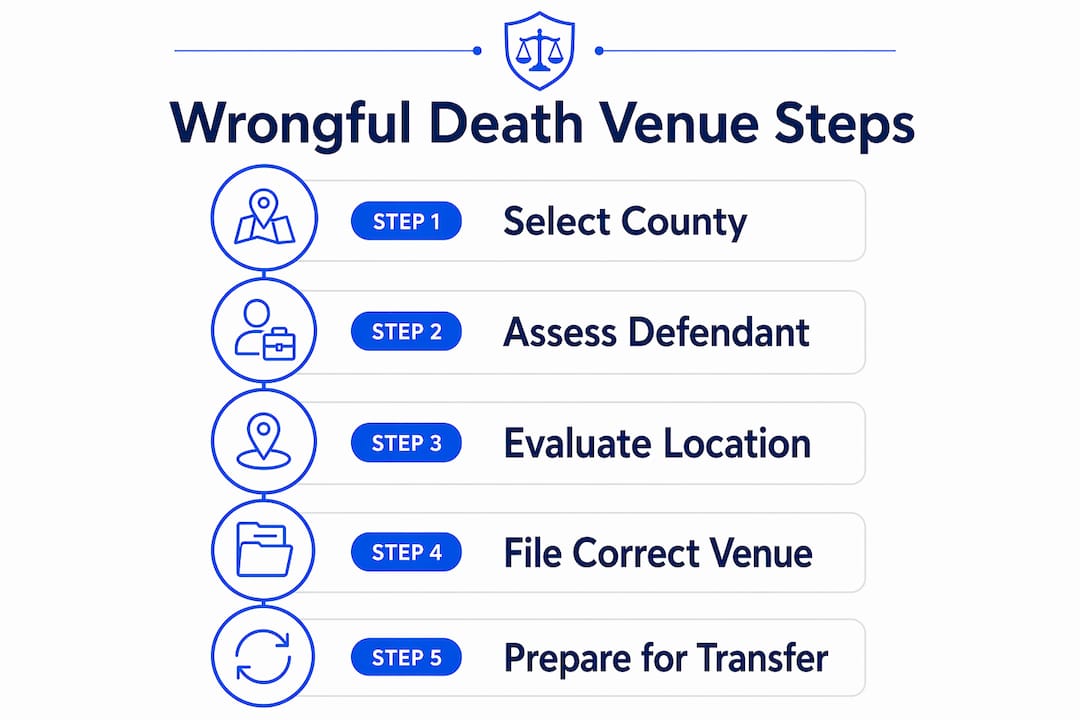
Georgia’s venue statute gives plaintiffs meaningful choices about where to file. Georgia’s venue rules permit filing in the county where the defendant resides, where the accident occurred, or where the relevant transaction took place. Each option carries different strategic implications.
For Atlanta wrongful death cases, the most common venue options are:
- Fulton County: Covers the City of Atlanta and is often the default choice for incidents occurring within city limits.
- DeKalb County: Applies when the accident or defendant’s residence falls within DeKalb’s boundaries.
- Clayton County: Relevant for incidents in South Atlanta and surrounding communities served by Jewkesfirm.
- Gwinnett or Cobb County: May apply when defendants reside or operate businesses in those counties.
Venue selection is a strategic decision, not just a legal formality. Jury pools differ significantly across metro Atlanta counties. Docket speeds vary, meaning some counties resolve cases faster than others. A county with a slower docket can add a year or more to your timeline.
Defendants have the right to challenge venue through a motion to transfer. Georgia courts generally transfer cases to the correct venue rather than dismiss them outright. That transfer process, however, can add months of delay and give the defense time to build its case.
| Venue factor | Impact on your case |
|---|---|
| Jury demographics | Affects verdict amounts and plaintiff-friendly outcomes |
| Docket speed | Determines how quickly your case reaches trial |
| Defendant’s home county | Defense may seek transfer to a more favorable court |
| Accident location | Often the strongest venue argument for plaintiffs |
Pro Tip: Filing in the county where the accident occurred is often the most defensible venue choice. It gives you a strong legal basis and reduces the risk of a successful transfer motion by the defense.
How does jurisdiction affect the timeline of a wrongful death lawsuit?
Time is the most critical factor in any Atlanta death lawsuit jurisdiction analysis. Georgia law requires wrongful death claims to be filed within two years from the date of death under Ga. Code § 9-3-33. Miss that deadline and your family loses the right to recover compensation entirely.
Jurisdictional errors create timeline risks beyond the statute of limitations. When a defendant successfully argues improper venue, the case transfers to the correct court. That transfer restarts certain procedural clocks, requires re-filing of documents, and can push a trial date back by six months to a year.
Key timeline risks tied to jurisdiction include:
- Venue transfer motions: Filed early by defendants to shift the case to a more favorable county.
- Appellate delays: Venue disputes can be appealed, stalling the case while courts decide.
- Refiling requirements: Some transfers require plaintiffs to re-serve defendants, adding weeks to the process.
- Discovery restarts: A new court may set new discovery schedules, delaying depositions and evidence gathering.
Early jurisdiction assessment prevents most of these problems. Attorneys who map venue options early can anticipate defense challenges and file in the strongest possible court from the start. That preparation keeps your case on track and your family’s focus where it belongs: on recovery.
What are common challenges in establishing wrongful death jurisdiction in Atlanta?
Jurisdiction disputes become most complex when defendants operate across multiple counties or states. A trucking company headquartered in Cobb County that caused a fatal accident in Fulton County gives plaintiffs two legitimate venue options. The defense will almost always argue for its home county.
Forum selection clauses add another layer of difficulty. Some contracts, such as those signed with employers or service providers, include clauses that specify where disputes must be resolved. Legal experts warn that forum selection clause disputes often cause significant procedural delay, even when courts ultimately reject the clause in wrongful death cases.
Corporate defendants present specific challenges:
- Large companies may have registered agents in multiple counties, creating genuine ambiguity about proper venue.
- Out-of-state defendants may argue that Georgia courts lack personal jurisdiction over them entirely.
- Defendants with multiple business locations may claim that no single Atlanta-area county is the correct venue.
Jurisdictional errors in wrongful death cases rarely end a claim permanently. Georgia courts prefer to transfer cases to the correct venue rather than dismiss them. The real cost is time, and time is the one resource grieving families cannot afford to waste.
Plaintiffs counter these defense tactics by documenting the connection between the accident location and the chosen venue. Strong evidence of where the fatal incident occurred, where witnesses live, and where key evidence is located all support keeping the case in the plaintiff’s preferred court. An experienced attorney can file preemptive responses to anticipated venue challenges, reducing the chance of a successful transfer motion.
Key Takeaways
Atlanta wrongful death jurisdiction requires filing in the correct Georgia court, by the right claimant, within two years of the death, with venue chosen strategically to protect the case’s timeline and outcome.
| Point | Details |
|---|---|
| Legal definition | Georgia law defines wrongful death as a fatality caused by criminal or negligent acts under Ga. Code § 51-4-1(2). |
| Who can file | Only the surviving spouse, children, parents, or estate representative may bring a wrongful death claim. |
| Venue options | Plaintiffs may file in the county where the defendant resides or where the accident occurred. |
| Statute of limitations | Georgia requires filing within two years of the date of death under Ga. Code § 9-3-33. |
| Venue strategy | Choosing the right county early prevents transfer motions, delays, and lost litigation time. |
Why venue is the decision most families overlook
Families focused on grief and justice rarely think about venue as a strategic choice. They assume the courthouse closest to where their loved one died is the right place to file. That assumption is often correct, but not always.
I’ve seen cases where filing in the accident county was technically valid but strategically weak. The defense had strong ties to that county’s legal community, the docket was backlogged, and the jury pool was historically conservative on damages. A neighboring county, where the defendant’s registered agent was located, would have been a stronger choice. The family’s attorney filed quickly without that analysis, and the case dragged on for two additional years.
The lesson is not that speed is wrong. The two-year deadline is real and must be respected. The lesson is that speed and strategy are not opposites. An attorney who knows Atlanta’s metro counties, their dockets, and their jury demographics can file quickly and wisely. That combination is what separates a case that settles fairly from one that grinds through years of procedural battles.
Families deserve both urgency and precision. The wrongful death claim process in Georgia rewards those who get both right from the first filing.
— Ali
Jewkesfirm is ready to help with your wrongful death case
Losing a family member to someone else’s negligence is devastating. The legal process that follows should not add to that burden.

Jewkesfirm serves families across South Atlanta and surrounding Georgia counties, handling wrongful death cases with the dedication and local knowledge these claims demand. The firm’s attorneys assess jurisdiction and venue from the first consultation, so your case is filed in the right court, at the right time, with the strongest possible foundation. Jewkesfirm works on a contingency fee basis, meaning you pay nothing unless they win. Contact Jewkesfirm today for a free case evaluation and get the answers your family needs now.
FAQ
What is wrongful death under Georgia law?
Georgia law defines wrongful death as a death caused by the criminal or negligent acts of another party, including cases involving medical malpractice and defective products under Ga. Code § 51-4-1(2).
How long do I have to file a wrongful death claim in Atlanta?
Georgia requires wrongful death claims to be filed within two years of the date of death under Ga. Code § 9-3-33. Missing this deadline permanently bars recovery.
Where can a wrongful death lawsuit be filed in Atlanta?
You may file in the county where the defendant resides, where the accident occurred, or where the relevant transaction took place, giving plaintiffs meaningful venue options across the Atlanta metro area.
What happens if I file in the wrong court?
Georgia courts typically transfer the case to the correct venue rather than dismiss it. That transfer can add months of delay, which is why early venue assessment is critical.
Can a corporation challenge where I file my wrongful death lawsuit?
Yes. Corporate defendants frequently file motions to transfer venue to their home county. Plaintiffs can counter by documenting the accident location and other connections to their chosen court.