

Georgia arbitration in injury cases is a legal process where a neutral third party, called an arbitrator, reviews evidence and issues a decision that resolves your dispute outside of court. This process is formally governed by the Georgia Arbitration Code, specifically OCGA 9-9-2, which defines the legal framework for enforcing arbitration agreements and outlining arbitrator authority. For injured individuals in Georgia, understanding what is Georgia arbitration in injury means knowing you have a real alternative to a lengthy court trial. Arbitration can be binding or non-binding, and that distinction carries serious consequences for your right to appeal. Jewkesfirm works with injured clients across South Atlanta and surrounding counties who face arbitration clauses and need clear, experienced guidance before they agree to anything.
What is the Georgia injury arbitration process, step by step?
The Georgia injury arbitration process follows a structured timeline that typically spans approximately 110 days from start to finish. That timeline is shorter than most court cases, which is one reason insurance companies and defendants often prefer it. Knowing each phase helps you prepare and avoid being caught off guard.
- Filing the arbitration demand (days 1–60). One party submits a formal demand for arbitration, usually to an arbitration organization or directly to the other party as specified in the agreement. Both sides then work to select a neutral arbitrator, often a retired judge or an experienced attorney.
- Evidence exchange (days 61–90). Both parties share relevant documents, medical records, accident reports, and other evidence. Unlike court discovery, arbitration limits depositions and document requests, so what you submit here carries significant weight.
- The arbitration hearing (days 91–100). The hearing takes place in a private conference room rather than a courtroom. Arbitration hearings are less formal than court trials, and the arbitrator controls the pace and evidentiary rules. You present your case, the other side presents theirs, and the arbitrator asks questions.
- The decision (days 101–110). The arbitrator issues a written award. In binding arbitration, that award is final and enforceable in Georgia courts. In non-binding arbitration, either party can reject the decision and proceed to trial.
Pro Tip: Review your arbitration agreement before the process begins. Many agreements specify which arbitration organization governs the case, the rules that apply, and whether the decision is binding. Missing these details early can cost you significant rights later.
How does arbitration differ from court litigation in Georgia injury cases?
Arbitration and traditional litigation are fundamentally different in structure, cost, and outcome. Injured individuals who understand these differences make better decisions about which path to take.

Formality and procedure. Court trials follow strict rules of evidence and civil procedure under Georgia law. Arbitration hearings are far less formal. The arbitrator has broad discretion over how evidence is presented and how the hearing runs. That flexibility can work in your favor or against you, depending on how prepared you are.
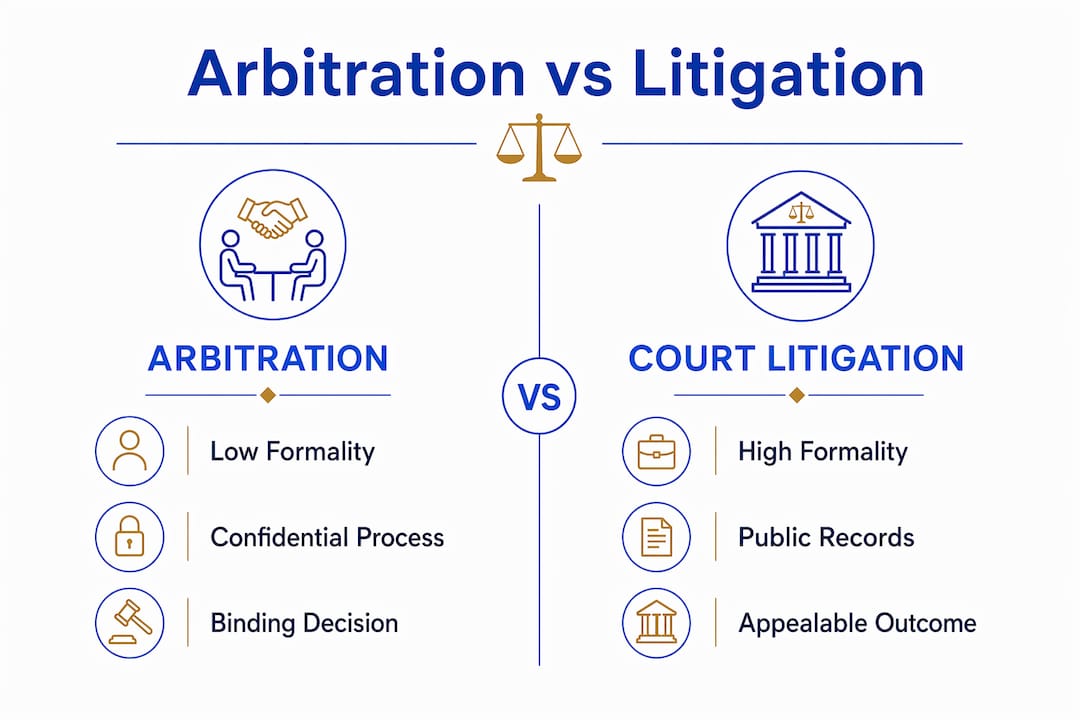
Privacy. Court proceedings are public record. Arbitration is private and confidential, which means sensitive medical details and financial information stay out of the public eye. For many injury claimants, this is a meaningful benefit.
Cost. Courts are funded by taxpayers, so filing fees are relatively low. In arbitration, both parties pay arbitrator fees, which are often charged by the hour. Those fees can add up quickly in complex cases.
Appeal rights. This is the sharpest difference. Georgia courts allow appeals on legal errors. Arbitration awards are binding with very limited grounds for appeal. Courts will only vacate an arbitration award under narrow conditions, such as proven arbitrator misconduct or fraud. You essentially give up your right to a second chance.
Here is a direct comparison of the two paths:
| Category | Arbitration | Court litigation |
|---|---|---|
| Formality | Low, arbitrator controls process | High, strict procedural rules |
| Privacy | Fully confidential | Public record |
| Timeline | Approximately 110 days | Often 1–3 years |
| Cost structure | Arbitrator fees paid by parties | Court fees, but lower upfront |
| Appeal rights | Extremely limited | Full appellate process available |
| Discovery scope | Restricted | Broad, including depositions |
What are the benefits and drawbacks of arbitration for injury claims in Georgia?
Arbitration is not the right choice for every injured person. It offers real advantages in certain situations and serious risks in others. A clear-eyed view of both sides helps you protect your claim.
Benefits of choosing arbitration:
- Speed. The approximately 110-day timeline is significantly faster than a court trial, which matters when you need compensation to cover medical bills and lost wages.
- Privacy. Confidential proceedings protect sensitive personal and medical information from public exposure.
- Expert decision-maker. Arbitrators are typically retired judges or seasoned attorneys who understand injury law, which can lead to more informed decisions than a lay jury.
- Less formal setting. The conference room environment can feel less intimidating than a courtroom, particularly for injured individuals who are still recovering.
Drawbacks and risks to consider:
- Limited appeal rights. A bad arbitration award is nearly impossible to overturn, even if you believe the decision was wrong.
- Arbitrator fees. Arbitration fees can accumulate significantly in complex injury claims involving multiple expert witnesses or extended hearings.
- Restricted discovery. Limited access to depositions and documents can prevent you from uncovering evidence that would strengthen your case.
- Risk of lower awards. Some studies and legal observers note that arbitration awards in injury cases tend to be lower than jury verdicts, though outcomes vary widely.
Pro Tip: Arbitration works best for straightforward injury claims with clear liability and documented damages. If your case involves disputed facts, multiple defendants, or serious long-term injuries, the restricted discovery and limited appeal rights in arbitration may put you at a disadvantage.
How to prepare effectively for arbitration in a Georgia injury case
Preparation is the single biggest factor in arbitration outcomes. Because discovery is limited and the hearing moves quickly, you cannot afford to show up unprepared. The personal injury case timeline in arbitration leaves little room for last-minute evidence gathering.
Strong preparation starts with these steps:
- Gather and organize all evidence early. Medical records, accident reports, photographs, witness statements, and expert opinions must be compiled before the evidence exchange phase. Evidence quality directly determines arbitration outcomes.
- Read your arbitration agreement carefully. Many arbitration agreements include mandatory clauses that waive your right to a jury trial. Knowing exactly what you agreed to shapes your entire strategy.
- Choose experienced legal counsel. Attorneys familiar with arbitration assist with arbitrator selection, evidence preparation, and protecting your legal rights under Georgia law. Arbitration without legal representation is a serious risk.
- Understand the arbitrator’s background. Arbitrators are usually retired judges or experienced lawyers with discretion over evidentiary matters. Knowing their background helps you tailor how you present your case.
- Avoid common pitfalls. Do not sign an arbitration agreement without legal review. Do not assume the informal setting means you can present your case casually. And never underestimate the finality of a binding decision.
The goal is to treat arbitration with the same seriousness as a court trial, even though the setting is less formal. Your compensation depends on it.
Key Takeaways
Georgia arbitration in injury cases is a binding, private, and time-limited process governed by OCGA 9-9-2 that requires thorough preparation and experienced legal counsel to protect your compensation rights.
| Point | Details |
|---|---|
| Legal foundation | Georgia arbitration is governed by OCGA 9-9-2, which enforces agreements and defines arbitrator authority. |
| Typical timeline | The full arbitration process spans approximately 110 days from filing to final decision. |
| Binding finality | Binding arbitration awards are nearly impossible to appeal, making preparation critical before the hearing. |
| Cost awareness | Arbitrator fees are paid by both parties and can grow significantly in complex injury cases. |
| Legal representation | Experienced counsel helps with arbitrator selection, evidence strategy, and protecting your rights under Georgia law. |
My honest read on arbitration for Georgia injury claimants
I have seen arbitration described as a win for injured people because it is faster and less formal. That framing is only partly true. Speed matters when you need money to pay medical bills. But speed without the right preparation can lock you into a low award with no way out.
The part that concerns me most is the limited discovery. In a court case, your attorney can depose witnesses, demand documents, and build a complete picture of what happened. In arbitration, those tools are restricted. If the other side is hiding something, you may never find it. That asymmetry tends to favor defendants and insurance companies, not injured claimants.
The confidentiality benefit is real, and I do not want to dismiss it. For clients dealing with sensitive medical histories or private financial situations, keeping proceedings out of the public record has genuine value. But confidentiality should not be the primary reason you choose arbitration over litigation.
My strongest advice is this: never enter arbitration without an attorney who has handled Georgia injury arbitrations before. The informal setting creates a false sense of ease. The rules still matter. The arbitrator’s discretion is wide. And the decision, once made, is almost always final. Knowing how to file an injury lawsuit in Georgia gives you context for what you are giving up when you agree to arbitration instead.
— Ali
Jewkesfirm is ready to guide you through Georgia injury arbitration
Facing an arbitration clause in your injury case is not something you should handle alone. Jewkesfirm represents injured individuals across South Atlanta and surrounding Georgia counties, with direct experience in personal injury arbitrations and the full range of injury claims.

Whether you are reviewing an arbitration agreement before signing or preparing for a hearing that is already scheduled, Jewkesfirm provides the focused legal guidance you need to protect your injury claim and pursue maximum compensation. The firm operates on a contingency fee basis, meaning you pay nothing unless they win your case. Contact Jewkesfirm today for a FREE CONSULTATION and get a clear picture of your rights before you make any decisions.
FAQ
What is Georgia arbitration in an injury case?
Georgia arbitration in an injury case is a legal process where a neutral arbitrator reviews evidence and issues a decision resolving the dispute outside of court. It is governed by the Georgia Arbitration Code under OCGA 9-9-2.
Is arbitration binding in Georgia injury cases?
Binding arbitration awards in Georgia are final and enforceable in court, with very limited grounds for appeal such as arbitrator misconduct or fraud. Non-binding arbitration allows either party to reject the decision and proceed to trial.
How long does the Georgia injury arbitration process take?
A typical arbitration timeline spans approximately 110 days, covering filing and arbitrator selection, evidence exchange, the hearing, and the final decision.
Do I need a lawyer for arbitration in Georgia?
Legal counsel familiar with Georgia arbitration is strongly recommended. Attorneys assist with arbitrator selection, evidence preparation, and protecting your rights throughout the process.
Can I still go to court if I signed an arbitration agreement?
Signing a binding arbitration agreement generally waives your right to a jury trial, making arbitration the exclusive path for resolving the dispute as specified in the contract terms.