

Every year, tens of thousands of Americans die in motor vehicle crashes from causes that are largely preventable. In 2024, 39,254 people died in U.S. traffic crashes, a 4.3% decrease from 2023, yet the toll remains staggering. The most common examples of fatal accident causes include distracted driving, speeding, alcohol impairment, drowsy driving, reckless behavior, and adverse road conditions. Understanding exactly how these causes work, and what they look like in real crashes, is the first step toward protecting yourself and the people you love.
Key fatal accident causes at a glance:
- Distracted driving: phone use, texting, eating, navigation systems
- Drowsy/fatigue driving: microsleeping, nodding off, loss of lane control
- Speeding: exceeding posted limits or driving too fast for conditions
- Alcohol and drug impairment: BAC at or above 0.08 g/dL
- Reckless and aggressive driving: tailgating, road rage, running red lights
- Adverse weather and road conditions: ice, fog, debris, poor lighting
- Driver errors: failure to yield, improper lane changes, running stop signs
- Vehicle defects: brake failures, tire blowouts, steering malfunctions
Unintentional injuries rank as the third leading cause of death in the United States, with 184,265 deaths recorded in 2025. Motor vehicle crashes drive a substantial share of that number.
1. How does distracted driving cause fatal accidents?
Distracted driving kills because it pulls a driver’s attention away at the exact moment a split-second reaction could prevent a crash. NHTSA identifies phone calls, texting, eating, navigation system use, and passenger interaction as the primary distraction categories, each one capable of taking a driver’s eyes off the road long enough to miss a stopped vehicle, a pedestrian, or a red light.
Common distraction types and their crash risk:
- Visual distractions: reading a text, checking GPS, looking at a passenger
- Manual distractions: eating, adjusting the radio, reaching for an object
- Cognitive distractions: hands-free calls, daydreaming, emotional conversations
- Combined distractions: texting combines all three types simultaneously
Texting while driving is particularly deadly because it combines visual, manual, and cognitive distraction at once. At highway speeds, glancing at a phone for just five seconds covers the length of a football field with no eyes on the road.
2. Why is drowsy driving one of the deadliest accident causes?
Fatigue-related crashes are among the most underreported deadly accident examples on American roads. Driver drowsiness causes loss of vehicle control through behaviors like nodding off, microsleeping, and drifting out of a lane, often with no braking at all before impact. That absence of skid marks at a crash scene is frequently the first sign investigators look for when fatigue is suspected.
Behaviors that signal dangerous drowsiness include:
- Repeated yawning or heavy eyelids
- Drifting across lane markings
- Missing exits or traffic signs
- Microsleeping, which are brief unconscious lapses lasting just seconds
- Inability to recall the last few miles driven
Long-haul truck drivers, night-shift workers, and anyone who has slept fewer than six hours face the highest risk. Commercial trucking crashes often involve fatigue as a contributing factor, and understanding those patterns matters if you or someone you know has been hurt in one. Jewkesfirm has handled trucking accident claims where driver fatigue played a central role.
3. Speeding as a major cause of fatal accidents
Speeding contributed to 11,288 traffic fatalities in 2024, accounting for 29% of all crash deaths that year. What many drivers miss is that speeding does not only mean exceeding a posted limit. NHTSA classifies a crash as speeding-related when a driver was traveling too fast for conditions, such as rain, fog, or heavy traffic, even if the posted limit was not technically broken.
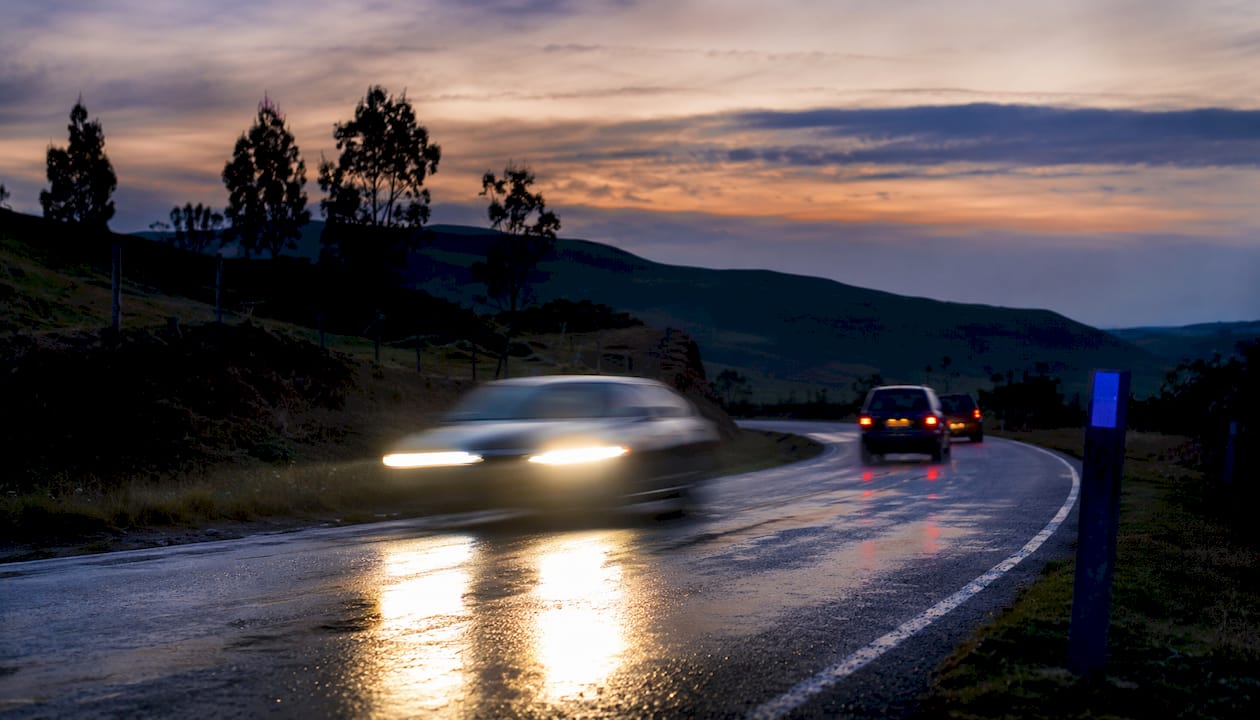
Higher speeds reduce reaction time and dramatically increase crash severity. A vehicle traveling at 65 mph needs roughly twice the stopping distance of one at 45 mph, and the energy transferred in a collision increases with the square of speed. That physics is why speeding crashes so often prove fatal rather than merely injurious.
Pro Tip: On wet or icy roads, reduce your speed well below the posted limit. The posted limit reflects ideal dry conditions, not the reduced traction of a rain-slicked highway.
4. Alcohol-impaired driving examples and statistics
Alcohol-impaired driving accounted for 30% of all 2024 traffic fatalities, with 11,904 deaths in crashes where at least one driver had a BAC of 0.08 g/dL or higher. Of those 11,904 deaths, 61% were the impaired drivers themselves. The remaining victims were passengers, occupants of other vehicles, and pedestrians who had done nothing wrong.
The numbers get sharper when you look at BAC levels. Among drivers with any alcohol in their systems in fatal crashes, 68% of those fatalities involved drivers with a BAC of 0.15 g/dL or higher, nearly double the legal limit. Alcohol-impaired driving fatalities were also three times more likely to occur at night than during the day. Families who lose someone to a drunk driver often have grounds for a wrongful death claim in addition to any criminal proceedings.
5. How reckless and aggressive driving leads to fatal crashes
Reckless driving takes many forms, but all of them share one trait: a conscious disregard for the safety of others. Road rage incidents, high-speed weaving through traffic, and running red lights are among the most common examples of this type of deadly behavior.
Behaviors that frequently cause fatal crashes:
- Tailgating: following too closely eliminates stopping distance entirely
- Weaving through traffic: unpredictable lane changes at speed
- Running red lights or stop signs: a leading cause of intersection fatalities
- Road rage: aggressive confrontations that escalate to dangerous maneuvers
- Illegal passing: passing on curves or hills with no sight distance
Aggressive driving often escalates quickly. A driver who starts by tailgating may follow up with a sudden lane change that clips another vehicle, sending it into a barrier or oncoming traffic. The crash that results looks like a single event, but the chain of reckless choices that caused it stretches back much further.
6. Adverse weather and poor road conditions as fatal accident factors
Weather does not cause crashes on its own. Driver behavior in poor conditions is the primary factor, but adverse weather like ice or road debris consistently appears as a contributing element in fatal crash data. The combination of a slick road and a driver who has not adjusted speed or following distance is where fatalities happen.
Conditions that elevate fatal crash risk:
- Ice and snow: dramatically reduced traction and braking ability
- Heavy rain: hydroplaning risk and reduced visibility
- Dense fog: near-zero visibility at highway speeds
- Road debris: tire blowouts or sudden swerving
- Poor lighting: unlit rural roads at night, missing streetlights
Drivers who treat a rain-soaked highway the same as a dry one are making a decision that can prove fatal. The posted speed limit does not account for a road surface that offers a fraction of normal grip.
7. Failure to obey traffic laws and common driver errors
Traffic law violations are among the most direct examples of fatal accident causes because they remove the structured rules that keep vehicles moving safely around each other. Failure to yield at intersections, running stop signs, and improper lane changes each create collision scenarios where impact is nearly unavoidable.
Common violations that lead to fatal crashes:
- Failure to yield: the leading cause of many intersection and pedestrian fatalities
- Running stop signs: particularly deadly on rural roads with high-speed approaches
- Improper lane changes: cutting off vehicles without checking blind spots
- Wrong-way driving: often linked to impairment, causes head-on collisions
- Pedestrian and bicycle failures: drivers not yielding to crosswalk users
Pedestrians and cyclists are especially vulnerable when drivers ignore right-of-way laws. A vehicle striking a pedestrian at even moderate speed carries a high probability of a fatal outcome.
8. How to prevent fatal accidents: key safety practices for drivers
Prevention starts with the behaviors that show up most consistently in fatal crash data. Addressing them directly cuts risk across nearly every cause category.
Proven practices that reduce fatal crash risk:
- Always wear a seat belt. Among fatally injured occupants in 2024, only about 46% were buckled, despite 91.2% national seat belt use.
- Never drive above the posted speed limit or too fast for current conditions
- Put the phone away completely, not just on silent
- Never drive after drinking or using impairing substances
- Pull over and rest when drowsy; caffeine is not a substitute for sleep
- Maintain a safe following distance, especially in poor weather
- Obey all traffic signals and yield laws
Pro Tip: If you feel drowsy behind the wheel, the only safe fix is to stop driving. Find a rest stop, a parking lot, or a safe shoulder and sleep for at least 20 minutes before continuing.
9. Recent statistical insights on fatal accident causes from 2024 data
The downward trend in U.S. traffic fatalities is real and meaningful. Thirteen consecutive quarterly declines in fatalities were recorded through mid-2025, following the sharp increases of the COVID-19 period. NHTSA projects an estimated 36,640 deaths for full-year 2025, a 6.7% decrease from 2024’s 39,254, which would bring totals back to pre-pandemic levels.
Alcohol-impaired driving remains the single most persistent behavioral risk, accounting for 30% of all 2024 fatalities. Speeding accounted for 29% of all crash deaths. Seat belt non-use among fatally injured occupants, at roughly 46%, stands in stark contrast to the 91.2% national usage rate, pointing to a concentrated risk among the unrestrained. These figures reflect where continued intervention opportunities remain strongest.
10. Swerving, avoiding hazards, and veering into another lane
Sudden swerving to avoid a road hazard or another vehicle is a frequent trigger for fatal single-vehicle and multi-vehicle crashes. When a driver jerks the wheel sharply to avoid a deer, debris, or a vehicle that has drifted into their lane, the resulting trajectory often sends the vehicle off the road, into a barrier, or directly into oncoming traffic.
The danger compounds on highways where speeds are high and guardrails are absent. A driver who swerves successfully to avoid one hazard may cross the center line and strike an oncoming vehicle head-on, trading one risk for a far more lethal one.
11. Overcorrecting after a swerve or skid
Overcorrecting is what happens when a driver reacts too aggressively after an initial swerve or skid. The vehicle begins to slide or drift, the driver steers hard in the opposite direction, and the overcorrection sends the vehicle into a spin or a rollover. Rollovers are among the most lethal crash types, particularly for unrestrained occupants.
This pattern appears frequently in single-vehicle fatal crashes on rural roads, where the combination of high speed, limited barriers, and a driver who panics creates the conditions for a fatal outcome. Staying calm and making small, controlled steering inputs is the correct response to a skid, but it requires practice and awareness that most drivers never develop.
12. Careless driving and its role in fatal crashes
Careless driving differs from reckless driving in degree but not in consequence. Where reckless driving involves deliberate disregard for safety, careless driving reflects inattention or poor judgment without necessarily any intent to harm. Failing to check mirrors before merging, misjudging a gap in traffic, or accelerating through a yellow light are all examples of careless behavior that can prove fatal.
The legal distinction matters in personal injury and wrongful death cases, where establishing the degree of negligence directly affects liability. Careless driving is still negligence, and victims of crashes caused by inattentive drivers have the same right to pursue compensation as those harmed by more obviously reckless behavior.
13. Why motorcycle crashes carry a higher fatality risk
Motorcyclists face a disproportionately high fatality risk compared to passenger vehicle occupants. The absence of a protective frame, airbags, and crumple zones means that even a moderate-speed impact can be fatal. Helmet use is the single most effective protective factor, yet a significant share of fatally injured riders are found without one.
Common motorcycle-specific fatal accident causes include:
- Left-turn crashes: a car turning left across a motorcycle’s path is one of the most common fatal scenarios
- Lane splitting at speed: moving between lanes of traffic at high speed reduces reaction time for both parties
- Road surface hazards: gravel, sand, and wet paint markings cause loss of traction that a car would handle easily
- Visibility failures: motorcycles are harder for other drivers to see, especially at intersections and in blind spots
14. Intersection-related fatal accidents
Intersections concentrate conflicting traffic movements into a single point, making them among the most dangerous locations on any road network. Failure to yield, running red lights, and misjudging vehicle speeds are the behaviors that most frequently produce fatal intersection crashes.
Left turns are particularly dangerous because the turning driver must judge the speed and distance of oncoming vehicles while also watching for pedestrians and cyclists. A miscalculation of just a few miles per hour can result in a broadside collision at full speed. Understanding Georgia’s fault rules matters when determining liability after an intersection crash.
15. Vehicle defects and mechanical failures
Mechanical failures account for a smaller share of fatal crashes than driver behavior, but they are not rare. Brake failures, tire blowouts, steering malfunctions, and defective safety systems can each cause a driver to lose control with no warning. When a defect is traced to a manufacturer or a repair shop, the crash may give rise to a product liability or negligence claim separate from any driver fault.
Tire blowouts at highway speed are particularly dangerous because the sudden loss of pressure pulls the vehicle sharply to one side. Drivers who have not maintained proper tire pressure or who are running worn tires face a meaningfully higher risk of a blowout-related crash.
16. Alcohol and drug influence beyond the moment of driving
Substance impairment does not end when a crash occurs. Alcohol and drugs in a driver’s system affect how emergency responders assess injuries, how victims behave at the scene, and how legal liability is ultimately assigned. An impaired driver who survives a crash may attempt to flee, interfere with first responders, or make statements that complicate the legal process for victims.
Drug impairment, including prescription medications and marijuana, increasingly appears alongside alcohol in fatal crash toxicology reports. Speeding-related crashes often involve poly-substance use, where alcohol is combined with other drugs in ways that compound impairment far beyond what either substance would cause alone. For families navigating the aftermath, understanding the full picture of impairment is critical to building a strong legal case.
Have you lost someone in a preventable crash?
When a fatal accident results from someone else’s negligence, whether that is a drunk driver, a reckless speeder, or a distracted motorist, families deserve answers and accountability. Jewkesfirm has fiercely protected the rights of accident victims and their families across South Atlanta and surrounding Georgia counties, recovering millions for those who trusted us with their most difficult cases.
You pay nothing unless we win. Call Jewkesfirm today for a FREE CONSULTATION and let us put our experience to work for you.
Get your free case review or learn more about legal steps after an accident to protect your rights from day one.
Key Takeaways
Alcohol-impaired driving, speeding, and distracted driving together account for the majority of the 39,254 traffic fatalities recorded in the United States in 2024, and all three are preventable with consistent behavioral choices.
| Point | Details |
|---|---|
| Alcohol impairment dominates | Alcohol-impaired driving caused 30% of all 2024 traffic fatalities, totaling 11,904 deaths. |
| Speeding kills at every speed | Speeding-related crashes claimed 11,288 lives in 2024, representing 29% of all traffic deaths. |
| Seat belts save lives | About 46% of fatally injured occupants in 2024 were wearing a seat belt, despite over 90% national usage. |
| Fatalities are declining | Thirteen consecutive quarterly declines through mid-2025 show prevention efforts are working. |
| Driver behavior is the root cause | Distraction, fatigue, and impairment are the primary causes of fatal crashes, not road or vehicle conditions. |