A car accident can turn your life upside down in seconds. The shock, the confusion, the physical pain — it all hits at once. But what happens in the hours and days after the crash can be just as critical as the crash itself. Mistakes made early, like admitting fault, missing medical appointments, or accepting a quick settlement, can cost you thousands of dollars and weaken your legal position. This guide walks South Atlanta drivers through every essential step to take after a collision, so you can protect your health, your rights, and your financial recovery.
Table of Contents
- Assess injuries and ensure safety first
- Document the accident scene and gather evidence
- Notify insurance and manage communication carefully
- Consult a qualified attorney before finalizing decisions
- Verify your claim progress and prioritize recovery
- Our perspective: Why every detail matters after an accident
- Need legal support? Connect with The Jewkes Firm today
- Frequently asked questions
Key Takeaways
| Point | Details |
|---|---|
| Safety is the first step | Check for injuries and move to a safe spot before doing anything else. |
| Document everything | Photos and notes power your claim and legal protection after a car accident. |
| Report insurers factually | Give only factual information to your insurer and avoid early statements to the other party. |
| Seek expert legal help | Consulting a lawyer early boosts your chances for a fair settlement in Georgia. |
| Track your recovery | Stay organized and follow up consistently with your claim and your health providers. |
Assess injuries and ensure safety first
Your first priority after any accident is safety. Before you think about insurance or legal steps, check yourself and every other person involved for injuries. Even if you feel fine, adrenaline can mask pain. Injuries like whiplash or internal trauma may not show symptoms right away.
Call 911 immediately if anyone appears injured or if there is significant vehicle damage. Emergency responders will document the scene and connect injured parties with medical care. A police report created at the scene also becomes a key piece of evidence later.
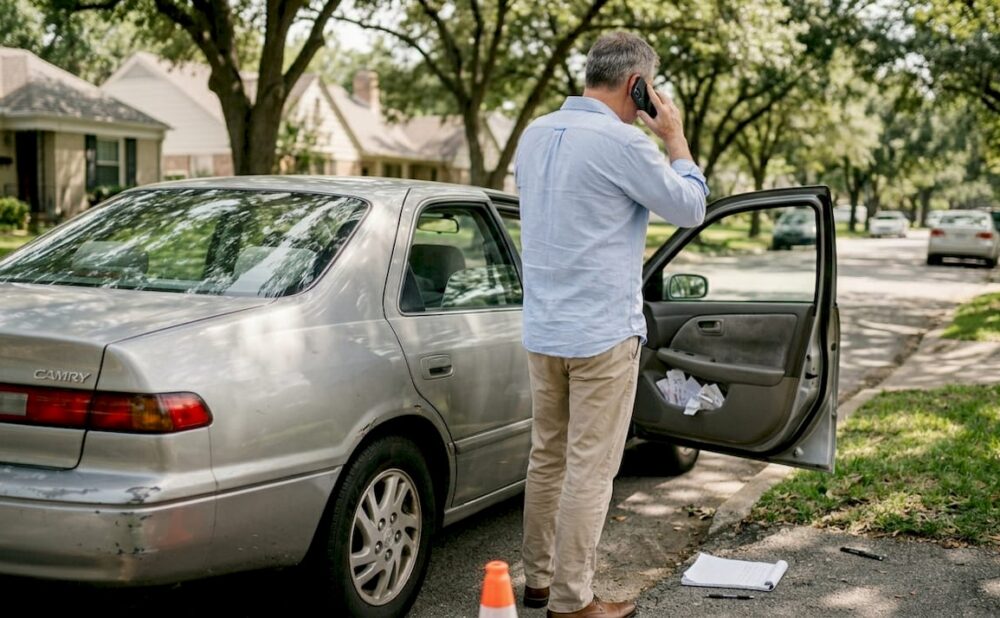
If the vehicles are driveable and it is safe to do so, move them to the shoulder or a nearby parking lot. This reduces the risk of a secondary collision. However, do not leave the scene entirely. Leaving the scene of an accident in Georgia can result in criminal charges, regardless of fault.
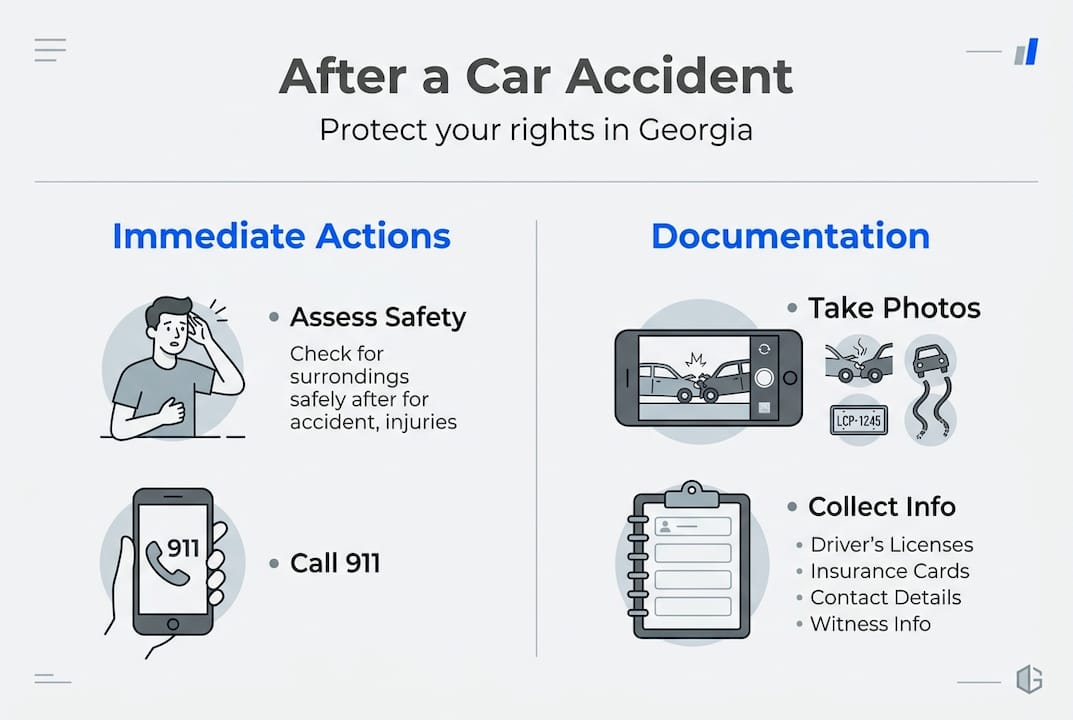
Here are the immediate actions to take:
- Turn on your hazard lights as soon as the vehicle stops
- Check for injuries to yourself, passengers, and others involved
- Call 911 for medical help or if damage is significant
- Move to a safe location but stay at the scene
- Use cones, flares, or warning triangles if available to alert other drivers
- Do not admit fault or make statements about what happened
“Stay calm and focus on well-being first. Your health is the foundation of your entire claim. Without documented injuries and timely medical care, insurers will question whether the accident truly caused your harm.”
The vehicle safety guidance from the National Highway Traffic Safety Administration reinforces that staying composed and securing the scene immediately reduces both injury risk and legal complications. Once immediate safety steps are taken, it is crucial to document what has occurred.
Document the accident scene and gather evidence
Evidence collected at the scene can make or break your claim. Insurers and attorneys rely heavily on documentation to determine fault and calculate damages. The more thorough you are, the stronger your position.
Here is a step-by-step approach to documenting the scene:
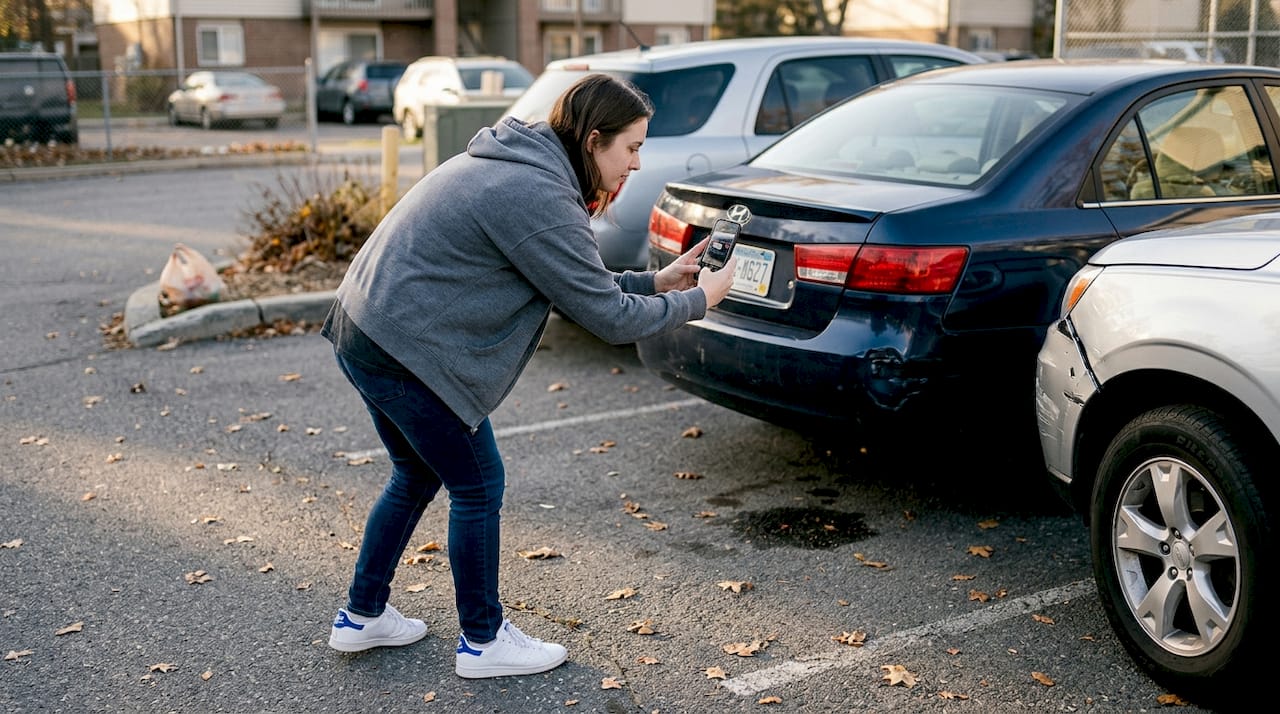
- Photograph every vehicle from multiple angles, including all sides and license plates
- Take wide-angle shots of the full scene, including road markings, traffic signals, and skid marks
- Capture any visible injuries on yourself or others
- Note the date, time, exact location, weather conditions, and road surface
- Exchange contact and insurance information with all drivers involved
- Collect names and phone numbers from any witnesses nearby
- Ask the responding officer for the police report number or a copy of the report
Pro Tip: Use your smartphone’s timestamp feature when taking photos. This creates an automatic record of exactly when each image was captured, which can support your timeline during a claim dispute.
The table below shows what information to gather and why it matters:
| Information to collect | Why it matters |
|---|---|
| Photos of all vehicles | Establishes damage and point of impact |
| Witness contact info | Provides independent accounts of the crash |
| Police report number | Official record used by insurers and courts |
| Weather and road conditions | Supports or challenges fault determinations |
| Other driver’s insurance details | Required to file a claim with their insurer |
Understanding handling accident claims in Georgia will help you see exactly how this evidence is used in the claims process. The collision insurance procedures outlined by AAA also highlight how documentation directly affects claim outcomes. With evidence secured, the next step is to report the accident to the right parties and safeguard your legal position.
Notify insurance and manage communication carefully
Georgia is an at-fault state. That means the driver who caused the accident is responsible for damages, and claims are typically filed with that driver’s insurance company. Knowing this shapes how you communicate after a crash.
Notify your own insurer promptly with strictly factual details. Stick to the basics: when, where, and what happened. Report to your insurer soon and avoid fault discussions, recorded statements to the other party’s insurer, and early settlements that may not cover your full damages.
Here is what to do and what to avoid:
- Do report the accident to your insurer within 24 to 48 hours
- Do provide factual details only, without speculation
- Do not admit fault or apologize, even casually
- Do not give a recorded statement to the other driver’s insurer
- Do not accept any settlement offer before consulting a lawyer
Pro Tip: If the other party’s insurer calls you, it is perfectly acceptable to tell them you are represented by an attorney or that you need time before speaking with them. You are not required to engage immediately.
The comparison below shows how communication choices affect your claim:
| Communication approach | Potential outcome |
|---|---|
| Factual report to your insurer | Protects your claim and keeps options open |
| Recorded statement to other insurer | Can be used against you to reduce payout |
| Early settlement acceptance | May not cover future medical costs |
| Legal consultation before decisions | Maximizes your recovery potential |
Georgia’s 50% fault rule means that if you are found 50% or more at fault, you cannot recover damages. This makes careful communication critical. Reviewing claim examples in South Atlanta shows how quickly communication mistakes can reduce or eliminate compensation. Now that claims are initiated, it is essential to protect your rights and maximize your potential recovery.
Consult a qualified attorney before finalizing decisions
One of the most important steps you can take after an accident is speaking with a qualified attorney before you sign anything or make major decisions. Many accident victims do not realize how much legal guidance can change their outcome.
Research consistently shows that accident victims who work with attorneys tend to receive significantly higher settlements than those who handle claims alone. Legal advice after an accident can be the single biggest factor in your financial recovery.
Here is what an attorney can do for you:
- Review your case and identify all potential sources of compensation
- Handle communications with insurers on your behalf
- Prevent you from making statements that could hurt your claim
- Negotiate aggressively for a fair settlement
- File a lawsuit if the insurer refuses to offer fair compensation
“The collision insurance process can be complex. Some advisors say notify your own insurer first; others warn you to limit details. The consensus is clear: provide a factual report only, and consult a lawyer before engaging with the other driver’s insurer.”
Pro Tip: Most personal injury attorneys, including those at The Jewkes Firm, work on a contingency fee basis. You pay nothing unless they win your case. There is no financial risk in scheduling a consultation.
The benefits of hiring a lawyer after an accident go well beyond paperwork. Attorneys understand Georgia statutes, insurance tactics, and how to build a case that holds up. A free legal consultation costs you nothing and could protect everything. After securing legal guidance, confirm all actions and expectations for your recovery ahead.
Verify your claim progress and prioritize recovery
Once your claim is filed and you have legal support in place, your job is to stay organized and focused on healing. Claims do not resolve overnight. Staying proactive protects both your health and your case.
Follow these steps to keep your claim on track:
- Follow up with your insurer and attorney on a regular schedule, at least every two weeks
- Keep a written log of every phone call, email, and conversation related to your claim
- Store all medical records, bills, receipts, and correspondence in one dedicated folder
- Attend every scheduled medical appointment and follow all treatment plans
- Notify your employer if your injuries affect your ability to work, and document any lost wages
“Missing a single medical appointment can give insurers reason to argue that your injuries were not serious. Consistency in treatment is not just good for your health — it is essential for your claim.”
Patience is part of the process. Some claims resolve in weeks; others take months, especially if liability is disputed or injuries are severe. Understanding how to file an injury lawsuit in Georgia can help you prepare for what comes next if a settlement is not reached. Knowing the full scope of a personal injury claim in Georgia also sets realistic expectations for your timeline and recovery. Having walked through all the necessary steps, let’s add some hard-won wisdom.
Our perspective: Why every detail matters after an accident
After years of working with accident victims across South Atlanta, we have seen one pattern repeat itself: the cases that struggle are rarely lost because of the accident itself. They are lost because of what happened afterward.
An offhand comment to an adjuster. A missed follow-up appointment. A receipt thrown away. These small oversights carry real financial consequences. Insurers are trained to find gaps in your story, and even minor inconsistencies give them leverage to reduce your payout.
The biggest factor in successful claims is not the severity of the crash. It is diligence. Clients who document everything, follow their treatment plans, and consult an attorney early consistently see better outcomes. The oversights after crashes that seem minor in the moment can become major obstacles months later.
Empowerment comes from paying attention to all the details, not just the obvious ones. Every receipt, every phone call, every medical note is a piece of your case. Treat it that way.
Need legal support? Connect with The Jewkes Firm today
If you have been in a car accident in South Atlanta or anywhere in Georgia, you do not have to navigate this process alone. The right legal support can mean the difference between a fair settlement and a denied claim.
The Georgia personal injury lawyers at The Jewkes Firm specialize in auto accident claims and have helped clients across South Atlanta recover the compensation they deserve. We work on a contingency fee basis, meaning you pay nothing unless we win. Do not wait until a deadline passes or an insurer pressures you into a bad decision. Schedule a free consultation today and let us protect your rights from day one. Your recovery starts with one call.
Frequently asked questions
When must I report an accident to my insurer in Georgia?
You should notify your insurer as soon as possible after an accident, ideally within 24 to 48 hours, to avoid jeopardizing your coverage.
Should I talk to the other driver’s insurance company?
Do not speak with the other party’s insurer before getting legal advice, as even a casual comment can be used to reduce your claim value.
Is Georgia an at-fault state for car accidents?
Yes, Georgia follows an at-fault system, meaning the at-fault driver’s insurance is typically responsible for covering the other party’s damages.
What if I discover injuries days after the accident?
Seek medical attention immediately and inform your insurer. Delayed injury symptoms are common after accidents and are still covered in most Georgia claims.
How can a lawyer help after an accident in South Atlanta?
A qualified attorney can manage insurer communications, protect you from harmful statements, and help maximize your settlement under Georgia personal injury law.