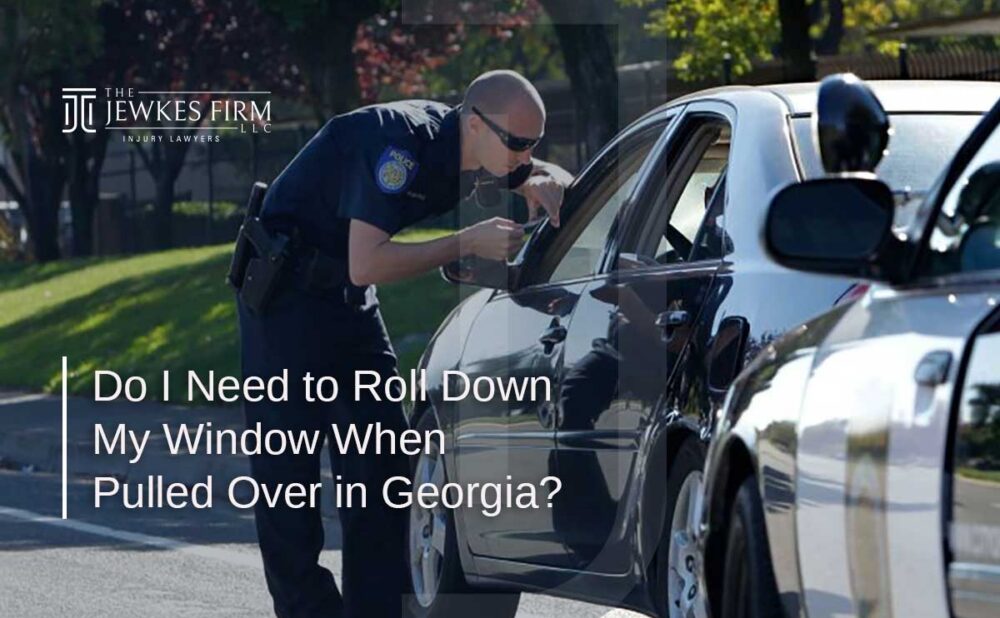
Do I Need to Roll Down My Window When Pulled Over in Georgia?
Being pulled over by law enforcement can be stressful — even more so if you’re unsure of what the law actually requires. One of the most common questions is whether you need to roll down your window when pulled over. The short answer is that Georgia has no legal statute explicitly requiring you to roll down your window all the way, but how you handle that window can matter a lot during the stop. Understanding your rights and obligations during these encounters is crucial, especially if you want to avoid escalating the situation unnecessarily.
At The Jewkes Law Firm, led by Attorney Jordan Jewkes, we empower Georgia drivers with clear, practical legal information. Here’s what you need to know about window compliance during traffic stops in Georgia.
Injured During A Traffic Stop? Contact Us For A Free Consultation
Injured During A Traffic Stop?
The Legal Requirement to Roll Down Your Window in Georgia
In Georgia, there is no specific state law that explicitly requires drivers to roll down their windows during a traffic stop. However, law enforcement officers generally have the authority to request that you roll down your window.
The courts have consistently permitted officers to require drivers to lower their windows to conduct a lawful investigation. This is primarily because:
- Rolling down the window facilitates communication.
- It allows the officer to perform a standard traffic stop — including checking licenses, registration, and conducting sobriety tests.
- It is necessary for officer safety and assessment of the situation inside the vehicle.
If you refuse to roll down your window when requested, the officer may consider that refusal suspicious behavior, potentially elevating the situation or justifying further actions such as ordering you out of the vehicle. This can increase the likelihood of:
- A longer detention.
- The officer ordering you out of the vehicle.
- Potential use of force or other legal actions.
In extreme cases, officers may force entry or take more assertive actions if they believe there’s a safety threat — though this is rare and depends on the full context of the stop.
Why Rolling Down the Window Matters — Even If It’s Not “Required” by Law
Communication is Essential
An officer approaching your vehicle needs to communicate with you — for safety, efficiency, and clarity. Lowering the window enough to talk and to provide documents helps facilitate that conversation.
Some courts have examined situations where police officers requested that individuals lower a window to help determine whether those individuals were fully “stopped” or detained under the Fourth Amendment.
Refusing Can Lead to Escalation
While you might think keeping the window up shows you’re protecting yourself, officers can interpret refusing or delaying lowering your window when requested as non-compliance with a lawful order. This can prompt officers to:
- Ask you to exit the vehicle
- Conduct a more invasive search
- Or, in some cases, arrest you for obstruction of justice.
Georgia courts and law enforcement generally view rolling the window down “enough to see and communicate” as reasonable compliance.
Practical Safety Considerations
Leaving your window completely closed may appear as suspicious or uncooperative, even though technically not illegal. For the safety of both parties, most traffic‑stop guidance suggests lowering your window to a level where you can hand documents through without being asked repeatedly.
Need a Free Consultation? Need a Skilled Attorney?
Free Consultation
Call (770) 771-5130
If you’ve been injured, you need to hire the best legal care to assist you with your claim. Get a FREE consultation today!
Practical Advice — What Should You Do?
While it is not illegal to keep your window rolled up, the safest and most cooperative approach during a traffic stop is to lower your window respectfully when asked. Here are some additional tips:
- Stay Calm and Polite. Answer questions calmly and follow the officer’s instructions without sudden movements.
- Roll Down the Window Enough to Communicate. If you feel uncomfortable lowering the entire window (for example, on a cold night), you can roll it down just enough to speak and hand over documents.
- Know Your Rights but Avoid Escalation. You have the right to remain silent and not consent to searches; however, refusal to lower your window when requested may lead to further detainment or escalation.
- Document the Encounter. If you believe the officer is violating your rights, try to remember details or safely record the encounter if possible.
Following these steps can protect your legal rights while also keeping the encounter safe.
Your Rights During the Stop
It’s also important to know that you have rights during a traffic stop including:
- The right to remain silent beyond providing required documents
- The right to refuse a search if the officer lacks probable cause
- The right to request an attorney if the encounter escalates
Even if an officer suggests or requests you roll down your window all the way, that isn’t itself a lawful basis to search your vehicle without consent or probable cause. If an officer later tries to use statements or actions against you, preserving your rights and consulting an attorney early is key.

GEORGIA PERSONAL INJURY LAWYER NEAR ME
jewkesfirm is Here to Protect Your Rights
Georgia law does not explicitly require a driver to roll down their window all the way during a traffic stop. However, because officers must receive your documents and communicate with you, lowering your window enough to do so is strongly recommended to avoid unnecessary conflict or escalation.
At jewkesfirm, LLC, Attorney Jordan Jewkes understands how quickly a routine traffic stop can turn complicated. If you are charged or injured during a traffic stop—whether related to excessive force, unlawful search, or other violations—we are ready to stand by your side.
We provide experienced, compassionate legal representation to help you navigate the complexities of Georgia traffic laws. Your rights matter, and protecting them starts with knowing them. For personalized advice and strong advocacy, contact jewkesfirm Injury Lawyers today at (770) 771-5130.
Frequently Asked Questions
Do I have to roll down my window during a traffic stop in Georgia?
No, Georgia law does not specifically require you to roll your window all the way down during a traffic stop. However, it’s important to lower your window enough to communicate with the officer and provide necessary documents like your driver’s license, registration, and insurance. Refusing can lead to further action by the officer.
What happens if I refuse to roll down my window during a traffic stop?
Refusing or delaying compliance can lead to an escalation of the situation. Officers may ask you to exit the vehicle or even conduct a more invasive search. To avoid unnecessary complications, it's recommended to lower the window enough to comply with the officer’s request.
Can I just crack my window slightly during a traffic stop?
Yes, a small crack in the window is typically enough for an officer to see and communicate with you. However, it’s important to remember that being cooperative and following the officer’s reasonable requests will help ensure the stop goes smoothly.
What should I do if a police officer asks me to roll down my window?
It’s best to comply politely and roll the window down enough to communicate clearly. This helps keep the stop calm and reduces the chance of escalation.
Can I record a traffic stop if I feel an officer is violating my rights?
Yes, in Georgia you can record police encounters as long as you do not interfere with the officer’s duties. Recording can help document any misconduct.
What should I do if I’m wrongly charged or injured during a traffic stop?
Contact a qualified personal injury or criminal defense attorney immediately. At jewkesfirm, Attorney Jordan Jewkes offers aggressive and compassionate representation to protect your rights.
What are my rights during a traffic stop in Georgia?
You have the right to remain silent, to refuse a search without a warrant or probable cause, and to ask if you are free to leave. Cooperation during the stop can improve safety for all parties.
Can an officer search my car without my consent?
An officer cannot search your vehicle without your consent unless they have probable cause. If an officer requests to search your vehicle, you have the right to refuse. It’s important to assert your rights calmly and respectfully.