
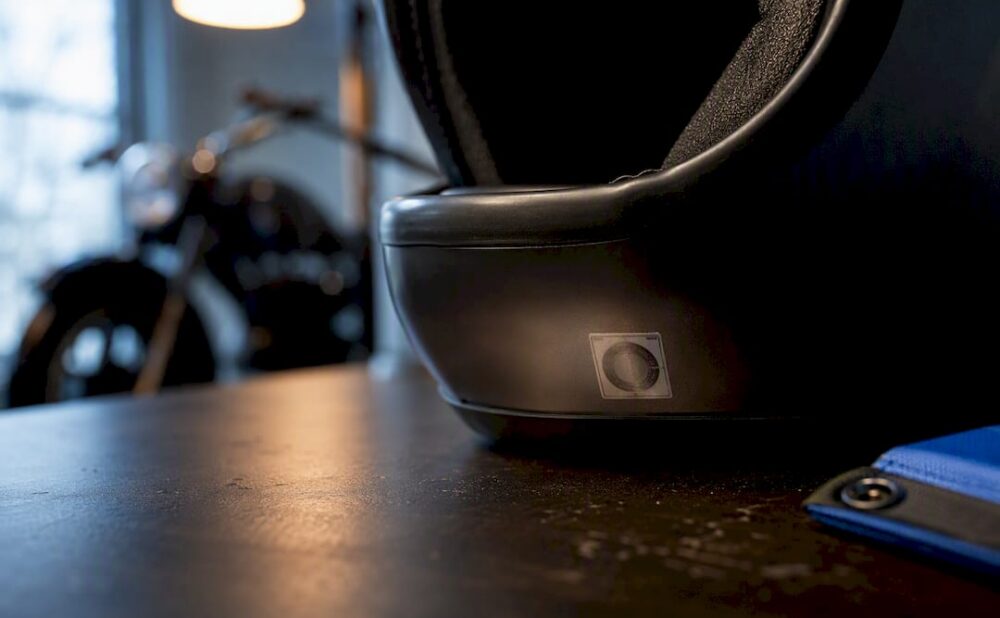
Yes, Georgia law requires every motorcycle operator and passenger to wear protective headgear that meets the federal helmet standard, FMVSS No. 218. This universal helmet law applies regardless of age or riding experience. Riders on motorcycles without a windshield also need approved eye protection. Skip either requirement, and you’re not just risking a citation. You could be handing an insurance company ammunition to reduce or deny your injury claim.
Key Takeaways
- All motorcycle riders and passengers in Georgia must wear helmets that meet the federal FMVSS No. 218 standard, regardless of age or experience.
- Helmets must have a permanent label confirming compliance with federal safety standards; stickers alone are not enough.
- If a motorcycle has no windshield, riders are also required to wear impact-rated eye protection, such as goggles or helmet-attached shields.
- Helmet violations can influence fault in injury claims, and riding without a compliant helmet may lead to reduced compensation after a crash.
- Proper helmet fitting and replacing helmets after a crash are crucial for safety and legal protection in injury cases.
Table of Contents
- What the Georgia Statute Requires Under O.C.G.A. § 40-6-315
- Who Has to Wear a Helmet, and Who’s Exempt
- What Actually Counts as a Compliant Helmet
- Eye Protection and the Windshield Rule
- Penalties and How Helmet Compliance Affects Injury Claims
- Choosing and Fitting a Helmet That Actually Protects You
- Jewkes Firm Perspective: Preserving Evidence After a Crash
- How Jewkes Firm Helps Injured Georgia Riders
- Sources
What the Georgia Statute Requires Under O.C.G.A. § 40-6-315
Georgia’s helmet mandate comes from a single, specific statute: O.C.G.A. § 40-6-315. The law states plainly that no one may operate or ride a motorcycle unless wearing protective headgear that complies with standards set by the commissioner of public safety. That’s the legal foundation behind every helmet checkpoint and every insurance dispute involving a Georgia motorcycle crash.
The statute doesn’t just say “wear a helmet” and leave it at that. It hands the commissioner of public safety the authority to define, approve, and publish official lists of qualifying protective equipment. That authority is what connects state law to the federal safety standard riders actually have to meet.
A few things to keep straight about the statute itself:
- It covers both operators and passengers, with no separate rule for either.
- It applies statewide, on every public road, at every posted speed.
- It gives the commissioner rulemaking power rather than fixing rigid technical specs directly in the code.
- It works in tandem with a separate eye-protection requirement, covered further below.
You can read the full statutory text through Justia’s Georgia Code database, which is where most Georgia attorneys pull the exact language during litigation.
Who Has to Wear a Helmet, and Who’s Exempt
Georgia’s motorcycle helmet requirement is about as close to universal as state law gets. There’s no age exception, no “experienced rider” carve-out, and no distance-based threshold. If you’re operating or riding on a motorcycle on a Georgia road, the helmet requirement applies to you the same way it applies to a first-time rider on a cul-de-sac.
The exemptions that do exist are narrow and specific:
- Motorcycles with a fully enclosed cab, since the vehicle itself provides the head protection the statute is after.
- Three-wheeled motorcycles used exclusively for agricultural purposes, a carve-out aimed at farm equipment rather than street riding.
That’s the entire exemption list. There’s no exception for short trips, low speeds, or riding through a residential neighborhood. A common myth among newer riders is that helmet laws loosen up once you’ve held a motorcycle endorsement for a certain number of years. Georgia’s statute makes no such distinction, and that misunderstanding has cost more than one rider a citation.
What Actually Counts as a Compliant Helmet
Wearing “a helmet” and wearing a compliant helmet are two different things under Georgia law. The state doesn’t invent its own technical helmet spec. Instead, Ga. Comp. R. & Regs. R. 570-13-.02 adopts the federal motorcycle helmet standard, FMVSS No. 218 (49 C.F.R. § 571.218), directly by reference. Meet the federal standard, and you meet the state requirement.
Pro Tip: Check the permanent label glued or stitched inside the helmet, not a sticker on the outside shell. Stickers peel off and get swapped between helmets; the interior label doesn’t.
Here’s how to verify a helmet on the spot:
- Look for a permanent interior label listing the manufacturer’s name, model designation, and the phrase “DOT, FMVSS No. 218, CERTIFIED.”
- Check the shell for cracks, deep scratches, or soft spots, especially near the chin bar.
- Confirm the helmet hasn’t been in a prior crash. Impact-rated foam liners compress permanently and don’t reset.
- Cross-reference the model against NHTSA’s guidance on identifying counterfeit or noncompliant helmets if anything looks off.
NHTSA’s own safety research documents how much helmets reduce the severity of head injuries in a crash, which is the entire reason the federal standard exists in the first place. A helmet with a fake sticker offers none of that protection, no matter how convincing it looks on a shelf.
Eye Protection and the Windshield Rule
Georgia’s statute doesn’t stop at your head. If your motorcycle has no windshield, you’re also required to wear approved eye protection, and this rule catches riders on stripped-down cruisers and custom builds more often than most people expect.
Acceptable options include:
- A face shield attached directly to the helmet.
- Riding goggles rated for impact protection.
- Prescription or sunglasses generally do not satisfy the requirement on their own.
Goggles and shields have real tradeoffs. Scratched lenses distort vision in bright sun, and heavily tinted shields become a liability riding at dusk or after dark.
Pro Tip: A full-face helmet solves both requirements at once. The shield satisfies the eye-protection rule and the shell satisfies the headgear standard, which is why Georgia DDS guidance points new riders toward full-face designs first.
Penalties and How Helmet Compliance Affects Injury Claims
A helmet violation in Georgia is typically enforced as a traffic citation, similar to other equipment infractions, and the Georgia Department of Driver Services maintains the rules and licensing framework that governs how these violations get recorded. The fine itself is rarely the biggest concern for injured riders. What matters far more is what happens after a crash.
Georgia follows a modified comparative-fault system, and helmet noncompliance can become part of that fault calculation. If you were riding without a compliant helmet, or wearing one that didn’t meet the FMVSS No. 218 standard, an insurance adjuster or defense attorney may argue your injuries were worse because of it. That argument can chip away at your settlement even when the other driver caused the wreck. Georgia’s own 50 percent comparative fault rule determines how much your compensation shrinks if you’re found partially responsible.
The burden generally falls on the rider to show helmet compliance, meaning an undamaged helmet with an intact certification label can matter as much as the crash report itself.
If you’re involved in a motorcycle crash, take these steps quickly:
- Get medical care immediately, even if injuries seem minor at first.
- Photograph the scene, your helmet, and the interior certification label before anything gets thrown away.
- Keep the helmet itself. Don’t clean it, repair it, or discard it.
- Request copies of your medical records as soon as they’re available.
- Talk to an attorney before giving a recorded statement to any insurance company.
Choosing and Fitting a Helmet That Actually Protects You
Meeting the legal standard and actually being protected in a crash aren’t always the same thing, which is why fit matters as much as the DOT label. Full-face helmets provide the most head and eye protection since they cover the chin and jaw. Three-quarter helmets protect less of the face but offer better peripheral awareness in slow city traffic. Half helmets satisfy the bare legal minimum but leave the face and jaw exposed.
A properly fitted helmet should pass these checks:
- Cheek pads should press firmly against your face with no gap when you open your jaw.
- There should be no pressure points or gaps at the temples when you shake your head side to side.
- The chin strap should sit snugly enough that you can fit only one or two fingers underneath it.
- The helmet shouldn’t shift or rotate when you grab the back and try to roll it forward off your head.
- There should be no loose rocking at the neck roll when you nod up and down.
Pro Tip: Try on a helmet at the end of a shopping trip, not the beginning. Head swelling from trying on multiple helmets can make a snug fit feel wrong when it’s actually correct.
Replace any helmet after a crash, even a minor one, since the impact-absorbing liner doesn’t recover once compressed. Most manufacturers recommend periodic replacement regardless of visible damage, and it’s worth checking your specific model against manufacturer recall notices periodically.

The Jewkes Firm Perspective: Preserving Evidence After a Crash
Helmet condition and certification come up constantly in motorcycle injury cases. Insurers look for any reason to argue a rider’s injuries stemmed from a noncompliant or damaged helmet rather than the other driver’s negligence. That’s why the physical helmet itself often matters as much as the police report.
If you’ve been in a wreck, photograph your helmet from every angle before touching it, including the interior label. Don’t repair or discard it, no matter how tempting it is to move on. Get to a doctor promptly, since medical records created soon after a crash carry more weight than ones created weeks later. Then talk to a lawyer before you say anything to an insurance adjuster.
How The Jewkes Firm Helps Injured Georgia Riders
An experienced personal injury legal team understands how helmet evidence and Georgia’s comparative-fault rules can affect injury claims. Legal fees are often handled on a contingency basis, meaning there may be no upfront cost and payment may only be required if compensation is recovered.

Legal representation can include investigating the crash scene, evaluating helmet certification and condition, and advocating against attempts by insurers to shift blame onto the rider. Riders who seek legal advice early tend to see significantly higher settlements than those who negotiate alone. If you’re unsure what comes next after a crash, our step-by-step personal injury guide for Georgia accident victims walks through the timeline. Call Jewkes Firm today for a free consultation, or visit Jewkes Firm to get your case reviewed at no cost.
This article is general information, not a substitute for advice from a qualified lawyer. Consult a qualified legal professional about your own circumstances before acting on anything here.
Sources
- Georgia Code § 40-6-315 – Headgear and eye-protective devices for riders (Justia)
- GA R&R – GAC – Chapter 570-13 Specifications for Protective Headgear for Vehicular Users (Georgia Secretary of State rules)
- Section 3: Before You Ride | Georgia Department of Driver Services
- 49 C.F.R. § 571.218 (FMVSS No. 218) (eCFR)