
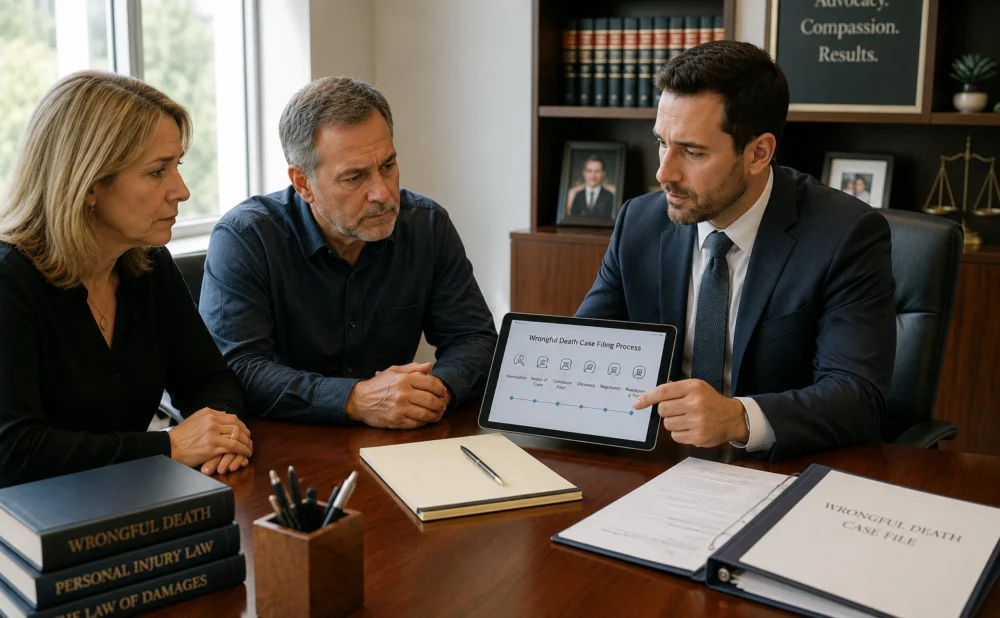
Have you recently lost a loved one and wondered what legal steps you can take if someone else’s negligence may have caused their death? During a time of grief, the idea of navigating a legal process can feel overwhelming. Families are often left dealing with emotional pain, unexpected expenses, and unanswered questions about what happened. If another person, business, or organization may be responsible for your loved one’s death, understanding how to file a wrongful death claim can help you protect your rights and pursue accountability.
At Jewkes Law Firm, we know that no legal action can replace a loved one. However, a wrongful death claim may help families recover financial compensation and obtain answers about the circumstances surrounding the loss. Understanding the process can help you determine your next steps and whether pursuing a claim is appropriate for your situation.
How to File a Wrongful Death Claim
Filing a wrongful death claim generally begins with determining whether another party’s negligence, recklessness, or wrongful conduct caused the death. In Georgia, specific family members or the representative of the deceased person’s estate may have the legal right to pursue compensation through a wrongful death claim under Georgia’s wrongful death statutes. According to Georgia law (O.C.G.A. §§ 51-4-1 through 51-4-5), the surviving spouse, children, parents, or estate representative may have standing to bring a claim depending on the circumstances.
Filing a wrongful death claim typically involves gathering evidence, obtaining medical and accident records, identifying liable parties, calculating damages, and complying with important legal deadlines. Evidence may include witness statements, medical records, accident reports, expert testimony, employment records, and financial documents. A thorough investigation is often necessary to establish liability and demonstrate the losses suffered by surviving family members.
Once sufficient evidence has been collected, a claim may be filed against the responsible party or their insurance company. Many wrongful death cases are resolved through settlement negotiations, while others proceed to litigation if a fair resolution cannot be reached. The Georgia courts recognize that wrongful death claims seek compensation for the full value of the life of the deceased person, while related estate claims may seek recovery for medical expenses, funeral costs, and other damages arising from the fatal injury.
Because wrongful death cases often involve complex legal and financial issues, working with an experienced wrongful death attorney can help ensure that evidence is preserved, damages are properly evaluated, and filing requirements are met. Taking prompt action is especially important because Georgia law generally imposes time limits on filing wrongful death lawsuits. Missing these deadlines may prevent surviving family members from pursuing compensation altogether.
Who Can File a Wrongful Death Claim in Georgia?
One of the first questions families often ask is who has the legal right to bring a wrongful death claim.
Georgia law establishes a specific order of priority.
Surviving Spouse
The surviving spouse is generally the first person entitled to file a wrongful death claim.
Children
If the deceased had children, they may share in any recovery and may have legal rights depending on the circumstances.
Parents
If there is no surviving spouse or child, the deceased person’s parents may be eligible to pursue a claim.
Estate Representative
In some situations, the personal representative of the deceased’s estate may file a claim on behalf of the beneficiaries.
Determining who has legal standing can become complicated, especially when multiple family members are involved. Consulting a wrongful death lawyer can help clarify eligibility and ensure the proper party brings the claim.
What Evidence Is Needed for a Wrongful Death Claim?
Strong evidence is one of the most important factors in a successful wrongful death case.
Common evidence may include:
- Death certificate
- Medical records
- Accident reports
- Witness statements
- Photographs and videos
- Surveillance footage
- Employment records
- Income documentation
- Expert opinions
The type of evidence needed depends on how the death occurred.
For example, a fatal car accident may require crash reports and reconstruction analysis, while a medical malpractice case may require extensive medical records and expert testimony.
Preserving evidence early can strengthen a claim and improve the chances of a favorable outcome.
Step 1: Determine Whether Negligence Caused the Death
The first step is determining whether another party’s actions contributed to the death.
Negligence occurs when a person or organization fails to exercise reasonable care under the circumstances.
Common situations that may result in wrongful death claims include:
- Car accidents
- Truck accidents
- Motorcycle accidents
- Medical malpractice
- Workplace accidents
- Nursing home negligence
- Defective products
- Dangerous property conditions
A thorough investigation can help determine whether legal liability exists.
Step 2: Gather Documentation and Evidence
Once potential negligence has been identified, it is important to gather as much information as possible.
Families should preserve:
- Medical records
- Bills and receipts
- Insurance information
- Employment records
- Accident reports
- Communications with insurers
- Photographs and videos
Organizing documentation early can make the claims process more efficient and help establish the full extent of damages.
In many cases, attorneys also work with investigators and experts to collect additional evidence.
Step 3: Calculate Damages
Calculating damages is often more complicated than families expect.
Georgia law allows recovery for various economic and financial losses resulting from a wrongful death.
Potential damages may include:
Lost Income and Benefits
Families may recover compensation for wages, retirement benefits, and other financial support the deceased would likely have provided.
Funeral and Burial Expenses
Reasonable funeral and burial costs may be recoverable.
Medical Expenses
Medical treatment received before death may result in significant expenses that may be included in certain claims.
Full Value of the Life of the Deceased
Georgia law allows recovery for the full value of the deceased person’s life from their perspective, including both economic and intangible aspects.
Properly valuing damages often requires financial analysis and expert input.
Step 4: File the Wrongful Death Claim
Once evidence has been gathered and damages have been evaluated, the claim can be formally filed.
The filing process may involve:
- Preparing legal documents
- Identifying responsible parties
- Filing within applicable deadlines
- Serving notice on defendants
- Complying with court requirements
Accuracy is critical during this stage.
Errors or missed deadlines can affect the outcome of a case and may even prevent recovery altogether.
For this reason, many families choose to work with a wrongful death attorney who understands Georgia’s legal requirements.
Step 5: Negotiate or Proceed to Trial
After a claim is filed, settlement negotiations often begin.
Insurance companies and defendants may evaluate the evidence and make settlement offers.
During negotiations, attorneys work to secure compensation that fairly reflects the family’s losses.
Factors that may affect settlement discussions include:
- Strength of liability evidence
- Amount of damages
- Insurance coverage limits
- Expert testimony
- Future financial losses
If a fair settlement cannot be reached, the case may proceed to trial.
Although many wrongful death claims settle before trial, litigation remains an important option when necessary.
How Long Do You Have to File a Wrongful Death Claim in Georgia?
Time limits are extremely important in wrongful death cases.
In Georgia, wrongful death claims generally must be filed within two years from the date of death. Certain exceptions may apply depending on the facts of the case, including circumstances involving criminal proceedings or estate administration.
Even when additional time may be available, waiting can create challenges.
Important evidence may become unavailable, witnesses may be harder to locate, and memories can fade.
Acting promptly allows families to preserve evidence and evaluate their legal options before deadlines approach.
Because every case is unique, reviewing the situation with a legal professional as soon as possible is often advisable.
Why Choose Jewkes Law Firm
At Jewkes Law Firm, we understand that families pursuing wrongful death claims are facing one of the most difficult periods of their lives.
We believe every family deserves compassionate support, clear communication, and strong legal advocacy.
When clients choose our firm, they benefit from:
- Thorough case investigations
- Personalized legal strategies
- Strong negotiation skills
- Litigation experience
- Regular communication and updates
- Commitment to protecting clients’ interests
As experienced wrongful death attorneys, we take the time to understand each family’s unique circumstances and goals.
Our team works diligently to gather evidence, identify responsible parties, and pursue the compensation families may need to move forward.
We know that no financial recovery can replace a loved one. However, our legal team is committed to helping families seek accountability, justice, and financial security during a difficult time.
Final Thoughts
Understanding how to file a wrongful death claim can help families make informed decisions after a tragic loss. While the legal process may seem overwhelming, taking the proper steps can protect important rights and improve the chances of a successful outcome.
From gathering evidence and calculating damages to filing legal documents and negotiating settlements, each stage of the process plays an important role. Acting promptly and seeking experienced legal guidance can help families pursue accountability and the compensation they may be entitled to.
Speak With Jewkes Law Firm About Your Family’s Situation
If you have lost a loved one and believe negligence may have played a role, we invite you to contact Jewkes Law Firm for a Free Consultation. Our team can review your circumstances, answer your questions, and help you understand your legal options. There is no obligation, only an opportunity to learn more about whether a wrongful death claim may be appropriate for your family.
Follow us on our social media pages below:
Learn more about personal injury law through the articles below: