

Reporting an accident promptly means notifying the proper authorities, your employer, or your insurer within the legally required window so your health, legal rights, and financial recovery stay protected. This is the single most consequential step you can take after any collision, workplace injury, or slip and fall. Delay it, and you risk losing evidence, forfeiting legal deadlines, and handing insurers the leverage to deny your claim. Whether you were hurt in a trucking crash on I-75 or injured on a job site in Clayton County, the clock starts the moment the incident occurs.
Why report accidents promptly: legal deadlines you must know
Accident reporting is governed by specific legal deadlines, not general best practices. Missing those deadlines carries real consequences, including fines, misdemeanor charges, and the loss of your right to file a claim.
For workplace injuries, OSHA requires employers to report work-related fatalities within 8 hours and serious injuries within 24 hours. Non-compliance exposes employers to significant fines, but injured workers who delay notifying their employer also risk losing workers’ compensation benefits entirely.
Motor vehicle accident deadlines vary by state. Oregon mandates reporting within 72 hours to protect driving privileges, while North Carolina requires immediate reporting for any accident involving injury or property damage over $1,000. Failure to report in North Carolina is classified as a misdemeanor. New York and Minnesota treat the same failure identically.
Here is a quick reference for common reporting deadlines:
| Accident type | Reporting deadline | Consequence of delay |
|---|---|---|
| Workplace fatality (federal OSHA) | 8 hours | Significant employer fines |
| Serious workplace injury (OSHA) | 24 hours | Fines and compliance violations |
| Auto accident (Oregon) | 72 hours | Loss of driving privileges |
| Auto accident (North Carolina) | Immediate | Misdemeanor charge |
| Workers’ compensation claim | Varies by state (often 30 days) | Loss of benefits |
Legal practice guides identify the critical 24 to 72 hour window after an accident as the period when filing reports and preserving evidence is most effective. Every hour past that window gives insurers more room to dispute liability.
- File a police report at the scene or within 24 hours whenever possible
- Notify your employer in writing if you are injured at work
- Contact your auto insurer to report the incident, even if fault is unclear
- Keep copies of every report you file, including timestamps
Pro Tip: In Georgia, you are required to report any accident involving injury, death, or property damage exceeding $500. Filing that report is not an admission of fault. It is a legal obligation that protects you.
How timely reporting strengthens your legal and insurance claim
The strength of any personal injury claim depends on evidence, and evidence degrades fast. Skid marks fade, surveillance footage gets overwritten, and witnesses forget details within days. Early reporting preserves fresh witness accounts and physical evidence that are critical for accurate investigation and future injury prevention.

When you report an accident quickly, you create an official, independent record of what happened. Accident reports serve as independent, official accounts that are essential in claims and litigation. They prevent disputes over basic facts and establish a timeline that is hard to challenge.
Delayed reporting also invites insurer skepticism. Insurance adjusters are trained to look for gaps in documentation. A report filed three weeks after a crash raises questions about whether the injuries are real, whether the accident actually caused them, and whether you are exaggerating your losses. That skepticism translates directly into lower settlement offers or outright denials.
Prompt reporting in workers’ compensation is directly linked to faster return-to-work outcomes, fewer lawsuits, and lower overall claim costs. This is not just good for employers. It means injured workers get medical care faster and their claims are managed more effectively from the start.
“The first hours after an accident are when your case is won or lost. Evidence disappears, witnesses scatter, and insurers begin building their defense. Reporting immediately is the one action that preserves everything you need.” — Personal injury legal practice guidance
Key benefits of filing your report within the required window include:
- Locking in witness statements before memories fade
- Establishing a documented injury timeline that supports medical claims
- Preventing insurers from arguing the accident was minor or unrelated to your injuries
- Giving your attorney the strongest possible foundation to document accident evidence and build your case
How accident type affects reporting and evidence collection
Auto accidents, workplace injuries, and slip and falls each have distinct reporting requirements and evidence priorities. Treating them the same is a mistake that costs victims real money.
Auto and trucking accidents require a police report, exchange of insurance information, and photos of vehicle damage, road conditions, and any visible injuries. In Georgia, the investigating officer files a crash report, but you should also request a copy and verify its accuracy. Trucking accidents add a layer of complexity because federal motor carrier regulations require the trucking company to conduct its own internal investigation. That means evidence like driver logs, black box data, and maintenance records can disappear quickly if you do not act fast. Knowing the key steps after a car accident is not optional. It is the difference between a strong claim and a dismissed one.
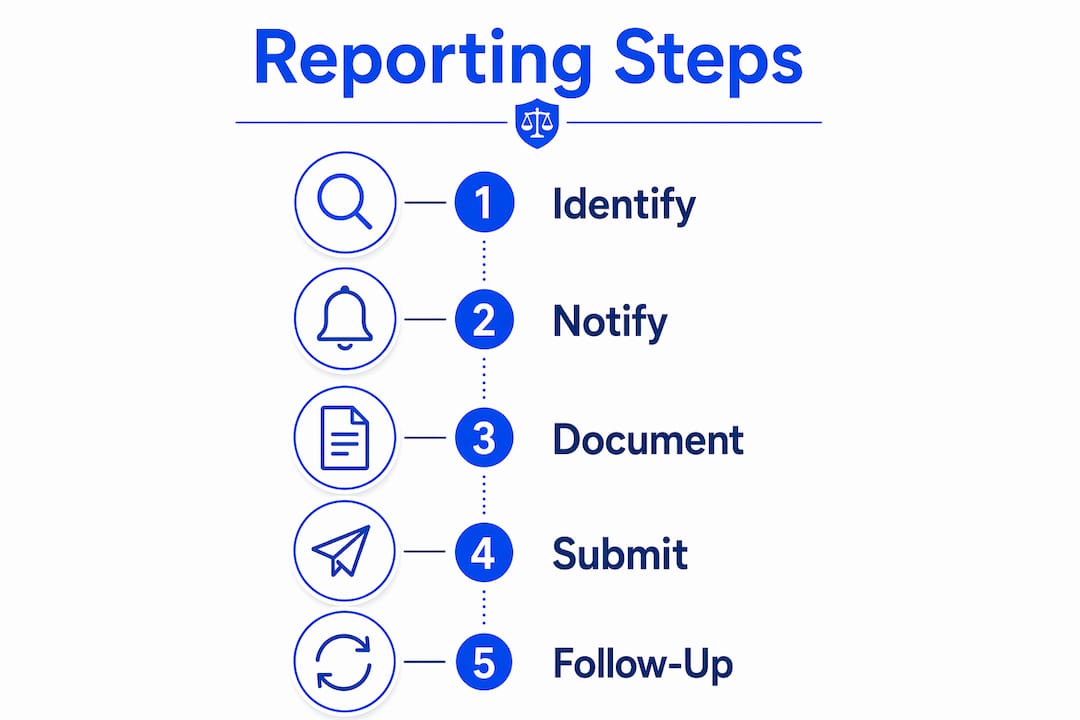
Workplace injuries require you to notify your supervisor immediately and complete a formal incident report. Most states require this notification within 30 days to preserve workers’ compensation eligibility, but filing the same day is always better. Your employer is then obligated to file a First Report of Injury with the state workers’ compensation board.
Slip and fall accidents on commercial or private property require you to report the incident to the property owner or manager before you leave. Ask for a written incident report and keep a copy. Document the exact hazard that caused your fall, whether that is a wet floor, broken step, or uneven pavement. Steps after a slip and fall include photographing the scene from multiple angles before conditions change.
| Accident type | Primary report to file | Key evidence to collect |
|---|---|---|
| Auto/trucking | Police report, insurer notification | Photos, witness contacts, dashcam footage |
| Workplace injury | Supervisor notification, incident report | Medical records, safety logs, coworker statements |
| Slip and fall | Property owner incident report | Photos of hazard, surveillance footage, shoe condition |
Pro Tip: Always get the names and contact information of at least two witnesses at the scene. Written witness statements collected within 48 hours carry significantly more weight than recollections gathered weeks later.
Common mistakes that undermine accident reports
Knowing why timely accident reports matter is only half the equation. The other half is avoiding the errors that neutralize even a well-timed report.
- Delaying because you feel fine. Adrenaline masks injury severity after accidents. Whiplash, traumatic brain injuries, and internal injuries often show no symptoms for 24 to 72 hours. If you wait until you feel pain to report, insurers will argue the injury happened somewhere else.
- Giving a recorded statement to the insurer without legal advice. Rushing to provide statements to insurance adjusters before consulting an attorney can be used to limit or deny your claim. Adjusters are skilled at asking questions that produce answers that minimize liability.
- Saying “I’m fine” at the scene. Those two words appear in more claim denial letters than any other phrase. Never make statements about your physical condition at the scene. Say only what is necessary to exchange information and cooperate with law enforcement.
- Skipping the police report for minor accidents. Property damage that looks minor often reveals hidden structural damage later. Without a police report, you have no independent record of the incident. Failing to document accidents seriously weakens insurance claims and exposes you to liability risks.
- Assuming a late report is worthless. Filing a late report is better than filing no report at all. Late reports may carry administrative penalties, but they still create official documentation that supports your legal standing. If you missed a deadline, report as soon as possible and consult an attorney about your options.
Key takeaways
Reporting an accident within the required legal window is the single most protective action you can take for your health, your claim, and your legal rights.
| Point | Details |
|---|---|
| Legal deadlines are strict | OSHA requires fatality reports within 8 hours; many states treat failure to report auto accidents as a misdemeanor. |
| Evidence degrades fast | Witness memory, surveillance footage, and physical conditions change within hours, making early reporting critical. |
| Delayed reports invite denial | Insurers use gaps in documentation to dispute liability and reduce settlement offers. |
| Accident type changes the process | Auto, workplace, and slip and fall incidents each require different forms, deadlines, and evidence priorities. |
| Late reports still have value | Filing after a missed deadline preserves documentation and legal standing, even if administrative penalties apply. |
What I’ve learned from watching delayed reports cost clients their cases
I have seen the same pattern repeat more times than I can count. Someone gets hurt, they feel shaken but functional, and they tell themselves they will deal with the paperwork tomorrow. By the time tomorrow arrives, the surveillance footage is gone, the witness has moved on, and the insurer has already started building a narrative that the injuries were pre-existing.
The hardest cases to fight are not the ones where liability is unclear. They are the ones where the injured person had a strong claim but waited too long to report it. Adrenaline is a powerful deceiver. It convinces people they are fine when they are not, and that delay becomes the insurer’s best argument.
What I tell every client is this: report the accident before you do anything else. Before you call family, before you post anything online, before you agree to any recorded statement. Get the official report filed. Then get medical care. Then call an attorney. That sequence matters more than most people realize.
If you missed the reporting window, do not assume your case is over. Late reports still carry legal weight, and an experienced attorney can often work around administrative penalties to preserve your claim. The worst thing you can do is nothing.
— Ali
How Jewkesfirm can protect your rights after an accident

If you were injured in an auto accident, trucking crash, or workplace incident in South Atlanta or the surrounding Georgia counties, Jewkesfirm is ready to fight for you. The attorneys at Jewkesfirm understand how quickly evidence disappears and how aggressively insurers work to minimize your recovery. From the moment you call, they work to preserve your evidence, meet every legal deadline, and build the strongest possible case on your behalf. Jewkesfirm operates on a contingency fee basis, meaning you pay nothing unless they win. Get your free case evaluation today and let a dedicated legal team put your rights first.
FAQ
What is the deadline to report a workplace accident?
Under 2026 OSHA standards, employers must report work-related fatalities within 8 hours and serious injuries within 24 hours. Individual workers should notify their employer the same day the injury occurs to protect workers’ compensation eligibility.
What happens if you don’t report an accident on time?
Failing to report can result in misdemeanor charges, loss of insurance benefits, and significantly weakened legal claims. In states like North Carolina and New York, failure to report a qualifying auto accident is a criminal offense.
Should you report an accident even if you feel fine?
Yes. Adrenaline commonly masks injury symptoms for 24 to 72 hours after an accident. Delayed medical documentation weakens the connection between the accident and your injuries, giving insurers grounds to deny your claim.
Can you still file a report after missing the deadline?
Filing a late report is better than filing no report at all. Late reports may carry administrative penalties, but they still create official documentation that supports your legal standing and claim.
Do you need a lawyer before reporting an accident?
You should report the accident to authorities and your employer immediately, without waiting for legal counsel. However, before giving any recorded statement to an insurance adjuster, consult an attorney to protect your rights and avoid statements that could limit your recovery.