

The workflow for legal consultation is a structured, step-by-step process that guides accident victims through their first meeting with a personal injury attorney. Most clients walk in unsure of what to say, what to bring, or what happens next. That uncertainty costs them. Knowing the standard stages of a personal injury consultation, from document preparation through fee discussion and follow-up, gives you control over the outcome. Jewkesfirm built its client intake process around exactly this kind of clarity, because informed clients get better results.
What documents to prepare before your personal injury consultation
Preparation is the single biggest factor separating productive consultations from wasted ones. Attorneys spend the first portion of every meeting gathering facts. The more organized you arrive, the more time the attorney can spend actually evaluating your case.
Bring the following to your consultation:
- Medical records and bills: Include every visit, prescription, and treatment related to your injury. Unpaid medical bills are recoverable damages and strengthen your claim by proving continuity of care.
- Police or incident reports: These establish the official record of what happened and who was involved.
- Photographs: Photos of the accident scene, your injuries, and any property damage provide visual evidence that words cannot fully replace.
- Insurance correspondence: Bring all letters, emails, and claim numbers from your insurer and the other party’s insurer.
- Witness contact information: Names and phone numbers of anyone who saw the accident can be critical for corroborating your account.
- A written timeline: Write out the events in your own words, from the moment of the accident through your most recent medical appointment. Keep it factual and chronological.
The written timeline deserves special attention. Attorneys ask detailed questions about symptom progression and daily life impact. A clear personal account helps you answer accurately under pressure. Also, do not overlook minor expenses. Medical documentation including even small unpaid bills serves as vital evidence that insurers and courts take seriously.
Pro Tip: Place each document category in a labeled folder or envelope before the meeting. Attorneys move quickly through fact-gathering, and being able to hand over the right paper immediately keeps the conversation focused on your case.
You can also review a personal injury checklist to make sure nothing critical is missing before your appointment.
What are the steps in a legal consultation for personal injury?
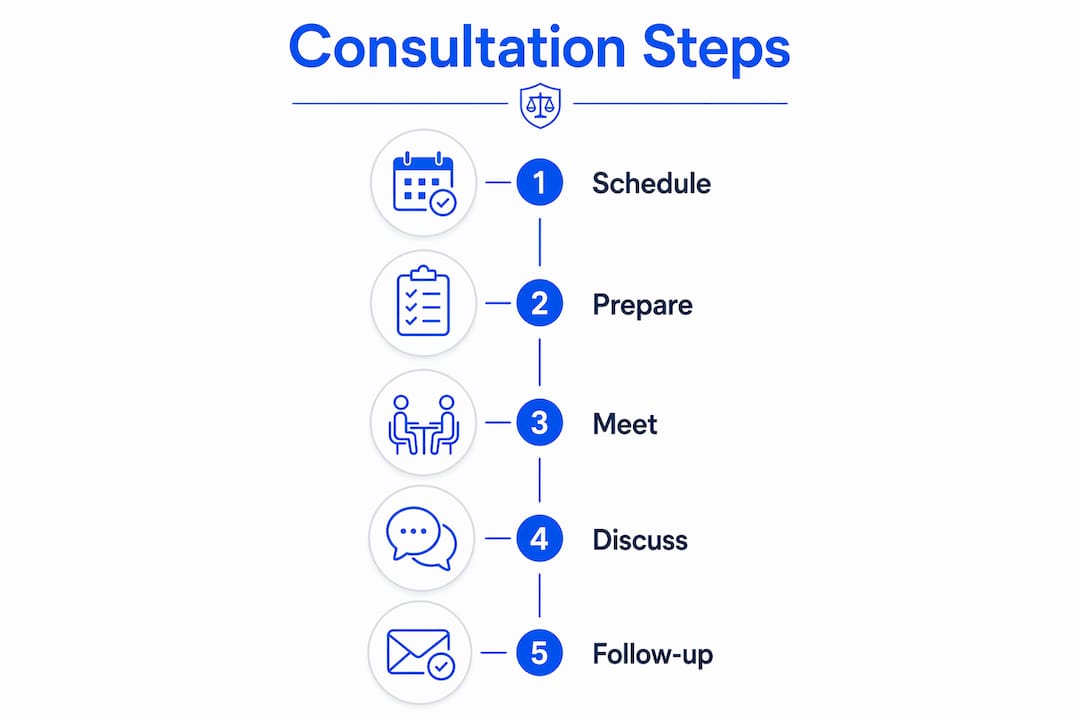
A standard personal injury consultation follows a predictable sequence. Initial consultations typically last 30–60 minutes and move through five clear stages. Knowing each stage removes the anxiety of not knowing what comes next.
- Your story and timeline. The attorney asks you to describe the accident in your own words. Speak chronologically. Include where you were, what you were doing, how the accident happened, and what injuries you noticed immediately.
- Attorney fact-gathering questions. Attorneys ask detailed questions about your treatment history, daily life impacts, symptom timelines, and insurance contacts. This stage surprises many clients because the questions go far beyond the accident itself. An attorney may ask whether you can still do your job, lift groceries, or sleep through the night. These details establish the full scope of your damages.
- Preliminary case assessment. The attorney evaluates whether your claim has legal merit. This includes identifying the liable party, the type of claim (auto accident, slip and fall, medical malpractice, etc.), and the likely value range based on your injuries and losses.
- Fee structure explanation. Personal injury attorneys work on a contingency fee basis. Contingency fees in 2026 typically range from 33% to 40% of the total recovery, and the percentage often increases if the case goes to trial. You pay nothing unless the attorney wins. The attorney should also explain how case expenses are handled and when they are deducted.
- Next steps. If both sides agree to move forward, the attorney outlines the representation agreement, explains what evidence still needs to be gathered, and describes how communication will work going forward.
The table below summarizes each stage and its primary purpose:
| Stage | Primary purpose |
|---|---|
| Client narrative | Establish the facts of the accident and injury |
| Attorney questioning | Identify damages, liability, and case gaps |
| Case assessment | Determine legal merit and claim type |
| Fee discussion | Clarify contingency percentage and expense handling |
| Next steps | Outline representation agreement and evidence plan |

Pro Tip: The first meeting’s primary goal is fact-gathering, not legal strategy. Do not expect a settlement number at this stage. Focus on giving the attorney complete and accurate information instead.
What questions should you ask during the legal consultation process?
The consultation is a two-way evaluation. You are assessing the attorney just as much as the attorney is assessing your case. Preparing detailed questions in advance helps you compare attorneys on experience, communication style, and realistic outcomes.
Ask the attorney these questions:
- How many cases like mine have you handled? Experience with your specific type of claim, whether auto accident, trucking crash, or slip and fall, matters more than general years in practice.
- Who will handle my case day to day? Some firms assign cases to junior associates after the initial meeting. Know who your actual point of contact will be.
- How do you communicate with clients? Ask about response times, preferred contact methods, and how often you will receive updates.
- What is your honest assessment of my case? A trustworthy attorney gives you a realistic picture, not just encouragement. Vague or overly optimistic answers are a red flag.
- What is the full fee structure? Ask specifically about the contingency percentage and whether expenses come out before or after the attorney’s cut. The order of settlement deductions can significantly affect your final payout.
Red flags to watch for include attorneys who guarantee specific settlement amounts, rush you to sign without explanation, or cannot clearly describe who handles your file. Consulting more than one attorney before deciding is a sound practice. Comparing fee terms, daily case management, and communication style gives you a much clearer picture of who will actually fight for you. A guide to choosing a personal injury attorney can help you structure that comparison.
What happens after the legal consultation?
The consultation ends, but the decision-making process is just beginning. Most clients need a day or two to review their notes and compare their options. That time is well spent, but do not let it stretch too long.
- Review your notes and the fee agreement side by side. Look specifically at the contingency percentage, how expenses are handled, and the deduction order. A written contingency fee agreement must clarify whether case expenses are deducted before or after the attorney’s percentage. That distinction can mean thousands of dollars in your final recovery.
- Watch the statute of limitations. Delaying the decision to sign risks the statute of limitations expiring, which ends your right to recover damages entirely. In Georgia, the statute of limitations for most personal injury claims is two years from the date of the accident.
- Sign the representation agreement. Once you choose an attorney, sign the agreement and get a copy for your records. This formally begins the attorney-client relationship.
- Support the evidence collection process. Your attorney will begin gathering additional records, contacting witnesses, and communicating with insurers. Your job is to follow medical advice consistently and keep your attorney updated on any new symptoms or developments.
- Understand the timeline ahead. Most personal injury cases move through insurance negotiation first, then settlement discussions, and potentially litigation if a fair offer is not reached. The Georgia personal injury case workflow outlines typical timelines and what to expect at each phase.
Pro Tip: Start a dedicated folder, physical or digital, for every document, email, and receipt related to your case the moment you leave the consultation. Organized records protect you if disputes arise later about what was said or agreed upon.
Key Takeaways
A well-prepared client who understands the legal consultation process is far more likely to leave the first meeting with a clear plan, a fair fee agreement, and the confidence to move forward.
| Point | Details |
|---|---|
| Prepare documents in advance | Bring medical records, police reports, photos, insurance letters, witness contacts, and a written timeline. |
| Know the five consultation stages | Narrative, attorney questioning, case assessment, fee discussion, and next steps follow a predictable order. |
| Ask the right questions | Ask about daily case management, communication, fee structure, and the attorney’s honest case assessment. |
| Clarify the fee agreement | Confirm the contingency percentage and whether expenses are deducted before or after the attorney’s cut. |
| Act before the deadline | Delaying your decision risks the statute of limitations expiring and losing your right to recover damages. |
What I have learned from watching clients walk into consultations unprepared
After years of observing how accident victims approach their first attorney meeting, one pattern stands out clearly. The clients who arrive with organized documents and written questions leave with power. The ones who arrive empty-handed leave with confusion.
Most people underestimate how much the attorney relies on the client’s own account during that first meeting. The attorney cannot build a case around vague recollections. Specific dates, symptom details, and expense records are the raw material of a strong claim. Clients who disclose every symptom, even the ones that seem minor or embarrassing, give their attorney the full picture needed to prove causation and damages.
I also think the fee conversation deserves more attention than most articles give it. The difference between expenses deducted before versus after the attorney’s percentage is not a technicality. On a $100,000 settlement with $20,000 in expenses and a 33% fee, the order of deductions changes your take-home by thousands of dollars. Ask the question directly. Any attorney worth hiring will answer it clearly.
Shopping around is not disloyal. It is smart. One consultation gives you a data point. Two or three give you a real comparison. The attorney who handles your case daily, not just the one who signs the agreement, is the person you need to evaluate carefully.
Understanding the full consultation workflow does not just reduce anxiety. It puts you in a position to make a genuinely informed decision about who represents you and what you agree to.
— Ali
Jewkesfirm offers a free first step for accident victims
Accident victims in South Atlanta and surrounding Georgia counties have access to a no-cost initial consultation with Jewkesfirm, a personal injury firm with a track record of recovering millions for injured clients.

Jewkesfirm handles auto accidents, trucking crashes, slip and falls, medical malpractice, and wrongful death cases with a detail-oriented, client-first approach. The firm operates on a contingency fee basis, meaning you pay nothing unless they win. Fee structures are explained clearly from the first meeting, with no surprises about deductions or percentages. If you are ready to understand your options and protect your claim, schedule your free consultation with Jewkesfirm today.
FAQ
How long does a personal injury consultation typically last?
Most personal injury consultations last 30–60 minutes. The time covers your account of the accident, attorney questions, a preliminary case assessment, and a fee discussion.
What is a contingency fee in a personal injury case?
A contingency fee means the attorney takes a percentage of your recovery only if you win. Standard rates in 2026 range from 33% to 40%, and the percentage typically increases if the case goes to trial.
Should I disclose all my symptoms even if they seem minor?
Yes. Full symptom disclosure is critical because even minor or delayed injuries help prove causation and the full extent of your damages.
Can I consult more than one attorney before deciding?
Consulting multiple attorneys before signing is a sound practice. Comparing experience, fee terms, and communication style helps you choose the attorney best suited to your case.
What happens if I wait too long to hire an attorney?
Waiting too long risks the statute of limitations expiring. In Georgia, most personal injury claims must be filed within two years of the accident date, after which you lose the right to recover damages.