
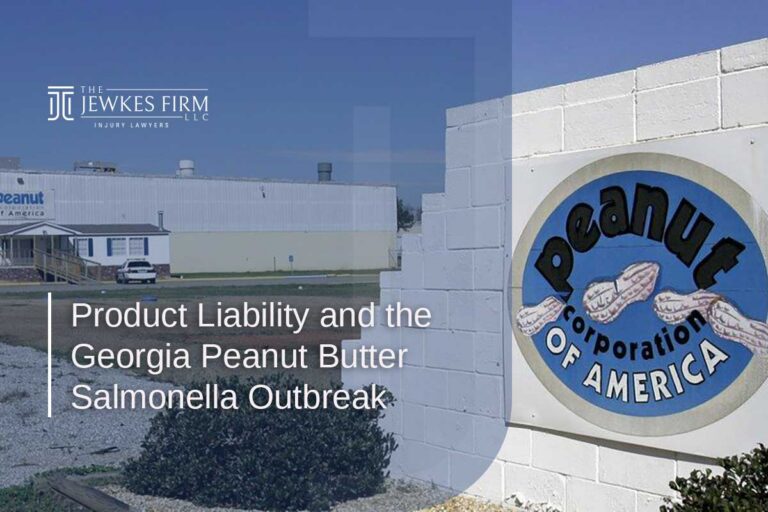
Most people outside southwest Georgia have never heard of Blakely, Georgia, a small city of roughly 5,000 people in Early County, near the Alabama border. But for nine families across the country, a loved one’s life ended in Blakely, and for hundreds more, an ordinary snack from there sent them to the hospital.
Between late 2008 and early 2009, a salmonella outbreak that investigators traced back to a peanut-processing plant that the Peanut Corporation of America (PCA) operated in Blakely killed nine people and sickened at least 714 others across dozens of states, according to reporting at the time by the Atlanta Journal-Constitution and other outlets. That outbreak prompted the largest food recall in United States history at that time, which covered thousands of products that hundreds of companies made. These companies had never set foot in Georgia but had unknowingly bought contaminated peanut paste as an ingredient.
What distinguishes the PCA case from a single car crash, a slip-and-fall, or even a one-time product defect is that company insiders knowingly shipped peanut products contaminated with salmonella again and again instead of absorbing the cost of destroying tainted batches, according to federal investigators and, eventually, a federal jury. Their decision cost nine people their lives and left a legal and legislative legacy that still shapes how food safety and product liability law functions today.
SUMMARY
The Georgia peanut butter salmonella outbreak, linked to the Peanut Corporation of America’s Blakely plant, caused nine deaths and sickened over 700 people nationwide. This crisis triggered the largest food recall in U.S. history at the time and exposed severe violations of food safety protocols. The case set a landmark precedent in product liability law, holding manufacturers accountable for knowingly distributing contaminated products. Victims and families affected by contaminated food products in Georgia can seek legal compensation through claims based on negligence, strict liability, or breach of warranty. Understanding your rights and consulting an experienced personal injury attorney is essential for navigating complex food poisoning and product liability cases. This outbreak also helped spur the Food Safety Modernization Act, significantly strengthening the FDA’s recall and inspection powers.


PCA’s Blakely facility processed raw peanuts into peanut paste, peanut meal, and peanut butter. Much of PCA never sold those products under its own name on grocery store shelves. Instead, PCA sold them as raw ingredients to other food manufacturers, who baked them into crackers, cookies, ice cream, energy bars, and even pet treats sold under well-known national brand names. Few of the people who later fell ill knew they had eaten anything connected to a peanut-processing plant in rural Georgia.
In January 2009, state and federal health investigators traced a cluster of Salmonella Typhimurium illnesses back to products that PCA made at the Blakely plant. When U.S. Food and Drug Administration (FDA) inspectors finally entered the plant, they documented mold on the ceiling and walls, gaps in the roof large enough to let in rain and pests, dead insects near stored peanuts, holes large enough for rodents to enter, and a failure by PCA to properly separate raw, unprocessed peanuts from finished, ready-to-ship product.
Federal prosecutors reported that PCA’s own testing had detected salmonella in its products at least a dozen times in 2007 and 2008 alone.
Far more troubling than the physical conditions, however, was what internal company records later revealed. Instead of destroying those batches, PCA resubmitted samples for retesting until it obtained a clean result it could ship—or, in some instances, PCA shipped the product before the test results even came back. Emails introduced at trial showed company president Stewart Parnell personally approving shipments of contaminated product, with prosecutors arguing that production deadlines and profit margins repeatedly took precedence over consumer safety.
Former Peanut Corporation of America employee Kenneth Kendrick recounts the nauseating working conditions he experienced at the company’s Texas plant.
The contaminated peanut paste and meal did not stay confined to Georgia or even to a handful of products. By the time officials completed the recall, it had affected roughly 3,900 products that more than 360 companies nationwide manufactured, according to a retrospective summary of the case. Grocery store shelves across the country emptied of peanut butter crackers, cookies, and snack products, and sales of peanut butter industry-wide fell by nearly a quarter in the months that followed, even for brands that had no connection to PCA.
PCA itself did not survive the fallout. Less than 24 hours after a related recall at a sister facility in Plainview, Texas, officials announced the recall, and PCA then announced it was permanently halting operations and filed for Chapter 7 bankruptcy liquidation on February 13, 2009. For many victims, that development meant they had to seek compensation not directly from PCA but through the company’s insurance coverage and through any other companies in the distribution chain who could also bear liability for using a contaminated ingredient in their own products.
Product liability law holds companies that make, distribute, or sell a defective or dangerous product accountable when that product injures someone—not just the end user who holds it when something goes wrong. As The Jewkes Firm’s own product liability and food poisoning practice pages explain, these claims generally fall into a few recognized categories.
Georgia product liability claims generally involve one of three types of defects: manufacturing defects, where something goes wrong on the production line, causing an individual unit (or batch) to differ from how the manufacturer designed it; design defects, where the product’s design itself is unreasonably dangerous even when manufactured exactly as intended; or failure to warn, where a company fails to adequately disclose a known risk associated with its product.
The PCA case was, at its core, a manufacturing-defect and food-safety case. Peanut butter or peanut paste itself is not inherently dangerous, but unsafe processing conditions and PCA’s pattern of shipping products its own tests flagged as contaminated created the danger—one that traveled downstream, hidden, into finished products that companies which bought the ingredient had no idea were unsafe.
Georgia law allows injured consumers to pursue a product liability claim under one or more legal theories: ordinary negligence (if the manufacturer fails to use reasonable care); strict liability under O.C.G.A. § 51-1-11, which holds a manufacturer responsible for a defective product without requiring proof of carelessness, so long as the product was defective when it left the manufacturer’s control and that defect caused the injury; and breach of warranty, when a product fails to perform as represented or implied.
In a mass food-contamination event, the critical legal question often is not whether any single employee acted carelessly, but whether the defendant released contaminated product and whether that contamination caused the plaintiff's illness.
Strict liability matters enormously in a case like PCA’s. Tracing that chain of causation—from a specific plant, through specific lot numbers, into specific finished products on specific store shelves—required the FDA’s and Centers for Disease Control and Prevention (CDC) laboratory capabilities in the PCA case, including genetic fingerprinting of the salmonella strain that matched illnesses back to their source.
The PCA case produced both civil and criminal consequences, and the criminal side is especially unusual. Prosecutors rarely pursue food-safety executives criminally in the United States; the PCA case became a landmark precisely because prosecutors changed that norm.
Because PCA filed for bankruptcy liquidation within days of the outbreak becoming public, injured consumers and grieving families could not simply sue PCA and collect a judgment from its ongoing operations—there were none left. According to Atlanta Journal-Constitution reporting, by January 2010 roughly 120 victims had agreed to split a $12 million insurance settlement tied to PCA’s coverage. Other victims and families pursued claims against companies further down the supply chain who incorporated PCA’s tainted ingredients into their own branded products, since those companies also could potentially bear liability for selling a defective product to the public even though they did not process the raw peanuts themselves.
In one of the most severe foodborne illness outbreaks in U.S. history, salmonella bacteria contaminated peanut butter and peanut products nationwide—with evidence suggesting the Peanut Corporation of America was aware of the contamination before distributing them.
In February 2013—roughly four years after the outbreak—a federal grand jury in Georgia indicted several former PCA officials, including company president Stewart Parnell, his brother and company food broker Michael Parnell, plant manager Samuel Lightsey, quality assurance manager Mary Wilkerson, and plant manager Daniel Kilgore, on dozens of felony counts such as conspiracy, fraud, obstruction of justice, and introducing adulterated and misbranded food into interstate commerce.
In September 2014, a federal jury convicted Stewart Parnell and Michael Parnell on 71 criminal counts. A year later, in September 2015, U.S. District Judge W. Louis Sands—presiding in Albany, Georgia—sentenced Stewart Parnell to 28 years in federal prison, a punishment multiple national outlets described as the longest sentence ever imposed on an American food company executive for a food-safety violation.
Prosecutors had sought a life sentence. Michael Parnell received 20 years, and quality assurance manager Mary Wilkerson received 5 years. Two plant managers who cooperated with prosecutors and testified against the Parnells, Samuel Lightsey and Daniel Kilgore, received shorter sentences of 3 and 6 years, respectively.
At sentencing, several victims and family members addressed the court directly, according to the Washington Post. Among them were a man whose elderly mother died after eating contaminated product, and a young man who became seriously ill as a three-year-old after eating peanut butter crackers. Stewart Parnell apologized to the court, saying he was “embarrassed and morally disgraced” and that he thought about the victims every day. Parnell’s attorney plans to appeal. The case’s criminal outcome helped build momentum for the federal Food Safety Modernization Act, signed into law in January 2011, which expanded the FDA’s recall and inspection authority.
Most Georgia food poisoning and defective product cases never involve criminal prosecution or a nationwide recall. But victims should take the same practical steps whether the case involves a single bad meal at a local restaurant or a product recalled nationwide:
Seek medical care promptly, and tell any treating provider what you ate or used and when symptoms began. Keep the food packaging, receipts, or the product itself if possible, because physical evidence disappears quickly once you discard food or use up a product. You should report the illness to the local county board of health. This helps identify others affected by the same source. Write down a timeline of what you ate or used, when symptoms started, and every medical visit that followed. And be cautious about early settlement offers from a company’s insurer—such offers often occur before the full extent of an injury, especially one with long-term complications, becomes known.
For families who lose a loved one to a contaminated or defective product, Georgia’s wrongful death statute allows the deceased person’s surviving spouse, children, or other next of kin to recover for the full value of the life lost—a claim distinct from the deceased’s estate’s separate right to recover for pain, suffering, and medical expenses before death. Georgia also generally imposes a two-year statute of limitations on personal injury and wrongful death claims under O.C.G.A. § 9-3-33, which makes prompt legal advice important even when a case initially seems straightforward.
One of the largest food poisoning outbreaks in U.S. history: Peanut Corporation of America CEO Stewart Parnell shipped peanut products contaminated with salmonella, resulting in nine deaths and thousands of illnesses.
In Georgia, families who lose a loved one due to a contaminated or defective product can seek compensation under the state's wrongful death statute. This law allows the surviving spouse, children, or other next of kin to recover the full value of the deceased person's life.
Cases like the PCA outbreak illustrate why victims should rarely handle food poisoning and product liability claims alone. A single illness can involve an entire supply chain: the original grower or processor, a broker, a downstream manufacturer who used a contaminated ingredient in its own branded product, a distributor, and a retailer. Figuring out which of those parties bears legal responsibility—and preserving the evidence needed to prove it—generally requires lab testing, expert epidemiological analysis, and the ability to obtain internal company records and testing histories that companies have no incentive to hand over voluntarily.
An experienced personal injury attorney can also help families navigate what happens when the company most obviously responsible no longer exists in any meaningful form, as when PCA filed for bankruptcy within days of the outbreak becoming public. Attorneys know how to pursue claims against bankrupt company insurance coverage or other companies in the distribution chain who share legal responsibility, distinguishing between a fair recovery and a shortchanged one.
The same lessons apply on a smaller scale to any Georgia family dealing with a contaminated restaurant meal, a recalled consumer product, or a defective medical device. The Jewkes Firm offers free consultations and handles personal injury cases on a contingency-fee basis, meaning families pay nothing up front, from its offices serving Tyrone, Griffin, and LaGrange and clients throughout Georgia.

Investigators traced the outbreak to the Peanut Corporation of America's Blakely, Georgia plant, where company officials knowingly shipped contaminated peanut paste and peanut butter despite positive salmonella tests.
The outbreak resulted in 9 deaths and sickened at least 714 people across dozens of states.
Product liability law holds manufacturers and sellers accountable if their defective or dangerous products cause injury. Claims can arise from manufacturing defects, design defects, or failure to warn about risks.
Yes, victims can pursue claims under product liability, negligence, or breach of warranty laws. It is advisable to consult a personal injury attorney experienced in food poisoning cases.
Several PCA executives, including Stewart Parnell, faced criminal charges and received prison sentences ranging from 3 to 28 years for conspiracy, fraud, and shipping contaminated food.
Seek medical care promptly, keep any food packaging or receipts, report the illness to the local health department, document a timeline of symptoms, and consult with a personal injury attorney.
The outbreak contributed to momentum for the federal Food Safety Modernization Act of 2011, which expanded FDA recall and inspection authority to prevent similar incidents.
Sources:
GET A FREE CASE REVIEW
The Peanut Corporation of America case is an extreme example. However, the underlying lesson applies to every product liability and food poisoning case, large or small: companies sometimes know their products are dangerous and ship them anyway, because in the moment, they judge the cost of doing the right thing as higher than the cost of doing the wrong one. The civil and criminal legal systems exist, in part, to flip that calculation—to make companies and their decision-makers pay far more for cutting corners on safety than they would have paid by doing it right.
Nine families paid the ultimate price for PCA’s decisions. Hundreds more spent days or weeks fighting an illness that began with something as ordinary as a peanut butter cracker. Their case now forms part of the historical record precisely because they and their attorneys pursued accountability rather than letting a bankrupt company’s collapse end the story.
If a contaminated food product, a defective product, or a company’s failure to disclose a known danger harmed you or a family member, you do not have to face a corporation and its insurers alone.









The Jewkes Firm, LLC
1155 Senoia Road
Suite 102
Tyrone, GA 30290
Advertising does not indicate a guarantee of results.
The information you obtain at this site is not, nor is it intended to be, legal advice. You should consult an attorney for advice regarding your individual situation. Contacting us does not create an attorney-client relationship.