
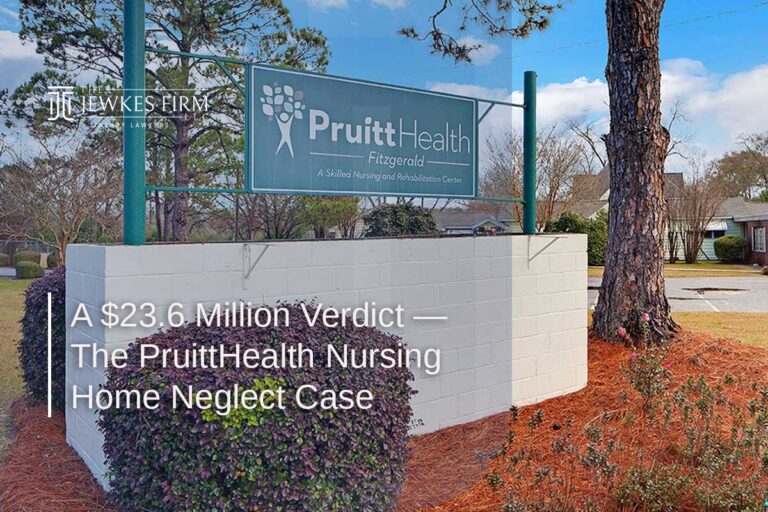
A beloved Fitzgerald coach died after someone at a Georgia nursing home gave him unprescribed morphine, lorazepam, and hydrocodone. A Gwinnett County jury held the facility accountable — here’s what Georgia law says about nursing home neglect.
John D. Owens Jr. spent his life helping kids. He taught economics and coached baseball and basketball at Fitzgerald High School, coached in Wilcox and Dodge counties, mentored students through 4-H, cheerleading, and ROTC, and even scouted for the Pittsburgh Pirates. By early 2021, at 76, he was a resident of PruittHealth-Fitzgerald, recovering from a urological surgery and still able to get around the facility with a walker. On March 11, 2021 — about six weeks after a single overnight shift — he died.
In August 2026, after more than four years of litigation, a Gwinnett County State Court jury decided what happened to him mattered enough to award his family $23.6 million. The jurors found that PruittHealth negligently caused his fatal injuries and that the facility violated Georgia’s Bill of Rights for Residents of Long-Term Care Facilities. This verdict ranks among the largest nursing home awards in recent Georgia history and offers a detailed, sobering look at how a short-staffed overnight shift and three unexplained medications ended a life — and at what Georgia law allows a grieving family to do about it.
PruittHealth strongly disagrees with the verdict and is pursuing post-trial and appellate options, maintaining that staff gave Owens appropriate care. This article describes what the Owens family alleged and what the jury found after a two-week trial — not a final, unappealable legal conclusion.
If you suspect someone neglected or mistreated your loved one at a Georgia nursing home or assisted living facility, you may have legal options. Call The Jewkes Firm at (770) 771-5130 for a free consultation.
SUMMARY
A Gwinnett County jury awarded $23.6 million to the family of John D. Owens Jr. after finding PruittHealth negligent for unprescribed medication use and understaffing at a Georgia nursing home. This landmark verdict highlights the protections under Georgia’s Bill of Rights for Residents of Long-Term Care Facilities and underscores the importance of proper staffing, medication management, and legal recourse for families facing nursing home neglect. If you suspect elder abuse or neglect in a Georgia nursing home, understanding your legal rights and seeking experienced legal help is critical.

Owens first entered PruittHealth-Fitzgerald in early 2020. By September, he had improved enough to move to an assisted living facility in Abbeville, where, according to his son Matthew, he walked and got around the facility with a walker. After his urological surgery and a series of infections, Owens returned to skilled nursing care at PruittHealth-Fitzgerald in December 2020.
The lawsuit alleges that during an overnight shift on January 26-27, 2021, staff at PruittHealth gave Owens morphine, lorazepam, and hydrocodone — medications no doctor had prescribed him. The family’s attorneys claimed the staff used the medications as a “chemical restraint” to manage behavior related to a past brain injury and PTSD, rather than for any legitimate medical purpose. Staff notified Matthew Owens of a significant change in his father’s condition, and medical personnel hospitalized Owens on January 27, where drug testing revealed the unprescribed medications in his system. He died on March 11, 2021.

Coach John D. Owens, Jr. during his stay at a nursing home. (Matt Owens)
The family filed their case in June 2022, alleging that the facility dangerously understaffed its overnight shift — assigning just two nurses to care for 46 residents — and that only the facility’s nurses had access to the controlled substances involved. They alleged that staff failed to properly preserve surveillance footage from the relevant shift and that the facility terminated its medical director, Dr. Eugene Jackson, after he raised concerns about the medications. Jackson later testified as a key witness at trial. PruittHealth denied the family’s account of his termination and maintained throughout the litigation that staff gave Owens standard, appropriate care and that he died from pneumonia and related complications — not from any improperly given medication.
After a two-week trial, the jury returned its verdict on August 21, 2026: $12.6 million for Owens’s pain and suffering, and $11 million to his sons, Matthew Owens and John Owens III, for the full value of his life — a combined $23.6 million, plus court costs and interest. The court entered judgment against PruittHealth-Fitzgerald, LLC; PruittHealth, Inc.; and United Health Services of Georgia, Inc. The jurors found that the parent and related entities bear responsibility through agency theories and by piercing the corporate veil.
Attorney Evan Jones, who represented the family alongside Lance Lourie, said the Owens family never aimed to win a record verdict.
“It didn’t have to go this route. It ended up this way because this was the only route. The hardest part, when anybody goes through this, is you end up stuck on this worst part of his life.” – Owens’ son, Matthew Owens
Jones added that he handled other PruittHealth cases across Georgia, including in Valdosta and Albany, and noted understaffing as a recurring problem: “It would not surprise me if in some of my cases we find they are chronically understaffed.”
This is bigger than one medication administration. It raises questions about chemical restraint, staffing and institutional accountability in long-term care.


Georgia law guarantees nursing home residents specific protections under the Bill of Rights for Residents of Long-Term Care Facilities, (O.C.G.A. § 31-8-100 et seq.). The General Assembly adopted this law to protect residents’ dignity, personal integrity, and right to receive appropriate care. When a nursing home violates these rights—as a court found in the case against PruittHealth—Georgia law allows families to file civil claims that go beyond ordinary negligence. Here, families can seek compensation for pain, suffering, wrongful death, and other damages.
The $23.6 million verdict against PruittHealth-Fitzgerald not only highlights the tragic consequences of nursing home negligence but also underscores the legal rights Georgia residents have when placed in long-term care facilities.
Inside South Georgia nursing homes, families have raised concerns after records revealed repeated allegations of neglect, with many relatives describing similar experiences across multiple Pruitt Health facilities, according to WALB News 10.
Georgia law holds nursing home staff to a professional standard of care (O.C.G.A. § 51-1-27). They must provide the level of care and skill normally expected under similar circumstances. Additionally, when a facility accepts Medicare or Medicaid funding, federal nursing home regulations apply. Georgia courts recognize these regulations as relevant evidence in abuse and neglect cases.
Neglect cases often involve one or more of the following problems:
It is important to remember that juries make decisions based on the evidence presented and arguments made in court. Nursing homes and their insurers often vigorously contest claims, which is why these cases can take years to resolve. For example, PruittHealth disputed allegations in the Owens case and plans to appeal the verdict.
The recent $23.6 million verdict against PruittHealth-Fitzgerald highlights the serious consequences of nursing home negligence and affirms the legal rights of Georgia residents in long-term care facilities. The law ensures that nursing homes maintain adequate staffing, properly use medications, and communicate openly with families. Failing to do so can result in severe penalties and legal action.
If you suspect neglect, chemical restraint, or mistreatment of your loved one at a Georgia nursing home or assisted living center, The Jewkes Firm can guide you through your legal options and protect your family’s rights.
Worried about neglect, overmedication, or unexplained decline in a loved one’s care at a Georgia facility? Contact us for a free consultation.
Nursing home abuse and neglect cases often involve powerful corporate defendants with extensive legal resources. The Owens case took more than four years from filing to verdict. The case turned on evidence — staffing logs, medication records, surveillance footage, and the testimony of a former medical director — that an ordinary family would have had little ability to gather or preserve on its own.
The Owens family’s success came from resources and expertise only seasoned personal injury attorneys provide. If you suspect a loved one suffered neglect, overmedication, or abuse at a Georgia nursing home or assisted living facility, learn more about making claims on our Georgia nursing home abuse attorney page.
If the case involves a loved one’s death, see our Georgia wrongful death lawyer page for what Georgia law allows families to recover, including “full value of life” damages as the Owens jury awarded. For more on medication-related harm, see our post on medication errors and pharmaceutical negligence.

If you believe someone overmedicated, neglected, or abused your loved one at a Georgia nursing home or assisted living facility, your family may qualify for compensation. The Jewkes Firm Injury Lawyers offer free, confidential consultations to review your case and explain your options. Contact The Jewkes Law Firm today at (770) 771-5130 for your free legal consultation. Let us fight for your family’s justice. Don’t wait to get the legal help you need. Protect your loved one’s rights and hold negligent facilities accountable.
Disclaimer: This article is for informational purposes only and does not constitute legal advice. The verdict described here is not final and remains subject to post-trial motions and possible appeal. For advice about a specific situation, consult a qualified attorney.
Watch for unexplained injuries, sudden weight loss, bedsores, medication changes without explanation, drowsiness or confusion, poor hygiene, emotional withdrawal, and lack of communication from facility staff.
Georgia’s Bill of Rights for Residents of Long-Term Care Facilities guarantees dignity, respect, appropriate care, and protection from abuse or neglect. Families can hold facilities legally responsible if they violate these rights.
Document your observations, report your concerns to facility management, and contact an experienced nursing home neglect attorney promptly. Early legal intervention helps preserve key evidence.
You generally have two years from the date of injury or death, but specific circumstances may affect deadlines. Consult an attorney immediately to ensure timely filing.
Yes. Georgia law allows families to sue parent companies under theories such as agency and piercing the corporate veil if they control the facility’s operations.
You can recover damages for pain and suffering, medical expenses, lost income, wrongful death, and “full value of life” compensation for surviving family members.
Sources:
GET A FREE CASE REVIEW
The Owens case reminds us that nursing home neglect doesn’t always manifest as a fall or bedsore — sometimes it looks like unexplained drowsiness, sudden decline no one can explain, or staff chronically stretched too thin. Matthew Owens put it simply after the verdict:
“Your greatest fear, when you have someone in these facilities, is what you can’t see.” His father had spent decades caring for other people’s children. In the end, his own family had to pursue a four-year lawsuit and a two-week trial to get an accounting of what staff did to him during a single overnight shift in a place meant to keep him safe.
Georgia law gives families real tools to demand answers and hold facilities accountable, but, as this case shows, getting those answers rarely happens quickly or easily. For families sensing something’s wrong with a loved one’s care, involving an experienced attorney early — while records and evidence remain available — improves the chances of holding negligent staff accountable.
If you believe a loved one has suffered neglect, overmedication, or harm at a Georgia nursing home, don’t wait. Contact The Jewkes Firm today for a free consultation: (770) 771-5130.








Advertising does not indicate a guarantee of results.
The information you obtain at this site is not, nor is it intended to be, legal advice. You should consult an attorney for advice regarding your individual situation. Contacting us does not create an attorney-client relationship.