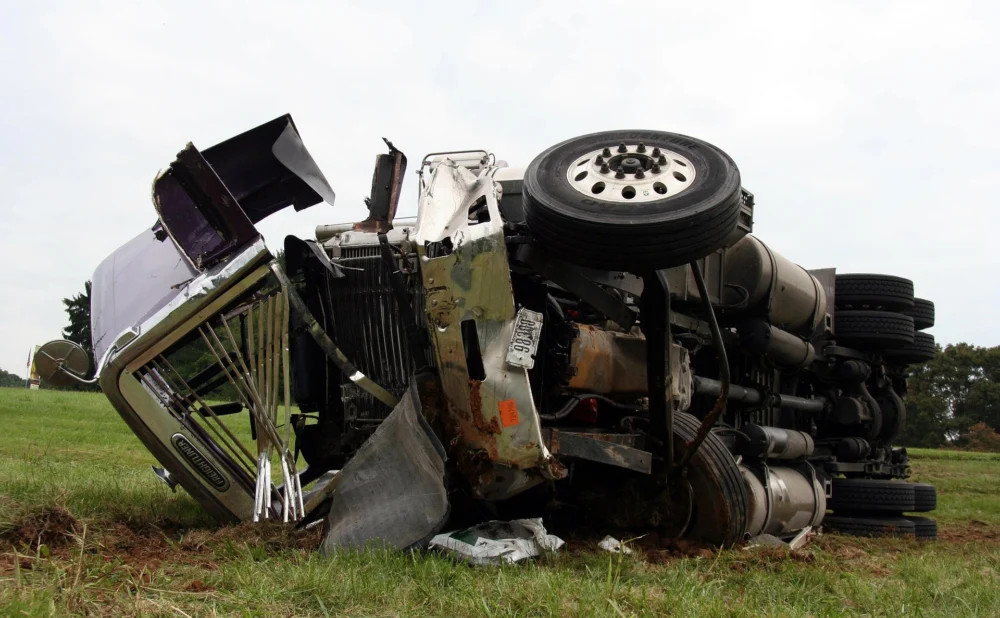

Filing a trucking accident claim is the legal and insurance process of identifying liable parties, collecting evidence, submitting required paperwork, and negotiating compensation after a crash involving a commercial truck. The process is more complex than a standard car accident claim because multiple parties share liability in most trucking cases, including the driver, the trucking company, maintenance contractors, and cargo loaders. Insurance companies representing these parties are experienced at minimizing payouts. Knowing how to file a trucking accident claim correctly, and quickly, is what separates a fair settlement from a denied or undervalued one.
How to file a trucking accident claim: first steps that protect you
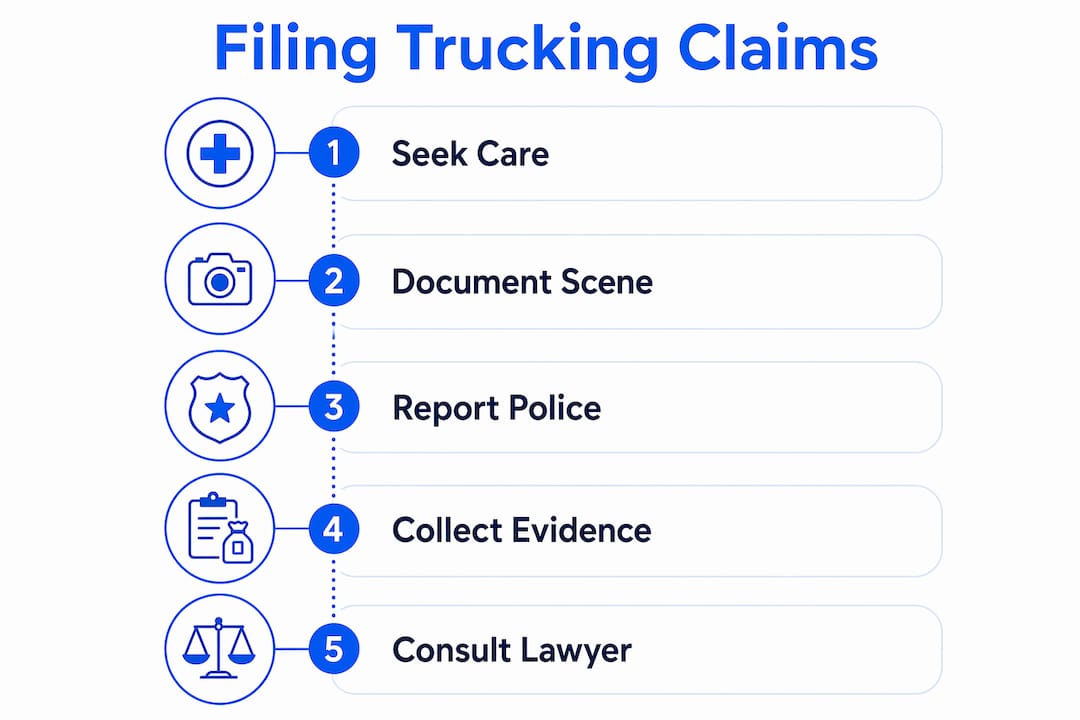
The actions you take in the hours and days immediately after a truck crash directly determine the strength of your claim. Many victims fail to collect key accident evidence or report quickly, which weakens their compensation claims before the process even begins.
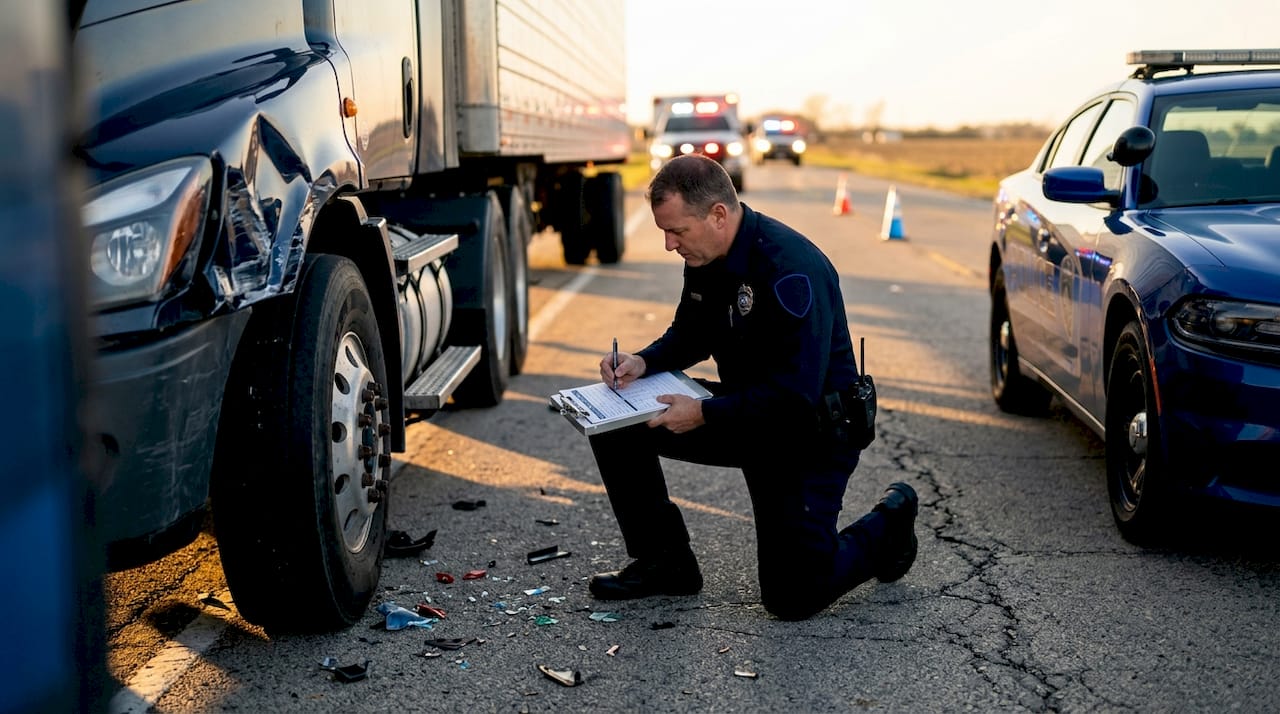
Seek medical attention first. Even if you feel fine, internal injuries from high-impact truck collisions often appear hours or days later. A medical record created on the day of the crash establishes a direct link between the accident and your injuries. Without that record, insurers will argue your injuries came from somewhere else.
Once you are safe, document everything at the scene:
- Photograph all vehicles from multiple angles, including the truck’s license plate, DOT number, and company name on the cab
- Record video of skid marks, road conditions, traffic signals, and any debris
- Collect names and contact information from all witnesses
- Note the truck driver’s name, license number, and insurance carrier
- Request a copy of the police report number before leaving the scene
Report the accident to law enforcement immediately. Filing a truck accident report with police creates an official record that becomes a foundational document in your claim. Notify your own insurance company promptly as well, but keep your statement brief and factual.
Pro Tip: Never give a recorded statement to the trucking company’s insurer without speaking to an attorney first. Communications with insurers can be used against claimants, and a single poorly worded sentence can reduce your compensation significantly.
Who is actually liable in a trucking accident?
Trucking accident liability is rarely straightforward. Identifying responsible parties requires examining the driver, the employer, and every contractor who touched the vehicle or its cargo. This is one of the most important steps in the trucking accident claim process.
The most common liable parties include:
- The truck driver. Fatigue, distraction, speeding, or impairment are common driver failures. Federal Hours of Service regulations govern how long a driver can operate without rest, and violations create direct evidence of negligence.
- The trucking company. Employers are legally responsible for their drivers’ actions under a doctrine called respondeat superior. Companies can also be independently liable for negligent hiring, inadequate training, or pressuring drivers to skip rest breaks.
- Vehicle maintenance providers. If a brake failure or tire blowout caused the crash, the company responsible for maintaining the truck may share liability. Maintenance logs are critical evidence here.
- Cargo loading companies. Improperly secured or overloaded cargo can cause a truck to jackknife or roll. The company that loaded the freight can be named as a defendant.
- The truck or parts manufacturer. Defective components like faulty steering systems or brake assemblies can shift liability to the manufacturer under product liability law.
Understanding truck accident liability early in your case prevents you from settling with one party while leaving others unaccountable. An attorney can subpoena driver qualification files, employment records, and company safety histories to build a complete picture of fault.
What evidence is essential to support your claim?
Truck-accident claims are fundamentally about demonstrating legal responsibility and backing it with credible evidence that insurers and courts will accept. The challenge is that much of the most powerful evidence sits in the trucking company’s possession, and trucking companies try to protect themselves by controlling access to that data after a crash.
The core categories of evidence you need are:
- Black box data. Commercial trucks carry Electronic Control Modules that record speed, braking, and engine activity in the seconds before impact. This data is gold in a liability dispute.
- Electronic logging device (ELD) records. Federal law requires ELDs to track driver hours. These records reveal Hours of Service violations that prove driver fatigue.
- Maintenance and inspection records. These show whether the truck was roadworthy and whether the company ignored known defects.
- Accident scene photos and video. Your own documentation plus any nearby surveillance footage establishes physical conditions at the time of the crash.
- Medical records. Detailed records from emergency care through ongoing treatment connect your injuries directly to the accident and quantify your damages.
- Wage and income records. Documents showing lost earnings and projected future income losses are required to claim economic damages beyond medical bills.
Pro Tip: States like Georgia impose filing deadlines, and trucking companies are not required to retain electronic data indefinitely without a preservation request. Send a legal hold letter through an attorney as soon as possible to prevent critical evidence from being deleted or overwritten.
The table below shows how each evidence type connects to a specific element of your claim.
| Evidence type | What it proves |
|---|---|
| Black box and ELD data | Driver speed, braking behavior, and Hours of Service compliance |
| Maintenance records | Whether the truck was mechanically fit and if defects were ignored |
| Medical records | Injury severity, causation, and cost of treatment |
| Accident scene photos | Road conditions, vehicle positions, and point of impact |
| Wage and income records | Economic losses including past and future lost earnings |
The step-by-step process of filing a trucking accident claim
The claim filing process moves through several distinct phases. Each one has deadlines and strategic decisions that affect your final recovery.
- Preserve evidence immediately. Before filing anything, secure the evidence described above. Have your attorney send a preservation demand to the trucking company within days of the crash.
- File a police report and obtain a copy. The official report is required by most insurance carriers and establishes the basic facts of the accident.
- Notify all relevant insurance carriers. This includes your own insurer and the trucking company’s carrier. Provide factual information only and avoid admitting fault or speculating about injuries.
- Undergo a full medical evaluation. Complete all recommended treatment and keep every record. Gaps in treatment give insurers grounds to argue your injuries were not serious.
- Work with a claims adjuster. The trucking company’s insurer will assign an adjuster to evaluate your claim. Adjusters work for the insurer, not for you. Their initial settlement offer almost always undervalues long-term injury impacts.
- Negotiate or litigate. Insurance adjusters often attempt early settlement offers that fail to account for future medical costs, permanent disability, or pain and suffering. An attorney evaluates the full value of your claim before any agreement is signed. If negotiations fail, filing a lawsuit in civil court is the next step.
The table below compares settling versus litigating so you can understand the tradeoffs.
| Factor | Settlement | Litigation |
|---|---|---|
| Timeline | Weeks to months | One to several years |
| Certainty | Guaranteed outcome | Jury decides |
| Cost | Lower legal fees | Higher legal fees |
| Compensation potential | May be limited | Can be significantly higher |
| Privacy | Confidential | Public record |
Georgia’s statute of limitations for personal injury claims is generally two years from the date of the accident. Missing that deadline means losing your right to compensation entirely, regardless of how strong your case is.
Common mistakes that can sink your trucking accident claim
Most claims are not lost at trial. They are lost in the first few days after the crash, through avoidable errors that give insurers the ammunition they need to deny or reduce compensation.
- Delaying medical treatment. Waiting even 48 hours to see a doctor creates a gap that insurers exploit to argue your injuries were not caused by the accident.
- Posting on social media. Photos or comments about your activities after the crash can contradict your injury claims. Insurers monitor social media accounts during active claims.
- Giving a recorded statement without counsel. This is one of the most damaging mistakes a claimant can make. Lawyers manage communications with insurers to safeguard client interests and prevent self-incriminating statements.
- Accepting the first settlement offer. Early offers rarely reflect the true cost of serious injuries, especially when future surgeries, rehabilitation, or permanent disability are involved.
- Underestimating multi-party liability. Settling with the driver while overlooking the trucking company or maintenance contractor leaves significant compensation on the table.
Pro Tip: Hiring a trucking accident lawyer in Georgia early does not mean you are committing to a lawsuit. It means you have someone protecting your rights while you focus on recovery.
Key takeaways
Filing a trucking accident claim requires immediate evidence preservation, identification of all liable parties, and professional legal support to counter the resources of commercial trucking insurers.
| Point | Details |
|---|---|
| Act immediately after the crash | Seek medical care, document the scene, and report to police before evidence disappears. |
| Liability is rarely limited to one party | Drivers, trucking companies, maintenance firms, and cargo loaders can all share fault. |
| Evidence under company control is at risk | Send a legal preservation demand quickly to prevent black box and ELD data from being deleted. |
| Early settlement offers are often too low | Adjusters undervalue future medical costs; never accept an offer without legal review. |
| Filing deadlines are strict | Georgia’s two-year statute of limitations is absolute. Missing it ends your claim. |
What I’ve seen happen when victims go it alone
I have watched too many accident victims walk into the claims process with confidence and walk out with a fraction of what they deserved. The pattern is almost always the same. They feel well enough in the first week to think the injuries are manageable. They give a recorded statement because it seems like the cooperative thing to do. They accept a settlement check because the number looks large until the medical bills arrive.
What most people do not realize is that trucking companies and their insurers respond to serious crashes with experienced legal teams within hours. By the time a victim without representation is ready to file, the black box data may already be gone and the company’s version of events is already documented. Prompt legal action is not about being aggressive. It is about being equal to the opposition you are facing.
The other thing I want to be direct about is the complexity of liability in these cases. Victims often assume the truck driver is the only responsible party. In reality, the trucking company’s hiring practices, the maintenance contractor’s inspection failures, or the cargo company’s loading errors may be the primary cause of the crash. Missing those parties means leaving the people most responsible for your injuries without accountability.
You do not need to figure all of this out on your own. What you need is to move quickly, document everything, and get professional guidance before the other side gets too far ahead.
How Jewkesfirm can protect your trucking accident claim
Jewkesfirm has extensive experience representing trucking accident victims across South Atlanta and the surrounding Georgia counties. When you are up against a commercial carrier and its insurance team, you need an advocate who knows how to pursue maximum compensation and who will not back down from a complex, multi-party claim. Jewkesfirm works on a contingency fee basis, meaning you pay nothing unless we win your case. From preserving critical evidence to managing every insurer communication, the firm handles the legal process so you can focus on healing. Contact Jewkesfirm today for a FREE CONSULTATION and let us review your case at no cost to you.
FAQ
What is the first step in filing a trucking accident claim?
The first step is seeking medical attention and documenting the accident scene with photos, witness contacts, and the truck’s identifying information. Identifying liable parties and gathering supporting evidence follows immediately after.
How long do I have to file a truck accident claim in Georgia?
Georgia imposes a two-year statute of limitations on personal injury claims from the date of the accident. Missing this deadline permanently bars you from recovering compensation, regardless of how strong your case is.
Can I file a claim against the trucking company, not just the driver?
Yes. Trucking companies are frequently liable for driver negligence under respondeat superior, and they can also face independent liability for negligent hiring, inadequate training, or poor vehicle maintenance. Liability can be shared across multiple parties simultaneously.
What documents do I need for a truck accident claim?
You need the police report, medical records, accident scene photos, the truck’s black box and ELD data, maintenance records, witness statements, and proof of lost wages. Electronic logging device records are particularly time-sensitive and must be preserved through a formal legal request.
Should I accept the first settlement offer from the trucking company’s insurer?
No. Early settlement offers from insurance adjusters routinely undervalue future medical costs, long-term disability, and pain and suffering. Always have an attorney review any offer before signing, since accepting a settlement typically releases all future claims against the responsible parties.