

Key Takeaways
- Proving a medical negligence claim requires establishing duty, breach, causation, and damages to seek compensation. The process involves gathering comprehensive records, obtaining expert reviews, and navigating legal steps from filing to settlement or trial. Success depends on timely action, credible evidence, and strong expert testimony to meet procedural and legal criteria.
The medical negligence claim process explained is the step-by-step legal framework by which patients or their families seek compensation for substandard medical care that caused measurable harm. Also called the medical malpractice claim process in the United States, this procedure requires proving four specific legal elements before any compensation is awarded. Understanding the procedural stages, timelines, and evidence requirements protects your rights and gives you a realistic picture of what lies ahead. This guide walks you through every critical phase, from gathering records to reaching a settlement or going to trial.
What are the four elements you must prove?
Proving medical negligence requires establishing four elements: duty, breach, causation, and damages. Failing to prove even one of these results in claim dismissal. This is the legal foundation every successful malpractice case is built on.
Here is what each element means in practice:
- Duty of care. A duty arises automatically from the provider-patient relationship. Once a doctor, hospital, or clinic agrees to treat you, they are legally obligated to meet an accepted standard of care.
- Breach of that duty. A breach occurs when the provider’s treatment falls below what a reasonably competent provider would do under similar circumstances. Expert witnesses assess breach by comparing the defendant’s conduct against that standard. Lay juries rely heavily on this testimony because medical standards are beyond everyday knowledge.
- Causation. You must show the breach directly caused your injury. The legal test is the “but for” standard: the injury would not have occurred but for the negligence. Causation is often the most contested element, especially when a patient has pre-existing conditions that complicate the picture.
- Damages. You must show measurable harm. This includes physical injury, emotional distress, lost income, and ongoing medical costs. Vague or speculative harm does not satisfy this requirement.
Pro Tip: Document every symptom, missed workday, and out-of-pocket expense from day one. Detailed personal records strengthen your damages claim and give your attorney concrete numbers to work with.
How is evidence gathered during the claim process?
Evidence gathering is the phase that determines whether your case moves forward or collapses. Evidence quality can make or break a medical negligence claim, and this phase begins long before any lawsuit is filed.
The typical evidence-gathering sequence looks like this:
- Request your complete medical records. This includes treatment notes, lab results, imaging, surgical reports, and discharge summaries. Obtaining full records typically takes 4–8 weeks. Request everything, not just the records related to the incident.
- Build a detailed chronology. Organize records into a timeline that shows exactly what happened, when, and who was responsible. A clear narrative makes it easier for experts and attorneys to spot where care deviated from the standard.
- Commission an independent expert review. A qualified medical expert analyzes your records and assesses whether a breach occurred and whether it caused your injury. This review typically takes 2–6 months. Expert testimony is indispensable because medical standards are too complex for lay juries to evaluate without guidance.
- Enter the discovery phase. In U.S. litigation, the discovery phase is critical because most evidence is exchanged here. Both sides share documents, take depositions, and disclose expert reports. Surprises at trial are rare because discovery is thorough.
- Preserve all supporting documentation. Photographs of injuries, correspondence with providers, billing records, and personal journals all contribute to a complete evidentiary picture.
Pro Tip: Request a psychiatric or psychological record review through a service like ChartInsight if your claim involves emotional harm or mental health treatment. Specialized expert review strengthens causation arguments in complex cases.
What are the procedural steps from filing to resolution?
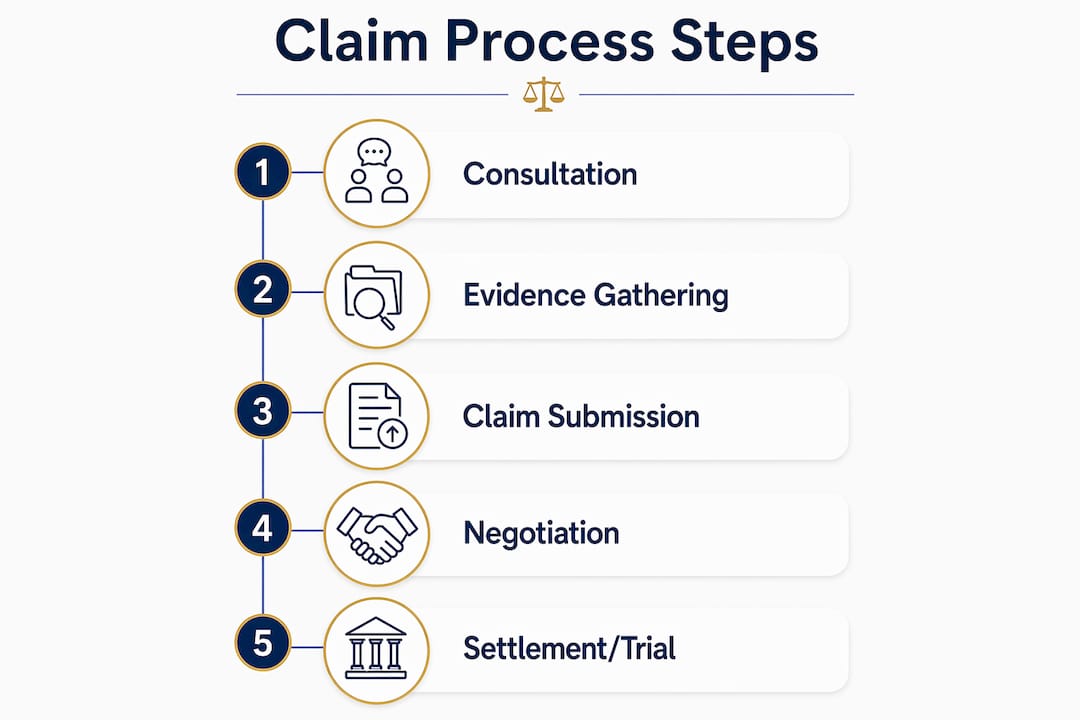
The legal process for medical negligence follows a predictable sequence, though the timeline varies significantly by case complexity. Here is how the stages typically unfold.

Pre-litigation and initial consultation
The process begins with an attorney reviewing your case and advising whether the four elements are provable. If the case has merit, record gathering and expert review begin immediately. In Georgia, the statute of limitations is 2 years, meaning delays can permanently bar your claim even if harm continues to develop. Attorneys begin evidence gathering early to protect against this deadline.
Formal claim submission
In the United States, filing a complaint with the court formally initiates the lawsuit. In the United Kingdom, the pre-action protocol requires sending a Letter of Claim that sets out the facts, alleged negligence, injury, causation, and damages in a clear narrative. Defendants must acknowledge receipt within 14 days and have 4 months to produce a full Letter of Response. A weak or vague Letter of Claim can directly harm settlement chances.
Negotiation, settlement, or trial
The table below summarizes the typical stages and timeframes across both U.S. and U.K. contexts.
| Stage | Typical Duration |
|---|---|
| Medical record gathering | 4–8 weeks |
| Independent expert review | 2–6 months |
| Letter of Claim and Response (UK) | 4 months for response |
| Discovery phase (US) | 3–12 months |
| Negotiation and settlement | 10–24 months |
| Total case duration | 18 months to 3 years |
Most cases resolve through negotiation before reaching trial. When defendants deny liability or fail to respond adequately, litigation proceeds to court. The Georgia personal injury settlement process follows a similar arc, moving from demand letters through negotiation to potential trial if a fair offer is not reached.
Key factors that affect total timeline include:
- Severity and complexity of the injury
- Number of defendants named in the claim
- Availability and credibility of expert witnesses
- Whether liability is disputed or admitted early
How can you avoid the most common claim mistakes?
Missing or inadequate expert reports, unclear causal chains, and failure to quantify damages are the three most common reasons malpractice claims fail. Knowing these pitfalls in advance gives you a real advantage.
- Meet every deadline. In Georgia, the two-year statute of limitations is firm. Missing it ends your claim regardless of how strong the evidence is. Some exceptions exist for minors or cases involving fraudulent concealment, but you should never rely on exceptions.
- Gather complete, accurate records. Partial records create gaps that defense attorneys exploit. Request records from every provider involved in your care, not just the one you believe was negligent.
- Retain qualified expert witnesses. Credibility matters. An expert who lacks direct experience in the relevant specialty will be challenged aggressively by defense counsel. Your attorney should vet experts carefully before retaining them.
- Value your damages realistically. Overvaluing a claim invites lowball counters and delays. Undervaluing it leaves money on the table. Work with your attorney and, where appropriate, financial or vocational experts to calculate a defensible number.
“The strength of a medical negligence claim rests on three pillars: complete records, credible expert testimony, and a clear causal narrative. Weakness in any one of them gives the defense an opening.”
Understanding medical malpractice in Georgia means recognizing that the legal system places the burden of proof squarely on the claimant. That burden is manageable with the right preparation and legal support.
Key takeaways
A successful medical negligence claim requires proving duty, breach, causation, and damages through complete records, credible expert testimony, and strict compliance with filing deadlines.
| Point | Details |
|---|---|
| Four elements are mandatory | Duty, breach, causation, and damages must all be proven or the claim is dismissed. |
| Expert testimony decides cases | Credible, specialty-matched experts are the single most important factor in proving breach and causation. |
| Deadlines are non-negotiable | Georgia’s two-year statute of limitations bars claims filed late, regardless of injury severity. |
| Evidence gathering takes months | Plan for 4–8 weeks for records and 2–6 months for expert review before formal filing. |
| Most claims settle before trial | Strong pre-litigation preparation improves settlement outcomes and reduces the need for court proceedings. |
What i’ve learned after years of watching these cases unfold
Most people who come to an attorney after a medical injury are focused on the outcome. They want to know what they will recover. What I have found is that the claimants who do best are the ones who focus on the process first.
The single biggest mistake I see is waiting. People are still recovering, still processing what happened to them, and the clock is already running. In Georgia, two years sounds like a long time until you factor in record gathering, expert review, and attorney preparation. By the time some families call for help, months have already slipped away.
The second thing I have learned is that the quality of your expert witness matters more than almost anything else. A brilliant case with a weak expert loses. A solid case with a credible, experienced expert wins. Defense attorneys know this too, which is why they work hard to discredit opposing experts. Your attorney’s ability to find and retain the right expert is not a secondary concern. It is central to the outcome.
Finally, I would tell anyone going through this process to write everything down. Keep a daily journal of symptoms, limitations, and how the injury affects your life. Juries and adjusters respond to specificity. “I can no longer pick up my grandchildren” is more persuasive than “I have back pain.” Your personal record is evidence too.
Ready to protect your rights? Jewkes Firm can help.
If you or a family member has been harmed by substandard medical care, the time to act is now. Jewkes Firm has recovered millions for injured clients across South Atlanta and surrounding Georgia counties, and the team is ready to evaluate your case at no cost to you.

Jewkes Firm works on a contingency fee basis. You pay nothing unless they win. From the first consultation through settlement or trial, their attorneys handle every stage of the medical negligence claim process so you can focus on recovery. Call today for a FREE CONSULTATION and let Jewkes Firm put their experience to work for you.
FAQ
What is the first step in a medical negligence claim?
The first step is consulting an experienced attorney who can assess whether your case meets the four required elements: duty, breach, causation, and damages. Early consultation also protects you from missing Georgia’s two-year statute of limitations.
How long does a medical negligence claim take to resolve?
Most cases take 18 months to 3 years from initial consultation to resolution, depending on complexity, the number of defendants, and whether liability is disputed. Cases that settle before trial resolve faster than those that proceed to court.
Do i need an expert witness to win a malpractice claim?
Yes. Expert testimony is required to establish both breach of the standard of care and causation. Without a qualified medical expert, a jury has no basis to evaluate whether the provider’s conduct was negligent.
What damages can i recover in a medical negligence case?
Recoverable damages include medical expenses, lost wages, future care costs, pain and suffering, and emotional distress. The specific amounts depend on the severity of the injury and the strength of the supporting documentation.
What happens if the defendant denies liability?
If the defendant denies liability or fails to respond adequately, the case proceeds to litigation. Both sides enter the discovery phase, exchange evidence, and prepare for trial. Many cases still settle during or after discovery once both sides assess the strength of the evidence.