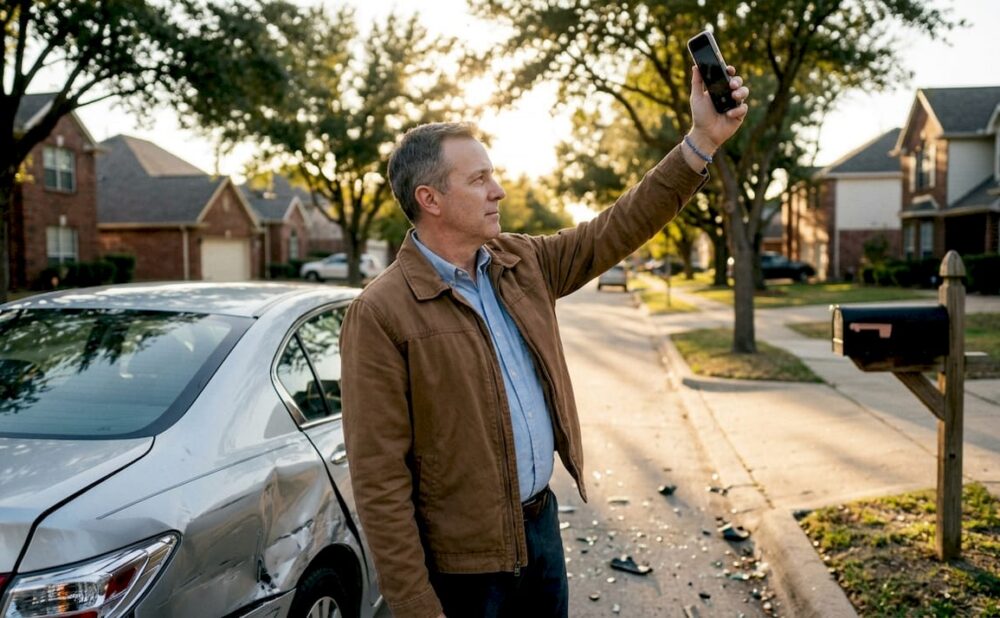

Key Takeaways
- Promptly documenting all physical, photographic, and witness evidence at an accident scene is crucial to protect legal rights and maximize compensation. Timely, detailed records—such as GPS-enabled photos, videos, injury photos, and pre-existing damage documentation—remain vital, as accident evidence degrades quickly and human memory fades. Proper evidence collection supports stronger claims, reduces disputes, and can significantly influence legal outcomes in personal injury cases.
Accident scene documentation is the process of capturing comprehensive physical, photographic, and written evidence immediately after a collision to protect your legal rights and support any injury or liability claim. The standard industry term for this practice is incident evidence preservation, and it covers everything from smartphone photos to witness statements to written notes. Nine out of ten personal injury claims are settled during insurance adjustments, relying on documented evidence rather than verbal accounts. That single fact explains why document accident scenes thoroughly matters more than almost anything else you do in the first minutes after a crash. Your phone, your memory, and your attention to detail are the three tools that determine whether you walk away with fair compensation or nothing.
What key evidence must you document at an accident scene?
Thorough evidence collection starts the moment it is safe to move around the scene. Every piece of physical and visual information you capture becomes an objective record that insurance companies cannot easily dispute.
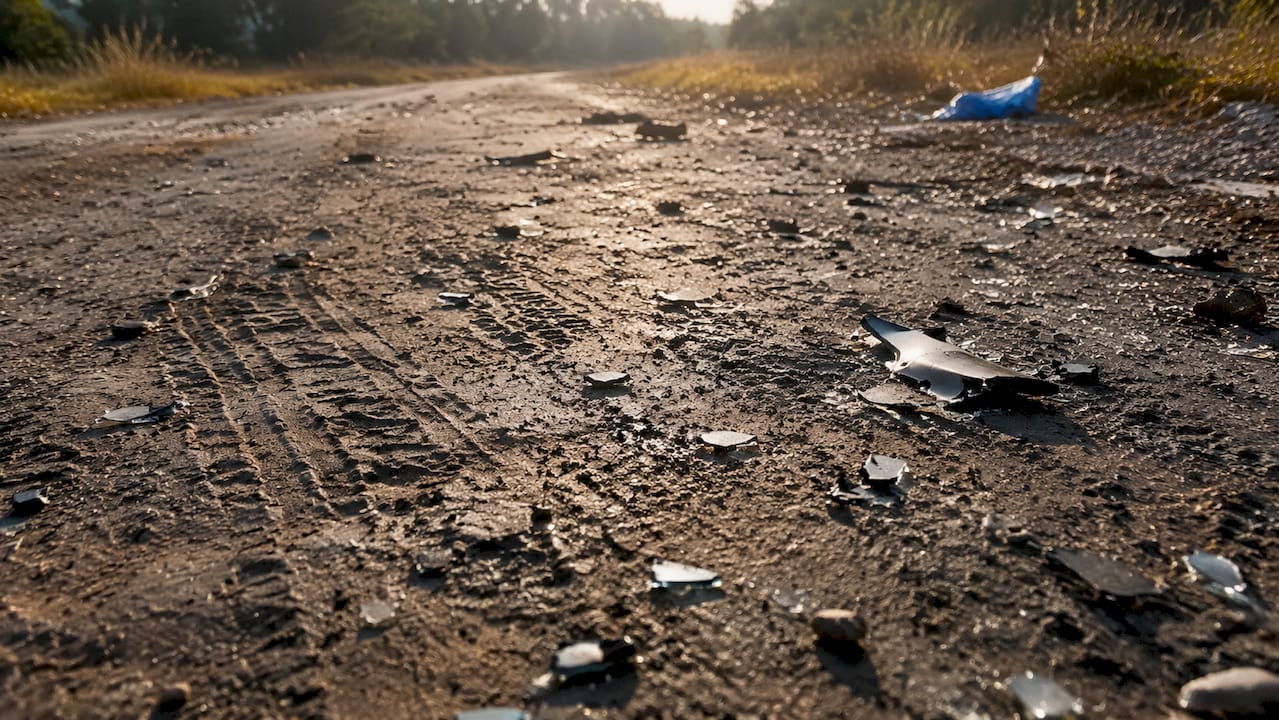
Photographs are your first priority. Shoot wide-angle shots of all vehicles involved, then move in close to capture specific damage, tire positions, and contact points. Document road conditions, lane markings, traffic signals, street signs, and any environmental factors like standing water or sun glare. Photograph skid marks from multiple angles before traffic or weather erases them.
Video recordings add a layer of detail that static photos cannot match. A narrated video walk-around captures transient scene details and witness presence better than photos alone. Walk the scene while narrating what you see, including the time, weather, road conditions, and the positions of all vehicles. A 90-second narrated video often tells a clearer story than 30 individual photos.
Witness information is evidence that expires fast. Collect the following before anyone leaves:
- Full name and phone number of every witness
- Their physical location when the accident occurred (vantage point matters legally)
- A brief verbal statement on video if they consent
- License plate numbers of any vehicles belonging to witnesses who seem reluctant to stay
Physical markers deserve careful attention. Skid marks, fluid spills, broken glass, and debris patterns all tell the story of how the collision happened. Photograph these markers with a reference object nearby, like a shoe or a water bottle, to give scale.
Pro Tip: Turn on location services and timestamp display on your phone before you start shooting. Smartphone GPS metadata embedded in images can decisively prove the location and time of evidence capture in court, neutralizing any claim that photos were staged or altered.
Why does timing matter for preserving accident evidence?
Physical evidence at accident scenes degrades within hours or days. Skid marks, debris, and fluid patterns can disappear after a single rain shower or routine road cleaning. What looks like clear proof of fault at 3:00 p.m. may be completely gone by morning.
Human memory follows a similar curve. Witnesses forget details, change their accounts under pressure, and unconsciously fill gaps with assumptions. Courts and insurance adjusters treat contemporaneous records, meaning records made at the time of the event, as far more credible than recollections made weeks later. A written note you typed into your phone at the scene carries more legal weight than a statement you give from memory 30 days later.
“Photos serve as objective anchors that do not change over time, protecting victims from memory degradation and bolstering legal claims.” — Why Documentation Matters After a Car Accident
Insurance adjusters use documentation gaps as leverage to minimize claim payouts. When your evidence is thin or delayed, adjusters have room to argue that injuries were pre-existing, that fault is unclear, or that damages were exaggerated. Delay can reduce a strong claim to a disputed one, and a disputed claim often settles for far less than its true value.
The practical rule is simple: document everything you can within the first 30 minutes, then follow up with additional photos of your injuries over the next several days. Time-stamped records created close to the event are the foundation of any strong personal injury case.
How should you document accident injuries and pre-existing damage?
Injury documentation requires a different approach than scene documentation. Visible injuries like bruising, cuts, and swelling often worsen over the 24–72 hours following a crash. Photograph injuries immediately at the scene, then again each day for the first week.
Follow these steps to build a complete injury record:
- Photograph all visible injuries at the scene with good lighting. Use a second person to photograph injuries you cannot capture yourself, like back bruising or neck marks.
- Start a personal injury journal the same day. Record your pain levels on a 1–10 scale, physical limitations, sleep disruption, and any activities you cannot perform. Contemporaneous written notes with date-stamps are more credible than later recollections.
- Seek medical attention immediately, even if injuries feel minor. Medical records that link your injuries to the accident date are critical. Gaps in treatment give insurers grounds to argue your injuries were not serious or were caused by something else.
- Document pre-existing vehicle damage before your car is repaired or inspected by an insurer. Showing prior wear or dents closes a common insurer loophole where they attribute new damage to old conditions.
- Coordinate with your healthcare providers to get written documentation connecting your diagnosis and treatment to the accident. Ask your doctor to note the accident date in every record.
Pro Tip: Keep all medical receipts, prescription records, and therapy invoices in a single folder, physical or digital. This paper trail directly supports the economic damages portion of your claim and is one of the most persuasive tools your attorney can use. Review Jewkes Firm’s guide on documenting accident injuries for a detailed breakdown of what to include.
What are the best tools and practices for accident documentation in 2026?
Modern technology makes thorough documentation faster and more reliable than ever. The right tools, used correctly, produce evidence that holds up under legal scrutiny.
Smartphone settings to configure now, before any accident:
- Enable location services for your camera app so GPS coordinates are embedded in every photo
- Turn on automatic cloud backup (Google Photos or iCloud) so evidence is preserved even if your phone is damaged
- Set your camera to the highest resolution available
- Enable the date and time display overlay if your phone supports it
Documentation methods ranked by legal value:
| Method | Strengths | Best Used For |
|---|---|---|
| Time-stamped photos | Immutable, GPS-verified, easy to produce | Vehicle damage, road conditions, injuries |
| Narrated video | Captures context, sequence, and witness presence | Scene overview, witness statements |
| Written notes (phone or paper) | Contemporaneous, credible, detailed | Pain levels, sequence of events, conversations |
| Police report | Official record, third-party authority | Fault determination, insurance filings |
| Witness contact list | Independent corroboration | Disputed liability cases |
Use a standard accident victim checklist to make sure you cover every category under stress. Checklists remove the guesswork when adrenaline is affecting your judgment.
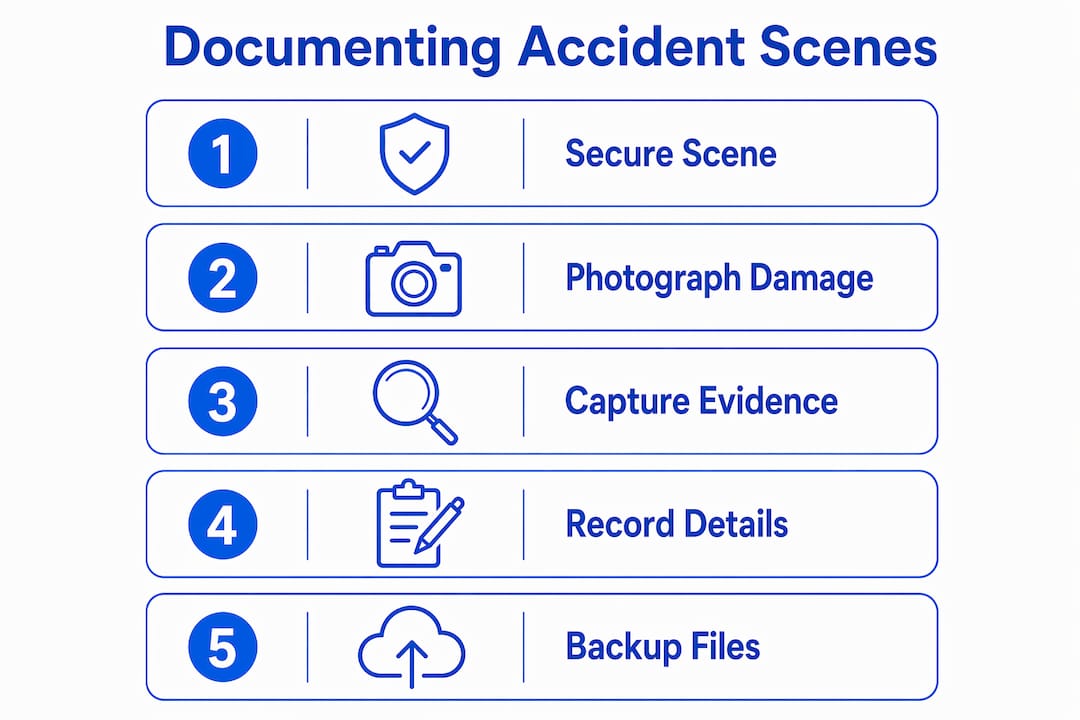
Back up all evidence to at least two locations immediately after leaving the scene. Email photos to yourself, upload to cloud storage, and consider sending copies to a trusted contact. Accident scene investigations rely on prompt and meticulous collection of physical evidence, and losing that evidence to a damaged phone or corrupted file can be catastrophic for your claim.
If you are injured or shaken, ask a passenger or bystander to help document the scene. Give them clear instructions: photograph all four sides of every vehicle, capture the full road environment, and record any witnesses present.
Key takeaways
Thorough accident scene documentation, completed within the first 30 minutes, is the single most effective way to protect your legal rights and maximize your compensation.
| Point | Details |
|---|---|
| Document immediately | Physical evidence like skid marks degrades within hours, so capture everything before leaving the scene. |
| Use GPS-enabled photos | Smartphone metadata proves the time and location of evidence, making photos legally reliable. |
| Record injuries over time | Photograph injuries daily for the first week, since bruising and swelling often worsen after the crash. |
| Prevent pre-existing damage disputes | Document prior vehicle damage before any insurer inspection to close a common claim loophole. |
| Back up evidence right away | Upload photos and videos to cloud storage immediately so a damaged phone cannot destroy your case. |
What i’ve learned from watching claims win and lose on documentation alone
I have reviewed enough personal injury cases to say this with confidence: the difference between a strong settlement and a denied claim is almost always documentation quality, not the severity of the injury.
People make the same mistakes under stress. They wait for police to arrive before taking any photos. They assume the other driver’s admission of fault at the scene will hold up later. It rarely does. Insurance adjusters are trained to find gaps, and a verbal admission with no photographic backup is worth very little once attorneys get involved.
The most counterintuitive lesson I have learned is this: thorough documentation actually reduces conflict. When you have clear, time-stamped, GPS-verified photos of the scene, the other party’s insurer has far less room to negotiate against you. The evidence does the arguing. You do not have to.
The other mistake I see constantly is treating injury documentation as a one-time task. Injuries evolve. A whiplash injury that feels like mild stiffness on day one can become debilitating by day four. If you only photographed your neck on the day of the crash, you have no visual record of how the injury progressed. That gap costs people real money.
My honest advice: treat the scene like a crime scene investigator would. Be methodical, be thorough, and back everything up before you drive away. Your future self, and your attorney, will thank you.
How Jewkes Firm can help you build a strong case
If you have been in an accident in South Atlanta or the surrounding Georgia counties, the evidence you collect at the scene is only the beginning.

Jewkes Firm’s personal injury attorneys know exactly how to use your documentation to build a case that insurance companies cannot easily dismiss. From auto accidents and trucking crashes to slip and falls, the firm has recovered millions for injured clients across Georgia. Jewkes Firm works on a contingency fee basis, meaning you pay nothing unless they win. Your documentation, combined with their legal experience, levels the playing field against well-funded insurance adjusters. Get a free case review today and find out what your claim is worth.
FAQ
Why should you document an accident scene right away?
Physical evidence like skid marks and fluid patterns degrades within hours, and delayed documentation gives insurance adjusters grounds to dispute your claim. Immediate, time-stamped records are treated as far more credible by courts and insurers.
What should you include in accident scene photos?
Photograph all vehicle damage from multiple angles, road conditions, traffic signals, street signs, skid marks, debris, and any visible injuries. Include wide shots for context and close-ups for specific damage details.
How do photos help in a personal injury claim?
Photos serve as objective evidence that does not change over time, protecting you from memory disputes and insurer challenges. GPS and timestamp metadata in smartphone photos also authenticate when and where the evidence was captured.
Does documenting pre-existing vehicle damage really matter?
Documenting prior damage prevents insurers from disputing whether specific damage was caused by the accident or existed beforehand. Without that record, insurers can devalue or deny the property damage portion of your claim.
Should you get witness information even if police are responding?
Collecting witness names, phone numbers, and vantage points is critical regardless of whether police respond. Witnesses leave quickly, and their independent accounts can be decisive in disputed liability cases where your word conflicts with the other driver’s.
Recommended
- Why Document Accident Scene: Protect Your Claim
- Auto Accident Victim Checklist: Secure Your Rights
- Key steps after a car accident: protect your rights
- How to document accident injuries for a strong legal case