

Slip and fall accidents cause over 800,000 hospitalizations annually in the United States, with victims facing devastating medical bills and lost income. In South Atlanta, property hazards like wet floors, uneven sidewalks, and poor lighting create daily risks for residents and visitors. Many injured victims don’t realize they’re entitled to substantial compensation for their injuries, pain, and financial losses. This comprehensive guide walks you through the compensation process, from understanding your rights under Georgia law to securing fair settlements with the help of experienced personal injury attorneys who know how to maximize your recovery.
Table of Contents
- Understanding Slip And Fall Compensation In South Atlanta
- Preparing Your Slip And Fall Case: Documentation And Legal Support
- The Slip And Fall Claims Process And What To Expect In Settlements
- Common Challenges In Slip And Fall Compensation And How To Avoid Them
- Expert Legal Help For Slip And Fall Victims In South Atlanta
- Frequently Asked Questions About Slip And Fall Compensation In South Atlanta
Key takeaways
| Point | Details |
|---|---|
| Compensation types | Economic damages cover medical costs and lost wages, while non-economic damages address pain and suffering without caps in Georgia. |
| Settlement averages | Typical settlements range from $10,000 to $75,000 for moderate injuries, with severe cases exceeding $100,000. |
| Documentation matters | Prompt reporting and thorough evidence collection significantly increase your chances of securing fair compensation. |
| Legal representation | Hiring a specialized South Atlanta attorney improves settlement outcomes and reduces the 30% claim denial rate. |
| Time sensitivity | Georgia’s two-year statute of limitations requires quick action to preserve your right to compensation. |
Understanding slip and fall compensation in South Atlanta
When you suffer injuries from a slip and fall accident in South Atlanta, Georgia law entitles you to pursue two main categories of damages. Economic damages represent the tangible financial losses you experience, including hospital bills, prescription medications, physical therapy costs, and wages lost during recovery. If your injuries require ongoing treatment or permanent disability accommodations, you can also claim future medical expenses and reduced earning capacity.
Non-economic damages compensate for the intangible suffering that numbers alone can’t capture. Pain and suffering, emotional distress, loss of enjoyment in daily activities, and diminished quality of life all fall under this category. Unlike some states that impose arbitrary caps, Georgia law does not limit non-economic damages in slip and fall cases, allowing juries to award compensation that truly reflects your suffering.
Consider these compensable damages in your claim:
- Emergency room visits and ambulance transport
- Surgical procedures and hospital stays
- Rehabilitation and physical therapy sessions
- Prescription medications and medical equipment
- Lost wages from missed work days
- Reduced future earning capacity
- Physical pain and emotional trauma
- Loss of life enjoyment and daily activities
Pro Tip: Start a detailed injury journal immediately after your accident, documenting daily pain levels, medication effects, and how injuries impact your routine activities. This personal record becomes powerful evidence when negotiating non-economic damages with insurance adjusters.
“The key to maximizing compensation is proving both the extent of your injuries and the property owner’s negligence. Documentation separates strong cases from weak ones.”
Your compensation amount depends on injury severity, treatment duration, and how well you document every expense and impact. Keep every receipt, medical record, and correspondence related to your accident. Photograph your injuries as they heal, save pay stubs showing lost income, and gather statements from family members who witness your daily struggles. This evidence transforms abstract suffering into concrete proof that justifies substantial Georgia slip and fall settlements.
Preparing your slip and fall case: documentation and legal support
Building a strong compensation claim starts the moment your accident occurs. Your actions in the hours and days following a slip and fall directly impact your ability to recover damages. Property owners and their insurance companies will look for any reason to deny liability, making thorough preparation essential for success.
Follow these critical steps to protect your claim:
- Report the incident immediately to property management, store managers, or the responsible party, requesting a written incident report and keeping your copy.
- Photograph the hazardous condition that caused your fall, including wide shots showing the area and close-ups of the specific danger like wet floors or broken pavement.
- Collect contact information from witnesses who saw your accident, as their statements provide independent verification of what happened.
- Seek medical attention within 24 hours, even if injuries seem minor, because delayed treatment gives insurers ammunition to claim your injuries aren’t serious.
- Document all medical visits, treatments, and expenses meticulously, organizing records chronologically for easy reference during negotiations.
- Avoid giving recorded statements to insurance adjusters before consulting an attorney, as these statements often contain inadvertent admissions that harm your case.
Pro Tip: Take photos of your clothing and shoes from the accident day before washing them. Visible damage or stains corroborate your account of how the fall occurred and the force of impact.
Selecting the right legal representation dramatically affects your compensation outcome. South Atlanta firms specializing in slip and fall cases include Jamie Ballard Law, The Jewkes Firm, Southside Injury Law, Leeds Law Firm, and Spaulding Injury Law. These attorneys understand local property codes, common defense tactics used by Georgia insurers, and how to value claims accurately based on regional settlement trends.
Experienced attorneys handle the complex legal work while you focus on recovery. They investigate liability by obtaining maintenance records, security footage, and incident reports that property owners often hide from victims. They calculate fair compensation by consulting medical experts about future treatment needs and economists about lost earning capacity. Most importantly, they negotiate from a position of strength because insurers know these attorneys will take cases to trial if necessary.

The benefits of hiring a slip and fall lawyer extend beyond legal expertise. Attorneys work on contingency, meaning you pay nothing unless they recover compensation. This arrangement aligns their interests with yours and removes financial barriers to quality representation. They also handle all communication with insurance companies, protecting you from manipulation tactics designed to minimize payouts or trick you into accepting lowball offers.
Early consultation matters because evidence disappears quickly. Security footage gets overwritten, witnesses forget details, and hazardous conditions get repaired. Reporting slip and falls promptly and contacting an attorney within days preserves crucial evidence and demonstrates you take your injuries seriously.
The slip and fall claims process and what to expect in settlements
Navigating the claims process requires understanding how insurance companies evaluate liability and calculate settlements. The process begins with a thorough investigation to establish that the property owner knew or should have known about the dangerous condition and failed to fix it or warn visitors. Georgia premises liability law requires proving the owner’s negligence directly caused your injuries.
Your attorney will send a demand letter to the insurance company detailing the accident circumstances, your injuries, treatment history, and total damages. This letter includes medical records, bills, wage loss documentation, and expert opinions supporting your compensation request. Insurance adjusters then investigate your claim by reviewing the evidence, interviewing witnesses, and inspecting the accident location.
Settlement negotiations follow a predictable pattern. Insurers typically respond with a lowball offer, hoping you’ll accept quick money rather than fight for fair value. Your attorney counters with evidence justifying higher compensation, often through multiple rounds of negotiation. If negotiations stall, mediation brings in a neutral third party to facilitate agreement. When insurers refuse reasonable settlements, filing a lawsuit and preparing for trial often motivates them to increase their offers substantially.
Settlement amounts vary significantly based on injury severity and case strength:
| Injury Severity | Typical Settlement Range | Examples |
|---|---|---|
| Minor injuries | $10,000 to $25,000 | Sprains, bruises, minor fractures with full recovery |
| Moderate injuries | $25,000 to $75,000 | Broken bones, soft tissue damage requiring surgery |
| Severe injuries | $100,000 to $500,000 | Traumatic brain injuries, spinal damage, permanent disability |
| Catastrophic injuries | $500,000+ to millions | Paralysis, severe brain damage, wrongful death |
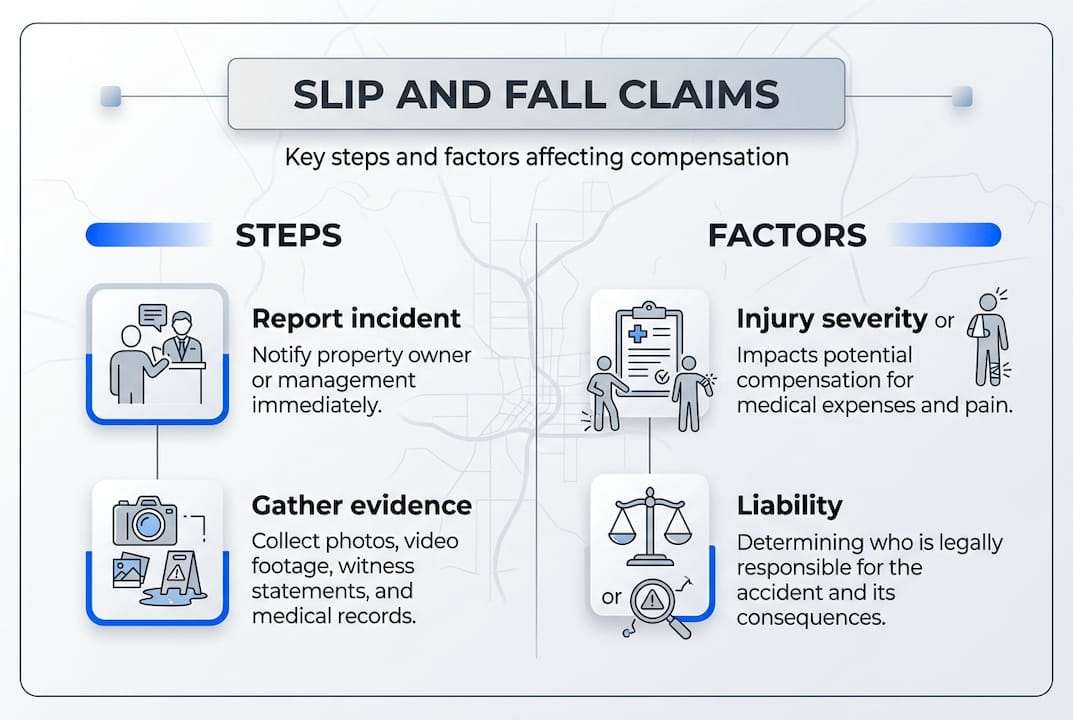
Georgia slip and fall settlements average approximately $46,000 statewide, but this figure masks enormous variation. A victim with a concussion and two weeks of missed work might settle for $15,000, while someone suffering permanent back injuries requiring multiple surgeries could recover $300,000 or more. Documented multi-million dollar verdicts exist for catastrophic cases involving permanent paralysis or severe brain damage.
Several factors influence your final compensation:
- Clear liability evidence showing obvious property owner negligence
- Injury severity and permanence of your condition
- Medical treatment costs and future care needs
- Impact on your ability to work and earn income
- Quality and credibility of your documentation
- Skill of your legal representation
Timeline expectations vary, but most slip and fall claims resolve within six to eighteen months. Simple cases with clear liability and moderate injuries often settle during negotiations. Complex cases involving disputed liability, severe injuries, or uncooperative insurers may require litigation, extending the process to two or three years. Georgia’s two-year statute of limitations creates urgency, as missing this deadline forfeits your right to compensation entirely.
Understanding the Georgia settlement process helps you set realistic expectations and recognize when insurers make fair offers versus when they’re trying to exploit your financial desperation. Patience combined with strong legal representation typically yields significantly higher settlements than rushing to accept the first offer. Your attorney’s experience with slip and fall liability in Georgia ensures you don’t leave money on the table.
Common challenges in slip and fall compensation and how to avoid them
Even strong slip and fall claims face obstacles that can reduce or eliminate compensation. Insurance companies employ sophisticated strategies to deny liability, minimize damages, and pressure victims into accepting inadequate settlements. Recognizing these challenges and implementing countermeasures protects your financial recovery.
Insufficient documentation represents the most common claim killer. Without photos of the hazard, witness statements, or prompt medical treatment, insurers argue the dangerous condition didn’t exist or your injuries aren’t serious. Gaps in medical treatment raise red flags, suggesting injuries weren’t severe enough to require consistent care. Missing work records or incomplete expense documentation allows adjusters to dispute your claimed losses.
Delayed injury reporting creates credibility problems. When you wait days or weeks to report an accident, property owners question whether it actually occurred on their premises. Insurance companies argue you injured yourself elsewhere and fabricated the slip and fall to collect money. Even legitimate victims lose cases because they prioritized immediate concerns over formal documentation.
Approximately 30% of slip and fall insurance claims get denied or significantly reduced, often due to preventable mistakes. Common denial reasons include:
- No documented proof the hazard existed
- Delayed medical treatment suggesting minor injuries
- Inconsistent statements about how the accident occurred
- Pre-existing conditions that insurers blame for current symptoms
- Failure to report the incident promptly to property owners
- Lack of legal representation allowing insurers to exploit victims
Pro Tip: Never sign any documents from insurance companies without attorney review. Release forms often contain language waiving your right to future claims, even if complications develop later. These documents are designed to protect insurers, not you.
“Insurance adjusters are trained negotiators working to minimize payouts. They’ll use your words against you, downplay your injuries, and pressure you to settle quickly before you understand the full extent of your damages. Having an attorney levels the playing field.”
Lack of legal representation dramatically increases denial and underpayment risks. Insurers know unrepresented victims don’t understand claim valuation, Georgia premises liability law, or negotiation tactics. They make lowball offers sound reasonable, exploit your financial stress to force quick settlements, and use complex legal language to confuse you. Attorneys eliminate these advantages by handling all insurer communication and advocating aggressively for fair compensation.
Speaking to insurance adjusters without guidance often backfires. Adjusters record conversations and cherry-pick statements that support denial. They ask leading questions designed to make you admit partial fault or minimize injury severity. A simple comment like “I’m feeling better” gets twisted into evidence your injuries weren’t serious, even if you still experience significant pain.
Overcoming these challenges requires proactive measures. Document everything immediately, seek medical attention within hours, report accidents formally before leaving the property, and consult attorneys before speaking with insurers. Gather witness statements while memories remain fresh, photograph hazards from multiple angles, and keep detailed records of every expense and impact. These steps transform vulnerable claims into strong cases that insurers take seriously.
Insurance coverage challenges vary depending on whether your accident occurred at a business, private residence, or government property. Commercial properties typically carry substantial liability insurance, while homeowners policies often have lower limits. Understanding coverage available helps you set realistic settlement expectations and identify all potential sources of compensation.
Expert legal help for slip and fall victims in South Atlanta
Navigating slip and fall compensation claims without experienced legal guidance puts you at a severe disadvantage against well-funded insurance companies. Property owners and their insurers employ teams of lawyers and adjusters whose sole job is minimizing payouts. You deserve equally skilled representation fighting exclusively for your interests.
The Jewkes Firm personal injury lawyers specialize in helping South Atlanta slip and fall victims secure maximum compensation. Their attorneys understand Georgia premises liability law, local property codes, and the specific tactics insurers use to deny legitimate claims in our region. They’ve recovered millions for injured clients by building ironclad cases, negotiating aggressively, and taking unfair insurers to trial when necessary.

The benefits of hiring a slip and fall lawyer extend far beyond legal expertise. Attorneys handle all case aspects while you focus on physical recovery, eliminating the stress of fighting insurance companies alone. They work on contingency, meaning you pay nothing unless they win compensation. This arrangement removes financial barriers to quality representation and ensures your attorney’s success depends entirely on maximizing your recovery.
Don’t let insurance companies exploit your vulnerability during a difficult time. Contact experienced Georgia personal injury attorneys today to discuss your case, understand your rights, and take the first step toward fair compensation. Choosing the right injury attorney requires researching their slip and fall experience, success rates, and client testimonials. The Jewkes Firm offers free consultations to evaluate your claim and explain how they can help you secure the compensation you deserve.
Frequently asked questions about slip and fall compensation in South Atlanta
What is the average slip and fall settlement in South Atlanta?
Settlement amounts vary widely based on injury severity, but Georgia averages approximately $46,000 for slip and fall cases. Minor injuries typically settle between $10,000 and $25,000, moderate injuries range from $25,000 to $75,000, and severe injuries often exceed $100,000. Catastrophic cases involving permanent disability can reach millions.
How long do I have to file a slip and fall claim in Georgia?
Georgia’s statute of limitations gives you two years from the accident date to file a personal injury lawsuit. Missing this deadline forfeits your right to compensation permanently. However, you should contact an attorney immediately because evidence disappears quickly and early action strengthens your claim significantly.
Can I handle a slip and fall claim without a lawyer?
While legally possible, handling claims without representation dramatically reduces your compensation and increases denial risk. Insurance companies exploit unrepresented victims through lowball offers and manipulation tactics. Attorneys work on contingency, so hiring one costs nothing unless they recover money, making professional representation financially risk-free.
What evidence is best to prove liability in slip and fall cases?
Photographs of the hazardous condition, witness statements, incident reports, and maintenance records provide the strongest liability proof. Medical records linking your injuries directly to the fall, surveillance footage showing the accident, and expert testimony about property code violations also strengthen cases substantially. Immediate documentation matters most.
How quickly should I report my slip and fall injury?
Report accidents immediately to property management or the responsible party before leaving the premises. Request a written incident report and keep your copy. Seek medical attention within 24 hours and contact an attorney within days to preserve evidence and protect your rights. Delays create credibility problems that insurers exploit to deny claims.