

Personal injury law extends far beyond car accidents. Many South Atlanta residents don’t realize they can pursue compensation for medical malpractice, slip and fall incidents, and product liability cases. Georgia’s legal framework in 2026 provides clear paths to recovery for accident victims, but understanding your rights and deadlines is essential. This guide breaks down what you need to know about filing personal injury claims, navigating fault-based systems, and maximizing compensation under current Georgia statutes.
Table of Contents
- Understanding Personal Injury Law In Georgia
- Georgia’s Fault-Based Car Accident System And Compensation
- Legal Deadlines And Filing Personal Injury Claims In Georgia
- Navigating Damage Caps And Legal Challenges In Georgia Personal Injury Cases
- How The Jewkes Firm Can Help Personal Injury Victims In South Atlanta
- Frequently Asked Questions
Key takeaways
| Point | Details |
|---|---|
| Georgia uses a fault-based system | The at-fault driver pays for damages up to their liability coverage limits in car accidents. |
| Multiple injury types qualify | Claims cover auto accidents, medical malpractice, slip and falls, product liability, and wrongful death cases. |
| Strict filing deadlines apply | You typically have 2 years from the injury date to file a lawsuit in Georgia. |
| Damage caps exist for certain cases | Noneconomic damages face statutory limits in medical malpractice and wrongful death claims. |
| Legal representation improves outcomes | Experienced lawyers navigate complex Georgia laws and maximize compensation for victims. |
Understanding personal injury law in Georgia
Personal injury law addresses harm caused by someone else’s negligence or wrongful actions. When another party’s carelessness leads to your physical, emotional, or financial suffering, you have legal grounds to seek compensation. Georgia law allows for personal injury claims in cases of auto accidents, medical malpractice, and other injury-related incidents, giving South Atlanta victims multiple pathways to justice.
Common personal injury cases in Georgia include:
- Auto accidents involving cars, trucks, motorcycles, and pedestrians
- Medical malpractice from surgical errors, misdiagnosis, or medication mistakes
- Slip and fall incidents on poorly maintained properties
- Product liability for defective goods causing injury
- Wrongful death resulting from another party’s negligence
- Workplace accidents and construction site injuries
Georgia’s statutes govern how these claims proceed and which damages you can recover. Understanding case types helps you identify if your situation qualifies for legal action. The state’s legal framework balances victim rights with defendant protections, creating specific procedures you must follow.
Knowing why hire a personal injury lawyer becomes critical when navigating these complex claims. Each case type carries unique evidence requirements, liability standards, and compensation calculations. Your ability to prove negligence and demonstrate damages directly impacts your recovery potential.
Georgia’s fault-based car accident system and compensation
Georgia follows a fault-based system for car accidents, meaning the at-fault driver bears financial responsibility for damages. This differs from no-fault states where your own insurance covers injuries regardless of who caused the crash. In South Atlanta, determining fault shapes every aspect of your claim.
Under this system, you can claim compensation for injuries and vehicle damage after a car accident. The at-fault driver’s liability insurance must pay for:
- Medical expenses including emergency care, surgery, therapy, and rehabilitation
- Property damage covering vehicle repairs or replacement value
- Lost wages from missed work during recovery
- Pain and suffering for physical discomfort and emotional distress
- Loss of earning capacity if injuries affect future work ability
Proof of fault requires solid evidence. Police reports, witness statements, traffic camera footage, and accident reconstruction analysis all strengthen your position. Insurance companies scrutinize claims carefully, often attempting to shift blame or minimize payouts.

Pro Tip: Document everything at the accident scene. Photograph vehicle damage from multiple angles, capture road conditions and traffic signals, and collect contact information from witnesses before leaving.
Georgia’s modified comparative negligence rule affects compensation amounts. If you’re found partially at fault, your recovery decreases by your percentage of responsibility. Being 20% at fault for a $100,000 claim reduces your award to $80,000. You cannot recover anything if you’re 50% or more at fault.
Understanding these rules helps when dealing with insurance adjusters. Companies often use recorded statements against you, twisting words to establish your fault. South Atlanta truck accident claims involve additional federal regulations and multiple liable parties, making legal guidance even more valuable.
Legal deadlines and filing personal injury claims in Georgia
Time limits govern every personal injury claim in Georgia. Miss these deadlines and you lose your right to compensation permanently. Georgia’s car accident laws include fault rules, deadlines for filing lawsuits, and rules for reporting accidents, creating a structured timeline you must follow.
Critical deadlines include:
- Immediate accident reporting: Notify police within 24 hours for crashes causing injury, death, or property damage exceeding $500.
- Insurance notification: Contact your insurer promptly, typically within days as specified in your policy.
- Statute of limitations: File lawsuits within 2 years from the injury date for most personal injury cases.
- Government claims: Submit notice within 6 months when suing a city or county, 12 months for state agencies.
- Wrongful death claims: Families have 2 years from the date of death to file.
These timeframes vary based on injury type and defendant identity. Medical malpractice claims against private doctors follow the 2-year rule, but cases involving minors or hidden injuries have modified deadlines. Discovery of harm rules sometimes extend filing periods when injuries weren’t immediately apparent.
Pro Tip: Start building your case immediately after an accident. Evidence disappears quickly as witnesses forget details, surveillance footage gets deleted, and physical conditions change.
Delays harm your claim in multiple ways. Fading memories weaken witness testimony. Lost or destroyed evidence becomes irretrievable. Insurance companies question claim legitimacy when you wait months to report injuries. Courts show no mercy for missed deadlines, dismissing cases regardless of merit.
Protecting your rights requires prompt action. File injury lawsuit Georgia guide details the step-by-step process for meeting legal requirements. Even if you’re unsure about pursuing a claim, documenting everything preserves your options. You can always choose not to file, but you cannot recreate missed opportunities.
Knowing how to report slip and fall Georgia incidents properly ensures compliance with property owner notification requirements. Many businesses have internal reporting systems that create official records of your accident.
Navigating damage caps and legal challenges in Georgia personal injury cases
Georgia law imposes caps on noneconomic damages in specific personal injury cases. These statutory limits restrict compensation for pain and suffering, emotional distress, and loss of enjoyment of life. Medical malpractice cases face a $350,000 cap on noneconomic damages per healthcare provider, with a total limit of $1.05 million when multiple providers share liability.
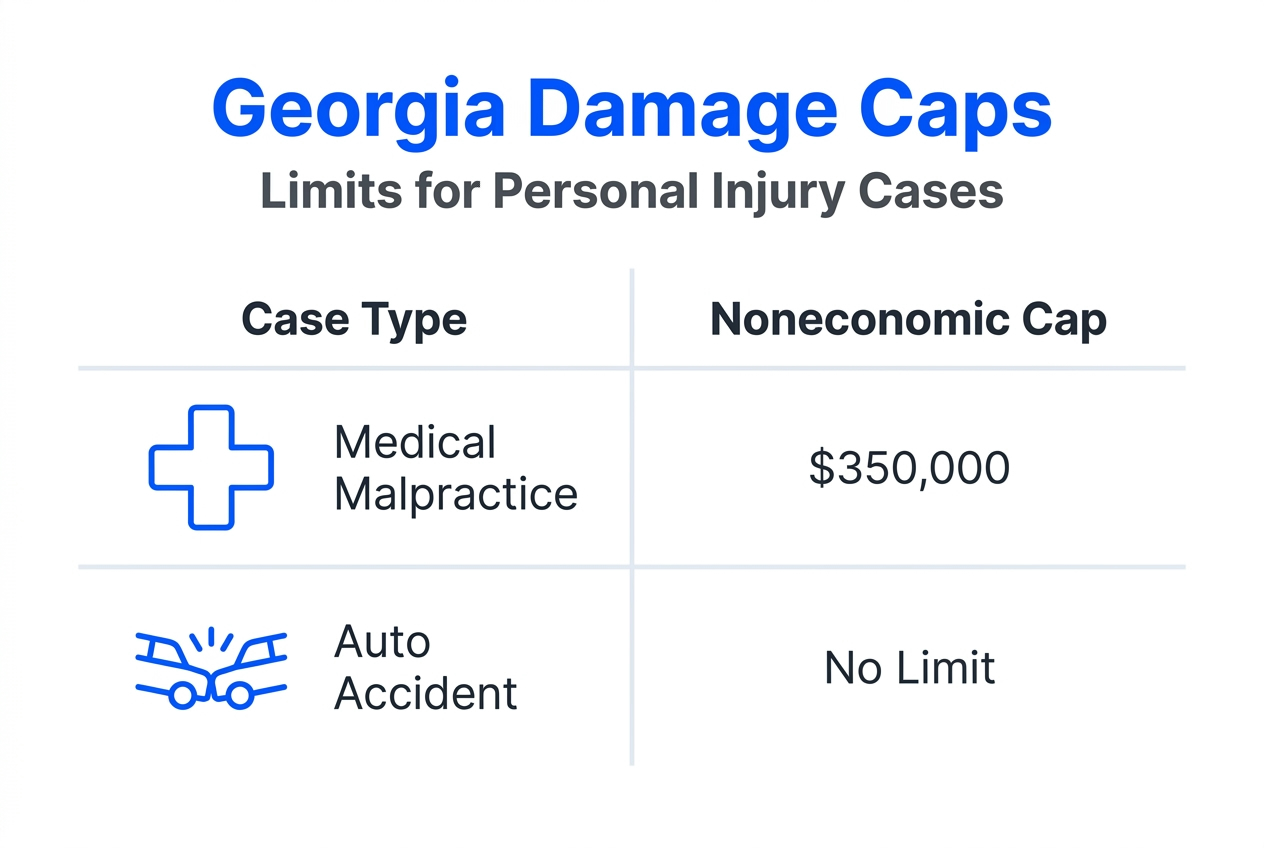
Wrongful death cases have similar restrictions. While economic damages like medical bills and lost income have no cap, noneconomic damages cannot exceed specific amounts. The Georgia Supreme Court has considered the impact of the 1868 Georgia Constitution on common law rights in cases involving damages, creating ongoing legal debates about these limitations.
| Damage Type | Medical Malpractice Cap | Auto Accident Cap | Wrongful Death Cap |
|---|---|---|---|
| Economic damages | No cap | No cap | No cap |
| Noneconomic damages | $350,000 per provider | No cap | Varies by case type |
| Punitive damages | Limited by statute | Limited by statute | Limited by statute |
These caps significantly impact victims with severe, life-altering injuries. Someone paralyzed by medical negligence faces decades of pain and limited mobility, yet their noneconomic recovery remains capped. Critics argue these limits violate constitutional rights to jury trials and equal protection.
Challenges to damage caps continue in 2026:
- Constitutional arguments based on the 1868 Georgia Constitution’s preservation of common law rights
- Equal protection claims asserting caps discriminate against severely injured victims
- Separation of powers challenges arguing legislatures cannot override jury awards
- Access to justice concerns about caps deterring legitimate claims
Understanding these limits helps you set realistic expectations. Your lawyer should explain how caps affect your specific case and whether any exceptions apply. Some situations allow higher awards, particularly when defendants acted with gross negligence or willful misconduct.
Strategic claim presentation can maximize recovery within legal constraints. Thoroughly documenting economic damages ensures full compensation for measurable losses. Expert testimony establishes the true value of noneconomic harm, even if caps limit final awards. Knowing how to maximize compensation South Atlanta victims receive requires understanding both the law and effective claim strategies.
Legal representation becomes essential when navigating damage caps. Experienced attorneys know how to structure claims, present evidence, and argue for maximum awards within statutory limits. They also monitor ongoing legal challenges that might affect your case.
How The Jewkes Firm can help personal injury victims in South Atlanta
Navigating Georgia’s personal injury laws requires experienced legal guidance. The Jewkes Firm helps South Atlanta accident victims understand their rights, meet critical deadlines, and maximize compensation in 2026. Our team knows how fault-based systems work and how to counter insurance company tactics designed to minimize your recovery.

We handle every aspect of your claim, from initial investigation through settlement negotiations or trial. Georgia personal injury lawyers at our firm bring decades of combined experience to auto accident cases, medical malpractice claims, slip and falls, and wrongful death lawsuits. You pay nothing unless we win your case, removing financial barriers to quality legal representation.
Our approach focuses on building strong evidence, meeting all deadlines, and fighting for full compensation within Georgia’s legal framework. Understanding why hire a personal injury lawyer becomes clear when you see how we navigate complex damage cap challenges and statute of limitations requirements. We guide you through each step outlined in our filing injury lawsuit guide, ensuring nothing falls through the cracks.
Frequently asked questions
What is personal injury law?
Personal injury law provides legal remedies when someone else’s negligence causes you harm. It covers physical injuries, emotional distress, and financial losses resulting from accidents, malpractice, or intentional wrongdoing. Georgia law allows victims to pursue compensation through insurance claims or lawsuits, with specific rules governing each case type.
Can I file a personal injury claim for a slip and fall accident in South Atlanta?
Yes, slip and fall injuries qualify for personal injury claims in Georgia when property owner negligence caused your accident. You must prove the owner knew or should have known about the hazard and failed to fix it or warn visitors. Timely report slip and fall Georgia incidents to create official documentation supporting your claim.
How long do I have to file a personal injury lawsuit in Georgia?
Georgia’s statute of limitations generally gives you 2 years from the injury date to file most personal injury lawsuits. Different deadlines apply for government claims, wrongful death cases, and situations involving minors. Missing these file injury lawsuit Georgia deadlines results in permanent loss of your legal rights.
What damages can I recover in a personal injury claim in Georgia?
Recoverable damages include medical expenses, lost wages, property damage, pain and suffering, and loss of earning capacity. Economic damages have no caps in most cases, while noneconomic damages face statutory limits in medical malpractice and wrongful death claims. Understanding types of damages in Georgia helps you assess your claim’s potential value.
Do I need a personal injury lawyer to handle my claim in South Atlanta?
While not legally required, hiring a lawyer significantly improves your chances of maximum compensation. Attorneys understand Georgia’s complex fault rules, damage caps, and insurance negotiation tactics. The need for a personal injury lawyer becomes obvious when dealing with disputed liability, severe injuries, or uncooperative insurance companies. Most personal injury lawyers work on contingency, charging fees only if you win.