
How to File an Auto Accident Claim Step by Step
Filing a car accident claim involves reporting the crash, gathering evidence, seeking medical treatment, notifying insurance companies, and negotiating a settlement. The process can be straightforward in simple cases but becomes more complex when injuries, disputes, or insurance challenges are involved.
After a car accident, many people feel overwhelmed and unsure about what steps to take next. You may be dealing with injuries, vehicle damage, medical appointments, and financial stress all at once. On top of that, the claims process can feel confusing and intimidating.
Knowing how to properly file an auto accident claim is essential for protecting your rights and ensuring you receive fair compensation. Every step you take matters, from the moment the accident happens to the final settlement negotiation.
This guide walks you through the entire process step by step, explains common mistakes to avoid, and shows you how to protect yourself legally and financially.
Step 1: Ensure Safety and Call Emergency Services
The first priority after any accident is safety.
Check for injuries immediately
Take a moment to assess:
- Your own condition
- Passengers in your vehicle
- People in other vehicles
Even if injuries seem minor, they should not be ignored.
Move to safety if possible
If the vehicles are creating danger:
- Move to a safe location
- Turn on hazard lights
- Stay away from traffic lanes
If the accident is severe, remain in place until help arrives.
Call emergency responders
You should call emergency services if:
- Anyone is injured
- Vehicles are heavily damaged
- Traffic is blocked
Police documentation will be important later in your claim.
Step 2: Get a Police Report
A police report is a key piece of evidence in your claim.
What police do at the scene
Officers will:
- Document the accident
- Interview drivers and witnesses
- Record observations
- Create an official report
Why it matters for your claim
Insurance companies use police reports to:
- Determine fault
- Validate your statement
- Evaluate damages
What you should say
Be careful and:
- Stick to facts
- Avoid guessing
- Do not admit fault
Step 3: Seek Medical Attention
Even if you feel okay, medical evaluation is critical.
Why medical care is important
Some injuries are not immediately obvious:
- Whiplash
- Concussions
- Internal injuries
- Soft tissue damage
Medical records support your claim
They help:
- Prove injury occurred
- Link injuries to the accident
- Establish treatment needs
Follow all treatment plans
You should:
- Attend appointments
- Take prescribed medication
- Follow doctor instructions
Gaps in treatment can reduce claim value.
Step 4: Gather Evidence at the Scene
Evidence is essential for a strong claim.
What to collect
If possible, gather:
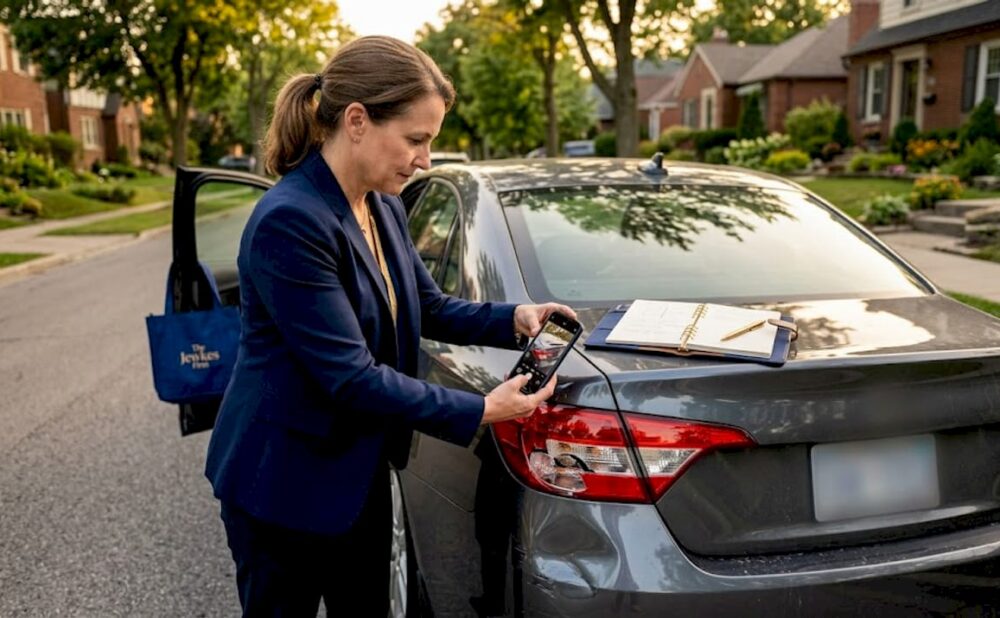
- Photos of vehicle damage
- Road conditions
- Traffic signs
- Visible injuries
Why evidence matters
Evidence helps:
- Establish fault
- Show severity of damage
- Support your version of events
Additional documentation
Also record:
- Time and date
- Weather conditions
- Location details
Step 5: Exchange Information with the Other Driver
You must exchange basic information.
What to collect
- Name and contact information
- Insurance provider
- Policy number
- Driver’s license
- License plate number
What to avoid
Do not:
- Argue
- Apologize
- Admit fault
- Engage in confrontation
Stay calm and professional.
Step 6: Talk to Witnesses
Witnesses can strengthen your claim significantly.
Why witnesses matter
They can:
- Confirm what happened
- Support your statement
- Clarify unclear details
What to collect
- Names
- Phone numbers
- Short statements if possible
Step 7: Notify Your Insurance Company
You should report the accident promptly.
What to say
When speaking to your insurer:
- Stick to basic facts
- Avoid speculation
- Do not admit fault
Why caution is necessary
Insurance companies may:
- Minimize your claim
- Request recorded statements
- Use your words against you
Step 8: Understand Your Insurance Coverage
Knowing your policy helps you understand what is covered.
Common coverage types
- Liability coverage
- Collision coverage
- Medical payments coverage
- Uninsured motorist coverage
Why coverage matters
Your policy determines:
- What damages are covered
- How much compensation you may receive
- Whether additional claims are needed
Step 9: Document Your Injuries and Expenses
Proper documentation strengthens your claim.
Medical expenses
Track:
- Hospital bills
- Medication costs
- Therapy expenses
- Follow-up care
Lost income
Include:
- Missed work
- Reduced work capacity
- Lost business opportunities
Other losses
You may also include:
- Pain and suffering
- Emotional distress
- Transportation costs
Step 10: Avoid Common Claim Mistakes
Many people accidentally weaken their claims.
Mistake 1: Delaying medical care
This can make it harder to prove injuries.
Mistake 2: Giving recorded statements too early
Insurance companies may use them against you.
Mistake 3: Accepting early settlement offers
These are often lower than full value.
Mistake 4: Posting on social media
Posts can be misinterpreted and used as evidence.
Mistake 5: Not keeping records
Missing documentation weakens your claim.
Step 11: File Your Insurance Claim
Once you have gathered information, you formally file your claim.
How to file
You can file:
- Online
- By phone
- Through your attorney
What you will need
- Accident details
- Police report
- Insurance information
- Medical records
Step 12: Insurance Investigation Process
After filing, the insurance company investigates.
What they review
- Police report
- Vehicle damage
- Medical records
- Witness statements
Possible outcomes
- Claim accepted
- Partial settlement
- Claim denied
- Further investigation requested
Step 13: Settlement Negotiation
Most claims are resolved through negotiation.
How negotiation works
- Insurance makes initial offer
- You may accept or reject
- Counteroffers may be made
- Final agreement is reached
Why initial offers are low
Insurance companies often:
- Aim to minimize payouts
- Expect negotiation
- Offer quick settlements
Step 14: When a Claim Becomes a Lawsuit
If negotiations fail, legal action may be necessary.
When lawsuits happen
- Serious injuries
- Disputed fault
- Low settlement offers
- Insurance denial
What happens next
- Complaint is filed
- Discovery process begins
- Depositions may occur
- Trial or settlement follows
Step 15: How Long the Process Takes
Claim timelines vary based on complexity.
Simple claims
- A few weeks to months
Complex injury claims
- Several months to over a year
Factors affecting timeline
- Injury severity
- Insurance cooperation
- Disputes over fault
- Need for litigation
Step 16: Role of Legal Representation
An attorney can significantly improve your claim outcome.
What an attorney does
- Handles insurance communication
- Gathers evidence
- Calculates damages
- Negotiates settlement
- Represents you in court
Why legal help matters
Insurance companies often take claims more seriously when an attorney is involved.
Working with an auto accident attorney ensures your claim follows proper legal procedures and that your rights are protected throughout the process.
Step 17: Emotional Impact of Filing a Claim
Filing a claim after an accident is stressful.
Common emotions include:
- Anxiety
- Confusion
- Frustration
- Stress about finances
Why support matters
Understanding the process helps reduce stress and improves decision-making.
Step 18: Final Steps Before Settlement
Before closing your claim, ensure:
- All medical treatment is complete
- Future expenses are considered
- Damages are fully calculated
Final Thoughts
Filing an auto accident claim involves many steps, from reporting the accident to negotiating a fair settlement. Each stage plays an important role in determining the outcome of your case. Taking the right steps early can significantly improve your chances of receiving fair compensation and avoiding unnecessary delays or mistakes.
If you are unsure about how to move forward or are dealing with insurance challenges, reaching out to The Jewkes Law Firm can help you understand your rights and options. Speaking with an experienced attorney can provide clarity, support, and guidance so you can focus on recovery while your claim is handled properly.
Follow us on our social media pages below:
Learn more about personal injury law through the articles below: