
One wrong move after a slip and fall can cost you everything. Not the fall itself, but what you do in the minutes, hours, and days that follow. Many victims in South Atlanta walk away from the scene thinking they’re fine, skip the doctor, and forget to report the incident. Then, weeks later, they discover their injuries are serious and their claim is nearly impossible to prove. Delayed reporting leads to a 40% claim loss in cases just like yours. This guide walks you through every critical step you need to take to protect your health, preserve your evidence, and secure the compensation you deserve.
Table of Contents
- Prioritize your health: Get immediate medical attention
- Report the fall immediately and request a written report
- Document everything: Preserve evidence before it disappears
- Consult a premises liability attorney early
- Know your deadlines: Statute of limitations and special rules
- Timeline and expectations: Settlements, compensation, and results
- Connect with local experts for personalized help
- Frequently asked questions
Key Takeaways
| Point | Details |
|---|---|
| Get medical attention | Prompt medical care protects your health and documents your injuries for your claim. |
| Report right away | Notify the property manager immediately and request a written report to increase your claim’s chance of success. |
| Gather strong evidence | Photos, witness contacts, and saved clothing can dramatically increase your compensation. |
| Consult a lawyer early | An attorney boosts your outcome and usually costs nothing unless you win your case. |
| Know legal deadlines | Georgia law often requires action within two years, or six months for some government properties. |
Prioritize your health: Get immediate medical attention
Your health comes first. Always. But here’s what most people don’t realize: getting medical care right away isn’t just about feeling better. It’s one of the most important legal moves you can make.
Some injuries don’t show up immediately. Concussions and internal injuries may not produce obvious symptoms for hours or even days after a fall. If you wait to see a doctor, the insurance company will argue your injuries weren’t serious, or worse, that they happened somewhere else entirely.
Here’s what prompt medical care does for your case:
- Creates a direct link between the accident and your injuries
- Establishes a timeline that supports your claim
- Provides official documentation that is difficult for insurers to dispute
- Protects your long-term health by catching hidden damage early
Follow through with every recommended appointment, specialist visit, and treatment plan. Keep copies of all records, bills, and prescriptions. These documents become the backbone of your injury documentation strategy.
Statistic: Gaps in medical treatment are one of the top reasons insurance companies reduce or deny slip and fall claims in Georgia.
Pro Tip: Even if you feel completely fine after a fall, go to an urgent care clinic or emergency room. A clean bill of health still creates a post-accident record that protects you if symptoms develop later.
Once you’ve ensured your health is protected, the next step is creating an official record of the incident.
Report the fall immediately and request a written report
Don’t leave the property without reporting what happened. This step is non-negotiable. Notifying the property owner or manager right away creates an official record that is very hard to erase or dispute later.
Here’s exactly how to handle reporting:
- Find the manager or owner on-site and notify them verbally and in writing if possible.
- Request a written incident report before you leave. Read it carefully and correct any errors.
- Get the full name and contact information of every person you speak with.
- Ask for a copy of the completed report before you walk out the door.
- Note the date and time of your report in your own records.
Prompt reporting boosts claim success by 43% in South Atlanta cases. That’s not a small number. It reflects how much weight courts and insurers place on timely, documented notice.
“Delays in reporting don’t just slow your case down. They erase evidence, weaken your credibility, and hand the property owner a ready-made defense.”
After you’ve reported your injury, preserving evidence at the scene becomes your top priority.
Document everything: Preserve evidence before it disappears
Evidence disappears fast. A wet floor gets mopped. A broken step gets repaired. A missing warning sign gets replaced. In South Atlanta, local hazards like grocery spills and apartment stairways can be cleaned up within minutes of an incident. You need to act before that happens.
Use your phone to capture everything:
- Photos of the hazard that caused your fall (wet floor, uneven surface, poor lighting)
- Photos of the surrounding area, including any missing or inadequate warning signs
- Photos of your injuries, taken immediately and in the days that follow
- Video of any cleanup or repairs happening in real time
Also collect the names and contact information of any witnesses. Their accounts can be decisive. And preserve the shoes and clothing you were wearing. These items can show the condition of the surface and support your version of events.
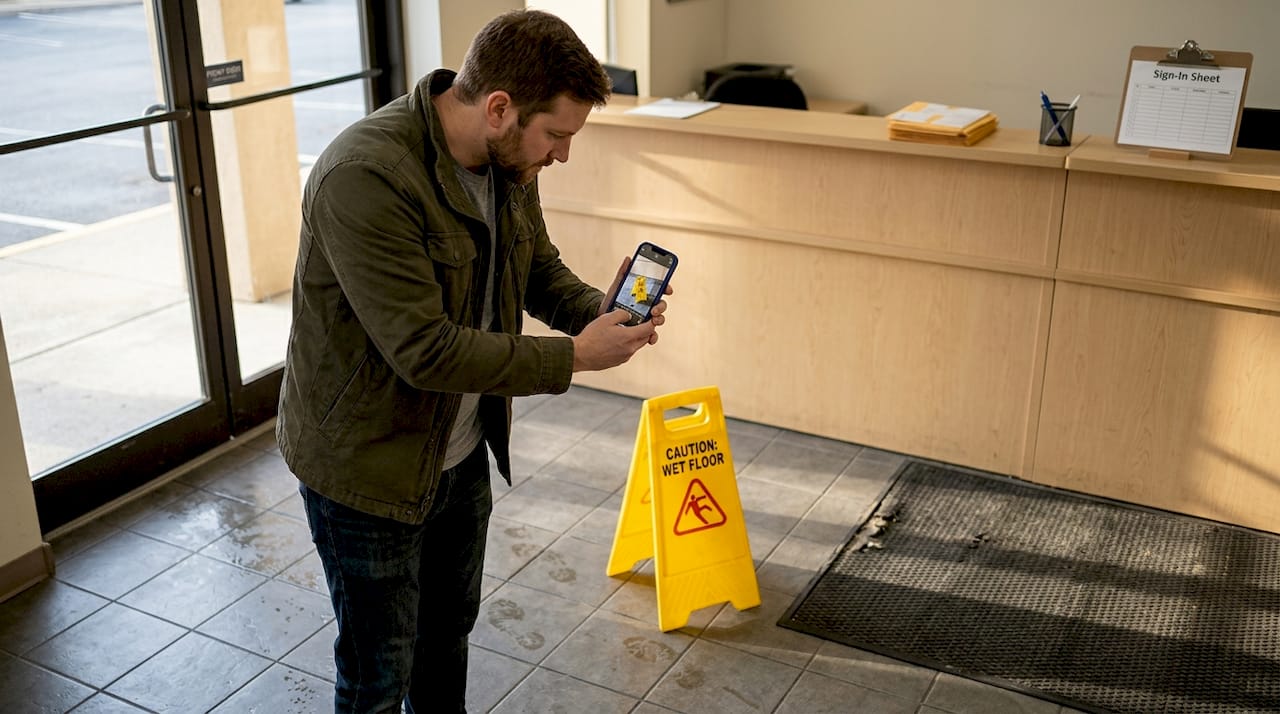
Here’s a quick evidence checklist to keep in mind:
| Evidence type | Why it matters |
|---|---|
| Photos of hazard | Proves the dangerous condition existed |
| Witness contacts | Provides independent confirmation of events |
| Clothing and shoes | Demonstrates surface conditions and impact |
| Incident report copy | Creates an official record tied to the property |
| Medical records | Links injuries directly to the accident |
Pro Tip: If you see property staff beginning to clean up the hazard, immediately start recording video. Showing that conditions were altered right after your fall can actually strengthen your case.
With your health secured, the fall reported, and evidence preserved, the next decision is whether to handle your case alone or seek help.
Consult a premises liability attorney early
Premises liability is the area of law that holds property owners responsible for unsafe conditions on their property. Navigating it alone is difficult. Insurance adjusters are trained to minimize payouts, and they start working against you from day one.
Hiring an attorney early changes the dynamic entirely. Consulting a premises liability attorney promptly gives you a 30% higher success rate and significantly stronger negotiation leverage. Attorneys know what evidence to gather, which experts to consult, and how to counter lowball offers.
Here’s what working with an attorney looks like in practice:
- Free initial consultation to review your case at no cost
- Contingency fee structure, meaning you pay nothing unless you win
- Professional evidence gathering before critical deadlines pass
- Direct negotiation with insurance companies on your behalf
“Most slip and fall cases settle before trial. An experienced attorney can make sure your share of that settlement reflects the true value of your injuries and losses.”
Pro Tip: Bring your evidence checklist, photos, medical records, and incident report to your first consultation. The more organized you are, the faster your attorney can assess your case and start building your claim.
Once professional help is secured, it’s critical to act within legal deadlines to protect your rights.
Know your deadlines: Statute of limitations and special rules
Georgia law sets firm deadlines for filing personal injury claims. Miss them, and you almost certainly lose your right to recover anything, regardless of how strong your case is.
Here are the key deadlines you need to know:
- Two-year statute of limitations: Under O.C.G.A. § 9-3-33, you have two years from the date of your injury to file a personal injury lawsuit.
- Six-month ante litem notice: If your fall happened on city or county property, you must provide written notice to the government entity within six months of the incident.
- Act immediately for government claims: Six months passes faster than you think, especially when you’re recovering from injuries.
“Act fast. Waiting too long can permanently end your case, even if the property owner was clearly at fault.”
Here’s a side-by-side look at how deadlines differ based on where your fall occurred:
| Claim type | Filing deadline | Key action required |
|---|---|---|
| Private property | 2 years from injury | File lawsuit in civil court |
| City or county property | 6-month written notice | Submit ante litem notice first |
| State property | 1 year (varies) | Consult attorney immediately |
Understanding the statute of limitations for your claim is not optional. It’s the foundation of your entire legal strategy.
If you follow the right steps and meet deadlines, what can you realistically expect from your claim? Let’s break down the progression and likely outcomes.
Timeline and expectations: Settlements, compensation, and results
Knowing what to expect financially helps you make informed decisions. The average slip and fall settlement in South Atlanta is approximately $46,000, but that number varies widely based on the severity of your injuries and the strength of your evidence.
Here’s a breakdown of typical outcomes:
| Injury severity | Typical settlement range | Estimated timeline |
|---|---|---|
| Minor (sprains, bruising) | $5,000 to $25,000 | 3 to 6 months |
| Moderate (fractures, soft tissue) | $25,000 to $150,000 | 6 to 12 months |
| Severe (spinal, traumatic brain) | $150,000 to millions | 12 to 18+ months |
The full claims process typically runs 6 to 18 months from the date of the incident to final payout. Most cases settle before trial through negotiation.
Factors that raise your compensation amount include:
- Strong photographic and video evidence of the hazard
- Prompt medical treatment with consistent follow-up
- Clear liability with no comparative fault on your part
- Witness statements that corroborate your account
- Documented lost wages and long-term medical costs
Statistic: Strong evidence like video and photos increases settlement value by 40 to 60% compared to cases with limited documentation.
Having a clear picture of outcomes means you’re ready to take the next step if you need guidance or representation.
Connect with local experts for personalized help
If you’ve been injured in a slip and fall in South Atlanta, you don’t have to figure this out alone. Local attorneys understand the specific courts, property hazards, and insurance tactics common to this area. That local knowledge can make a real difference in the outcome of your case.

The South Atlanta slip and fall lawyers at The Jewkes Firm offer free consultations and work on a contingency fee basis, meaning you pay nothing unless they win for you. Whether you’re still gathering evidence or ready to file, reaching out early gives you the best possible chance at maximum compensation. Your rights deserve to be fiercely protected. Call today for a FREE CONSULTATION and let a dedicated legal team put their experience to work for you.
Frequently asked questions
What’s the first thing I should do after a slip and fall?
Seek immediate medical attention even if your injuries seem minor, since some conditions like concussions may not show symptoms right away. Getting evaluated right away also creates a documented record that supports your claim.
How soon do I need to file a slip and fall claim in Georgia?
Most personal injury claims must be filed within two years of the injury date. If the fall happened on city or county property, you must provide written notice within six months.
Does it matter if I report the accident right away?
Yes, significantly. Prompt reporting boosts claim success by 43% in South Atlanta, and delays can result in lost evidence and weakened credibility with insurers.
What kinds of compensation can I expect?
Settlements range from a few thousand dollars for minor injuries to hundreds of thousands or millions for severe cases, with most claims resolving within 6 to 18 months.
Can I afford a lawyer for a slip and fall case?
Most personal injury attorneys, including those at The Jewkes Firm, offer free consultations and contingency fees, so you pay nothing unless your case is won.