

TL;DR:
- Liability insurance covers injuries and damages caused to others when you are at fault.
- Georgia’s minimum liability limits may be insufficient for serious accidents, risking personal financial exposure.
- It does not cover your own injuries or property damage; separate coverage is needed for those protections.
Liability Insurance Explained: Key Protection After Accidents
Most people assume their car insurance will take care of them if something goes wrong on the road. That assumption can be costly. Liability insurance does not protect you after an accident. It protects the other person. If you are at fault for a crash in Georgia, your liability coverage pays for the injuries and damages you caused to others, not your own losses. Understanding this distinction is not just helpful, it is essential. Whether you were recently in an accident or simply want to know your rights before one happens, this guide breaks down exactly how liability insurance works, what it covers, and where it falls short.
Table of Contents
- What is liability insurance?
- How liability coverage works in Georgia
- What liability insurance does NOT cover
- Why higher coverage may matter in serious accidents
- A hard truth about liability insurance most people overlook
- Get trusted advice on liability after your accident
- Frequently asked questions
Key Takeaways
| Point | Details |
|---|---|
| Covers Others’ Losses | Liability insurance in Georgia pays for injuries or property damage you cause to someone else but not your own losses. |
| Minimums May Be Insufficient | State minimum coverage often isn’t enough in serious accidents and can leave you paying large bills yourself. |
| Understand Policy Limits | Be aware of your coverage limits to avoid out-of-pocket costs after an accident. |
| Consider Extra Protection | Higher liability limits may protect your finances if an accident causes significant injuries or damage. |
What is liability insurance?
Liability insurance is one of the most misunderstood types of car coverage in Georgia. People often confuse it with full coverage or assume it protects everyone involved in a crash. It does not work that way.
At its core, liability insurance is designed to pay for injuries and property damage to other people when you are legally responsible for an accident. If you rear-end another driver, run a red light, or make a left turn that causes a collision, your liability insurance steps in to cover the harm you caused. Your own losses are a separate matter entirely.
There are two main types of liability coverage you need to know:
- Bodily Injury (BI) liability: This pays for the medical bills, lost wages, pain and suffering, and other injury-related costs of the people you hurt in an accident. This includes drivers, passengers, and pedestrians.
- Property Damage (PD) liability: This pays for damage you caused to someone else’s car, fence, mailbox, storefront, or any other property that was not yours.
Each type has its own policy limit. That limit is the maximum your insurer will pay out. Once the coverage runs out, you could be personally responsible for the rest.
“Liability insurance is designed to pay for injuries and property damage to other people when you’re legally responsible for an accident.” — State Farm
Here is why this matters so much after an accident. If another driver files a claim against you, your liability insurer handles the investigation, negotiates with the injured party, and pays up to your policy limits. You do not write a check directly, but you are not off the hook if the damages exceed what your policy covers.
Liability insurance also plays a critical role in personal injury claims. If you were injured by an at-fault driver, their liability insurance is the primary source of compensation for your medical bills and losses. Knowing how that coverage works gives you real power when dealing with the other driver’s insurer.
Pro Tip: Always ask for the other driver’s insurance information at the scene. The name of their insurer and their policy number are critical starting points for any liability claim you may need to file.
How liability coverage works in Georgia
Now that you know what liability insurance is, let’s break down how it applies specifically in Georgia.
Georgia is an at-fault state. That means the driver who caused the accident is legally responsible for the resulting damages. The at-fault driver’s liability insurance pays for the other party’s injuries and property losses. This is different from no-fault states, where each driver’s own insurance typically covers their own injuries regardless of who caused the crash.
Georgia requires all drivers to carry minimum liability insurance limits. Those minimums are:
- $25,000 per person for bodily injury
- $50,000 per accident for total bodily injury (when multiple people are hurt)
- $25,000 per accident for property damage
These are often written as 25/50/25 on a policy. Auto liability coverage is commonly split into Bodily Injury liability and Property Damage liability, each with its own policy limits that apply separately.
| Coverage Type | Georgia Minimum | What It Pays For |
|---|---|---|
| Bodily Injury (per person) | $25,000 | Medical bills, lost wages, pain and suffering per injured person |
| Bodily Injury (per accident) | $50,000 | Total BI payout cap when multiple people are injured |
| Property Damage (per accident) | $25,000 | Damage to vehicles or property you caused |
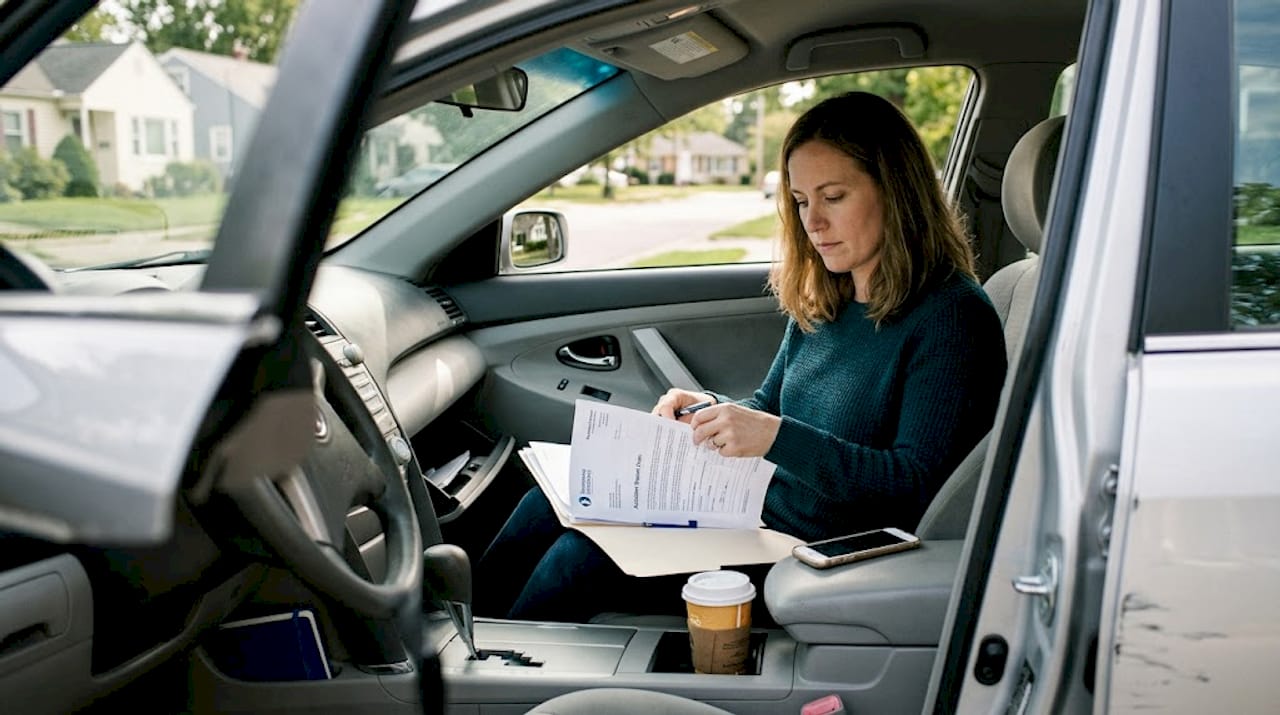
Here is how a typical claim unfolds. After an at-fault accident, the injured party files a claim with your insurer. The insurer assigns an adjuster, reviews the evidence, and determines fault. If liability is clear, they negotiate a settlement with the injured party and pay out up to your policy limits.
Georgia also uses a modified comparative fault system. Under Georgia’s 50% fault rule, you can only recover compensation if you are less than 50% at fault for the accident. If you are 30% responsible, your recovery is reduced by 30%. If you are found 50% or more at fault, you get nothing. This rule applies equally to injured victims seeking compensation from an at-fault driver’s liability policy.
Pro Tip: If fault is disputed after your accident, do not settle quickly or accept a lowball offer. Knowing when to hire a personal injury lawyer can be the difference between fair compensation and a fraction of what you deserve.
Understanding these mechanics helps you navigate the claims process with confidence instead of confusion.
What liability insurance does NOT cover
Understanding what liability insurance pays for makes it equally important to see where its protections end.
This is where many Georgians get blindsided. After an accident, people often assume their insurance will handle everything. Then the bills start coming in and the coverage runs dry faster than expected. Here is what liability insurance will not pay for:
- Your own injuries: If you caused the accident, your liability policy pays for the other driver’s medical treatment, not yours. You need medical payments coverage (MedPay) or personal injury protection (PIP) for your own injury costs.
- Damage to your own vehicle: Liability coverage does not pay to repair or replace your car. You need collision coverage for that.
- Your own lost wages: If your injuries keep you out of work, liability insurance will not replace your income. Again, separate coverage is required.
- Injuries to your passengers: Some people mistakenly believe their liability policy covers everyone in the car. It does not cover your own passengers if you caused the accident.
- Intentional acts: If damage or injury was caused intentionally, liability coverage does not apply.
Liability insurance typically does not pay for your own injuries or damage to your own vehicle. Those usually require other coverages entirely. This is a critical point that surprises many accident victims.
Knowing this, you can take practical steps to protect yourself. After any accident, follow the right steps after an accident to preserve evidence, document your injuries, and avoid common mistakes that can hurt your claim later.
It is also worth understanding how affidavits factor into insurance documentation. Some claims processes involve sworn written statements, and you can learn more about insurance affidavits to understand what that might mean for your situation.
Pro Tip: Even if you were not at fault in a Georgia accident, review your own insurance policy for MedPay coverage. It can pay your medical bills quickly while a liability claim against the other driver is still being processed.
Common misconceptions run deep here. Many drivers believe that as long as they have insurance, they are covered. The reality is that being legally insured in Georgia only guarantees that others are protected from your mistakes, not the other way around. If the at-fault driver only carries minimum coverage and you are seriously injured, their liability policy may not come close to covering your actual losses.
Why higher coverage may matter in serious accidents
Seen what liability covers and excludes, let’s look at why choosing only the minimum coverage could leave you exposed.
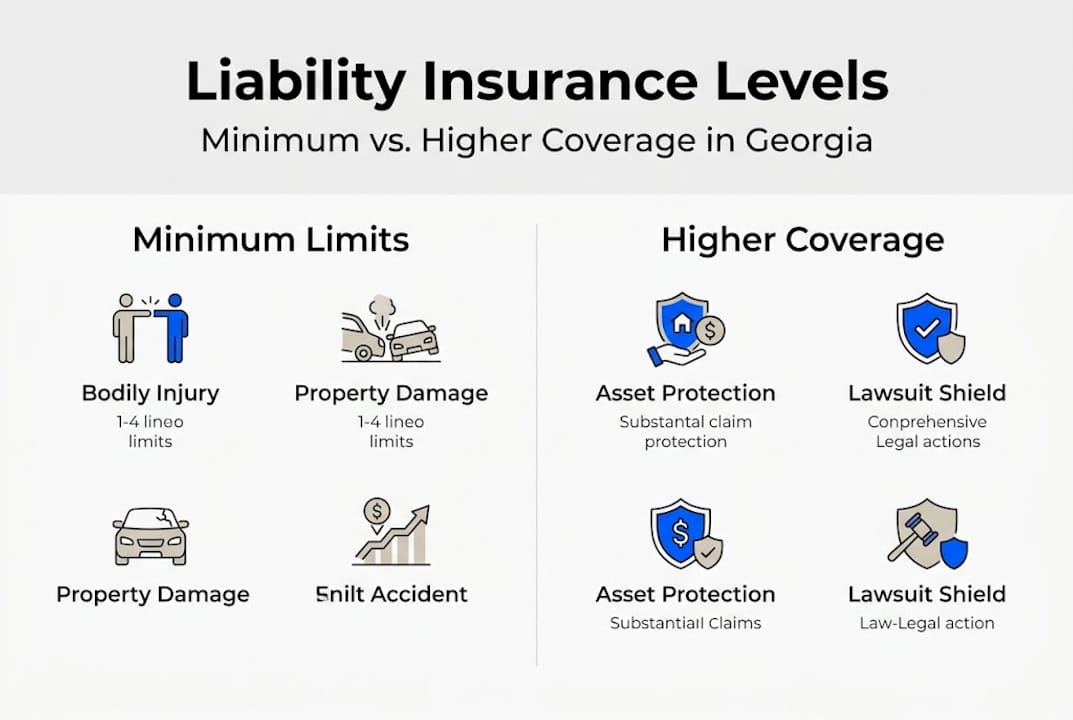
Georgia’s minimum required limits sound reasonable until you factor in the actual cost of a serious accident. A single emergency room visit after a crash can run $30,000 to $50,000. Add surgery, physical therapy, follow-up care, and lost income, and you are looking at costs that easily exceed $100,000 or more. A two-car accident with multiple injured passengers can multiply these numbers quickly.
Minimum required Georgia liability limits can be far below the amount needed in serious injuries. Higher limits reduce the chance you will pay remaining costs out of pocket when damages exceed your policy limits.
“When damages exceed your policy limits, the injured party can pursue the remaining balance directly from your personal assets.”
That means your savings, your home equity, your wages, and your future earnings could all be on the table if a lawsuit goes to judgment against you.
Here is a realistic look at how minimum limits compare to real accident costs:
| Scenario | Estimated Costs | Georgia Minimum Coverage | Potential Out-of-Pocket |
|---|---|---|---|
| Minor fender bender | $5,000 | $25,000 PD | $0 |
| Single injury, broken leg | $60,000 | $25,000 BI | $35,000+ |
| Multi-car crash, 2 injured | $150,000+ | $50,000 BI total | $100,000+ |
| Severe TBI or spinal injury | $500,000+ | $25,000 BI per person | $475,000+ |
The gap between minimum coverage and real-world costs is not theoretical. It happens to Georgia drivers every year.
Higher liability limits protect you in a few important ways:
- They reduce the likelihood that injured parties will sue you personally for the remainder
- They give your insurer more room to negotiate settlements without going to court
- They show good faith in serious accidents, which can actually help resolve claims faster
- They prevent a single bad day from becoming a financial disaster that follows you for years
If you are injured by someone with only minimum coverage and your losses far exceed that amount, you may need to explore options beyond the at-fault driver’s policy. Understanding your options around filing an injury lawsuit in Georgia can help you pursue every available path to fair compensation.
The math is clear. The difference in premium cost between minimum and higher liability limits is often just a few dollars per month. The difference in protection can be hundreds of thousands of dollars when it matters most.
A hard truth about liability insurance most people overlook
With the risks of low coverage in mind, here is a perspective most Georgians do not consider until it is too late.
Meeting Georgia’s minimum liability requirements feels like doing the right thing. You followed the law. You have insurance. But those minimums were set decades ago, and medical costs have risen sharply since then. The legal minimums were never designed to be adequate coverage. They were designed to be a floor, not a ceiling.
We see this reality play out in personal injury cases regularly. A driver carries the minimum, causes a serious accident, and the injured victim is left without enough coverage to pay their bills. The at-fault driver then faces a lawsuit because the insurance ran out. Both sides lose.
Thinking about worst-case scenarios is not pessimistic. It is smart planning. Ask yourself what would happen if you caused an accident tomorrow that left someone with a permanent injury. Would your current limits protect your home, your retirement account, and your paycheck?
Understanding negligence and your rights in Georgia is the starting point for making informed decisions, whether you are the injured party or the one potentially at fault. Liability insurance is not just a legal checkbox. It is the financial foundation that determines what happens to everyone involved when something goes wrong.
Get trusted advice on liability after your accident
If you have been in an accident in Georgia and you are trying to make sense of liability coverage, policy limits, and what compensation you actually deserve, you do not have to figure it out alone.
The Jewkes Firm offers FREE consultations to accident victims throughout South Atlanta and surrounding Georgia counties. Our team understands how insurance companies operate, and we know how to fight for the maximum compensation you are owed. We work on a contingency fee basis, which means you pay nothing unless we win your case. The benefits of legal advice after an accident are real, and they can make a measurable difference in your settlement. Call us today and let us put our experience to work protecting your rights.
Frequently asked questions
Does liability insurance cover my own injuries in a Georgia car accident?
No, liability insurance only pays for injuries and damages you cause to others. Your own injuries require separate coverage such as medical payments or collision insurance.
What are the minimum liability insurance limits required in Georgia?
Georgia requires at least 25/50/25 in liability coverage, but minimum Georgia liability limits can fall far short in serious accidents, potentially leaving you personally responsible for costs beyond your policy’s cap.
What is the difference between bodily injury and property damage liability?
Bodily injury liability pays for medical expenses and related costs to people you injure. Auto liability coverage is split into BI and PD categories, with property damage paying for physical damage to other people’s vehicles or property.
What happens if damages exceed my Georgia liability policy limits?
If damages exceed your limits, you may owe the remaining balance from your own assets. Georgia car insurance laws do not cap your personal liability at your policy limit, which is why higher coverage is strongly recommended for meaningful financial protection.